AI race

Trump is treating AI like a nuclear bomb

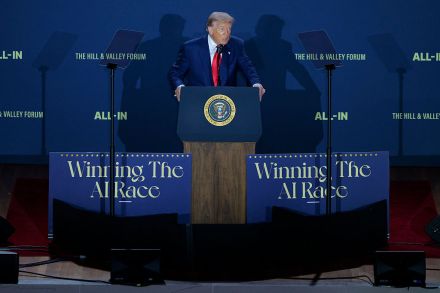
Initially, AI’s critics insisted that artificial intelligence was just another software product. AI was presented as a huge commercial opportunity, sure. It was presented as a tool through which humans could enhance their lives, but ultimately it was still understood as a statistical program that knew how to spell. Thanks to the Trump administration’s Anthropic export ban, that illusion is dead. The more powerful the technology becomes, the more determined governments are to control who can access it The United States government ordered Anthropic to suspend access for non-US persons to Fable and Mythos 5, its most advanced models, after officials raised national-security concerns. Whatever one thinks of the decision itself, its significance is hard to overstate.
The race to superintelligence

From our US edition

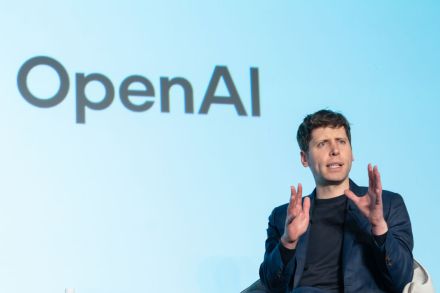
This summer, two of the leading contenders in the great AI race have suddenly, alarmingly, declared that the endgame is in sight and that they’re now spending vast amounts of time and money to try to ensure that their own AIs beat the others. What does winning mean? It means that their models (you know them perhaps as GPT, Claude and Gemini) reach first AGI (human-level intelligence), then superintelligence. No one quite knows what superintelligence will do (we’re not smart enough) but it’s clear that whoever owns the winning model will wield unimaginable power. They’ll dominate the world. A new Alexander the Great. The first to show his hand was Sam Altman, the chief executive and founder of OpenAI, a company he once shared with his former friend Elon Musk.

superintelligence