AI art

AI is turning the world into slop

From our UK edition

It seems AI is not just making everyone sound the same, but now everything must look the same too. I haven’t been able to walk into a pub, cafe or shop this summer without noticing the uncanny, slightly unreal sheen of an AI-generated poster. From caricatured cartoon children on a nursery advertisement to an abnormally glistening burger on a food menu, every billboard, flyer and sign now seems to have been regurgitated from the same ChatGPT printing press. We are hurtling ever closer to a flattened future in which everything converges towards the average, the mediocre, the visual mean There are many telltale signs that a sign is generic AI-slop.

The sad decline of painting

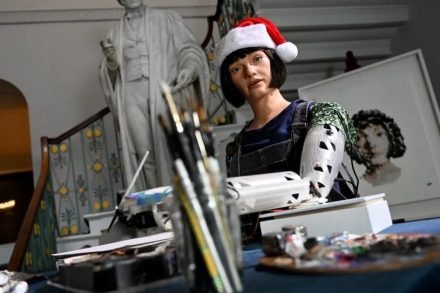
What hope is there for artists following the sale last year of the robot Ai-Da’s portrait of Alan Turing, entitled “A.I. God,” for $1 million? Someone has perhaps paid over the odds for a 3D print with a few marks added by a robotic arm and a few more by studio assistants to areas of the canvas Ai-Da couldn’t reach. Innovation wins. In the 1970s, the walls of art-school degree shows were studded with plaster casts of students’ genitals. By the 1980s, students were discouraged from attempting realist painting, but messy gray abstract works were still acceptable. Then it was found objects and piles of stuff. One young studio assistant I knew in the 2000s had a tutor at art school who’d gained top marks in his degree by filming himself pouring a glass of milk over his head.

painting