Africa

Is Sudan next?

From our UK edition

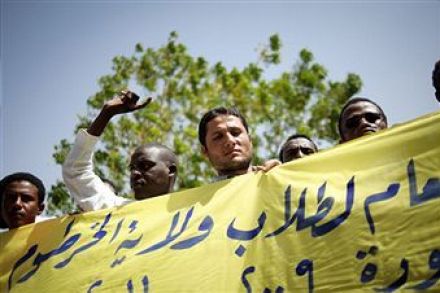
The momentum behind the Arab Spring revolutions appears to have been checked – for now. The Libyan domino hasn't fallen. But there's more unrest to come in North Africa. On March 21, a group called Youth for Change will hold mass protests throughout Sudan. Youth for Change (sinister name) are inspired, obviously, by what has happened in Egypt and Tunisia. Their aim, they say, is to ‘to rewrite the constitution with the voice of the people in order to hold national general elections: '[We march] to reclaim our dignity as human beings first and second as Sudanese ...that has been violated by the regime when it killed thousands of our brothers in Darfur, the north, the east, and all the documented incidents to dishonour the Sudanese nation.

To strike or not to strike?

From our UK edition

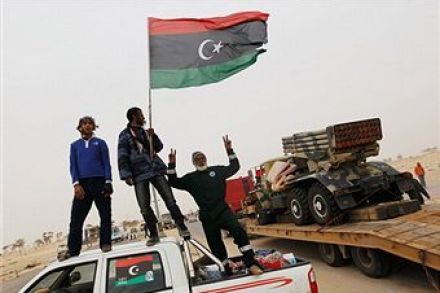
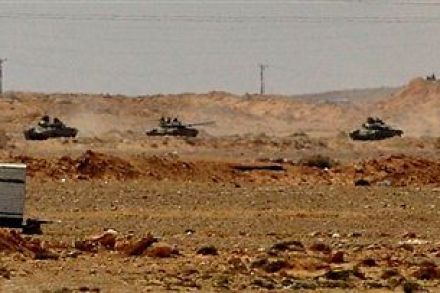
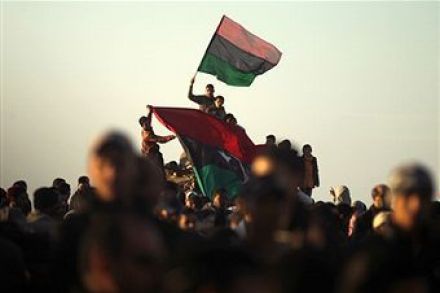
The situation in Libya is still uncertain, but the fog of war is clearing to expose a depressing picture. Forces loyal to the Gaddafi regime are conducting a successful offensive. The Times’ Deborah Haynes confirms reports (£) that Zawiya has fallen and rebels have been forced from the oil town of Ras Lanuf. William Hague has spoken to Mahmoud Jabril, Special Envoy of the Libyan Transitional Council. The Foreign Office has issued a communiqué on the conversation and some of Jabril’s emotional concern escapes the bland text. In the words of the Foreign Office, he wants ‘the West to act to hinder Qadhafi's ability to inflict further violence on the Libyan people, including through a no fly zone.

From the archives: Mugabe’s rise to power

From our UK edition

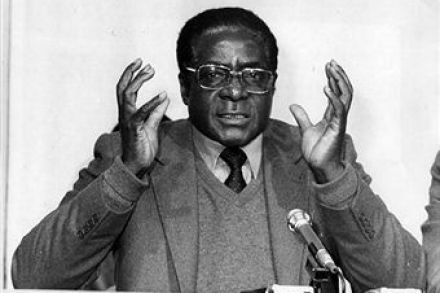
A strange sort of anniversary, but an anniversary nonetheless: it is 31 years, to the day, since Robert Mugabe took power in Zimbabwe, or Rhodesia as it was still called. In which case, here is The Spectator's leading article from the time. It is, for the large part, a good demonstration of the benefits conferred by hindsight. But its caginess about Mugabe is apparent in such observations as, "It is up to Mr Mugabe whether he leads his country into yet another black tyranny, corrupt and inefficient, or whether he builds on what has already been built." Mugabe, it seems, made his mind up on that one some time ago. Off the the Rhodesian hook, The Spectator, 8 March 1980 Mr Mugabe's victory in the Rhodesian elections is overwhelming.

Toppling Mad Dog

From our UK edition

Should Gaddafi be pushed? That is the question diplomats and policy makers are beginning to ask. The UN has imposed travel restrictions and frozen Gaddafi’s assets. But Gaddafi is resisting the hangman’s noose; the loss of his Mayfair property empire is the merest of inconveniences. And still he fights on. There is now a growing humanitarian case for direct military intervention by Western powers. However, there are plenty of arguments against even introducing a no-fly zone. Gideon Rachman makes some of them in today’s FT: ‘A few of the problems are practical. Some military observers say that a no-fly zone would be of limited use in Libya, since Col Gaddafi seems to be mainly relying on ground forces.

Brits want to give money abroad – but not necessarily via the government

From our UK edition

"A well-targeted aid budget is essential if Britain is to punch above its weight on the world stage." That's how Tim Montgomerie finishes his neat defence (£) of British aid policy for the Times today. But, putting aside the matter of whether it's wise to give aid to, say, India at a time of spending restraint back home, Tim's claim rather inspires a question: is our aid budget well-targeted? And the answer, it seems to me, is encoded in Ian Birrell's punchy piece for the Evening Standard. Ian's overall point is similar to that made by economists such as Dambisa Moyo, whose work we have mentioned on Coffee House before now: that international aid is failing, on a grand scale, to do anything about the poverty it's meant to alleviate. Worse, it even has counterproductive effects.

British foreign policy needs to promote democracy

From our UK edition

After a week of hesitation and well-publicised problems evacuating British citizens from Libya, the government has led the international community's response to the crisis. The decision to move HMS Cumberland into position was astute, as was the authorisation to rescue the people stranded in the dessert. At the UN, British diplomats have been drafting most of the key resolutions and now David Cameron has out-hawked everyone by saying he'd be willing to contemplate a no-fly zone. US lawmakers have asked the Obama administration why they have not been as swift as the UK. As a Bosnian-born friend of mine said last night: "If only David Cameron and William Hague were around in 1992, so many of my friends would have been alive today!

Gaddafi’s lethal sort of madness

From our UK edition

If Muammar al-Gaddafi weren't still in charge of a country, then his speech for Libyan State TV would have been straight-up hilarious. There he was, all spittle-flecked bombast, rattling on and on about the "bunch of rats and cats" who are trying to depose him, and blaming their actions on, erm, hallucinogenic drugs. "We Libyans have resisted the US and Britain in the past," he said, "and will not surrender." He also, predictably, mentioned Israel. It was like some living caricature of a mad dictator. As it is, though, we ought to dwell on some of the more ominous aspects of Gaddafi's address. He is not standing down, he said – giving the remarkable excuse that, as he is not a President, he has no position to resign from.

A Wind of Change down Arab Street?

From our UK edition

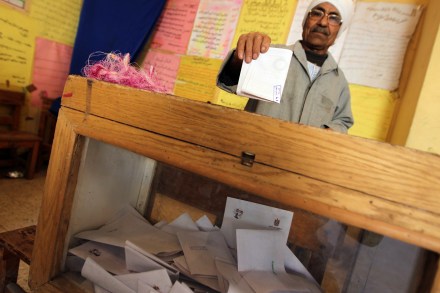
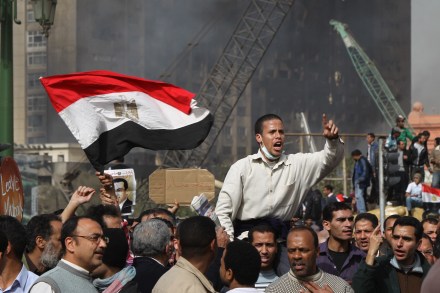
I wish I could be more enthusiastic about the events in Egypt and Tunisia – but, as I say in my News of the World column (£) today, the citizens of the Arab world all too often have a choice between a Bad Guy and a Worse Guy. Egypt looks like its choice is between the status quo, the Muslim Brotherhood or a military coup. This is not a 1989-style revolution, there is no Arabic equivalent of Scorpions singing Wind of Change. Successful revolutions normally have a well-organised alternative government, with a clear route towards democracy. Where is the Egyptian Lech Walesa, or the Tunisian Vaclav Havel?

South Sudan set for difficult independence

From our UK edition

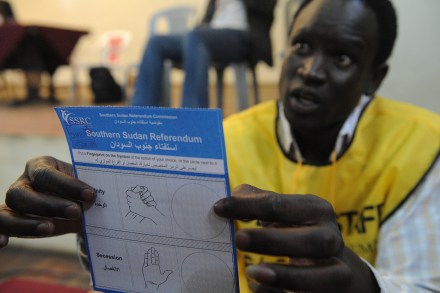
Today, voters in the southern part of Sudan head to the polls in a referendum which will determine whether they should form their own state or remain part of Sudan, Africa's largest country. Secession – the most likely outcome of the referendum, and called for in the 2005 peace agreement that ended 21 years of civil war between the country's north and south – would mean that the government in Khartoum could lose not only territory, but also over 80 percent of the revenues it receives from oil exportation, as most of the oil is located in the would-be state of South Sudan. As a result, many fear that bloodshed will follow the poll.

In Cote D’Ivoire, New Year may bring a new Africa

From our UK edition

The situation in Cote D'Ivoire is heating up. It has the potential either to herald a new future for West Africa, based on democracy, regional cooperation and a rejection of ethnic mobilisation; or to showcase the continent's violent and undemocratic past. Hitherto there have been signposts pointing in both directions. On the one hand, Laurent Gbagbo is clinging on to presidential power, after having been in office for ten years on a questionable mandate. Willing to politicise the army and exploit ethnic differences, his strategy is straight out of the continent's "big man" playbook of politics. On the other hand, Alassane Ouattara, the country's rightful leader, has refrained from using playing the ethnic card.

DfID’s role put to the test

From our UK edition

At a speech to the Royal Defence Academy earlier in the year, Andrew Mitchell outlined the costs of overseas conflict to Britain and offered a number of lessons for the future. The most important, he argued, was the need to help prevent wars before they start, starting with being “better at identifying the potential for conflict.” The Cabinet’s only ex-soldier, Mitchell has seen up close the cost of conflict, burns with anger about the Rwandan genocide and knows that development funds will forever be wasted if people are mired in violent conflict.

International aid should be abolished

From our UK edition

The Comprehensive Spending Review was a step in the right direction, but I agree with Philip Booth and others when they say that there should be far more cuts down the line. But the biggest mistake was the announcement that the Department for International Development’s (DfID) budget will be increased by 37 percent by 2015. It undermines the narrative that the country will be suffering the cuts together and shows a tone-deafness in cutting spending at home while increasing it abroad. But worse, it exacerbates the problem that development aid does an immense amount of harm to the developing world, and this spending increase will only make things worse.

Adventures in Charity: Bono Edition

From our UK edition

I dare say it makes one a bad person to be amused by this: ONE gives only a pittance in direct charitable support to its causes -- something Borochoff said the average donor might not realize. The Bono nonprofit took in $14,993,873 in public donations in 2008, the latest year for which tax records are available. Of that, $184,732 was distributed to three charities, according to the IRS filing. Meanwhile, more than $8 million was spent on executive and employee salaries. Like many others then, I guess that makes me a bad person. A spokeswoman for Bono's "charity" ONE Campaign explained all: ONE  "does advocacy work, not charity work." True enough. As their website explains: At ONE, we believe the fight against poverty is not about charity, but about justice and equality.

Amid the encircling gloom

From our UK edition

Africa is the setting for several of V. S. Naipaul’s finest fictional stories — In a Free State, A Bend in the River, Half a Life. Africa is the setting for several of V. S. Naipaul’s finest fictional stories — In a Free State, A Bend in the River, Half a Life. And there is a pattern to the themes in the African works: fear, post-colonial disintegration, isolation, approaching catastrophe, a sense of being trapped in a way of life that is hovering on the borders of savagery. It is an unforgettable vision, but it remains that of an outsider. In The Masque of Africa, Naipaul goes deeper; this is the account of a journey through five countries with the purpose of ‘investigating the effects of African belief on the progress of civilisation’.

Tried and tested

From our UK edition

In June 1964, when Nelson Mandela was sentenced to life imprisonment for acts of sabotage against the apartheid government of South Africa, he was, as photographs reveal, a burly, blackhaired man, with a handsome, pugnacious grin. By the time he was released in 1990, his hair was grey and his features gaunt. But his first speech as a free man described the same ideal of a democratic, multiracial South Africa that he had presented in his final address before being sentenced — ‘an ideal I hope to live for, but if needs be, an ideal for which I am prepared to die’.

Cherchez la femme

From our UK edition

The 22nd Earl of Erroll, Military Secretary in Kenya in the early part of the second world war, was described by two of his fellow peers of the realm as ‘a stoat — one of the great pouncers of all time’ and ‘a dreadful shit who really needed killing’. The 22nd Earl of Erroll, Military Secretary in Kenya in the early part of the second world war, was described by two of his fellow peers of the realm as ‘a stoat — one of the great pouncers of all time’ and ‘a dreadful shit who really needed killing’.

The relevance of politics

From our UK edition

This morning's papers share a unifying theme: the failure of political leadership to secure a deal at Copenhagen. Now, I applaud politicians for not succombing to enormous pressure and making a series of pledges that would risk grinding the world's poor ever deeper into the dirt. For those who take a different view, it is not that politicians have failed, but that high politics is an irrelevance, a vanity. I know Coffee Housers loathe her opinions, but Polly Toynbee is at her polemical best today. She writes: 'Politics is being weighed in the balance and found wanting. The writing is on the wall. The leadership required within and between each nation is heavier lifting that the weak machinery of governmental power can manage.

Sideshow on the lake

From our UK edition

During the night of 9 February 1916, two men were sitting on opposing shores of Lake Tanganyika. The longest lake in the world, it at that time divided German East Africa from the Belgian Congo. One of the men was Herr Kapitänleutnant Gustav von Zimmer, the other was an eccentric British navy officer, Commander Geoffrey Spicer-Simpson. The following morning, Zimmer would launch the Graf von Götzen, a large vessel which floats to this day on the waters of the lake. Spicer-Simson takes a starring role in my narrative non-fiction book, Mimi and Toutou Go Forth (2004).

Debating Aids

From our UK edition

Is it legitimate to discuss the strength of the link between HIV and Aids? It’s one of these hugely emotive subjects, with a fairly strong and vociferous lobby saying that any open discussion is deplorable and tantamount to Aids denialism. Whenever any debate hits this level, I get deeply suspicious. Which is why the below clip – from a documentary which The Spectator Events division is screening next week, called House of Numbers – aroused my interest. The film picked up awards at various American film festivals, but has since been denounced as backing Aids denialism. Yet the footage shows Luc Montagnier – who won a Nobel prize last year for his work on Aids – saying that many HIV infections can be shrugged off by a healthy immune system.

The Good Gordon Brown

From our UK edition

Marbury is quite right. The Prime Minister's advisers must wonder what they have to do to get this Gordon Brown appearing on your TV screen. Now, there are a few things one could say about the content of Brown's Ted Talk in Oxford but that's a post for another time. But in general, this is good stuff: fluent, passionate, witty (yes, really) and so on. Above all, freed from the tedium and trivia and trauma of life at Westminster you see a different and relaxed big-picture Gordon. It's almost enough to make one wonder what might have happened if only Gordon weren't quite so bad at politics... Anyway, this is worth your time. There's a good, if probably apocryphal, Reagan joke too.