Africa

Panic about Ebola in Africa – not here

From our UK edition

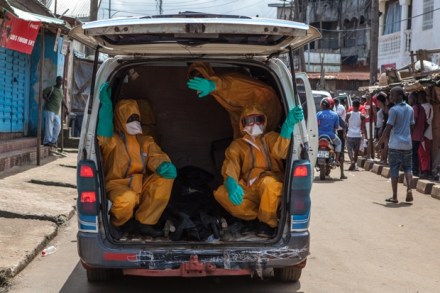
Got Ebola yet? Early symptoms are very difficult to distinguish from either winter flu or, indeed, a particularly bad hangover. Bit feverish, aches and pains, sore throat and so on. Only when you start to bleed from the eyeballs should you worry a bit: that’s never happened before with Jack Daniels. It was the African bloke huddled up on the tube, I would reckon, the one who kept coughing. I knew I shouldn’t have sat near an African. One or two clinical experts have been likening the Ebola virus to HIV. They seem to me similar more in a sociological sense. I remember those days when people avoided being in close proximity to homosexuals for reasons other than their appalling taste in music, or their moustaches.
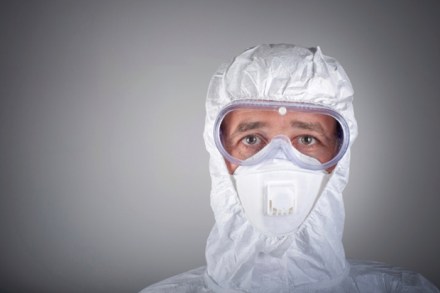
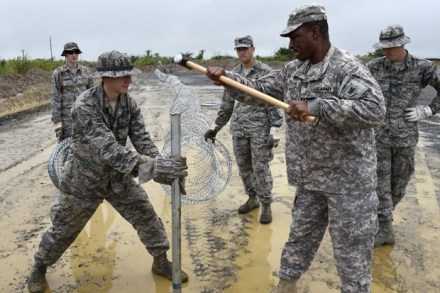
The US military should be winning wars, not fighting Ebola

From our UK edition

As a general rule, soldiers should be employed in the business of soldiering — preparing to fight or actually fighting (preferably infrequent) wars. In response to the Ebola outbreak afflicting West Africa, the Obama administration has decided to waive that rule. His decision to do so has received widespread support. Yet the effect of his decision is to divert attention from questions of considerable urgency. Drawing on the increasingly elastic authority exercised by the US commander-in-chief, President Obama has directed the deployment of up to 4,000 troops to Liberia, ground zero of the epidemic. These are not war fighters but support troops, mostly construction engineers and medical personnel.

Looking for a cure to Ebola? Try a western lifestyle

From our UK edition

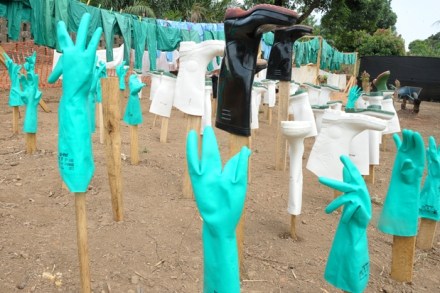
There is something depressing about the fact that it has taken a sick Spanish nurse to put Ebola back on the front pages. Since the summer, some 3,400 West Africans have died, but interest in the story here had waned. So long as the disease did not make the nine-mile leap across the Straits of Gibraltar, the moat which keeps all nasty things from Africa at bay from fortress Europe, a sense developed that it could quietly be forgotten — or left to the aid charities. No longer. Spain’s public health authorities are investigating how a nurse who treated two missionaries in a Madrid hospital — who had contracted the disease in Liberia and Sierra Leone — became infected in spite of the protective clothing she was wearing.

Portrait of the week | 4 September 2014

From our UK edition

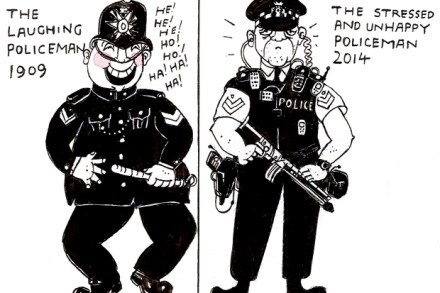
Home Britain’s terror threat level was raised from ‘substantial’ to ‘severe’ in response to fighting in Iraq and Syria, meaning that an attack on Britain was ‘highly likely’. Three days later, David Cameron, the Prime Minister, in a hesitant statement to the Commons, proposed that: police should be able to seize temporarily at the border the passports of people travelling overseas; there should be all-party talks on drawing up powers to prevent suspected British terrorists returning to Britain; those under terrorism prevention and investigation measures (Tpims) should be subject to ‘stronger locational constraints’.

Italy is killing refugees with kindness

From our UK edition

The next time you eat a fish from the Mediterranean, just remember that it may well have eaten a corpse. As the Italian author Aldo Busi told the press just the other day: ‘I don’t buy fish from the Mediterranean any more for fear of eating Libyans, Somalis, Syrians and Iraqis. I’m not a cannibal and so now I stick with farmed fish, or else Atlantic cod.’ Personally, I prefer my fish natural, fattened on drowned human flesh, but there you go. I take the point.

I thought I had contracted Ebola. Life doesn’t get much scarier than that

From our UK edition

Juba After an all-night rainstorm in Juba I woke to see the mosquito that bit me in the dark. Now, several days later, a fever returns to me like an old friend met on the road in Africa. Malaria. I can detect the signs without even having a blood test — the suicidal depression, the shivers, the backache, the halo of fire in the brain. I know how to treat myself with the right drugs and it doesn’t scare me at all. In a couple of days I’ll be right as rain. What scares me more is if it’s not malaria. In South Sudan I once had a fever that came with a port wine skin rash that covered my body for weeks. It foxed doctors from Nairobi to London. I had a disease unidentified by science! I was unable to walk but the temperature was low enough for me to be able to read.

What are the Chinese up to in Africa?

From our UK edition

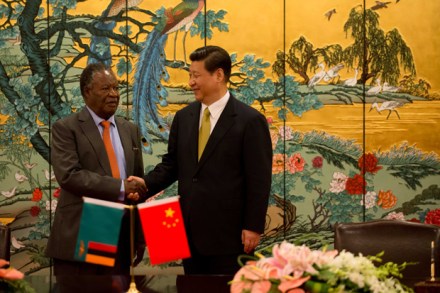
Few subjects generate as much angst, or puzzlement, among Western policymakers in Africa as China’s presence on the continent. In his new book, China’s Second Continent, the American journalist Howard French recalls meeting US officials in Mali to sound them out on the matter. Instead, he finds himself barraged by questions. ‘It would really be useful for us to know what the Chinese are up to,’ one American official tells him. ‘So far we’ve been limited to speaking with them through translators. We’ve got very little idea about any of this.’ Grasping the range and scale of China’s activities in Africa is indeed a tall order. Commercial deals are cloaked in secrecy. Immigration statistics from African countries are poor.

Investment special: Boom time in Africa

From our UK edition

It’s easy to see why until recently Africa has been a hard sell. It is still regarded as a place for charity rather than investment. But that view is out of date: much of the continent is booming now and investors are wising up. The economy of sub-Saharan Africa is expected to grow by 6 per cent this year. Compare this with the eurozone’s paltry 1 per cent, and you start to see why smart money is moving from the old continent to the dark one. ‘Economists have had to rip up their numbers for how rich African households are — they were too low,’ says Charles Robertson, author of The Fastest Billion, a book about Africa’s economic revolution. ‘And this is just part of a much improved story.

How green policies hurt the poor

From our UK edition

[audioplayer src="http://traffic.libsyn.com/spectator/TheViewFrom22_3_April_2014_v4.mp3" title="Matt Ridley and Fraser Nelson discuss the IPCC's latest report" startat=67] Listen [/audioplayer]Advocates against global warming often frame the issue in terms of helping the poor. ‘You’re right, people dying thanks to climate change is some way off...’ ran one fairly typical advert recently, ‘about 5,000 miles, give or take.’ Indeed, the United Nations agrees that, looking toward the future, climate change ‘harms the poor first and worst’. And the logic stacks up: the poorer you are, the less able you’ll be to afford the resources to adapt to a changing climate. However, climate policies also have a cost, and these predominantly hurt the poor.

Before you talk about ‘Lessons from Rwanda’, read this

From our UK edition

In Rwanda I was an ant walking over the rough hide of an elephant — this time 20 years ago I had no idea of the scale of what I could see on the ground. Trekking with a column of rebels from the Ugandan frontier south towards Kigali, we came upon the early massacres of Tutsis, hysterical survivors, flames leaping above huts, mortars roaring down misty valleys. But we had seen a lot of this across Africa in the 1990s. We visited a Catholic pastor in his rectory and I suppose at that point I and my Tutsi guides still respected the priesthood and could not imagine their complicity in murder. As we drank tea with him, we failed to ask why he had the body of a woman with her brains bashed out sprawled on the steps of his church. And then it just went on and on.

Why I won’t let my children learn French

From our UK edition

[audioplayer src="http://traffic.libsyn.com/spectator/TheViewFrom22_27_March_2014.mp3" title="Liam Mullone and Freddy Gray debate whether it's a good idea to let children learn French" startat=1467] Listen [/audioplayer]My children won’t learn French. If their school tries to force the issue, I’ll fight tooth and nail. There’ll be the mother of all Agincourts before I let it happen. It’s not that I have any problem with the language, even though it has too many vowels and you have to say 99 as ‘four-twenty-ten-nine’, making it impossible (I imagine) to sing that song about red balloons. It’s just that I want my children to be successful, and learning French makes no business sense.

Witnesses in the heart of darkness

From our UK edition

When presented with a 639-page doorstopper which includes 82 pages of closely-written sources, notes and index, most of us feel a bit like a patient about to swallow a strong dose of antibiotics: ‘This isn’t going to be pleasant, but it’ll be good for me.’ First published in Dutch in 2010, translated into French and German, and only now coming out in English, Congo arrives trailing prizes and praise. And yet I quailed. What I hadn’t realised was that David Van Reybrouck, who spent a decade on this extraordinary work, is not primarily a historian.

A secret from my African childhood has become a deeper mystery

From our UK edition

About 55 years ago, when I was about ten, my younger brother Roger and I discovered a slave pit in Africa. Actually it probably wasn’t a slave pit and we probably didn’t discover it, but ‘Arab’ ‘slave pits’ were what Southern Rhodesian schools offered as an explanation for the circular, room-sized, stone-lined pits sunk about five feet below ground but open to the sky. And if Roger’s and mine were not the first modern eyes to behold this antiquity, then we were able at least to persuade ourselves of the claim, as there was no path trodden into the small patch of dark, dense primary forest in whose midst we found the pit; and nobody else seemed to know about it. This felt like a discovery.

Britain has many major problems – racism isn’t one of them

From our UK edition

I am a banana. In Singapore, where I used to live, this needs no explanation — it means I’m yellow on the outside but white on the inside, someone who looks ethnically Chinese but whose way of thinking is ‘western’. There are bananas all over Asia, and I daresay the world. We are better versed in Shakespeare than Confucius, our Mandarin is appalling, and we often have pretentious Anglo or American accents. Then there are people who are ‘ching-chong’, a reference to anyone who enjoys the kitschy bling of stereotypically Chinese things, sans irony — they like paving their entire garden with cement, for example, or driving a huge Mercedes, or placing two garish stone lions on either side of a wrought-iron gate.

Will China kill all of Africa’s elephants?

From our UK edition

In 2010, Aidan Hartley, our ‘Wild Life’ columnist and Unreported World presenter, asked in his feature below: 'Will China kill all Africa’s elephants?' And, as I type, politicians from over 50 countries are discussing this very issue at the London Conference on the Illegal Wildlife Trade. Meanwhile, David Beckham, Prince William, and the Chinese basketball player Yao Ming have made a video highlighting the plight of the rhino. William Hague – hosting the summit – said at a reception last night that ‘we are on the brink of a crucial global turning point in the struggle against wildlife trafficking’, adding that the British government ‘has a responsibility to push for an international action plan to urgently tackle this trade’.

Education is the only way to save the black rhino

From our UK edition

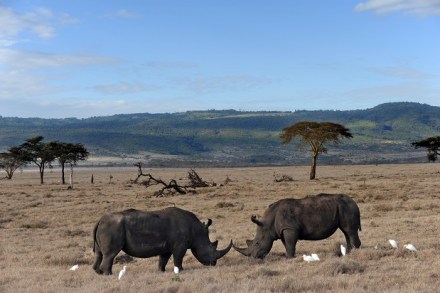
Could legalising the trade in rhino horn – and allowing sport hunting – be the solution to Africa’s rhino poaching problem? Legalisation, it is argued, will make it easier to control the trade in animal products and negate the black market. It’s a similar argument to one often used about the legalisation of marijuana – as Hugo Rifkind wrote a couple of weeks ago: ‘This is an economic land grab. It is the process of taking a criminal industry away from criminals.’ Controlling a legal trade in animal products is easier said than done, however. Authorities have struggled to suppress the illegal trade, so there are doubts about whether they can regulate a legal one. The economics are uncertain, too.

I don’t love money, but I love the risks it makes me take

From our UK edition

On the flight into Kinshasa, I sat next to an elderly Englishman who was pallid with fear. He revealed that he was a bankrupt who was determined to survive by smuggling gold dust out of the Congo. He was on the verge of tears at the prospect of returning to the African city where only a week before he had been robbed at gunpoint of his cash and gold. He cut a sad and lonely figure but flying over that ocean of unbroken forest I couldn’t help but envy him a little bit for his risk-taking. I have never been interested in money but I did enjoy Moscow in the early 1990s, when I met young bankers who launched their business careers selling black-market Levi’s jeans on the pavement. One had become a commodity trader after hijacking a train laden with wheat.

There’s a global morality gap — and it’s getting wider

From our UK edition

First World, Third World, East, West, North and South; every few years economists come up with yet another supposedly more acceptable way of slicing humanity into manageable chunks. Mostly these great divides are riven by wealth; sometimes (RIP Second World) by ideology. But I think it’s time to name a new divide, a more fundamental, more puzzling one — a split between worlds that will define the 21st century much as the Iron Curtain defined the 20th. I am talking about the morality gap. It is now clear, though not much talked about, that humanity, all 7.1 billion of us, tends to fall into one of two distinct camps. On the one side are those who buy into the whole post-Enlightenment human rights revolution.

Being a ‘National Treasure’ appears to be a license to talk rot

From our UK edition

Take, for instance, the curious case of Sir David Attenborough. The poor booby is another neo-Malthusian. Which is another reminder that expertise in one area is no guarantee of good sense in another. As I wrote in The Scotsman this week: Attenborough is a supporter of Population Matters, a creepy outfit who have previously suggested Britain’s optimum population lies around the 20 million mark. Let’s rewind the clock to 1850 then. Like other Malthusians, Population Matters is coy about how it proposes to reduce Britain’s population to this “sustainable” level. Emulating China’s one-child policy may be tempting, but will not reverse the terrifying tide of prosperity and population growth now threatening our planet.

Low life: Brief encounter aboard the Mombasa to Nairobi ‘Lunatic Express’

From our UK edition

Many years ago I met a woman in a train on the Mombasa to Nairobi ‘Lunatic Express’ line. She was seated opposite me in the compartment, next to her husband. The three of us had the compartment to ourselves. It was early in the morning. I’ve forgotten what the sleeping arrangements had been the night before. I think perhaps the husband and I had bedded down together and she’d rejoined him in the morning. Her husband had then left the compartment to go to the lavatory or dining car, and she and I had begun to talk. She’d met and married the husband after a whirlwind romance a year before, she told me, and they’d opened and run a small restaurant together up the coast at Lamu.