Advertising

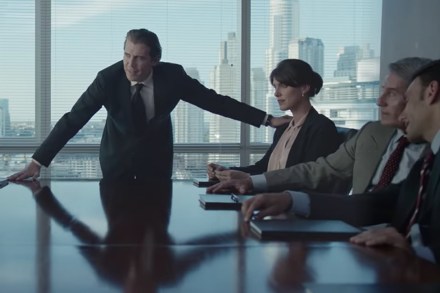
Burn in Hell, Steak-umm

For Hindus, cows are objects of veneration. Govinda, protector of cows, resides in Goloka and tends to a herd of creatures that bring nourishment and strength. Krishna lives here, and cows roam lush grasslands in peace.My head is swimming slowly, meditatively. Am I in Goloka? There are cows here: giant beasts with gentle eyes. But these are not grasslands. This is a gigantic, stinking barn, where cows are huddled up together in unbearable heat. In the distance there are moans. A calf is being dragged from its mother.

steak-umm

The truth behind the election’s so-called fact checkers

From our UK edition

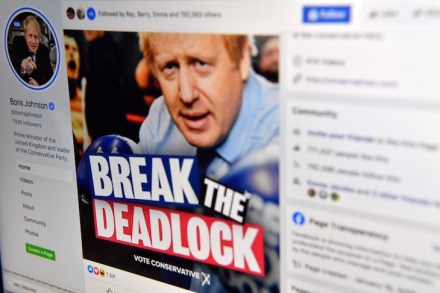
All election campaigns see politicians exaggerate, stretch the truth and make promises they can't keep. But if a report issued in early December is anything to go by, the 2019 general election campaign was a particularly dishonest affair - and one party was particularly guilty. On 10 December, Metro reported: Similarly, the Independent reported: Websites which make no attempt to be impartial were more vociferous. Under the headline, The Tory war on truth – and how to fight back, Open Democracy reported: Independent fact checkers have found that 88% of Tory Facebook adverts contain lies, while 0% of Labour’s do.

Actually, the husband in the Peloton commercial is a hero

Exercise company Peloton found itself at the center of the Twitter outrage machine this week after they dropped a new Christmas advertisement, 'The Gift that Gives Back.' https://www.youtube.com/watch?v=pShKu2icEYw&feature=emb_title The commercial kicks off when a husband gifts his young, attractive (and thin!) wife with a Peloton bike on Christmas morning. The wife proceeds to take videos of her workouts over the next year, finally surprising her husband with a progress video the following Christmas to thank him for the Peloton.Critics slammed the ad as sexist, declaring that a man should never give his wife exercise equipment as a gift because it implies she needs to lose weight.But don’t be fooled by the outrage mob.

peloton

Could Bloomberg’s huge ad buy backfire?

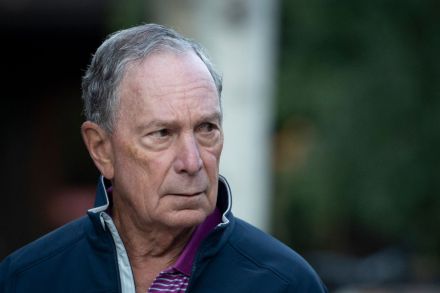
Around this time of the year, the biggest stories in the ad industry typically involve Black Friday and holiday campaigns. But then former New York City mayor Mike Bloomberg decided to launch his bid for the presidency.After Bloomberg formally unveiled his campaign on Sunday with a video that cited his success rebuilding NYC’s economy after the 9/11 terrorist attacks (and credit there is well deserved), The Guardian reported that the financial technology billionaire had already purchased $30 million in TV advertising. That’s not a lot of money for Bloomberg, whose net worth is estimated at over $50 billion, but it’s a hell of a lot of ads.

ad mike bloomberg

The brilliance of the ‘Meth’ campaign

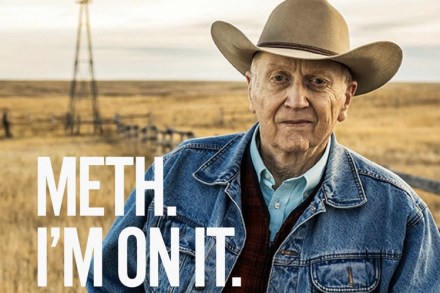
It was probably the most people have discussed meth since the Breaking Bad finale: the state of South Dakota unveiled its new advertising campaign designed to address the methamphetamine crisis, and it became an instant sensation. With the tagline ‘Meth: We’re On It’ and ads featuring a diverse array of people declaring ‘I’m on meth’, the campaign is designed to ‘get people talking about being part of the solution, not just the problem, when it comes to the state's meth epidemic’ according to the Sioux Falls Argus Leader.

meth

Why the left wants a political advertising ban

An easy, crowd-pleasing opinion column would maintain that banning political adverts from social media platforms is wrong because it implies that voters are anything less than impeccably rational in their decision. We like to think our votes are based on our pure objective reason. Simultaneously, we like to think the votes of people that we disagree with are based on the outrageous propaganda of our opponents and the sheeplike and emotional qualities of their supporters.Balderdash. None of us have a Spock-like devotion to logic or an assiduous grasp of evidence when we vote. We are all prey to biases that bubble out of our stew of grievances, tribal loyalties and tribal hatreds, sensitivity to rhetoric and keen desire for social status.

advertising

Facebook’s fake news problem is about more than just ads

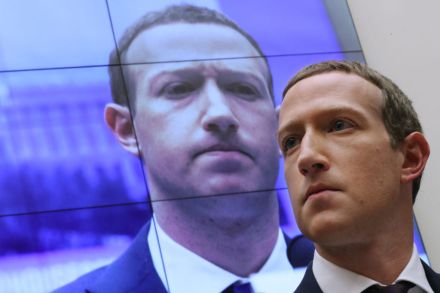
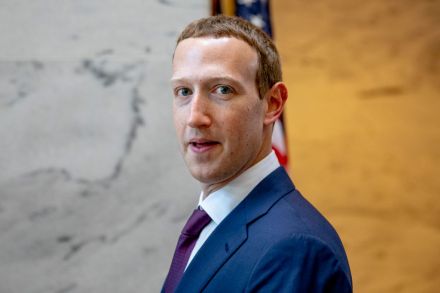
It seems like it should be quite the scandal: one co-founder of Facebook chastising another publicly for a business decision that has, allegedly, had major social reverberations. In response to Democratic presidential contender Elizabeth Warren calling out Facebook for loosening its restrictions on political advertising, Facebook co-founder Chris Hughes took to Twitter. ‘I have a feeling that many people in tech will see Warren’s thread implying FB empowers Trump over Warren as unfair,’ Hughes wrote. ‘But Mark [Zuckerberg], by deciding to allow outright lies in political ads to travel on Facebook, is embracing the philosophy behind Trumpism and thereby tipping the scales.

facebook ads

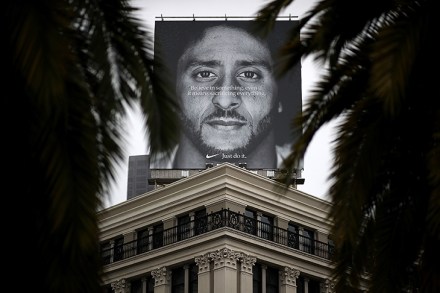
Just do it

From our UK edition

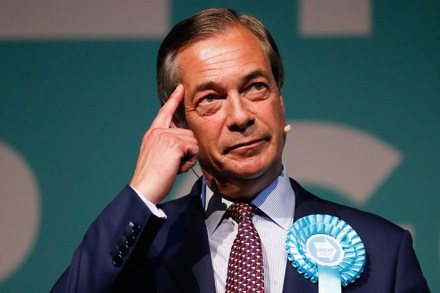
Am I allowed to mention Nigel Farage? Of course I am, this is The Spectator, and its readers enjoy analysing all kinds of people and ideas, even those they find unpalatable. Readers of Campaign, however, aren’t quite as broad-minded. Campaign is the trade magazine of the advertising industry, and when it published an interview with Farage some of its readers went into meltdown. Why? Surely Farage is the ideal subject for Campaign. He’s connected with millions of loyal consumers in ways other brands can only dream of. You’d think that people in the advertising world would want to hear how he did it, given that building brands and connecting with people are exactly what they’re supposed to do.

The service station problem: it’s becoming impossible to correct a mistake

From our UK edition

My first award for intelligent design this week goes to Dublin airport for displaying a sign which reads ‘Lounges. Turn back. No lounges beyond this point.’ It may seem like a trivial thing, but it takes a rare intelligence to think in this way. It’s one thing to put up a sign that says ‘Lounges, this way’. But it takes nous to think ‘yes, well and good, but what happens if people see the first sign but miss the second one?’ In all likelihood, they would end up walking 500 yards in the wrong direction, as I nearly did. Signage and wayfinding are mostly designed for people who never make mistakes. Should you misread your gate number at an airport, and end up at gate 92 instead of gate 29, you are doomed.

Tell us what we want

From our UK edition

We live in a logic-obsessed world, from computer modelling of the economy to businesses run by spreadsheets. But we also know, from decades of behavioural economics and evolutionary psychology research, humans are not robots. The social world is not a machine but a complex system. In Alchemy: The Surprising Power of Ideas that Don’t Make Sense, Rory Sutherland, vice chairman of Ogilvy and columnist for The Spectator, explains how to crack the magic underlying our humanity. Humans evolved to justify their instinctive decisions to others, not to prove what is right and wrong. Those who could defend their actions were more likely to survive. We use reason sparingly, selectively and self-servingly. We search for evidence to support our existing world view.

The art of persuasion | 23 May 2019

From our UK edition

People sometimes ask what slogan could have swayed the Brexit vote: the opposite of the touchstone phrase ‘Take back control’. There are many suggestions, my own being: ‘Don’t leave — it’s what the French want us to do.’ No Europhile committee would ever have approved a jingoistic slogan, of course; yet the feelings of committed Europeans are irrelevant. Those people will vote Remain in any case. Instead you need to reach the ambivalent, sceptical or mildly hostile. This raises the central question about communication: do you want to feel good about yourself, or do you want to change the minds of others? The art of sloganeering can serve two powerful ends — persuasion or cementing tribal allegiance. Usually you can’t do both.

Bud Light and the beervolutionary wars

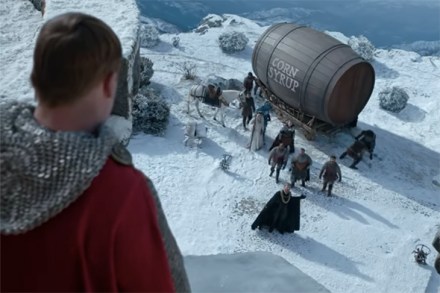
When historians reflect on Superbowl LIII, what will they say? They might look upon Adam Levine’s tattooed body and despair. They might bemoan the absence of excitement in an utterly forgettable game between the predictable champions and a transplant franchise with four fans. But what should be noted by all scholars of the period, is the first shots fired in the Great Light Beer War. Bud Light, continuing its largely successful Medieval Times-themed campaign, decided to take the fight from the fake Game of Thrones jousting fields to its light beer competitors. In an admittedly not-bad-for-a-beer-company commercial, the king ventures across the realm, stopping at various competitors’ castles to give them their corn syrup. https://www.youtube.com/watch?

bud light corn syrup

An open letter to Gillette from Godfrey Elfwick

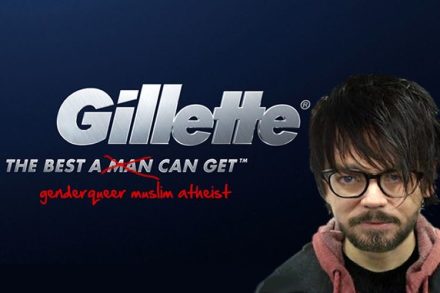
Dear Gillette, I watched your latest advert and I must say, it’s a good start. However, I have concerns that it wasn’t patronizing enough. In order to get through to the majority of men, you need to really talk down to them, treat them as if they were tiny children, incapable of understanding the world around them. Only then will you gain their trust and respect. To this end, I have taken the liberty of writing the outline for your next advert and I am willing to be featured in it (I will send you an invoice along with my PayPal details). Gillette Advert – Men Are Awful (working title) We open on a group of adult men playing some sport or other, Basketsoccer or whatever it is they do. In the corner we see a six-year-old girl looking vulnerable but also brave and defiant.

gillette godfrey elfwick

Masculinity isn’t toxic – corporate moralizing is

The first thing that astonishes about Gillette’s effort to alienate an entire customer base in a single two-minute slickly produced virtue signal is the arrogance. The unblinking temerity of a brand believing it’s somehow its duty not merely to make an appeal for commercial inclusion, but rather to instruct millions of people on how to lead their lives. If the ideological vacuum left by the decline of Christianity in the West really is being filled with a rush of competing forces, then surely we can view Gillette’s ad as consumerism’s most blatant effort yet from the pulpit of modernity to claim the hearts and minds (and souls) of the lumpen masses.

toxic masculinity

The desperate pursuit of woke capital

It was really only a matter of time before a men’s shaving company began virtue signaling about #MeToo and toxic masculinity. Welcome to the brave new world of ‘woke capital’ – Gillette and their cringeworthy ad is just the latest example. Their short film, which basically plays on familiar denunciations of guys as insufficiently sensitive, is all about showing how much Gillette cares about making the world a better place that is an absolute utopia full of neutered men. Of course, Gillette does not seem to care so much about...treating their workers with basic decency, but...details. Gillette is far from alone in their attempt to showcase their exquisite dignity and compassion.

gillette woke capital

Banksy’s stunt wasn’t even original – and why we should support ads on Sydney Opera House

From our UK edition

It was announced last week that the woman who bought Banksy’s 'Girl With Balloon' will be going through with the purchase. And who could blame her? The prospect of owning a piece of ‘art history’, as she called it, is an enticing one to any investor, regardless of its condition. The video documenting Banksy’s triumph has clocked over 12 million views since it was uploaded to his Instagram account, and one could certainly argue it highlights the disconnect between the intrinsic value of art and that ascribed to it by ever-changing tastes. But it would be wrong to give artistic credit for what is essentially a publicity stunt. Not least because it's so unoriginal. Does Banksy not know about Jean Tinguely’s 'Study for an End of the World, No.

Deep and meaningless

From our UK edition

Walking down the street on my lunch break, I sometimes pass a delivery man wheeling a large handcart of Japanese food. The cart bears a striking message: ‘Creating a world where everyone believes in their own authenticity.’ It raises some immediate questions: for instance, what does it mean to believe in your own authenticity? How would you go about creating a world where everyone does? And what’s it got to do with Japanese food? It’s unfair to single out the delivery service. Today, brands big and small have a Profound Statement to make. On my way home I pass a 30ft electronic billboard which displays a young couple embracing beneath a glowing night sky. The left side is filled with a portentous message: ‘Your time in the universe is finite.

Classified information

From our UK edition

Now here’s a series that would make a brilliant podcast but is also classic Radio 4 — they don’t have to be mutually exclusive. In fact, why can’t podcasts be more like Radio 4? Programmes where the presenter’s role is to draw out the knowledge of experts, and the pace is measured, allowing the fascination of what’s being revealed to make an impact before leaping on, and where there’s no background music except when it adds to the timbre, the meaning, the purpose. Each episode of Classified Britain (produced by John Forsyth) is only 15 minutes long, so not too demanding of one’s time, and yet a lot of information is packed into that slot without it seeming too hectic or over-enthusiastic.

Can WPP’s model survive without Martin Sorrell in charge?

From our UK edition

I said last week that WPP chief executive Sir Martin Sorrell was in ‘a very exposed position’. Sure enough on Saturday he resigned from the global advertising giant he created and had run for more than 32 years. ‘But he didn’t “create” it,’ one ex-employee told me, illustrating the internal resentments that seem to have contributed to Sorrell’s downfall. ‘He just made a lot of acquisitions and counted the pennies.’ Whatever he did or didn’t do, his departure was undignified and ill-explained.

We need to start telling the image censors to back off

From our UK edition

Almost two and a half years ago, feminists called on Transport for London to remove adverts of a scantily-clad Australian from the tube. Protests against the infamous 'beach body ready' adverts claimed that showcasing a woman in a bikini to peddle weight-loss pills was offensive to women. Apparently the sight of a skinny woman was upsetting to all of us non-skinny women. And, after pressure from London Mayor Sadiq Khan in 2016, TfL promised to ban all adverts which didn't adhere to the notion of 'body positivity'. Not all women were happy about the ban. Back then, I, and other commentators, warned that giving TfL the power to decide which images of a woman were ‘damaging’ and which were acceptable was pretty dangerous.