Adventure

The tragedy of Sir Walter Ralegh’s impossible quest

From our UK edition

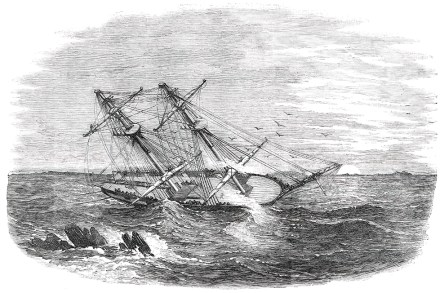
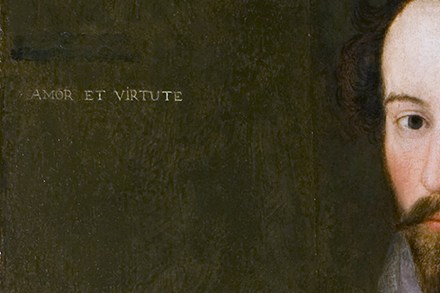
I remember little of my two years at boarding school, where I arrived aged eight, apart from the cloaks. Red, green, blue and yellow, for the houses of Ralegh, Nicholson, Gordon and Wellesley. They were called after generals, we were told, and of the four, Ralegh’s name is the best known. But why? I take a short survey of my colleagues. They all know the name but not why they know it. It is a curious fame to have, and perhaps David Gibbins’s book will do something to give it substance. Sir Walter Ralegh (Gibbins’s choice of spelling, as opposed to Raleigh, Rawleigh, Ralley and other versions in the elastic Elizabethan way with names) was more than a military commander.

Alone on a vast fjord, surrounded by whales, beneath the midnight sun

From our UK edition

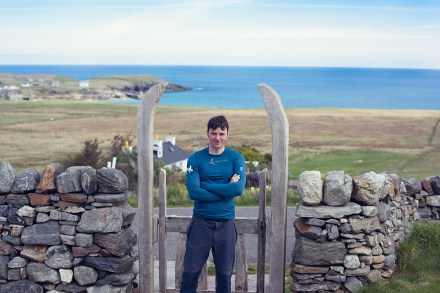
As an angler in pursuit of fish across some 45 countries, I have travelled in a variety of precarious watercraft, from a Tahitian va’a to a coracle in Coorg, and remain convinced that all buoyant vessels are merely looking for somewhere to sink. In his study of the cultural history of small boats around the north Atlantic, David Gange, an academic historian and devotee of the kayak, argues that they are in fact transports of delight, and a key component in the survival of precious maritime communities.

Nintendo and the plumber who conquered the world

It’s not more than a parlor game, perhaps, to speculate about history’s most crucial inventions. One invention often makes the next possible. Electric light revolutionized human productivity, allowing us to work well beyond sundown. The combustion engine and later the turbine engine collapsed our sense of distance, putting other continents within a day’s travel. We’re still debating what the internet’s done; how social media offers the double-edged sword of instant communication and addressability for good and ill; how it encourages the avatarization of ourselves as online presences. We’re both ourselves online and not quite ourselves, entirely embodied and yet psychically elsewhere.

nintendo

Nintendo and the plumber who conquered the world

It’s not more than a parlour game, perhaps, to speculate about history’s most crucial inventions. One invention often makes the next possible. Electric light revolutionised human productivity, allowing us to work well beyond sundown. The combustion engine and later the turbine engine collapsed our sense of distance, putting other continents within a day’s travel. We’re still debating what the internet’s done; how social media offers the double-edged sword of instant communication and addressability for good and ill; how it encourages the avatarisation of ourselves as online presences. We’re both ourselves online and not quite ourselves, entirely embodied and yet psychically elsewhere. But then again, we’ve always experienced this on some level or another.

Faith – and why mountains move us

From our UK edition

Sylvain Tesson’s White unfolds the story of a gruelling ski journey across the Alps during which the author aims to fulfil ‘a long-held dream of transforming travel into prayer’. Born in Paris in 1973, Tesson is a well-known adventure writer whose previous books include The Consolations of the Forest: Alone in a Cabin on the Siberian Taiga, which won awards on both sides of the Channel and was made into a film. As a public figure associated with the far right, Tesson remains divisive in his homeland. His political views do not seem to have dented book sales or literary coverage: one wonders if the same would be true if a travel writer of similar persuasion popped up here.

A marriage of inconvenience: The Bride Stone, by Sally Gardner, reviewed

From our UK edition

It’s 1796, and an idealistic young English doctor, Duval Harlington, just released from La Force prison in revolutionary Paris, learns that his father is dead. He is now Lord Harlington, heir to a fortune and the idyllic estate of Muchmore. But in order to gain possession of his heritage – and, as importantly, foil the aspirations of his unpleasant cousin Ralph Carson – Duval must marry within two days and seven hours. No suitable partner is available, so he buys a woman in a Norfolk wife sale for ten guineas. Money, its acquisition and loss, is woven through this hugely enjoyable novel.

Four months adrift in the Pacific: a couple’s extraordinary feat of endurance

From our UK edition

It is every writer’s dream to glimpse, peeping out from behind a news story or feature, the contours of a book. Brian Masters was eating his breakfast on 12 February 1983 when he read in the morning papers reports of the arrest of a mildly spoken Jobcentre employee accused of strangling a number of men with whose flesh he had blocked the drains in his flat in Muswell Hill. Masters wrote to Dennis Nilsen. Nilsen wrote back: ‘Dear Mr Masters, I pass the burden of my life on to your shoulders.’ After Nilsen had filled 50 prison notebooks, Masters embarked on Killing for Company, surely the grisliest yet most poignant biography of a serial killer ever written.

Tales of the unexpected: The Complete Short Stories, by Patrick O’Brian, reviewed

From our UK edition

The publishers of this handsome volume hint at high adventure – and period adventure at that. In the blot left by an antique quill pen swirls a breaking wave. Ah, the high seas! And here we are again with Aubrey and Maturin picking weevils out of ship’s biscuits and foiling Napoleon’s naval plans. So I had better warn readers that this isn’t really representative. The first story in the collection, ‘The Return’, is about a man returning to childhood haunts and fishing for trout. The second, ‘The Last Pool’, is different in that this time the fish are salmon (although the protagonist starts out looking for trout).

In praise of megarich adventurers

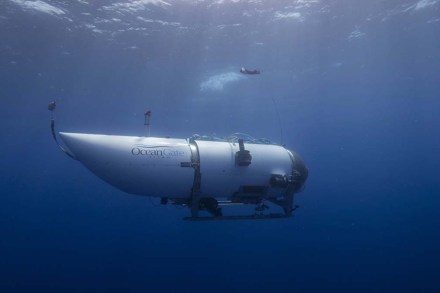
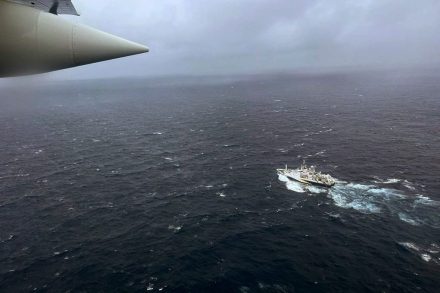
There's rich and there's rich. There's a number beyond which stuff starts to get boring. I'm not sure what it is, but it's the point at which you run out of restaurants to frequent and clubs to join and clothes to buy and you start thinking bigger. You start thinking about going to space and colonizing Mars — and exploring the dark depths of the deep blue sea. It is the reason that Elon Musk sold his seven homes and chucked out most of his possessions and torments his staff by sleeping at work. It is also part of the reason that five men are now sadly believed to have died while aboard a missing submarine after a "catastrophic implosion." If we didn’t love to hate the rich, this would have been seen for what it is: a tragedy.

titanic megarich adventurers

Dumb risks are worth taking

The plight of the Titanic submariners has engulfed the media over the past week and demanded the attention of countless rubberneckers to catastrophe. Parts of that attention are due to morbid curiosity, or the ghoulish nature of social media's animosity toward the super rich; those who Ben Dreyfuss terms "the abnormal people" on his Substack: "They heard the news, read the stories, took in all of the information that made you sad, and their first reaction was: anyone who can afford a $250k tourist trip deserves to die." But another slice of attention is due, at least in part, to the audacious nature of their chosen craft.

titanic adventure

The dauntless spirit of Richard Halliburton

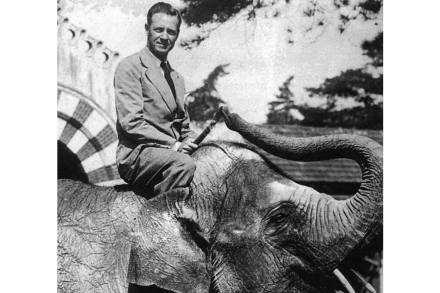
A sailor; a conqueror of the most treacherous mountain peaks; a man who wades defiantly under the stars of the Far East sky; a dashing writer who pursues his mark as a hunter on safari; an explorer who rides elephants through the Alps. This is not a collection of young men, newly emancipated by the end of the Great War and a new era of global empires. It is the nearly improbable life of one man, Richard Halliburton, whose swashbuckling existence was inspired by everyone from Daniel Defoe and Rupert Brooke to Odysseus. Halliburton was the self-proclaimed protagonist of his own heroic epic. He decided in the days before his graduation from Princeton in spring 1921 that he would forgo a life of tedious expectations and “let those who wish have their respectability.

Halliburton

Explorer, author, soldier, lover: The Romantic, by William Boyd, reviewed

From our UK edition

William Boyd taps into the classical novel tradition with this sweeping tale of one man’s century-spanning life, even to the extent of providing the accustomed framing device: the chance discovery of a cache of papers and mementoes. The items listed by ‘WB’ in his ‘Author’s Note’ – a musket ball, a fragment of a Greek amphora, a crinkly lock of hair – all find their place in the tale of this 19th-century adventurer, lover, traveller and author. Cashel Greville Ross (his name turns out to be as mutable as his identity and nationality) is born in Ireland in irregular circumstances – so irregular that a swift flight to England as a boy is effected, the first of his many transitions.