Abortion

Grandma: a feminist comedy that punches magnificently above its weight

From our UK edition

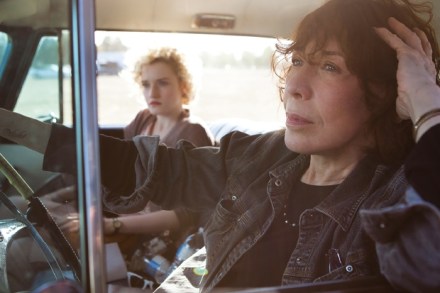
Apologies if you were expecting a review of Star Wars here, but Disney is not allowing critics access prior to the film’s opening on the 17th, and anyway, we’ve got Grandma, which was made for $600,000 in 19 days and has a running time of 79 minutes and stars a 76-year-old, so there is that. It’s also a feminist comedy with a plot driven by the need for an abortion, and if that doesn’t win you over, I’m not sure what else to say. It’s terrific? It’s small-scale, but punches magnificently above its weight? I laughed, and also cried? I could say that and have just said that, because it’s all true. Grandma stars Lily Tomlin and there is every sense this wouldn’t be a film unless it starred Lily Tomlin because she is the film, basically.

Northern Ireland’s pro-choice lobby couldn’t care less about democracy

From our UK edition

Well, the High Court in Belfast has driven a coach and horses through Northern Ireland’s abortion law. The Northern Ireland Human Rights Commission (NIHRC) sought a ruling to allow women to have abortions in local hospitals in cases of fatal foetal abnormalities, rape and incest; today, it got it. This judgment is plainly at odds with the opinion of the democratic forum in the north, the Northern Ireland Assembly, where every attempt to have abortion introduced upfront, in law, has been thrown out. Instead abortion seems likely to be brought in through the courts, that weaselly, undemocratic method of choice by the human rights lobby, whose concept of human rights never seems to extend to prenatal life.

Yet more examples of BBC bias this week

From our UK edition

Two reports on the BBC Ten O'Clock News this week, both unashamedly partisan. Yes, yes, I know they are not the only reports this week guilty of bias. There’s the same ol same ol refugee hugging every night and there was also a report on the fact that our population is about to rise by ten million without even the faintest suggestion that this might not be a bloody good thing. But I mean two specific reports. One, by Reeta Chakrabarti about protests outside abortion clinics. This was the most egregiously biased piece of reporting I have seen for a long while. It took, as a statement of unalterable fact, that these protests were vile. There was not a single voice raised in defence of the protests, or against abortion. It was propaganda, pure and simple.

Here’s what happens when you create a ‘safe space’ at a pro-life event

From our UK edition

You know all that stuff about 'safe spaces', places on university campuses where you’re not allowed to say or do anything mean or that could possibly be construed as mean about anyone in case it hurts people’s feelings, especially if you’re a minority of some description? Well, I got the chance to try it out myself the other day. I was at a gathering in Dublin of pro-lifers – I’d been asked to be one of the speakers at their annual event – and it was all going well. There had been a nice young woman talking about hostels for single mothers. There was also a professor of law from Trinity, Dublin, who discussed the background to the Eighth Amendment, which extends equal right to life to both mothers and their unborn offspring.

Banning provocateurs doesn’t silence them – it only amplifies their voices

From our UK edition

I write about free speech. And I’m tired of writing about free speech. I’m tired of needing to write about free speech. I’m tired of needing to defend women’s freedom to discuss our long-contested bodies without being plucked and waxed into acceptable, tidy language, bland and inoffensive as a Playboy Bunny’s perky smile. I’m tired of needing to defend a blogger or cartoonist’s freedom to poke fun at other people’s idols, when it’s men with guns in Paris, not roués with ink, who make me feel ‘unsafe’. I’m tired of the death of irony; I’m tired of the death of good faith. But most of all, I'm tired of student unions.

The tragic truth behind the ‘ShoutYourAbortion’ hashtag

From our UK edition

Try as I might, I can’t make myself furious about the #ShoutYourAbortion hashtag. It is, above all, cause for sadness. Many of the stories women tell about their abortions are, in some form, about social indifference. The women tweeting often say that a baby would have shipwrecked their life chances, that their abortion enabled them to be better mothers to their other children, that it would have been financially unfeasible to carry their pregnancy to term. And in a country such as the US, where over 40pc of women who have abortions live below the poverty line, and the most common reason for a termination is financial insecurity, those are serious concerns. https://twitter.com/MaryEmilyOHara/status/645969048514248704 https://twitter.

The Times on Pope Francis and abortion: the worst piece of religious reporting ever?

From our UK edition

The headline on page 33 of today's Times reads: 'Repent and we will forgive abortions, Pope tells women'. It's a bad headline, because the Church already grants absolution to women who repent of their abortions. CNN did much better: 'Pope Francis says all priests can forgive women who've had abortions'. (In fact, the Church teaches that God does the forgiving, but 'priests can forgive women' is OK as shorthand.) That said, headlines aren't written by reporters, so you'd expect the Times article to set the record straight. On the contrary: Tom Kington, the author, litters his piece with ignorant misrepresentations of Francis's ruling.

Pope Francis drops a bombshell: Catholics can receive absolution from dissident SSPX priests

From our UK edition

Pope Francis, unpredictable as ever, has just announced that during the forthcoming 'Year of Mercy', Catholics can receive absolution from priests of the ultra-traditionalist Society of St Pius X (SSPX), which has illicitly ordained its own bishops and doesn't recognise the Second Vatican Council. He's also given all priests permission to absolve anyone who truly repents of the sin of having or procuring an abortion – which they could already, though they might need the permission of the local bishop since it incurs automatic excommunication. So this isn't such big news.

Death watch | 27 August 2015

From our UK edition

[audioplayer src="http://rss.acast.com/viewfrom22/thereturnofassisteddying/media.mp3" title="Lord Falconer and Douglas Murray debate 'assisted dying'" startat=42] Listen [/audioplayer]A couple of years ago I contacted Holland’s top pro-euthanasia organisation. Our House of Lords looks likely to approve a bill legalising euthanasia here, I told them. ‘Very exciting!’ came the reply. Next month Parliament will again be discussing ‘assisted dying’, and although the tone of the British debate is not yet quite like the Dutch one, a shift in tone has undoubtedly occurred. In the past few years euthanasia has been renamed ‘assisted dying’ and become part of the ‘progressive’ cause.

Students against abortion

From our UK edition

In November 2013, the campaign group Abortion Rights announced their first-ever student conference. It was, they explained, in response to ‘many student unions reporting increased anti-choice activity on campuses’. Societies such as Oxford Students for Life, which I’ve been part of for the last couple of years, don’t tend to think of themselves as ‘anti-choice’, but it’s true there are more of us around. The number of young people who are opposed to abortion, or at least worried about it, is growing — this despite the usual hostility from student unions. Just look at the results of a ComRes survey conducted in April.

A true feminist will defend the unborn girls being aborted in the UK because of their sex

From our UK edition

Question: Is abortion on gender grounds illegal in the UK? Answer: yes and no and maybe - depends who you ask. Ask Britain's biggest abortion provider, the British Pregnancy Advisory Service, and they will tell you that the law is ‘silent on the matter'. Try the British Medical Association and they'll say that it may be permissible in some circumstances. Ask an academic, like Professor Sally Sheldon, and you'll get a nuanced answer about how the illegality of the practice is ‘far from clear’. Meanwhile, the government repeats in vain that ‘abortion on the grounds of gender alone is illegal’. So who's right? Well, everyone apparently. The way abortion law is framed means that contradictory interpretations of the law are possible.

The top students who are too lazy to argue

From our UK edition

[audioplayer src="http://traffic.libsyn.com/spectator/TheViewFrom22_20_Nov_2014_v4.mp3" title="Brendan O'Neill and Harriet Brown discuss the rise of the Stepford student" startat=41] Listen [/audioplayer] Don't be a Stepford student — subscribe to The Spectator's print and digital bundle for just £22 for 22 weeks.  Brendan O’Neill writes this week’s cover piece on his encounters with ‘Stepford Students’ - a censorious mob who try to shut down debates that they don’t like. His comes out this week after some Stepfords managed to shut down a debate about abortion at Christ Church by threatening to disrupt it with ‘instruments’.

Free speech is so last century. Today’s students want the ‘right to be comfortable’

From our UK edition

[audioplayer src="http://rss.acast.com/viewfrom22/8f1c0b97-698e-45c6-b50a-84e0e4b3773a/media.mp3" title="Brendan O'Neill and Harriet Brown discuss the rise of the Stepford student" startat=41] Listen [/audioplayer] Don't be a Stepford student — subscribe to The Spectator's print and digital bundle for just £22 for 22 weeks.  Have you met the Stepford students? They’re everywhere. On campuses across the land. Sitting stony-eyed in lecture halls or surreptitiously policing beer-fuelled banter in the uni bar. They look like students, dress like students, smell like students. But their student brains have been replaced by brains bereft of critical faculties and programmed to conform.

Sex-specific abortion is gruesome – but not explicitly illegal in Britain

From our UK edition

Imagine that you became pregnant. Imagine that you were entirely dependent upon your husband. Imagine that you became the victim of domestic violence during that pregnancy, and your husband began demanding that you did not give birth to a baby girl. Facing strong social pressure, coercion, or violence to end a pregnancy because you are carrying a girl, is a reality for a disturbing number of women in Britain, according to women’s advocacy organisation Jeena International, which helps women escape domestic violence. To begin tackling this issue, a large group of MPs led by Fiona Bruce have proposed the Abortion (Sex Selection) Bill.

Having an abortion means ending a life. Even pro-choice students should realise that

From our UK edition

Last week, the Tab, an online student tabloid, published an article by an anonymous Cambridge student entitled ‘I shouldn’t have been aggressively reminded of my abortion at Freshers Fair’. The author was complaining that she had been upset by a stand at the fair run by Cambridge Students For Life, an anti-abortion student society. The stall, she argues, had no place at an event that is meant to welcome new freshers, and was offensive to her personal choices. Her article certainly offended me. Her own abortion, she tells us, 'crosses my mind only once in a blue moon, and never tinged with regret'. It is clear that she considers abortion to be a feminist issue, akin to equal-employment rights or women’s suffrage: 'I am a confident woman and assertive feminist. . .

How should we describe ‘assisted dying’?

From our UK edition

There is, I realise, no perfect, neutral way of describing ‘assisted dying’, the substance of Lord Falconer’s bill which comes up for its second reading on 18th July. ‘Right to die’ is a bit tricky; dying is one of those rights that are thrust upon us without our even asking. It’s part of the human condition; just wait long enough, and it’s yours. And as Jenny McCartney eloquently makes clear in her piece on the subject, it’s actually assisted suicide — the assistance being provided by a doctor – or if you prefer, killing by request.

America’s Left is just as ‘eccentric’ as its Right

From our UK edition

Rory Sutherland writes in this week’s magazine that the Mozilla/Brendan Eich affair has finally put him off his dream of moving to the United States, quoting Andrew Sullivan that ‘The whole episode disgusts me – as it should disgust anyone interested in a tolerant and diverse society.’ The issue of gay marriage has changed politics in the English-speaking world in a way that perhaps people didn’t expect – breaking the liberal-Left’s final link with the ideal of John Locke that permitting something did not mean approving of it. This notion has been coming under pressure for some years, especially with discrimination laws, but SSM has snapped it. (Brendan O’Neill has written about this extensively for Spiked and Telegraph blogs.

The lefty liberals may be losing their hold over the arts world

From our UK edition

If you happen to be reading this column at breakfast, I’d recommend you skip to something more agreeable like Dear Mary and save mine till a bit later. It concerns the ugly details of one of the most revolting mass murderers in US history. His name is Kermit Gosnell — a doctor who ran a particularly dodgy clinic in Philadelphia specialising in late-term abortions for mostly poor black women. When police raided it in 2010, they encountered a scene of quite appalling horror. In a flea-ridden, blood- and faeces-stained basement, Gosnell had been operating on women using unsterilised equipment, killing babies well over the legal term limit, sometimes by sucking out their brains with a machine.

Is moral change speeding up?

From our UK edition

After David Cameron’s whole God thing last week, there was a discussion on the radio this morning about whether religion is necessary for morality. Clearly there’s nothing to stop atheists being as moral as religious people, and as atheism grows in more advanced, literate countries, almost by definition the least corrupt and venal societies also have the lowest levels of religious belief.

Was Roy Jenkins the greatest prime minister we never had?

From our UK edition

In any list of the-best-prime-ministers-we never-had, the name of Roy Jenkins is likely to be prominent. He was intelligent, moderate, courteous, thoughtful: he was exactly the sort of man whom any civil servant would wish to see installed in No.10. That, no doubt, is why he never got there. John Campbell makes no bones about the fact that he is a fan of Jenkins. He was, writes Campbell, ‘the first public figure I was aware of and always the one I most admired’. Campbell is far too sensible a man and good a biographer, however, to allow his book to degenerate into a paean of praise. Jenkins’s frailties are unsparingly exposed, his occasional failures recorded, his more extravagant pretensions ridiculed.