1960s

Back to the birth of the Greenwich Village music scene

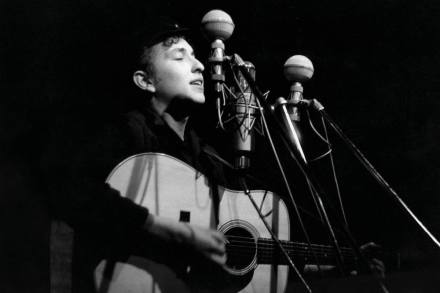
In 1961, the folk guitarist Barry Kornfeld moved back to Manhattan after spending a year in Boston. The Greenwich Village folk musicians he called friends, who before his trip to Boston had been enduring a hand-to-mouth existence, were now making a living playing their music in clubs along MacDougal Street — not necessarily “a good living,” Kornfeld noted, but certainly enough to get by. Kornfeld spotted another difference, too. Audiences at clubs weren’t merely clapping; they were snapping their fingers in appreciation, which felt like the hippest thing ever. Rolling Stone writer David Browne’s latest book, chronicling the history of Greenwich Village music, pivots around 1961.

Greenwich

Drew Gilpin Faust, a rebel with a cause

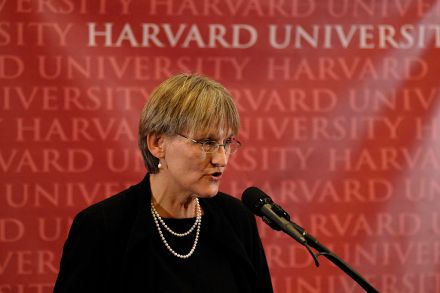
In 1957, when Drew Gilpin Faust was nine years old and growing up in the Shenandoah Valley, she learned from the car radio that in Virginia, black children were forbidden by law from going to school with white children. Disturbed by this egregious instance of Jim Crow segregation, she sent a letter to the president. “Please Mr. Eisenhower,” she wrote, “please try and have schools and other things accept colored people.” Young Drew’s sense of what was and wasn’t fair lay at the heart of her childhood rebelliousness, as well as her battle, as a young woman coming of age in the 1960s, against unjust social hierarchies.

faust

My illegal abortion

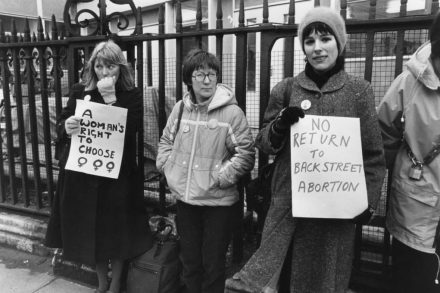
I was twenty-one in 1960 and I can remember exactly what my godfather gave me for my coming-of-age present. It was an abortion. He didn’t know this, of course, but he gave me £200 and that is what I used it for. I have never told this story before and am only doing so now because of the return of abortion to the heart of political debate after last year’s Dobbs decision, which has led to the tightening of abortion laws in many states across America. I know firsthand about the danger and misery of illegal abortions, because I had one myself in the days, pre-1967, when abortion was illegal in Britain.

abortion

Jenny Boyd goes beyond the muse

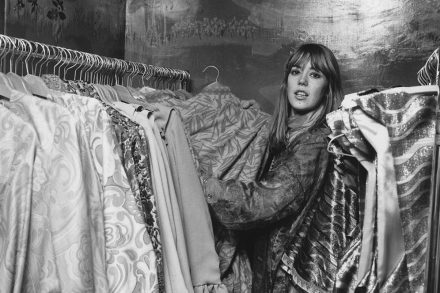
The beautiful muse to great male artists is a tricky figure, omnipresent in history but a bad fit for our fussy time. From Edie Sedgwick to Zelda Fitzgerald, and even some male ones, such as Neal Cassady, they’ve always been part of artistic scenes. In the scene of great Sixties rock, one of the most important was Jenny Boyd. She may not be as well-known as Yoko Ono, or her sister Pattie, who was married to George Harrison. But she may have been as influential. She was in the backstages, the bedrooms and the jam sessions with some of the most iconic musicians of all time. Shortly after traveling around India with the Beatles, she married (then divorced and remarried) Mick Fleetwood. Later, Donovan would write a love-sick song about her, "Jennifer Jupiter." So would Mick Jagger.

Jenny Boyd

Before Yellowstone there was The Big Valley

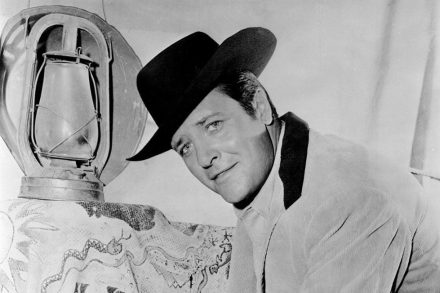
One of the most popular shows today is the Paramount Network’s Yellowstone, which follows the Dutton family, led by Kevin Costner's John Dutton, who owns and runs one of the largest ranches in the country, the Yellowstone Ranch in Montana. The sprawling cattle ranch, owned by several generations of Duttons, is under constant threat by scheming developers, environmental activists and Native Americans seeking historical justice, not to mention the forces of globalization that threaten to run the family legacy out of business. Writer and director Taylor Sheridan’s hit series has been praised for its breathtaking cinematography, complex characters, gritty realism and modern relevance.

big valley yellowstone

‘Alice’s Restaurant’ and how the hippies blew it

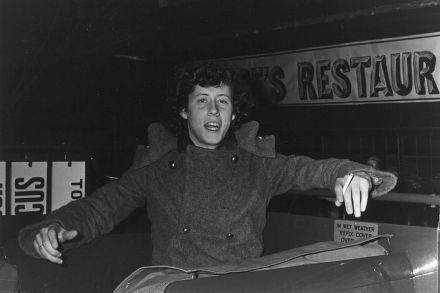
Traditions are good. If you don’t have any for Thanksgiving — or if you’re severed by space and circumstance from the people with whom you do share traditions — you could do worse than “Alice’s Restaurant.” Radio stations across the country play Arlo Guthrie’s rambling, folksy, satirical, eighteen-minute 1967 anti-Vietnam ballad at noon sharp on Thanksgiving Day. Wherever you are, scan through your radio, and I’ll bet you'll find it. The song tells the (mostly) true story of eighteen-year-old Arlo, the son of folk legend Woody Guthrie, attending “a Thanksgiving dinner that couldn’t be beat” at a deconsecrated Episcopal church in Great Barrington, Massachusetts. Ray and Alice Brock, a hippy couple who taught at Arlo’s high school, own the church.

Biden’s problem isn’t his age, it’s his eyesight

My brothers, my sisters, hold it right there. Thank you. We’re missing a major point, howsoever understandably. All this media chitchat coupling Joe Biden’s political incapacities to his undoubtedly advanced age and slowing gait requires, in my estimation, some context. Nor do I suggest the president’s recently acquired case of Covid — from which we all pray he recovers speedily and fully — lends point and pith to the discussion. I suggest that the problem with Joe Biden isn’t age as such, nor the infirmities that go with having lived back when Cokes cost a nickel and Ed Sullivan was king of TV.

How the 1960s institutionalized us

I was recently on Steve Bannon’s show, The War Room, to talk about my book The Long March. It was first published in 2000, so you might think that it is steeped in the sepia tones of another age. Doubtless in some ways it is. But in essentials, I believe, we are living now with the fruits of ideas that were but tender shoots when I was writing that book. Its subtitle is “How the Cultural Revolution of the 1960s Changed America.” The 1960s! Aren’t we done with that silly decade yet? It was sixty, not twenty, years ago that Sgt Pepper taught the band to play. Haven’t we moved on? You tell me.

revolution

‘I think The Kinks could have found a better frontman’: Ray Davies interviewed

‘I like your shirt today,’ Sir Ray Davies says to the waiter who brings his glass of water to the table outside a café in Highgate. ‘How’s your girlfriend?’ It turns out the girlfriend is no longer the girlfriend. ‘You broke up? You know, that happens. It’ll be OK. You’ll meet somebody else.’ He pauses and then says something that runs through my head for days after our interview. ‘She’ll meet somebody else.’ It’s true, of course; she will. And it’s a human thing to say: both parties to the relationship will move on. But it’s also delivered with a hint of claws. Who wants to be told, fresh from a break-up, that their ex will soon be hooking up with another partner?