Life

Michael Wolff is working on ‘nothing’

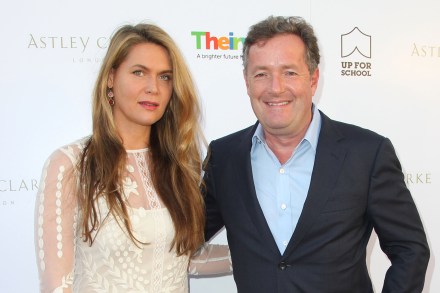
This article is in The Spectator’s December 2019 US edition. Subscribe here. New York ‘What are you working on?’ is a standard and annoying question often asked of creative types. Finally, I have a good answer: ‘Nothing.’ That was my response at a recent New York dinner party at the home of the Italian journalist Mario Platero and his British wife, Ariadne. The Plateros have been entertaining the New York media class for decades and many of their long-time guests are even older than I am. But they are all still announcing projects. More power to them. They are fighting obsolescence. I’m embracing it. For one thing, it is hard not to be fatalistic if you are a journalist.

michael wolff

My morning with Black Lives Matter UK

This article is in The Spectator’s November 2019 US edition. Subscribe here. Portland, Oregon It was a bright April morning and the sun shone benevolent golden rays upon me as I strode purposefully up the steps to the door of a house in the London district of Islington. Pressing the Victorian brass doorbell, I heard the comforting chimes of Toto’s ‘Africa’ emanating from within and nodded my head in approval. After a few seconds the door was opened by a charming white-passing transracial man who called himself Babatunde (I later found out his birth parents had named him Rupert). He graciously invited me into a spacious studio apartment decorated with tribal carvings from Ikea’s African Solnedgång collection.

black

Fashion victims: how feminists are betraying Muslim women

This article is in The Spectator’s November 2019 US edition. Subscribe here. When I was growing up, one of my closest female friends was Muslim. At first, her parents didn’t want us to be friends; they figured that as a child of divorced parents, I’d be a bad influence. Their restrictions pushed her to what they would surely have thought of as the dark side, had they ever known what we got up to. She and I were devout feminists, and we knew that women’s equality was more important than the dictates of religion. Neither she nor her mother covered her hair with a hijab or wore a baggy abaya. I’d been raised in a Christian household where short skirts were prohibited, but I’d recently moved in with my more permissive mother and stepfather.

feminists

The ‘Russians’ of Brighton Beach

This article is in The Spectator’s November 2019 US edition. Subscribe here. At the very southern tip of Brooklyn, far from the hip avocado cafés and right before you hit the sea, there sits the neighborhood of Brighton Beach. Nicknamed ‘Little Odessa’ after the waterfront city in Ukraine, the area is home to primarily Russian-speaking immigrants from the former Soviet Union. It’s a jumble of identity. The immigrants are mostly Jews from Ukraine, hence the nickname, but also Russia, Belarus and the other Soviet republics. So what to call these people in America? In Russia, in Ukraine, in Belarus, our identity cards never described us as Russian, Ukrainian, Belarusian. We were just Evrei, Jews.

brighton beach russians

Daddy issues: the fatherhood revolution has failed

This article is in The Spectator’s October 2019 US edition. Subscribe here. When I was growing up in the late 1960s, boys like me craved the admiration and approval of our dads; we wanted nothing more than to impress them. And now that we are dads, we crave the admiration and approval of our children; we want nothing more than to impress them. But the curious thing is, they don’t care about impressing us. In fact, our teenage children are just like our dads were — distant figures who are busy getting on with their own lives. Today we demonize dads of the recent past for being cold and uncaring. For failing to change diapers, read stories at bedtime, provide the unconditional love and praise children need to grow into happy, well- adjusted adults.

fatherhood

The differences between British and American readers

This article is in The Spectator’s October 2019 US edition. Subscribe here. New York This feels strange. Since 1977, I have been writing the High Life column in the London Spectator and concentrating on American goings-on for a British audience. Now I am about to write the High Life for an American readership. Are American readers very different? You betcha, though they are supposed to speak the King’s, or the Queen’s, English. Never mind. Both countries take their democracies seriously, and their freedoms even more so. One difference is that, over in the Old Country, people know that democracy is rare in distant parts of the world.

new york american

The best comedy is the type that makes white people feel terrible about themselves

  Portland, Oregon Allow me to introduce myself. I am Godfrey Elfwick. I am a genderqueer Muslim atheist. I am also WrongSkin, which means I was born white but identify as black (West Indian to be precise). I came out on Twitter as transrace in January 2015. When Rachel Dolezal confirmed her WrongSkin status later that year, it was a great comfort to me to learn I was influencing others to be proud of their transethnic identities. I only wish this level of awareness had been around in 1990. It would have been so much easier for Vanilla Ice. Living with so many levels of minority status can be extremely difficult. As a biologically born white male who identifies as a black woman, I am constantly vilified.

comedy
hog

Hog wild in Indiantown

This article is in The Spectator’s inaugural US edition. Subscribe here to get yours. My old college roommate and I were sitting on a 180-pound wild male boar. Neither of us were habitual hoggers. It was our first rodeo. Florida Route 710, the Beeline Highway from Palm Beach to Indiantown, is a two-lane straight shot out of the tropics and into the scrub near Lake Okeechobee. In the Twenties, a Baltimore banker, S. Davies Warfield, built a railroad into central Florida from Palm Beach. Up went Indiantown’s gridded streets and houses, and the Mission Revival-style Seminole Inn, where Warfield’s niece Wallis Simpson stayed both before and after marrying Edward VIII. But Warfield’s plans were scuppered by two hurricanes and the Depression.

Puritanism is back…and welcome to it

This article is in The Spectator’s inaugural US edition. Subscribe here to get yours. Cole Porter sang: ‘In olden days, a glimpse of stocking / Was looked on as something shocking / But now, God knows, / Anything goes.’ Everything went, and with it: humor. World War One was followed by a licentious riot of amoral libertinism, with the collapse of religious convictions, ethical norms, societal conventions and plain good manners. Nothing was sacrosanct and this turned laughter into hard work. Like going to see Waiting for Godot and waiting for the punch lines. Or skating over the thin ice on the river of despair in the novels of Evelyn Waugh.

wokeness puritanism
batavia new york

I am a part of Batavia, New York

This article is the American Life column from The Spectator’s inaugural US edition. Subscribe here to get yours. Batavia, New York, my favorite place in the world, was described by Alexis de Tocqueville on his American tour: ‘Scattered houses then marshes. Rooms built of tree trunks.’ OK, it wasn’t the Frenchman’s most memorable passage. But Tocqueville was more charitable than my landsman John Gardner, the 20th-century novelist who called Batavia a symbol of ‘both spiritual death and the death of civilization’. Gardner, a nomadic academic who had left town years earlier, was responding to the federally funded razing of Batavia’s core in the 1960s under the cruelly misnamed Urban Renewal Program.

Good morning, America

‘The Spectator is the best written paper,’ the American Whig Review said in 1851. ‘It has a place for every thing, and every thing can be found in its place.’ Not much has changed. The Spectator is still the greatest magazine in the English language. We will soon become the first magazine in history to publish a 10,000th edition. As that milestone approaches, we are expanding: this first American issue marks the beginning of an exciting New World chapter. It’s odd, perhaps, that it has taken us 191 years to come to America. The Spectator, rooted in true liberal and radical thinking, has long had an affinity for the Land of the Free. Our history is full of American connections.

magazine leader spectator