Life

Personal grooming on date night

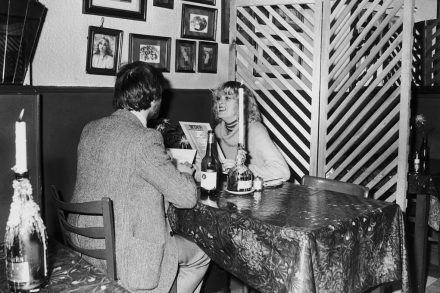
Recently, I got dumped by a woman I was crazy about. To cut a long sob story short, here I am 67 years old and facing the future alone. Gulp. Dumped. I can’t believe it! ‘Dumped’ has to be the most brutal word in the lexicon of love. To me it evokes a black garbage bag full of steaming excrement, wherein your bleeding heart lies, still beating. Anyway, I’m taking my date to the West End to an old-fashioned, dimly lit cocktail bar, the kind where wise-cracking metropolitan sophisticates once sipped martinis and smoked cigarettes to the sound of cool jazz. What’s my dream date? It goes something like this. I’m sitting in an elegant and quiet hotel bar opposite the most beautiful, intelligent, sexy and funny woman in the world. I’m not my normal self, thank God.

date

I was on the floor in ’74

Canadian schlockmeister Bryan Adams, born within a fortnight of yours truly, waxed profitably wistful over his Summer of ’69, but I shall extol, for rather less remuneration, the Autumn of ’74. The goad is my editing of the newly published Congressional Journal of Barber B. Conable, Jr., 1968-1984. I was honored to undertake the task; the late Mr Conable, with whom I became friends, is without question the greatest public man to hail from our boondock. Selected on different occasions as the most respected member of the House of Representatives, the Republican Conable had among his many quirks a refusal to accept campaign contributions greater than $50.

conable

The peculiarly American attitude toward change

Future historians will marvel, if history is not abolished and historians themselves canceled — or worse — before then, how so many Americans at the end of the 20th century and the beginning of the 21st came so suddenly and with apparent certainty to believe in such human and scientific impossibilities as homosexual marriage and the multiplication of the two biological sexes into a unlimited number of them; the ability as if by magic to transform a man into a woman and a woman into a man, and for a man to give birth to a baby; the possibility for Homo sapiens to exert direct control over the terrestrial climate, as if the earth were a suite in a luxury hotel; and other manifest absurdities.

change

The rational meaning of ‘surd’

Lewis Carroll, in his Phantasmagoria, and Other Poems (1869), constructed a poem that yielded a double acrostic, with the first and last letters of 13 words that were suggested by the 13 stanzas spelling out ‘quasi-insanity commemoration’, a reference to an Oxford commemoration ball. The first stanza, which yields the word quadratic, goes: ‘Yet what are all such gaieties to me/ Whose thoughts are full of indices and surds? x2 + 7x + 53 = 11 / 3.’ What, though, is the solution to the equation? I have seen it said that there is none, unless a minus sign is placed before the 53. But then it wouldn’t scan, and Lewis Carroll liked regular scansion: 11 / 3 is to be pronounced ‘eleven thirds’, not ‘eleven over three’.

surd

Perudo in Utah

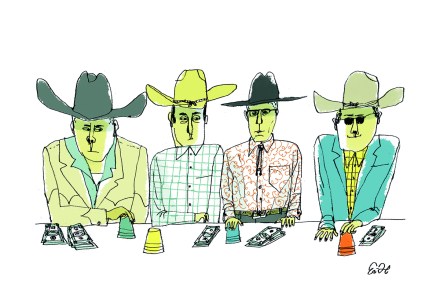
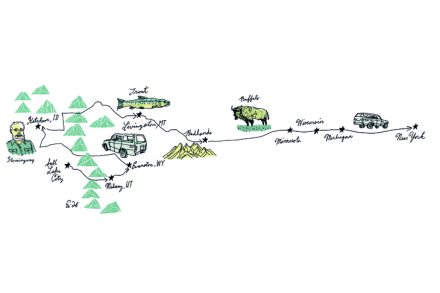
I’m two miles outside Wanship, Utah, at a remarkable new hotel called The Lodge at Blue Sky. I’ve just met my host in the bar, a bear of a man called John Tuffman, or ‘Tuff’, as I’m told to call him by his assistant. Owing to my delayed flight, we’re running a little behind schedule. ‘Down the hatch’, he says, nodding to my beer while he repositions his Stetson. We climb into a car and are driven up to the barn. A few weeks ago, I received an email which I had every right to believe was a scam or an elaborate catfishing attempt. It was an invitation from an events company in San Francisco to appear as the World Perudo Champion at an executive retreat in Utah. At 6 p.m.

perudo

I’m back for the Almanac

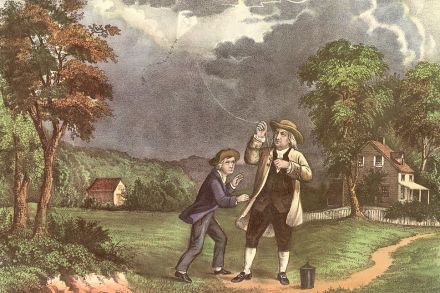
Growing up in Weston, Connecticut I remember well a little pamphlet that hung over the shelf in the garden shed, attached to a nail by a string threaded through its conveniently predrilled hole. The pamphlet was well-worn and covered with my father’s dirty fingerprints as he often consulted it. A new one replaced the old one every year. The cover always had a cameo of Benjamin Franklin, its first publisher. The title was The Old Farmer’s Almanac, and my father swore by it. As did several million other Americans, who wanted to be guided in the ways of gardening, know what to expect weather-wise for the year and find out about new seeds and ways to get better harvests of existing crops.

almanac

Bog bodies: mysteries of the Iron Age

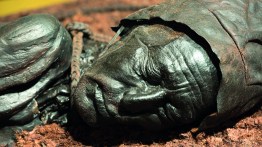
Some believe All Hallows’ Eve (October 31) is adopted from a much older Celtic holiday, Samhain, that marked the change from harvest’s richness to the darkness of winter. In its modern guise, Halloween still retains something of that pagan philosophy — a time when the borders between the living and the spirit world are supposed to be at their weakest. For our pre-Christian ancestors, this sense of the in-between was felt not only in the mulchy decay of autumn but in the land around them. Bogs were an in-between space for Iron Age Europeans. They thought that these muted open wetlands, with their sodden pools of still black water, exposed an opening to some other realm.

bog

The link between spick and span, spanking and spoon

I ‘hoovered’ on Saturday (as we say in Britain for vacuuming) while my husband was out ‘exercising’. I don’t know whether he attracts dust, like a piece of amber, or produces it, as if by spontaneous combustion in slow motion. Anyway, when he settled in his chair again, he ran his finger rather annoyingly over the table next to him and said encouragingly: ‘Spick and span.’ It’s a curious expression, since neither part seems to have any meaning on its own. The table wasn’t spick. Nor was it span. The earliest known use of the phrase is by Thomas North in 1571, in his translation of Plutarch’s life of Aemilius Paullus, called Macedonicus not because he came from there but because he beat the Macedonians in battle.

spick

Americans, London needs you

‘Nobody wants to admit it, but London was boring even before the pandemic — and it’s still boring now!’ I said. We were at a London drinks party. The guy retaliated with a smirk and that old Dr Johnson line, ‘He who is tired of London, is tired of life.’ ‘No,’ I said, ‘I’m not tired of life — I’m tired of people who always quote Dr Johnson when you make some slightly disparaging remark about London!’ I dislike that Dr Johnson quote because it assumes that you can’t be genuinely tired of London; your discontent must be due to your own boring, miserable life and not because London has become an overpriced, culturally exhausted and soulless city — which it has.

London

Modern English

The English language as written today is often nearly incomprehensible on first reading, and as spoken almost unintelligible and unpleasant to the point where the civilized listener disengages himself in frustration and disgust from the speaker and his speech. The problem in the first instance is the readiness of people who know better to embrace demotic usage in semi-formal literary venues, such as respectable journalism; the second, the bizarre combination of pretension and illiteracy and its results, the jargon and barbarisms ubiquitous in the 21st century.

English
names

What’s in a name?

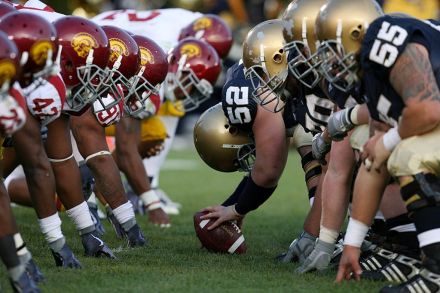
’Tis a ritual of late summer, fitting somewhere between tossing the last of our CSA-farm kohlrabi into the compost bin and the first pit forming in my stomach when I contemplate the beginning of a new school year — even though my shade hasn’t darkened a classroom door for many a decade. I refer to my purchase and mirthful reading of the Athlon Sports college football preview magazine, which retails for a cool $11.99. First thing I do is check the forecast for the trio of teams I have pulled for since I first laced up (and tripped over) cleats: Brigham Young (though I am not Mormon), Army (though I am a pacifist) and Notre Dame (though I am a piss-poor Catholic). Next I pour myself a tumbler of rotgut and settle in with the names, these glorious names.

Rules for anarchists

Anarchists have gotten a black eye over the past year, what with the antisocial cretins of antifa laying claim to a name that befits them as illy as ‘artist’ does Hunter Biden. It’s reminiscent of the late 19th century, when the A-word, which accurately described promising ventures in mutual aid and voluntary cooperation, was besmirched — and how! — by the disturbed Leon Czolgosz, who assassinated President William McKinley in Buffalo, thereby casting a serious pall over the Queen City’s Pan-American Exposition and escorting into the White House the bloodlusting Teddy Roosevelt, whom novelist Henry Blake Fuller derided as the ‘Megaphone of Mars’. American anarchism has always been a literary conceit more than a political (or anti-political) program.

anarchists

The importance of formality

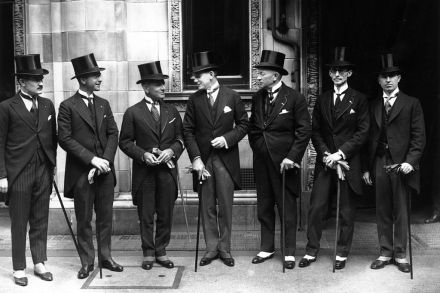
Over the past six decades Homo sapiens occidens has grown progressively more informal in matters of clothes, language, speech, manners and social behavior to the point where, having lost any form whatever, it has devolved into Homo slobus, and democracy into slobocracy. This departure from formality has occurred across every class of society and every occupational and social category — politics, corporate business and finance largely excepted — including what remains of high society, private schools and clubs, and the churches. The lockdowns that followed from the pandemic contributed immeasurably to an already precipitous momentum.

formality

The language of lounging around

At the Austrian embassy in Naples, a German diplomatist asked the great beauty Madame de Ventadour if she had been in the Strada Nuova that morning. ‘What else have we to do with our mornings, we women?’ replied Madame de Ventadour. ‘Our life is a lounge from the cradle to the grave.’ How true. The observation comes in Bulwer Lytton’s novel Ernest Maltravers (1837). I was put in mind of lounging by video conferencing, which allows conferees to attend to their visible top half while wearing lounge pants below. I wasn’t too sure what lounge pants were. I don’t wear them and my husband certainly doesn’t.

lounge

The straitened situation of conservatism

For the past seven and a half decades Western politicians have been exhorting voters to ‘believe’ or ‘have faith’ in democracy. They should have been addressing themselves instead. The unpleasant truth is that 20th- and 21st-century politicians on the right have never believed that constitutional democracy based roughly on the American model could ever satisfy the masses by giving them the material loot and freedom they expect, while those on the left have always thought it does not go far enough in granting themselves the power and authority they require.

conservatism
cruiser

Cruiser control

I’d been looking for well over a year for what I consider to be the most perfect Japanese-made piece of Americana there is. Scouring the internet on any given day turns up maybe 15 or so available, most in various states of disrepair. It’s the object of desire for most any red-blooded millennial male that salivates over things like dive watches and waxed-canvas jackets. The Toyota Land Cruiser FJ60. When the COVID pandemic hit, the used-car market exploded as city-dwellers looked for ways to escape a dreary existence in 500-square-foot apartments. What do you do when you can’t be inside? Load the family into the cruiser and head west, of course. National parks saw record-setting numbers of visitors.

What’s the difference between ‘gifting’ and ‘giving’?

Boris Johnson, Britain’s Daily Telegraph newspaper suggests, is understood to have a personal interest in rewilding, ‘recently gifting his father beavers to release on his own Exmoor estate’. I started at the word gifting like a horse shying at a plastic bag caught in the hedge. Why didn’t I like it? My first thought was that there was a perfectly good word, giving. My second was that gifting is an obtrusive case of verbing a noun. Thirdly, it belongs to a kind of speech adopted by copywriters for luxury cruises and retirement homes. In 1996, Robert Burchfield in The New Fowler’s Modern English Usage said that gift as a verb was ‘best avoided’, as it had fallen out of favor with speakers of standard English.

gifting

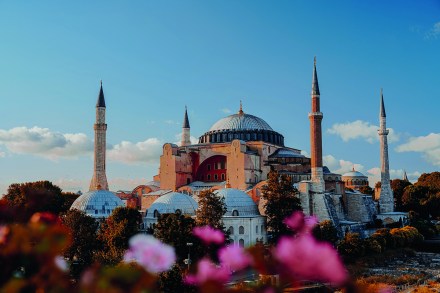
Walking to Byzantium

I decided to walk from Athens to Byzantium — Constantinople, the medieval Queen of Cities, lately Istanbul. I had a little red tent and a vision of noble penury that evoked the ghosts of Cyriaco of Ancona (d. 1452) and Paddy Leigh Fermor (d. 2011). My girlfriend said she'd join me later. The lines that now smudge my map look more like the flight of a woozy bluebottle than the traces of a man with a plan. My earliest memories of the trek are melancholy.

Byzantium

The error of idealism

‘He who is not a republican at 20 compels one to doubt the generosity of his heart; but he who, after 30, persists, compels one to doubt the soundness of his mind.’ Thus spake M. Anselme Polycarpe Batbie, a 19th-century French academic jurist whose sentiments, variously phrased, have also been attributed to John Adams, François Guizot and Georges Clemenceau. A generous heart and the ability to learn from experience are very good things, certainly. An even better one is common sense: a native attribute that age does not diminish. Mencken claimed that he had never changed his mind on any matter of importance. Donald Trump said in regard to John McCain that he preferred war heroes who didn’t get captured. Myself, I like thinkers who were right from the beginning —and stayed that way.

idealism

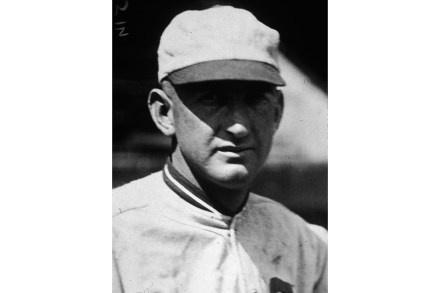
In the footsteps of Shoeless Joe

A visit to another state should be prefaced by reading one of its poets, so for a trip to Greenville, South Carolina, I chose Henry Timrod, the poet laureate of the Confederacy, over Hootie and the Blowfish. ‘Cling to the lowly earth, and be content!’ commanded Timrod, a favorite of Bob Dylan’s. The Nobelist borrowed a few words (‘along yon dim Atlantic line’) from Timrod for ‘Cross the Green Mountain’, an eight-minute Stonewall Jackson-flavored masterpiece he wrote for Ron Maxwell’s Civil War film Gods and Generals (2003). Dylan, an equal opportunity sampler, also filched lines for the song from ‘Come up from the fields father’ by that barbaric yawper of the Union, Walt Whitman.

shoeless