Life

The grievance games of the left

In the first week of October 2022, Jean-Luc Mélenchon, France’s perennial man of the Marxist left, former leader of La France insoumise and present chief of Nupes (Nouvelle Union populaire écologique et social), an alliance of hard-left, left and green parties, invoked the jours d’octobre that commenced on October 5, 1789 with the Women’s March from the Parisian marketplaces to Versailles and ended with the more or less forced departure of the royal family for the capital city in the early morning hours next day after several members of the Palace guard had been decapitated and their heads impaled on pikes. It is unclear what that revolutionary year, and the events of October 5-7, have to do with twenty-first-century France.

revenge

An LA adventure

For years I have read the likes of Raymond Chandler and John Fante and rewatched Chinatown in preparation for our occasional sojourns to Los Angeles (my wife is a native Angelena), but after the stupefaction induced by our last trip, I chose Charles Bukowski, the flophouse poet of hangovers, for our first post-Covid invasion. “Los Angeles is a Cross, and we all hang here, stupid little Christs,” wrote Bukowski in a 1967 letter. That line seems off to me, self-consciously poète maudit, but I always cut poets of place a break.

Los Angeles

With the vintage car enthusiasts at Lime Rock

There’s nothing like the sound of automobile engines at wide-open throttle, whirring by like a squadron of World War Two fighter jets in dive-bomb mode. But at the Lime Rock Park racetrack, the adrenaline-pumping hum is made even more riveting by the fact that you hear the overture of baritone bees before you see what’s making it. Lime Rock is in northwest Connecticut, “between Boston and New York City and is easy to access from all points in the Northeast.” That’s what the website claims, though in my experience, no place between Boston and New York City is “easy to access.” The site is right, however, in saying, “An essential part of the Lime Rock Park experience is the journey here.

lime rock

I was upstaged by Jordan Peterson

I’ve been inviting friends to my book launch and have gotten all sorts of reasons why they (“sadly”) won’t be able to attend: away on holiday, work commitments, family obligations, etc. But the most interesting reason for not coming to my book launch is one a very old friend gave me: “That’s the night I’m having dinner with Jordan Peterson.” “What?” I asked incredulously, “Are you going to dump me and my big night for dinner with Jordan Peterson?” There was a long pause before my friend said, “Ahh... let me get back to you on that.” This conflict of interests — me versus Peterson — poses an interesting moral and philosophical question for my friend and for all of us: what are the duties and obligations of friendship?

Peterson
british

The brilliance of British civilization

The day after the death of Queen Elizabeth II, I received a note from a friend in the Midwest asking whether I thought the British monarchy would survive her by more than a decade. I replied that of all British institutions the monarchy is the strongest — and that I expect it to last as long as Britain herself. Everything I witnessed in the week after the Queen died seems to me to justify this judgment, in particular the conduct of King Charles III, about whom my friend was skeptical. The events also confirmed my lifelong opinion that British civilization is the finest the world has ever seen; so fine, indeed, that I suspect that the citizens of most countries today are unable to appreciate the nature of its greatness, and how it came to be great; Americans, perhaps, especially.

A seaplane out of Manhattan

In the awfulness of LaGuardia Airport, the small 1939 Marine Air Terminal stands out as a reminder of earlier and better days. Today it is arguably the oldest American airport terminal in operation. Shuttered for decades, the building was resurrected by the Pan Am Shuttle in the 1980s, then the Eastern Shuttle, then the Delta Shuttle, and most recently JetBlue. Here was a terminal made for commercial aviation before the age of the “airbus.” You might miss the Daily Planet details of the main hall if you only pass through the side door. Designed by William Delano of Delano & Aldrich, the terminal connects the classicism of the Beaux-Arts with the thrust of Art Deco.

seaplane

Trapping gators in the Everglades

When the mugginess of a northeastern summer begins to oppress your spirits, there’s only one thing to do: convince yourself the grass is greener — or safer, at least — on your side by heading to a place where people have it even worse. For me, that was the edge of the Everglades in August, where not only does standing outside for more than a minute challenge the fortitude of your every pore, but an alarming number of the residents want to kill you. Invasive cane toads ooze sticky white goo that’s lethal to pets and highly toxic to humans. Venomous rattlesnakes slither undetected through dense vegetation. There are even black bears — who knew bears lived in Florida? — that can be troublesome.

alligator

How I learned to stop worrying and love self-promotion

I have a new book coming out this month and it’s called Jack and Me: How Not To Live After Loss. Not long ago, I would have been too embarrassed to give my book such an obvious plug as that. But that was the old, reticent, self-deprecating me who didn’t feel comfortable engaged in acts of blatant self-promotion. Now that me is dead. Meet the new me: the shameless, self-promoting media slut that I’m trying to become. It’s hard to believe that there was a time in London society when the pursuit of publicity and self-promotion was considered rather vulgar and regarded as an American practice that no classy English person — especially an English writer — would ever stoop to. (Of course, they did it all the time.

self-promotion

Keeping Syracuse time

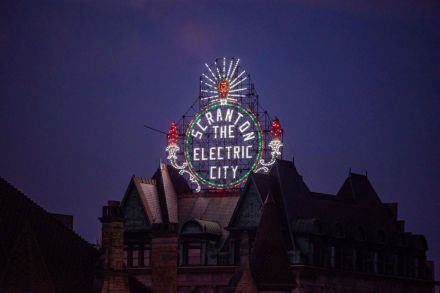
I have my flaws, but I do know how to treat a lady. Five years ago, for our thirtieth anniversary, I took my wife to a nineteenth-century mental hospital. (We didn’t check in.) This year, to celebrate her birthday, I showed her a traffic light — and as a lagniappe, we gandered at a clock, too. It’s not quite as quotidian as it sounds. Well, maybe it is, but now that I’ve got you on the line, let me tell you why we drove two hours to Syracuse, the Salt City, to inspect a pair of everyday sights. First, the light. In 1925 or thereabouts, the city of Syracuse installed a traffic signal with green on top and red on bottom in the Irish neighborhood of Tipperary Hill. This was done at the behest of an alderman surnamed Ryan. A proud Paddy politico, apparently.

Syracuse

The slumber of the Anglosphere

The countries we call Anglo-Saxon (Great Britain, the Commonwealth and the United States) have been known for centuries for their ability to govern themselves democratically, peacefully and efficiently. In the twenty-first century they have been doing less well. Britain and America are both in dreadful straits politically, economically and socially. The implosion of Boris Johnson and the search for a satisfactory successor have revealed the leadership of the Tory Party as a hapless and embarrassing collection of mediocrities devoid of coherent ideas. Across the Atlantic, one of the two major parties is a gerontocracy at the top and a gang of urban guerrillas with Molotov cocktails at its base.

anglosphere

Spain’s caminos come calling

I haven’t come close to dying of thirst in Texas, where I live. In Spain’s little-known Extremadura, however, I found the odds increasing. Wandering through wide-open scrubland in hundred-degree temperatures, my only company was lots of Spanish bulls, unfazed by the blistering heat as I sweated my heart out. The population of Extremadura has been sparse since the Muslim occupation, but there are plenty of cattle. As I headed north from Seville on the Via de la Plata, the latest leg of my extended Camino de Santiago pilgrimage crisscrossing the Iberian Peninsula, Extremadura struck me as remarkably like Texas ranching country.

spain

From Moscow to Kyiv and back again

During the best of times, I left New York for gonzo journalism in Moscow; and during the worst of times, I fled a jingoistic wartime Moscow for the post-Covid euphoria of a resurgent New York City. My life in a sense has come full circle: I left New York for Russia in my freewheeling, bohemian twenties in search of future adventure and returned in my fifties when the rose-tinted dreams of the future that fueled Russia’s hedonistic capital were snuffed out in a murderous rage. That rage of a crumbling empire also engulfed lovely Ukraine in flames, battering its gorgeous capital Kyiv, where I had spent a blissful decade. With two of the three cities that I had called home caught up in a fratricidal zero-sum war, New York is once again King of the Hill.

Moscow
famous

Getting in touch with my inner groupie

I like to think that I’m too intelligent, too sophisticated and too cultured to get excited by the presence of a famous person. Let the manipulated masses enjoy the bread and circus of celebrity; we enlightened members of the metropolitan elite are far above that sort of thing! Or so we like to think. Whenever I encounter the famous, something very strange happens to me: I go all groupie. I get excited. I giggle. I inwardly drool. I long to please. I want to be their new best friend. I want to tell all my friends about meeting my famous new friend — who isn’t actually my friend, but never mind. I was reminded of my groupie tendencies the other day when I went to the Idler Festival, Britain’s best arts and literary festival. I usually hate those sorts of events.

niagara

The downfall of Niagara Falls

If ever I pee on the grave of an American it will be that of Robert Moses, the highwayman whose roadbuilding and neighborhood-obliterating projects in New York City and New York State threw half a million people out of their homes, as Robert Caro estimated in his biographical masterpiece The Power Broker. To those who had the temerity to object to their ejection, the monster Moses hissed, “When you operate in an overbuilt metropolis, you have to hack your way with a meat ax. I’m just going to keep right on building. You do the best you can to stop it.” So it was with teeth gnashing that I drove down Robert Moses Parkway in the city of Niagara Falls, New York, en route to the annual Armenian festival at St. Hagop Armenian Apostolic Church.

politicians

Politicians are not ‘just like us’

Kenneth Minogue, the political philosopher from Down Under, devoted a career to the wholesale destruction of liberalism as a political, intellectual and moral system without liberals having ever noticed the fact. A decade ago, he observed that we now refer to our democratic rulers by their Christian names — Bill, Hillary, Barack, Joe, Boris and so on — as casually as we do baseball players, television anchors and rock stars. The casualness of the age is not a wholly sufficient explanation of the practice. Democratic politicians, American ones especially, have had nicknames attached to them by their constituents for at least two centuries: Little Jemmy, Old Hickory, His Accidency, Uncle Abe or the Tycoon, Old Rough-and-Ready, His Fraudulency and Amtrak Joe among numerous others.

My Tina Brown fantasy

I met my first wife at a party. I met my second wife at a party — and I’m convinced that I will meet my third wife at a party too. As I write, London is awash with parties, so my chances of finding my next wife are looking good. So far, I’ve met a sweet, bisexual marine biologist, a German curator — I’m not sure of what, but then everyone is a “curator” these days — a beautiful art critic who is famously bad in bed and one living legend. Her name is Tina. Tina Brown. Yes, that Tina Brown. Younger readers might be scratching their heads wondering: who’s that? (That’s like when young people say, “who are the Doors?”) She was the editor of Vanity Fair, the New Yorker and Talk magazine. (Gen-Z readers will be wondering: were they bands too?

tina

The selfishness of rich socialists

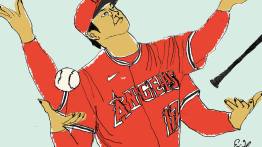
God damn this virus! It’s not so much that I mind the coughing — as a schoolboy I heard every mock-hacking variant of “Cough-Man” — as that Covid’s wretched timing caused me to miss Opening Day for baseball’s Muckdogs for the first time in decades, as well as the premiere of Brothers at Odds, a play about our town’s eccentric nineteenth-century Brisbane family, whose manse faces an uncertain future. I did catch the second performance of both play and ballclub, though, and I can report that greed, bigamy and utopian spider webs are as American as balks and catcher’s interference. Albert and George Brisbane, the titular siblings, were less Cain and Abel than Vain and Stable.

modernism

From modernism to totalitarianism

The modernist movement in the arts got underway around the start of the last century, encouraged by Ezra Pound’s exuberant exhortation to “Make it new!” Somewhat less attention was paid to making it good, as if what was new was inevitably good — better, indeed, than everything that had come before it. Barrels of printers’ ink were expended on the subject in the so-called “little magazines” of the period on both sides of the Atlantic, not all of it wasted; much of the relevant critical commentary was very intelligent and interesting indeed. Modernism as a concept and an aesthetic was less successful in music, painting, the plastic arts and architecture than in literature — though again, some of the work it inspired was very good.

The death of the ladies’ man

There used to be a tiny elite of men in London who, whenever their names came up at a dinner party, people would say, “Oh him! He’s slept with everyone!” Women would laugh — and then confess: yes, they had too. In those days they spoke of these men with great affection and even admiration. They were seen as lovable lotharios; incorrigible and irresistible. Men like me, racked with envy, would sit silently with forced smiles on our faces wondering: how did they do it? These men weren’t necessarily great-looking, super-successful or rich. They didn’t have charisma or much charm either, and yet they dated one beautiful woman after another. (One of these men dated both the young Rachel Weisz and Gillian Anderson.) What did these guys have that we didn’t?

lothario