Food and Drink

The best bargain burgundies

Apropos the subject of this column, videlicet, wine, a friend told me an arresting story about the once-famous British theater critic and playwright Kenneth Tynan (1927-1980). Sometime in the 1960s, when the prickly Gamal Abdel Nasser ruled Egypt, Tynan went sailing on the Nile. One night, he came ashore to enjoy dinner at the Luxor Hotel. The wine list was impressive. He ordered a famous bottle that cost practically nothing. The head waiter swept over to tell him, so sorry, they’d drunk the wine out. Tynan manfully looked again at the list and asked for the second best bottle. Alas, the waiter replied, that wine, too, had been exhausted. “Well, what do you recommend?” Tynan asked. To which the answer was: “We have no wine of any kind.” That hasn’t happened to me yet.

Burgundy

Eric Trump is storming the cider industry

When a name as famous as “Trump” is smacked on the side of a bottle in dazzling gold letters, one might be forgiven for assuming that whatever lies within is the product of too much money and too much time. All the gear, no idea, as they say. Yet in Charlottesville, on a pretty magnificent 1,300-acre estate, Trump Winery confounds expectations – thanks largely to its master wine and cider maker, Jonathan Wheeler. Jonathan has watched the winery’s tumultuous history unfold with the sort of resilience that would make a diplomat blush. The saga began with John and Patricia Kluge, who briefly enjoyed the distinction of being America’s wealthiest couple until a certain Bill Gates took their crown in the early 1990s.

drink

What your choice of drink says about you

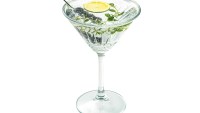
In my early twenties, nothing felt more sophisticated than drinking a French 75 at the bar. No matter that it went down like a piece of sour candy: ordering it made me feel like a real lady, a grown-up woman who knew what life was about. It was a cocktail with history, two kinds of alcohol and – most importantly – I felt it imbued me with the aura of a dame in a film noir. It was fun but classic; stylish without being too obviously trendy. Not try-hard like Carrie Bradshaw’s worldly Cosmopolitan. Certainly not like ordering a Martini. Even I knew that ordering a Martini at age 21 would have been an affectation. No, a French 75 was the perfect cocktail for me. I knew my place. Not much has changed since then.

Le Veau d'Or

The wait is worth it at Le Veau d’Or

The story of the golden calf is preserved in Exodus 32. Moses had gone up into the mountains to see a man about the law. He tarried. The people grew restless. Eventually they turned to Aaron, Moses’s elder brother, and said, “How about it?” Aaron could see trouble brewing as well as the next chap. “There’s lots of gold in them there earrings,” he said, looking around at the multitude. “Give me the gold and I’ll make you something to worship.” Hence the golden calf, which the people rallied round, much to the irritation of Moses and the higher authorities when they caught wind of it.

‘I don’t build new restaurants’: an interview with Tyler Florence

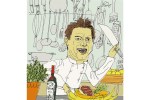
As a child, the chef and television host Tyler Florence had 42 different listed allergies. It wasn’t until he was 13 years old that he tasted melted cheese for the first time. “I had a very weird early diet. I could only eat and drink things like salmon, lentils, goat’s milk.” As a teen, he finally outgrew the allergies and tried foods most kids had been eating their whole lives. “It was like an explosion – all the flavors and the textures. I couldn’t get enough of it.” His first job was as a dishwasher at the Fish Market restaurant in Greenville, South Carolina. “It was the nicest restaurant in town. All the waiters had tuxedos and cummerbunds. It was the 1980s, so there were pink tablecloths and fish tanks in the dining room.

zucchini

My zucchini seedling scheme

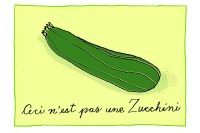
Véronique arrives 45 minutes late, a vision of practiced nonchalance and rustic affectation in a loose-fitting linen smock dress, clutching a wicker basket suspiciously devoid of wear. She regards my zucchini seedlings with mild distrust and incredulity, the way the French eye giant Spanish strawberries when they first start appearing in the local supermarket. The plants’ robust stems and glossy leaves look almost too healthy, especially given their minuscule nursery pots. Something is amiss. “C’est bio, ça?” she asks, though her tone suggests this isn’t really a question –more an ideological verbal tic than a genuine inquiry into my choice of potting mix. “Ben oui!” I smile with the practiced ease of a man who has told this particular lie many times before.

I tried the world’s worst drink

I am standing in a sunny courtyard in the little town of Gijduvan, waiting for a drink. Just in case you don’t know, Gijduvan is a way station on the old Silk Road, in the far west of Uzbekistan: it is known for ceramics, Sufi mystics and loud celebrations of the Persian spring festival, Nowruz. As part of this festival, the locals make a special soup/beverage called sumalak. The recipe, I’m told, dates to Zoroastrian times – more than 3,000 years ago – and includes “wheat sprouts,” “cottonseed oil” and, I am not joking, “stones.” I can already see the sumalak bubbling away in a vast steel pot. It looks like viscous brown cow slurry. To be honest, I’m not brimming with eagerness.

drink
jam

The joy of preparing freezer jam

July, and the morning sun blazes over fields of pick-your-own strawberries. The black bears scope out the blueberry patches in the national parks. Skin-destroying raspberry canes trail across the path, ready to spring out and scratch the faces of passers-by. The berrying season is upon us: scratched faces and stained clothing are on the cards. Have you ever seen a child pack a handful of wild raspberries away into a shirt pocket for safe keeping? I hope so. It’s one of the joys of life. Their faces, on seeing the inevitable results, are completely worth the ruined outfit. However, if you don’t have any young relatives to cheer you up with their berrying misadventures, pick-your-own farms aren’t just pick-your-owns but pick-me-ups.

seafood

The decadence of seafood towers

Whether or not it is your intention to see and be seen, you cannot avoid the latter when you order a seafood tower. I can say this definitively, having experienced one side more than the other – the mere glimpse of a spire of glistening seafood floating through the brasserie will not only draw the attention of fellow diners, but stir up burning envy in their hearts. The seafood tower takes the experience of eating an oyster and scales it up tenfold into an exercise in excess, sometimes three or more tiers high.

shooting

Wine highlights from a weekend shooting party

Do you know Charlotte Mulliner’s charming poem “Good Gnus”? It was transcribed by P.G. Wodehouse in his short story “Unpleasantness at Bludleigh Court.” I went shooting with friends last weekend at a magnificent rural fastness in a semi-secure, undisclosed location near Millbrook, New York. Although we were shooting clays, not pheasants or other fauna, the opening of “Good Gnus” nevertheless floated into my mind like a tocsin with its irrefragable psychological insight.

The oyster is your world

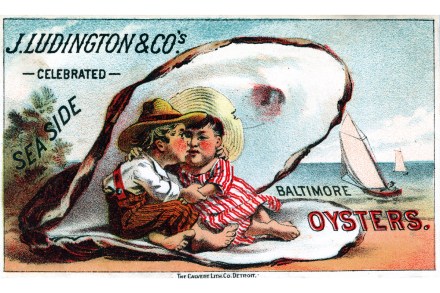
Oysters have recently achieved near-meme status as one of several “pick-me” foods alongside the dirty martini, pickles, tinned fish and other briny staples popularized online by Gen Z. These foods are noted for their slightly polarizing air – expressing a preference for them communicates an evolved palate, a niche preference, a willingness to see past an aesthetically questionable facade (the bumpy pickle, the barnacle-encrusted oyster). However, unlike its fellow “pick-me” travelers or its late, meme-ified millennial predecessor, avocado on toast, the oyster itself cannot be readily dismissed as a passing fad.

oyster
flowers

The allure of edible petals

Saying it with flowers used to be the thing – now we’re serving it with them. Edible florals have become quite the fashionable choice. There will be geraniums in your salad, lavender in your latte and hibiscus in your chocolate. Meghan Markle is making floral ice cubes, Jeremy Salamon is infusing his homemade vinegar with chamomile and Jamie Oliver is mercilessly pickling magnolia petals. There’s a Michelin-starred food joint-slash-florist in New York City, Il Fiorista, where you can get your favorite blooms stewed, baked, boiled or fried. The cocktails are swimming with garden truck, nasturtium leaves dye the buttermilk green and you could once, at any rate, lunch on sliced lotus root dusted with pine pollen (which sounds like a recipe for a positively Homeric sneeze).

Montana

The highs and lows of Montana’s state fair

There isn’t a lot for a kid in Montana to do in summer. School’s out and the heat is relentless – so stifling that the only real escape is the cool embrace of the fruit and vegetable aisle at Albertsons. By July, my hometown’s lone waterpark was overrun with feral, overweight preteens, their bellies jiggling as they stampeded across the scorching cement. After an overpriced afternoon at the waterpark, many of these kids would head to McDonald’s for dinner. The more upmarket option was to try to exploit a family with a country club membership. The fast food there is classy; quick but not greasy – think mini tacos and peppery chicken strips served with a petite white cup of ranch on the side. But down the highway are the real fast-food joints.

beaujolais

Beaujolais is the ideal summer wine

It’s been a while since we have traveled to Beaujolais, that ancient wine growing region along the Saône River north of Lyon. Since summer is nigh, it’s time for another visit. Beaujolais is an ideal summer red wine. It is almost always made exclusively from the Gamay grape, a cross between Pinot Noir and an ancient white varietal called Gouais. It is light, flowery, full of pleasing acidity and fruitiness, satisfying by itself and notably food friendly. Of course, anyone who writes about Beaujolais these days has to begin by issuing a little advisory, like the Surgeon General’s warning on packs of cigarettes and certain medications. A few decades back, Beaujolais was plagued by scandal.

The joy of French school lunches

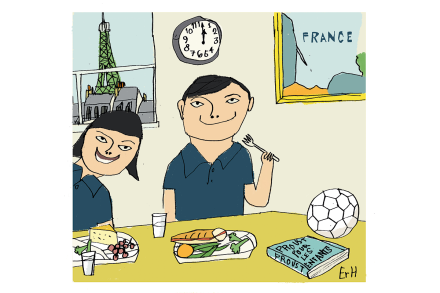
Since moving to France, one of my greatest pleasures has been rushing to pick up my two grandchildren from the tiny schoolhouse in the village of Monthelie. I can’t wait to hear about what they had for le déjeuner. Le déjeuner scolaire, a three- to four-course lunch, subsidized by the government, is sacrosanct. The French even have a phrase for socializing and eating together: la commensalité. They know that “a family that eats together, stays together.” I remember when America, where I used to live, understood that, too. Rarely do you see the French eating lunch or dinner alone in restaurants, bistros or cafés. The exception is for une pause café or morning coffee, when the French do prefer to be alone with a croissant, newspaper and quite possibly a cigarette.

salmon

The beauty and complexity of salmon

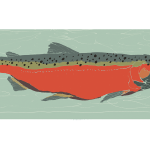
Britain’s most popular fish comes with batter, not scales – but America can virtuously say its favorite fish is salmon. Salmon and tilapia, according to AI, but you must never take AI at face value. Nor tilapia, for that matter. Stop me if I’ve already recounted the sad tale in these august pages, but I once – disastrously – tried to serve my relations tilapia. I bathed it in lemon-butter sauce, sprinkled chopped garden-fresh chives on it and nestled it among roasted tomatoes, olives and little baby potatoes in their skins. I even called it whitefish. I really gave it a fair shot. But pointed questions quickly came sailing toward me. What is this fish? What do you mean, tilapia? Where does it live? What does it eat? What are its desirable attributes?

The Sazerac: an old favorite… from New Orleans

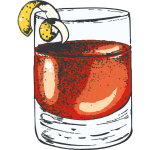
As the Super Bowl rolled into New Orleans, with Kendrick Lamar and his flared jeans in tow, I was thinking about the many contributions that this small Louisiana city has brought to the cocktail bar. There’s the creamy green Grasshopper, the French Quarter’s whiskey-based Vieux Carré, the tropical rum punch Hurricane and, of course, the comically difficult Ramos Gin Fizz – which blooms up in a tower of egg-white froth. But perhaps the oldest, most widespread and most conventional is the Sazerac: it is considered one of America’s oldest cocktails, having been served in New Orleans from the late 19th century.