Food and Drink

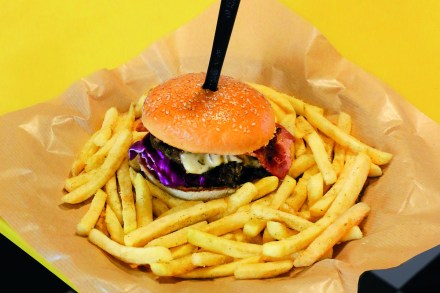
The man in the White Castle

The world’s first fast-food restaurant chain. The first to sell over a billion hamburgers, to invent the carry-out and to offer discount coupons in the newspapers. Jewel of the American Midwest. Celebrating its centenary. Better burgers than McDonald’s, according to Consumer Reports. Still run as a family business. Some 377 US locations, and growing. Obsessively loved by some, faintly ludicrous to others with its trademark enamel-glazed, faux-brick architecture and miniature square patties, White Castle is the Rodney Dangerfield of greasy spoons. It gets no respect.

white castle

The need for mead

I used to be terrified of homemade alcoholic drinks. Someone would bring out the elderflower champagne at a picnic, and I’d wave it away: ‘I’d love to. But I’m driving...’ Bottles of homemade cabernet would be pressed on me with irrepressible warmth at Christmas time; I’d accept them with a lying smile on my lips and an inward resolution to boil the contents for seven hours with sugar, oranges and cinnamon sticks and fob it off on guests as mulled wine. And for my narrow-minded ways I now repent. As I must, because with maturity comes the realization that, as Solzhenitsyn said, there is no us and them. The line dividing good from evil, the poised socialite from the homemade-liquor inflictor, cuts through the heart of every man.

mead

The dark side of energy drinks

I’m trying to cut down on energy drinks. I know, that’s a rather pathetic undertaking compared to going sober or quitting smoking. But it is hard. I wade through mental fog, yawning yawns that rival a buffalo’s bellow. Switch to coffee? Yes, I could. But hot drinks are not the same. I like the cold, refreshing quality — and the ring pull’s crack. Perhaps I will give up giving up and just embrace addiction. It’s a small one anyway. That is my defense, but also my confession. We can understand, if not excuse, people endangering their health for the sake of alcohol or cigarettes — but for a caffeinated soft drink? Or perhaps there are darker forces at play here.

energy
CHEESECAKE

My night at the Cheesecake Factory

The most exciting arrival in years on the DC dining scene is coinciding with the end of the pandemic. Not since the launch of the DC Michelin guide has the buzz been as strong. Nestled adjacent to the Old Ebbitt Grill, it’s sure to be a welcome addition to the Power Lunch scene among the Jos A. Bank-clad downtown crowd. Yes, the Cheesecake Factory has opened their new location just a few blocks from the White House. Truth be told, DC being a city full of cynical people who think they live in a West Wing episode and that the height of dining is Cafe Milano, it’s not actually clear to me that DC deserves a Cheesecake Factory. But it brings a level of class, sophistication and culture to the nation’s capital that we haven’t had since Billy Carter.

The green, green wines of Portugal

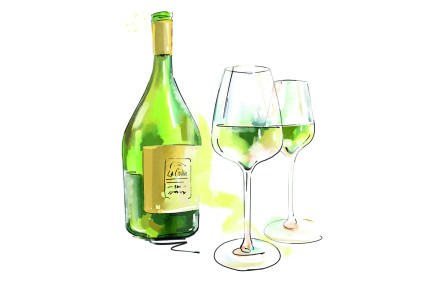
If I am going to talk about summer wines, I am going to have to introduce you to Gaius Plinius Secundus, known to us as Pliny the Elder. Pliny was a busy chap. Army commander and admiral in the Roman navy. Gourmand. Pal of the emperor Vespasian. Pliny did not have writer’s block. He published the first 10 books of his sprawling Historia Naturalis in 77 AD. Despite its title, the book is about a lot more than natural history. Really, it is a sort of proto-encyclopedia. Pliny hadn’t finished revising the rest when he went to investigate the strange things that were happening down at Mount Vesuvius in 79. He died in the conflagration. The chap we know as Pliny the Younger — the elder Pliny’s nephew and heir — was with him.

vinho verde green

I’ve come to love the onion

‘Life,’ Carl Sandburg says, ‘is like an onion. You peel it off one layer at a time, and sometimes you weep.’ Carl, being a poet, was the sensitive type. You’d better believe that when Chuck Norris peels an onion, the only crying comes from the onion. But Chuck’s iron-jawed impassivity isn’t a trait I personally seek to emulate (though one is naturally curious about the type; did you know that when Chuck goes to a feminist rally, he leaves with a freshly ironed shirt and a sandwich?) I freely admit that both life and onions have occasionally brought me to tears. Especially onions. Julia Child thought it hard to imagine a civilization without them, but as a seven-year-old I vigorously disagreed.

Onion
Sandwiches

I miss America’s sandwiches

When I was 16 I told my father I wanted to leave America to go to university in Scotland. His only real concern was the food: ‘I don’t think you know what you’re getting into.’ His run-in with British cuisine was in the 1970s, so little wonder. Sure enough, the food in the student halls of St Andrews was worthy of Oliver Twist. If it wasn’t slabs of fatty gammon, already cold in the tray, it was a tepid, oozing excuse for lasagna, harboring hard lumps of ground beef and grainy béchamel sauce. And then there’s haggis. I loved everything about my four years at the tiny university town on the frigid North Sea coast, except for the food. That all changed when I moved to London, and I have to hand it to them — Londoners do know how to eat well. The world’s cuisine is here.

In defense of decaf

We all have our daily rituals. We’re told they’re a necessity to live a healthier, happier, more productive life. Some pride themselves on an early start, a morning jog, or a half hour spent journaling in their wellness notebook. Not a morning person, I’d be nervous to jot down — and read back — my view of the world at 7 a.m., so I’ve never taken up the fad. But I reserve no judgment for those who do. Why then, is there such judgment about my routine, which every day involves fueling up on decaffeinated coffee? To be fair and objective, I’m guilty of nothing more than ‘fitting in’. Coffee ranks as one of the most popular drinks worldwide, with more than 400 billion cups consumed every year.

decaf

Pahlmeyer’s proprietary perfection

When Jayson Pahlmeyer left the practice of law in the mid-1980s in order to devote himself to winemaking, he said, ‘All I wanted to do was to create my own “California Mouton” — a rich, powerful Napa Valley Bordeaux blend, a wine that would drop wine lovers to their knees.”’ He did it in 1986, the first vintage of his Proprietary Red, a luscious Cabernet blend that won plaudits throughout the world of wine. Pahlmeyer’s Merlot and Chardonnay have been similarly decorated, and I may return to them in a future column. For now, I want to focus on the Proprietary Red.

Pahlmeyer

Can the Mayr diet work at home?

About five years ago, just after my 50th birthday, I noticed that I was extremely fat. Not ‘overweight’, not ‘heavy’, not ‘big-boned’, not possessed of a ‘good sense of humor’; fat is what it was. It was down to a long-undiagnosed medical condition and the attendant medication. It was also down to enjoying food a lot. What to do about it? Like a lot of men, I like a solution. I fundamentally believe that if you have a problem, you just need to find the right expert, who will lift the hood, run a few tests, give you a schedule to follow and it’ll be right as rain. ‘Go to the Mayr,’ a friend said. ‘They’ll put you right.’ And so it was. The Mayr Clinic is a celebrated health farm on the shores of the Wörthersee, a lake in eastern Austria.

mayr diet
clam chowder

The chowder crowd

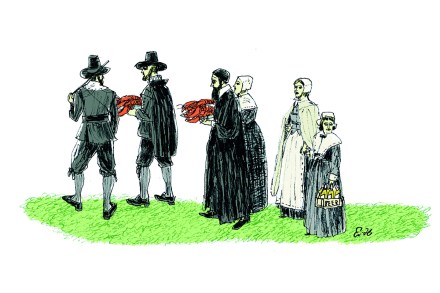
Cape Cod winters are brutal: they are long, freezing cold and windy. Cape Codders don’t know what spring is. The Pilgrims, having first touched terra firma in Chatham after months at sea, headed across Massachusetts Bay for Plymouth to more shelter. Days jump from those when Cape Codders think that Old Man Winter has played a nasty trick on them once again, to days of suddenly delicious warm sun which breaks through feathery skies, filled with what my father Bob called ‘unused air’. One of my dearest memories of spending a winter living in Chatham’s Old Village is of my father, Bob, in mid-May, appearing in his 10-foot skiff putt-putting out of the Mill Pond past our house, wearing his salt-laden floppy hat, heading for Stage Harbor to do some clamming.

A tale of two tapas

In 146 BC, Scipio Aemilianus laid siege to and destroyed the city of Carthage, thus bringing the third Punic War to an end. Scipio made a gift of what remained of the Carthaginian library to the kings of Numidia, Rome’s old ally against Carthage. At the direction of the Senate, however, he held back one book, the agricultural treatise of Mago, which he sent back to Rome. It was duly translated into Latin, but all that remains are fragments, which is too bad, for Mago apparently had a lot to say about many exigent matters, including the cultivation of grapes and making of wine. It appears that it was the Phoenician precursors of the Carthaginians who, around 1500 bc, first planted grapes in the Iberian peninsula.

Tapas bar

Can I be vegetarian and conservative?

My jar of vegan flaczki has been eyeing me for the last four months. It sits in my fridge, large, round and imposing, filled with a lumpy gray mixture. Flaczki is tripe soup, a traditional Polish concoction of broth, herbs, spices, vegetables and guts. Poles adore the stuff. It is warming and hearty. An unimpressed friend once described it as ‘elastic-band stew’. My vegan flaczki contains mushrooms instead of tripe. I bought it for a lark. My Polish friends thought it funny that a modern, progressive twist was being put on a firmly traditional dish. I am a vegetarian, but every time I think about eating my vegan flaczki, I think again. Traditional Polish food is warm, rich and meaty. Roulada, for example, is a meat roll stuffed with, among other things, more meat.

vegetarian

The need to knead

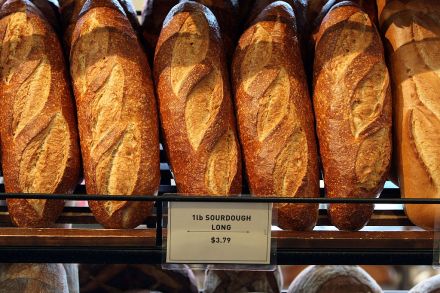
I don’t remember my grandmother, Anna Olson Nelson (Nelsie to her grandchildren), ever measuring out anything for her divine Swedish bread. The recipes must have been kept under the thick, blonde braid that she piled expertly on top of her head. What I do recall, as if it were yesterday, is helping Nelsie bake fläta and limpa every other Sunday in her small kitchen. The heavenly smells of cardamom and fennel wafted throughout her apartment while she tried to improve my Swedish. My mother, Mimi, often spoke Swedish to me and my sister, Chris, when we were babies and my father was with the Office of War Information as a correspondent in China, Burma and India during World War Two. Nelsie was our ‘Swedish nanny’.

bread

Dinner with Judy

How better to lift a torch against late-winter gloom than by conjuring an evening from a time when our country was still a confident going concern, when its culture and ideas bestrode the free world? What with our plague-driven mania for virtual living, it’s hard to get anyone to come to dinner these days. And since she died in 1969, our virtual guest of honor won’t be coming either. But from an era full of entertainment giants, we pick one, the star of stars: Miss Judy Garland. If only in our minds, we invite Judy to cocktails and dinner and then, just maybe if we get lucky, to linger late into the evening around the piano and sing a few of the old songs. This is not a formal affair, just two couples on a Friday evening after work.

judy

Georgians on my mind

Long before Achilles chased Hector around Troy and Homer wrote about the οἶνοψ πόντος, the ‘wine-dark sea’, people living in what is today the republic of Georgia were making wine. Archaeologists have found evidence of wine making there dating from 8000 BC: an impressive statement to the inventiveness to which necessity gives birth. Stretching from the Black Sea to the Caucasus Mountains, Georgia is home to a wide variety of climates, types of soil and geographical physiognomies. Today it is home to some 500 varietals, few of which are familiar to westerners (even though many if not most western grapes probably have precursors in Georgia and the Black Sea ‘cradle of wine’).

georgian wine

Hopping through Holy Week

What will Easter 2021 be like? Nothing like 2020, if I have my way. This year, I dream, Easter will be preceded by a Holy Week as solemn as if COVID had never been. Purple-veiled statues will stand solemnly about the church overlooking the Holy Thursday foot washing, a jug of water the only cleansing agent in sight, while a large choir sings the Ubi caritas. The Mass will be jammed with people, as it is every normal year, lovely, unknown people who spontaneously show up, unregistered and untraceable, squeezing in wherever there’s space. Afterwards an altar boy swinging a golden censer will lead the procession through volutes of blue smoke to an altar of repose, swathed in white silk.

rabbits holy week

Why Grüner is my go-to

The first person ever to tell me something true about wine was my first real boss, a generous and wise woman who toted me along to the Frankfurt Book Fair with her for several years in my early twenties. At the time I drank mostly sweet red blends that came in denominations of ‘box’ or ‘jug’. When she sensed (or perhaps shared) my fear of humiliating us both when I was asked for my wine order at a long, formal luncheon in a rather famous hotel, she leaned across the many forks of her place setting and whispered to me, ‘Get the Grüner.’ She elaborated that the American white wines I’d had were probably sweet or buttery, but German whites, like dry Rieslings and Grüner Veltliner, were mineral and fresh and lovely. They paired well with all foods.

grüner

The diversity dinner

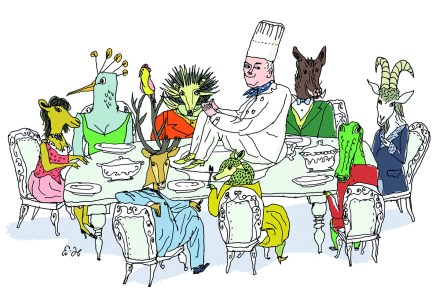
Growing up in a mixed American household of Indian, Italian and Puerto Rican descent, I never questioned the varying menu each night for dinner. Until I was a teenager, I hadn’t realized my family’s weekly meals were different from those of my friends — until they began begging me to eat at my house on weekends after I told them what was being cooked. For me, dietary normalcy meant chicken curry on Mondays, arroz con habichuelas on Wednesdays and lasagna on Fridays. My Puerto Rican and Italian American mother Loretta had married my father Roop, an Indian immigrant, in 1981. I always admired my mother for her fearlessness in crossing cultural lines during an era when interracial marriage was less common than it is today.

family diversity dinner
paris

The Judgment of Paris

What’s the most famous story about wine in the last 50 years? My candidate is the so-called ‘Judgment of Paris’ of May 1976. It was actually two judgments, one of American and French Chardonnays (the subject of the movie Bottle Shock), the other, more consequential, of American and French Cabernets (well, French Bordeaux, which are predominantly Cabernet). The competition was organized by Steven Spurrier, now one of the world’s most renowned wine connoisseurs, then a 35-year-old British bundle of energy who in 1970 had moved from London to Paris and acquired a small wine shop off the Rue Royale.