Food and Drink

Lucius Beebe knew how to live

There are some characters who infuse literature and life with disproportionate zest. The nature of their vocations is less relevant than the fervency they bring to the job, which is what makes them stand up off the page and sail through time. Lucius Beebe, who kept a Rolls-Royce and a Bentley, favored bowler hats and evening dress and wrote a column for the old New York Herald Tribune in the 1930s and then for Gourmet until his death in 1966, sits high up on my list of zestful characters who go the distance: militantly old-fashioned, never out-of-date. The association with the estimable, sadly deceased Gourmet justifies talking about Beebe under the food heading as much as any other, even though he did not always write about food as such.

beebe

My favorite Red Lion pub

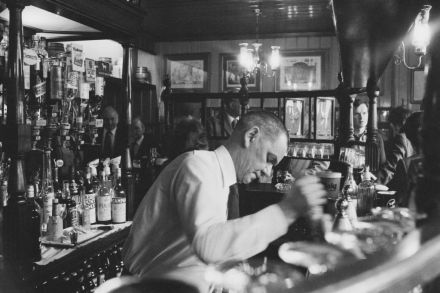
The best bars are empty. And empty bars close, which is a shame. I used to like drinking Polish vodka in the Russia House, up from Dupont Circle, in Washington, DC. The site is currently shuttered because some over zealous internationally correct ideologues smashed it up after Russia invaded Ukraine and it hasn’t come back. The Russia House never seemed to be that popular. It had a sort of fake glamour and contrived shadiness that I liked. I could never afford the caviar, so the prostitutes left me alone. DC snobs would call it “basic” — but then DC snobs are basic, so who cares what they think? I hope it has reopened by the next time I’m in Washington. Spare a thought, too, dear Americans, for British pubs.

red lion
harvest

Serving up a Half Baked Harvest feast

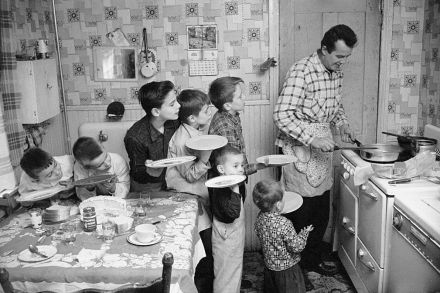
As one of eight children, I feel deep kinship with others who come from big families. Bunk beds, hand-me-down clothes, abject chaos at dinnertime — these are the staples of big-family life. Tieghan Gerard, the author of the food blog and cookbook series Half Baked Harvest, is one such kindred spirit. She comes from a family of ten, and began cooking as a tween to help with frenzied mealtimes. She soon started creating her own recipes for a food blog, which became three bestselling cookbooks and a four-million-follower Instagram. Her big-family backstory blends with her wholesome, rustic aesthetic: feeding a crowd, after all, involves creativity, resourcefulness and well-loved tools. I hoped I’d recognize some high-volume cooking tricks in Half Baked Harvest: Super Simple.

Remembering Orsini’s

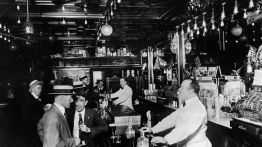
If Paris is cafés and London is pubs, New York is bars. Most of the legendary Big Bagel bars have been Irish: P.J. Clarke’s, still going strong, and the now-shut Elaine’s, where Woody Allen, Jackie Onassis, and Norman Mailer partied and gossiped protected by the formidable Elaine. But for me, although a regular at the above watering holes, there’s one that stands out because it was there where I cut my teeth as a young man about town, where I met Joan Collins, Janet Leigh, and Linda Christian — and debutantes and models galore. That was Orsini’s, at 43 West 56th Street, just off Fifth Avenue.

keto

Keto no-no

I recently got engaged. After the celebratory Champagne and indulgent restaurant meals my fiancé and I enjoyed in our month of post-betrothal bliss, reality set in: soon I must fit into a wedding dress. Of course, dresses come in all shapes and sizes, just like brides. But have you seen the price of a wedding photographer lately? I’d like to look my best. These days, the main weight-loss food trend seems to be the ketogenic diet. Like the Paleo and Atkins diets, eating keto means cutting carbs. Unlike these other diets, keto isn’t high in protein; it’s high in fat. The idea is that depriving yourself of carbs and protein will cause your body to burn fat for energy — starting with the bacon and eggs you ate for breakfast and ending with your thighs.

Are you man enough to eat raw offal?

The dominant wolf gets the liver, at least according to the podcaster Joe Rogan. In one episode, a bodybuilder called “CarnivoreMD” (real name Paul Saladino) tells him: “If you eat liver, you get to be an alpha male... or alpha female.” Offal has taken a markedly macho turn in recent years. No longer consigned to memories of the postwar school cafeteria, organs have become the preferred food of a certain type of gym bro. The word “offal” implies wastage — from the Middle Dutch for offcuts — but it can also be a delicacy. Foie gras is only the most obvious example. For the most part, though, the West has become squeamish about what was once called “variety meat.” But a new wave of offal-lovers is reviving an interest in organs.

offal
cake

Cake for a world turned upside down

My mother, although an excellent cook, never baked. She left that to her Swedish mother, Anna, who lived with my grandfather in an apartment my father built for them over our garage in Weston, Connecticut. Anna, as I’ve written before, was a gifted baker, especially when it came to Swedish breads. I can’t remember when my mother suggested I might make my father’s birthday cake. Or why the task had been handed down to me. I was only nine or ten, but my mother was well aware that I loved to watch Anna bake, and that my curiosity needed constant nourishment. Rural Weston had no bakery in its small-town center, nor did neighboring, cosmopolitan Westport. In the 1950s, powdered cake mixes came to Westport’s Gristedes supermarket.

zucchini

The postmodern horror of zucchini ‘apple’ crumble

There are some very bad people out there. Call me naive, but while I always vaguely knew this to be true, a chance discovery the other day really brought it home. I was scrolling idly through internet recipes and then, suddenly, stark and horrible, there it was — zucchini “apple” crumble, advertised as a method of successfully “tricking your family” into eating vegetables while conveniently using up overgrown zucchinis from the kitchen garden. “If they don’t see you making it, they’ll never know it’s not apple!” urged the author, evidently an agent of the dark side. My eyes widened with horror. My soul curled like a leaf in protest. But then the calming voice of reason intervened.

In praise of liquor stores

Pennsylvania’s liquor laws are... vintage. But not in a single-malt Scotch kind of way that means they improve with age. The state legislature did move the needle to the right side of draconian in 2016, but the Philadelphia Inquirer’s 1983 assessment of “Pennsylvania’s backwardness” being “a hangover from the administration of Republican governor Gifford Pinchot, who was elected on a ‘dry’ platform in 1930,” remains accurate. The Inquirer reported that after Prohibition was abolished in 1933, Pinchot led a special session to establish the Pennsylvania Liquor Control Board and “state stores” to make the purchase of alcoholic beverages “as inconvenient and expensive as possible.

liquor
garden

On constant gardening

Let nobody sneeze at the horticultural arts. Francis Bacon devoted a moderately famous essay to the topic, beginning by pointing out that the very first garden designer was Almighty God. The garden, Bacon argues in his 1625 treatise, offers the purest of human pleasures. As a civilization approaches its peak, its creative geniuses tend to focus on perfecting architecture before finally, at the apex of its development, turning to the art of the garden. With a name like Bacon, Sir Francis might be pardoned for devoting especial attention to the kitchen garden, whence hail so many excellent pairings for salt-cured pork — roasted cabbage with bacon and pine nuts, for instance, or the inseparable bacon, lettuce and tomato.

chatham

Spending Labor Day on the Cape

A few days before Labor Day I tend to get nostalgic for the sixty-five summers I spent in Chatham on Cape Cod. The feeling starts slowly, especially during our after-dinner, three-generation family strolls around the Chatham Lighthouse in the charming Old Village. If it is our last evening before returning to Europe, my father would be broiling the last steak. The stroll begins with a nip in the air and the gently falling, silver leaves from the trees that line small streets. There isn’t any traffic; residents of the Old Village walk. Later, when my mother had two bionic knees, she was still lovingly called the “fastest woman in town.” Now she strolls with the rest of us. We are savoring another tradition, after a summer filled with golf, tennis, swimming, boating and feasts.

Beaujolais

The bucolic Beaujolais

To every thing, saith the Sage of Ecclesiastes (and Pete Seeger), there is a season. There is a time for white tie and tails, footwear by Lobb, and the impeccably tailored business suit or long satin frock with appurtenances from Tiffany. There is also a time for lounging about in loose-fitting cotton trousers and boat shoes. You have on your artfully battered panama hat and sunglasses, and that book you are reading, while full of pictures and conversations, as Alice would have demanded, boasts charm, not charts or spreadsheets. Its story will not be on the test. It’s the same with wine. There is a time for the exquisite Montrachet or Cheval Blanc, the Bollinger RD, Krug, or Dom Pérignon.

The little joys of growing corn in Connecticut

They were neighbors and friends. Harold Loeb, an economist, writer and heir to the Guggenheim and Loeb fortunes, and his wife Vera lived down the Saugatuck River from us on Snake Drive, at the end of Buttonball Lane. Harold was better known as having been betrayed by Ernest Hemingway in Paris in the 1930s — Robert Cohn in The Sun Also Rises was modeled after him. Harold got even in The Way It Was, published in 1959. He asked my father to sketch him for the book’s back cover. Among other things they had in common a gift for gardening. My father, known for his charcoal sketches of celebrated locals of Weston, Connecticut, planted a large, Walden-inspired plot surrounded by a white picket fence, where weeds were allowed as long as they didn’t interfere with the crops.

corn
reykjavik

Thai-celand: how southeast Asian cuisine took over Reykjavik

Last October I flew to Reykjavik for a spa weekend among the volcanic lagoons. It sounded blissful, but the reality was strange and, in some ways, downright alarming. This was back when people still cared about Covid, and no one seemed to care more about Covid than the Icelanders (even though the data suggested that barely anyone there had the virus). You might imagine their reaction when someone collapsed on an incoming plane. That someone was me. I didn’t have Covid and had multiple PCR tests to prove it. What I had was a bout of vertigo so bad that I initially thought the plane was crashing. I managed to tell the Icelandic stewards, “I’m fine, really, it’s just vertigo.” One of them said to the other, “We’ll give her the injection, pull her pants down.

The scoop on homemade ice cream

"Gelati, sorbetti e granite,” it said on the cover. We were in a little bookshop off the Piazza Duomo in Verona. Days of consuming Italian gelato in the hot afternoons had worked so wonderfully upon our imaginations that here we were purchasing a recipe book in a language we didn’t even understand, trying to capture a little of the magical glitter of the Italian summer before it slipped through our fingers. I still have the book — and I still don’t understand enough Italian to follow a recipe. But the pictures convey some of the original magic. Gelato al limone peers creamily out of a yellow bowl, garnished with bristling strips of lemon peel. Gelato allo Champagne is pink and melting, snuggled up to a strawberry. Sorbetto d’arancia is spooned into a hollowed-out orange.

ice cream

The decline and fall of eating out

"Upgrade” is a term I associate with flying and getting a seat in the front cabin that you don’t pay for — except perhaps with “miles” and “points,” our version of Green Stamps. Upgrade’s predecessor from the era of rail travel was “step-up,” the term used by the Pullman Company when a passenger wished a better accommodation and space was available. You paid the conductor the step-up charge (in cash), and the porter dutifully toted your bags to your new compartment. Nowadays, it is no longer necessary to travel to upgrade. Just step out for lunch and add some “protein” to your salad. Upgrade! Marketing gibberish in the restaurant world is nothing new, but today it signifies the accelerating downgrade (sorry, no refund) of the whole business.

upgrade

Introducing f’mores

Don’t mess with s’mores, s.v.p... unless it’s for f’mores. They are my Gallic version of the gooey, sinfully rich and highly caloric, all-American dessert that the Girl Scouts invented in the 1920s. Graham crackers are sandwiched together with marshmallows roasted over campfire embers, and chocolate. S’mores are in our genes. I have three half-French grandchildren. Two summers ago, when California closed its schools, Covid sent the family fleeing Los Angeles to Antibes for two years. French schools reopened after six months of Zoom learning while California gave way to the powerful teachers’ unions and remained closed until this past spring. Before leaving, the family came to us.

f'mores

Tolosa Winery: my latest discovery

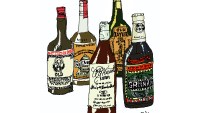
Writing about and — the necessary preliminary — drinking wine is a voyage of discovery. I won’t say that any new vineyard has made me feel quite like “stout Cortez” who, according to Keats, “star’d at the Pacific — and all his men/ Look’d at each other with a wild surmise—/ Silent, upon a peak in Darien.” But wine is in a deep sense about more than the fermented juice of the grape. It is about place — terroir, of course, but also place in a larger sense: place as habitation, place as community, which means place as the stage whereon manners, romance, technique and custom perform for the gods of pleasure. It is also about history and personality and their distillate: money, which ushers in snobbery and its accoutrements.

tolosa

Zabar’s is still thriving

You might expect Zabar’s, the world-famous “appetizing” store on Manhattan’s Upper West Side, to have become a shadow of its former self. This seems to be the case for most of New York’s other independent specialty shops. Fairway, Balducci’s, H&H Bagels, Dean & Deluca: the food purveyors of my youth have gone kaput. They were bought, leveraged, expanded, overextended and oversold. They expired past their sell-by dates. But somehow Zabar’s survived. For the Upper West Sider, Zabar’s is our Yale College and our Harvard. Like many I make my way down to 80th Street and Broadway most weekends for continuing education. I head to the appetizing counter and take a number.

zabar's