Features

The left’s real cause is muzzling its opponents

In February 2019, I appeared on the now-defunct NRATV to discuss anti-Semitic comments that Democratic Reps. Ilhan Omar and Rashida Tlaib had made. Timothy Johnson, a so-called researcher for Media Matters for America who has spent nearly a decade lying in wait for conservative pundits, was watching. He didn’t like that I opposed the new de facto leaders of the Democratic party. In revenge, he posted several screenshots of inappropriate jokes about Jewish people I made on Twitter seven years earlier. The screenshots went viral. My mentions and DMs flooded with demands for an apology, calls for my firing and orders that I kill myself. Bookers reached out to tell me that upcoming television and radio appearances were canceled.

amber athey
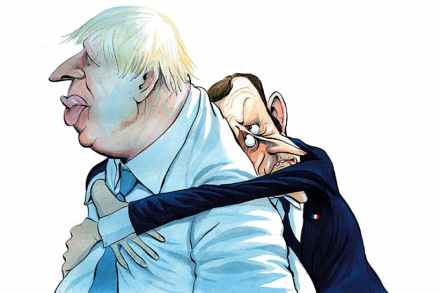
emmanuel macron

French disconnection: how Emmanuel Macron went from savior to failure

This article is in The Spectator’s February 2020 US edition. Subscribe here.Montpellier, France As the new year dawned, it was business as usual in France, with transportation paralyzed, hundreds of cars burning in the suburbs, violent demonstrations in the cities, a whiff of tear gas in the Métro, police beating protesters. Train drivers, air-traffic controllers, nurses, garbage collectors, ballet dancers, opera singers were all on strike — and so, even, were lawyers. If the country is not wholly immobilized, it’s because the French are pretty adaptable and, to be honest, some only pretend to strike. My garbage was picked up in the normal way. Making the French swallow bitter medicine is hard, even in a nation of hypochondriacs.

Donald Trump, president of peace

This article is in The Spectator’s February 2020 US edition. Subscribe here. Groupthink is the last thing a country needs when debating questions of war and peace. But groupthink is what America’s pundits have succumbed to once again. In 2003, voices of opposition to the Iraq War struggled to be heard, with even the progressive cable news channel MSNBC silencing its most outspoken critic (Phil Donahue) and telling a right-wing dissenter from President Bush’s war (Pat Buchanan) that he was expected to represent Republican opinion — which is to say, pro-war opinion. So much for press freedom. Today, groupthink is on the side of peace, or rather on the side of caricaturing President Trump as a warmonger.

peace

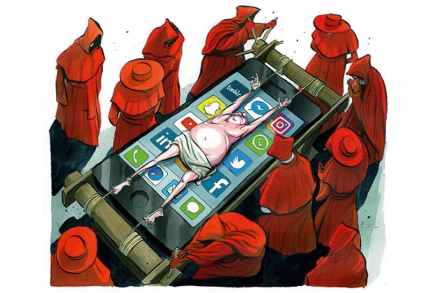
So you’ve been canceled. Here’s how to fight back

In April 2017, a group of students at Dartmouth College met with Dr David Bucci to complain about sexual harassment in the department of psychological and brain sciences that he chaired. The allegations didn’t sound particularly grave — none of the students complained of rape, for instance — but Dr Bucci flagged it up with the Title IX office even so. It was that office’s responsibility to follow up sexual harassment complaints and it duly did, suspending three professors and mounting several investigations. You can imagine Dr Bucci’s surprise, therefore, when seven female students named him in a lawsuit they filed against Dartmouth 19 months later, accusing him of ignoring the original complaint.

canceled cancel culture

Tyranny of the minority

De mortuis nil nisi bonum, the Romans used to say: ‘Of the dead speak only good.’ We can speak nothing else of the friend and longtime Spectator contributor we lost in January. Sir Roger Scruton was a fearless and humane advocate for art, beauty, faith, peoplehood and tradition; a fierce defender of the right to free and honest speech; and a clear-eyed advocate for the legal inheritances and cultural unity of the English-speaking peoples. He was one of the first people to undergo ordeal by ‘cancel culture’, or persecution by progressives, which is why we dedicate this free-speech issue to him. In the early 1980s, Roger was effectively expelled from the academy for expressing conservative opinions in public.

2019 was not a good year for freedom of speech

This article is in The Spectator’s January 2020 US edition. Subscribe here. ‘Crisis? What crisis?’ That’s often the response of complacent academics when people like me draw attention to the erosion of free speech on campus. For instance, Lee C. Bollinger, the president of Columbia University, wrote an essay for the Atlantic last June entitled ‘Free Speech on Campus is Doing Just Fine, Thank You.’ But is everything rosy in the groves of academe? I thought I’d take this opportunity to look back on the year gone by and see if 2019 was a good or bad one for intellectual freedom in American higher education.

freedom

How to lose votes and bore people

This article is in The Spectator’s January 2020 US edition. Subscribe here. If we can’t be governed, we may as well be entertained. That’s become the ethos behind the Donald Trump presidency. The national debt might continue to bulge, our military might remain pointlessly overextended, our healthcare system might stay ablaze, but at least politics has become funny in a nothing-matters, Rick and Morty kind of way. Americans upvoted a man who’d spent hours on the Howard Stern show boasting about his sexual prowess, and we expect to be amused, dammit. So why has the news lately been so dreadfully boring? The fault certainly doesn’t lie with Trump.

lose

Polls apart

This article is in The Spectator’s January 2020 US edition. Subscribe here. Galileo famously said that the book of nature is written in the language of mathematics. But what made him so important in the history of science was his further insight that mathematics, in order to reveal the laws of nature, had to be empirically tested. Mathematical formulae described what he thought would happen; he had to clamber up the leaning tower of Pisa and drop the two balls to convince us that objects of different masses fall at the same speed. I am not sure that most modern pollsters have taken Galileo’s second insight fully on board. The modern pollster tends to be in love with his model.

polls
endless

How to end endless wars

This article is in The Spectator’s January 2020 US edition. Subscribe here. ‘Great nations do not fight endless wars,’ President Donald Trump declared in his 2019 State of the Union address. Simultaneously benign and radically subversive, this simple statement may well qualify as an important moment in the Trump era. Here was a notably dishonest president calling attention to a truth that the political establishment appears intent on ignoring. Any objective look at the record of US military actions since 9/11 would reach similar conclusions. The politicians ordaining our wars have been reckless and incompetent. The soldiers sent to fight are brave but badly misused. And the people in whose name these wars are waged are oblivious to what has occurred.

The case for Genghis Trump

This article is in The Spectator’s January 2020 US edition. Subscribe here. America has a problem, and it’s not Donald Trump. Suicides and deaths by overdose are up; life expectancy is down. The country that led its allies to definitive victory against both Nazi Germany and imperial Japan in just four years has now been fighting in Afghanistan for nearly 20, with no end to the Taliban in sight. Wall Street prospers but young Americans are deep in debt, manufacturing employment is in decline, and the Great Recession of a decade ago revealed how fragile and irrational the whole financial system is. For all the talk we hear about ‘polarization’, the policies that led to these grim results were born of bipartisan consensus.

genghis donald trump boomer republicanism establishment

Who’s right in the 2020s?

A decade is an eternity in politics, but some things don’t change. In 2010, the smart people were either thrilled or alarmed by the prospect of an ‘emerging Democratic majority’, created by high immigration, de-industrialization and college education. Ten years on, influential magazines are still warning Republicans to play nice with a newly diverse electorate or go the way of the Whigs. Meanwhile, the candidates for the Democratic presidential nomination are all promising to ‘revive the Obama coalition’ as if the popular revolt of 2016 never happened. The Obama presidency, with its low-growth recovery and healthcare fiasco, marked the overreach and collapse of big-state liberalism.

right

A crime still in progress

This article is in The Spectator’s January 2020 US edition. Subscribe here.Crime in Progress is, inadvertently, the cruelest book ever written about the American media. Its authors, Glenn Simpson and Peter Fritsch, are the two former Wall Street Journal reporters who founded the DC-based consultancy Fusion GPS. In 2016, the Hillary Clinton campaign paid them to use their former media colleagues to push a conspiracy theory smearing her Republican opponent, Donald Trump. The crime is still in progress. To help top-notch journalists market the fantasy that one of the world’s most familiar faces was a secret Russian spy, Fusion GPS co-ordinated with the FBI to forge a series of ‘intelligence reports’.

progress steele

Trump and the troops

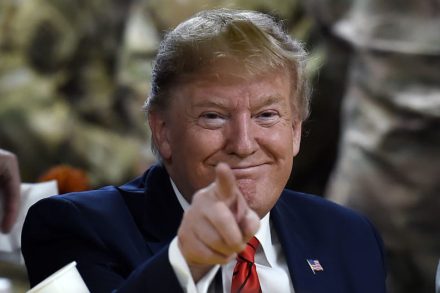
This article is in The Spectator’s January 2020 US edition. Subscribe here. Thanksgiving Day, the most American of holidays, found President Trump performing one of the nation’s few remaining civic rites: supporting the troops. When the President secretly flew to Afghanistan to feed and thank servicemen at Bagram Air Base, he got a cheering hangar full of airmen in return. Those turkey-stuffed troops were a captive audience, of course. Still, enthusiasm for Trump among American servicemen, both active-duty and veteran, seems to be one of the more genuine things about this surreal phase of American politics. In polls, support for the president among veterans far outpaces that among Americans at large.

troops

The real reason for college food fights

This article is in The Spectator’s December 2019 US edition. Subscribe here. Oberlin College hit the headlines earlier this year when it lost a high-profile lawsuit against a small business. Staff and students at the liberal arts college had accused a bakery in the local town of racism and organized a boycott after an employee caught an African American student shoplifting. The owners of the bakery sued the university for defamation, infliction of emotional distress and tortious interference. Turned out, the store’s employees were completely color-blind when it came to stopping people stealing — of the 40 shoplifters arrested in the previous five years, 32 were white — and the jury found with the plaintiffs.

manhattan

Trump vs the cities

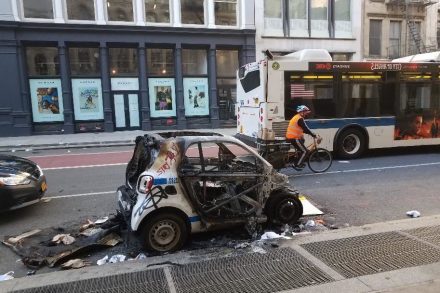
Update June 2, 2020: There’s something very wrong with our cities, as the devastating riots this week show. Last year, in the the Spectator's Christmas US edition, I wrote about how in a few short years the liberal city rapidly became the progressive city under an organized insurgency of far-left activists embedding themselves in municipal governments. The results have been devastating, as our once beautiful cities marinate in dirt, disease and strife. Now, they are burning. Failed progressive policies have never been more evident than they are today. With the election five months away, Trump now has an opportunity to pitch himself as the leader who will fight against the degradation of the inner cities.

Who likes Mike?

This article is in The Spectator’s December 2019 US edition. Subscribe here. It’s springtime for billionaires. Former New York mayor and media mogul Michael Bloomberg, who earned fame, among other things, for his abortive crusade against oversized high-calorie sugared drinks, is now joining liberal activist and billionaire Tom Steyer in running for the Democratic presidential nomination. Bloomberg, who turns 78 in February, has filed to enter the primary in Alabama and plans to skip the first four primaries in Iowa, New Hampshire, Nevada and South Carolina.

mike michael bloomberg

Forever in our debt

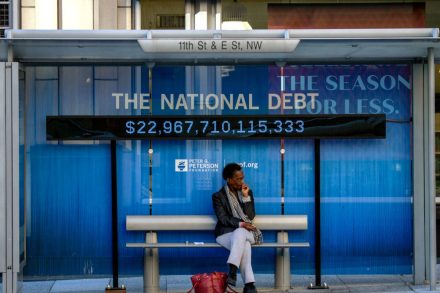
President Donald Trump will enter an election year with the threat of impeachment still hanging over him. Yet in most respects his administration is in a far better position than his critics could have imagined when he took office nearly three years ago. Economic growth, while in retreat in recent months, remains ahead of that of other developed countries. Stock markets, which Nobel Prize-winning economist Paul Krugman said might ‘never recover’ from Trump’s election, are at near-record highs. Where Trump’s opponents feared that his bellicose language would spark a nuclear conflict in North Korea, he defused the situation. His approach to foreign policy may be incoherent, but it hasn’t yet proven to be disastrous.

national debt
jeremy corbyn

Britain is dangerously close to having an overtly anti-American prime minister

This article is in The Spectator’s December 2019 US edition. Subscribe here. What have Fidel Castro, Nicolás Maduro, Hamas and the Khomeinist regime in Iran got in common? That the US has not exactly seen eye to eye with them over past years and decades? Well, yes. But there is another thing too: Jeremy Corbyn, the Labour party leader who could soon be the British prime minister, has warmly praised them all. Castro, according to Corbyn on the occasion of the former Cuban leader’s death in 2016, was a ‘champion of social justice’. Corbyn rang in to a Venezuelan TV program in 2014 to praise Maduro, who introduced him as a ‘friend of Venezuela’.

e-scooters

E-scooters are a wretched species to be introduced into the urban ecosystem

Scattered along the streets of Washington DC are electric scooters. Most have four-letter names: Bird, Lime, Skip, Jump, Bolt. Using one for the first time, you may prefer to employ another four-letter word. I know I did. My first taste of the e-scooter phenomenon was on a visit to Los Angeles in February last year. The Santa Monica company Bird had been up and running for only five months, yet already its scooters were all over the city, like avian excrement. Students at UCLA embraced the Birds. Nobody seemed fazed by the undeniable fact that you cannot look cool on a battery-powered two-wheeler. The epidemic then spread to other American metropolises: Atlanta, Minneapolis, Miami. New York has so far held out, but will likely soon fall.

The Ukraine blame game

This article is in The Spectator’s December 2019 US edition. Subscribe here. The unfolding deep-state effort to remove Donald Trump from office diffuses an acrid aroma of paranoia, partly because of its ever-expanding cast of enemies. After the tears and disbelief of 2016, there were rumors about ‘Russian collusion’ between the Trump campaign and Moscow. It emerged that investigations into Trump and his associates dated back to at least July 2016, when the FBI covertly launched ‘Crossfire Hurricane’ to investigate Michael Flynn, Carter Page, Paul Manafort, Roger Stone and other Trump campaign associates. The Obama administration had been sniffing around Trump since 2015, when his campaign first began to show signs of life.

ukraine