Features

A honeymoon in Berlin

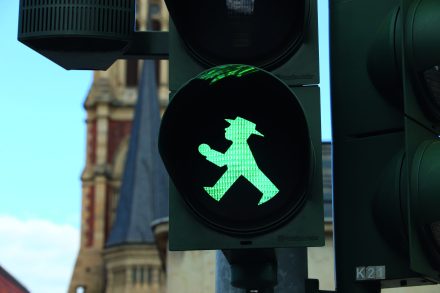
In December 2019, I arrived in Berlin by train. I was just married and on honeymoon. The most precious item in my luggage was my Interrail ticket. My husband and I hoped to visit as much of the Continent as we could in three weeks. We did not know that soon such a trip would be impossible, thanks to the infamous virus from China. We were keen to see what remained of the Berlin Wall. One of the longest still standing parts is on Niederkirchnerstrasse, next to the site of the former headquarters of the SS and the Gestapo, now home to the Topography of Terror, an indoor and outdoor museum dedicated to the Nazi era.
berlin

Buckle up for Biden and the Blob

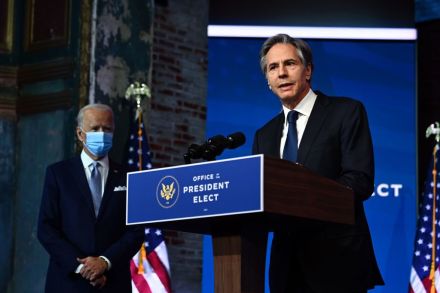
With any change of power in Washington, it is routine to ask which policies will endure and which will change. Yet the incoming Biden administration proposes neither new policies nor the revival of old ones. It promises, rather, an existential transformation following the traumatic ordeal of President Donald Trump. What is being brought back, we are told, is the concept of ‘expertise’ itself. Biden’s return to normalcy will be a re-empowerment of America’s bureaucratic class, so rudely ignored and pushed aside during the four-year time of troubles. Nowhere is this narrative more powerful than in foreign policy.

foreign policy blob

Are we back in the Obama White House?

Like most Greek stories, the tale of Pandora’s box is fraught with ambiguity. Most of us, when we first encounter the story, learn that it is a fable about the dangers of curiosity, not unlike the story ‘of man’s first disobedience, and the Fruit/ of that Forbidden Tree’. As Eve sneaked the apple, so Pandora took the lid off a box that she was forbidden to peek inside. Bang! Death, illness, famine and all the other miseries of the world escaped to blight man’s life, leaving behind only hope as a sort of consolation prize. But is hope a consolation? Or is it a subtler, more insinuating evil?

obama white house china joe biden

The family gap

In a speech to the Federalist Society in November, Supreme Court Justice Samuel Alito reiterated his concern that ‘in certain quarters, religious liberty is fast becoming a disfavored right’. Small wonder that the subject was on his mind. A week earlier, the Court had heard oral arguments in the latest religious-liberty case, Fulton v. City of Philadelphia. In it, Catholic Social Services — one of some 30 agencies used by the city to place foster children in private homes — claimed religious exemption for its policy of placing kids in traditional mom-and-dad family settings. So far, one might think, so unremarkable: a Catholic agency conforms its good works to Catholic principles. But what about nontraditional couples — like those of the same sex?

family

End game: the blurring line between fantasy sports and the real thing

For millions of fans, the only thing more important than the NFL from September to January is fantasy football. In the US and Canada alone, there are an estimated 59 million fantasy sports players — one-sixth of the entire population. These players spend an average of seven hours a week — almost a full working day — consuming fantasy content, according to Andrew Billings, an expert in fantasy sports at the University of Alabama. The rise of much modern sports — most obviously cricket — is inextricably linked to gambling. So it is with fantasy sports. It’s the numbers, stupid! Then obsessing over stats. With sports gambling illegal in most states until a Supreme Court ruling in 2018 overturned a federal ban, the fantasy world filled the void.

fantasy

The long legacy of looting

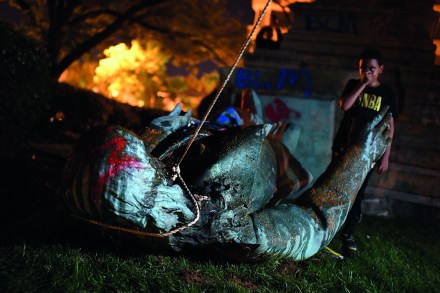
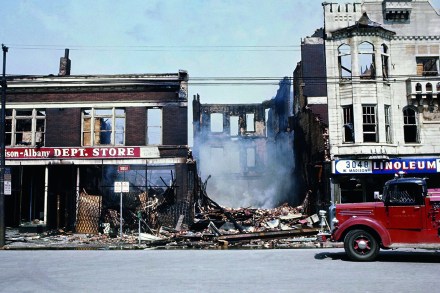
The causes of violent rioting and looting are complicated and often include real, unaddressed grievances. One thing is clear, though: looting has few winners and many losers. The losers in the long run are often those breaking the windows and making off with the bling. Many of us are trying to get a handle on the unrest we’ve witnessed in 2020. History doesn’t repeat itself, and, pace Mark Twain, it may not even rhyme, but sometimes a little context helps, if only to suggest possibilities. The considerable scholarly literature on the ‘race riots’ of the 1960s is mostly sympathetic to the rioters. It excuses or at least countenances violence because its authors share what they perceive to be the rioters’ goals: racial equality, social justice and the like.

rioting chicago

Elvis and Nixon, the odd couple

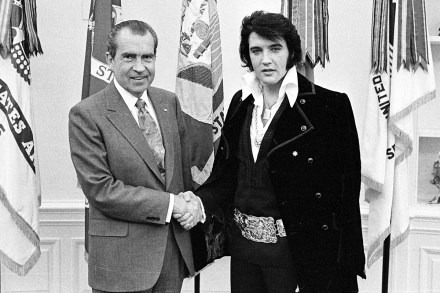
If you were called upon to invent the human antithesis of rock and roll, you couldn’t do better than our nation’s 37th president, Richard Nixon. Habitually clad in a funereally dark suit and dress shoes, even when strolling on the beach, Nixon’s tastes in music ran to the semi-classical strains of Mantovani and the Boston Pops, and a penchant for sitting alone at night brooding to Wagner. I once asked the legendary White House fixer Gordon Liddy what his chief thought, if anything, about pop music. ‘Crap,’ Liddy replied succinctly. In late 1970, the 57-year-old Nixon was at something of a low point. A combination of the continuing war in Vietnam and domestic economic woes proved disastrous for the GOP in that November’s midterm elections.

nixon

The fight for liberalism

The world has many island nations, and sometimes the United States counts itself among them. We have water on either side of us, and though we share our big island with Canada and Mexico, neither poses any threat. America is immune to invasion, a castle surrounded by the safest of moats. This wasn’t always so, and it isn’t really true today, unless we forget about Hawaii and our Pacific and Caribbean territories, most of which would be easy prey for other states if they weren’t under our sovereignty. In the earliest days of the republic, we shared the North American continent with outposts of Europe’s leading powers: France, Russia, Spain and Britain.

liberalism

Am I a cuck?

‘You’re a cuck, Tobes, an absolute cuck.’ My friend James Delingpole was furious. ‘Honestly, I thought I could depend on you of all people, but you’ve surrendered, just like every other right-wing commentator I know. I can’t begin to describe how disappointing this is. I would have expected it from some — Dan Hannan, Jonah Goldberg, the editors of the National Review — all bloody cucks, the lot of them. But not you, Tobes. I’m alone in the foxhole.’ This outburst would have been hard to listen to under normal circumstances, but it occurred on air during our weekly podcast on Ricochet. Needless to say, we were discussing the presidential election and James is 100 percent convinced that Donald Trump was the victim of a massive electoral fraud.

cuck

Biden’s speech impediment

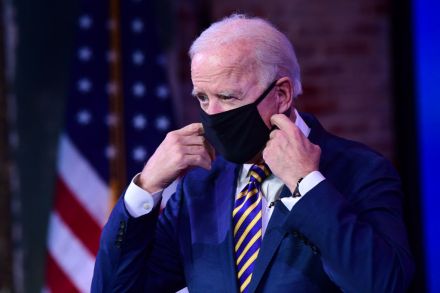
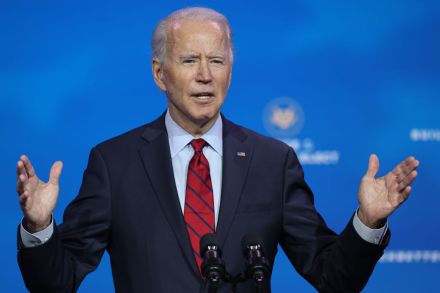
Does Joe Biden write his own speeches? Surely not. Yet his campaign says Biden was his own speechwriter for the address he made to the nation a week after the election, when he stressed his campaign theme: ‘We must restore the soul of America.’ The Soul of America is the title of a book by the historian Jon Meacham and the New York Times figured out that Meacham had helped with the speech. The campaign’s national press secretary, TJ Ducklo, was forced to concede that, yes, Biden had ‘consulted a number of important, and diverse, voices as part of his writing process, as he often does’.

joe biden speech

Republican resurrection

When Donald Trump took his famous escalator ride, the Republican party was too attached to abstract principles at the expense of the material interests of its own voters. It wasn’t even doing a particularly good job of adhering to its preferred ideological abstractions. Whatever the Democratic party’s ideological failings, its leadership understands the importance of delivering tangible benefits to the electoral coalition that puts them in power (although their newfound suburban voters could be in for a rude awakening if the Democrats ever get too much power). Trump presented an opportunity to change this.

populism republican

Brace yourselves for President Harris

Although the electors for the presidential election of 2020 do not cast their votes until December 14, and their votes are not certified — and hence the election is not officially ratified — until December 23, it is eminently possible that by the time you read this the world will know whether the election was won by Donald Trump or Joe Biden. That is emphatically not the case now, in mid-November. The media narrative would have you believe otherwise. According to the received script, Biden won on November 3, or at least in the wee hours of November 4, when mail-in ballots, tens of thousands of them, began appearing like manna from heaven.

president harris administration

Libertarians suck

Everyone knew some husky chap in college who smelled like onions and called himself a libertarian. He may or may not have worn a fedora. He wasn’t cool enough to do drugs but he figured that, if he never stopped talking about how much he wanted to legalize them, he’d get a bit of second-hand cool. This fellow was never seen without a copy of The Road to Serfdom tucked beneath his sweaty armpit. He never missed a seminar (again, lame) and would say the name of Ayn Rand out loud at least once per class. Sometimes he wouldn’t even raise his hand first; he’d just whisper it lovingly under his breath.

libertarians

Trump’s story is still not over

The triumphant ululations of the almost unanimous Trump-hating media of America and much of the world did not clarify the late election. An unknowable quantity of harvested ballots came from the mass unsolicited mailing to the wildly inaccurate voters’ listings in Democratic-governed swing states, following a plan the Democrats implemented in hundreds of state lawsuits over three years and then hid under the pandemic terror that their allies in the media propagated. This produced miraculous Democratic comebacks from ‘ballot drops’ in the middle of the night after counting had been paused in several selected states, and it quickly became almost impossible to verify these ballots, mixed in with many millions of others.

trump

The urgent case for voting reform

By now, The Spectator knows better than to say that Donald Trump has been definitively beaten. The President’s final defeat has been proudly proclaimed and then undermined so many times that the wisest course is to assume he will always rise again. Nevertheless, while Trump has not officially given up, he seems to have failed in his quest to win a second term. But the President did not fail in the hearts of his supporters. Most will agree: they did not lose this race — it was stolen from them. In the late hours of November 3, the President’s lead seemed insurmountable, his victory inevitable. Defying the polls, he romped to easy wins in Florida, Texas, Iowa and Ohio. The New York Times needle showed him on track to win Georgia by four points.

trust

The next American empire

Americans have never been sure of their standing in the world, and the world has never been sure of Americans’ standing. In their first century as a nation, Americans believed that their principles made their civilization not just different but also better than Europe’s. Meanwhile, the intellectual and political leaders of Europe were unconvinced that America was a civilization at all. In their second century as a nation, other, older civilizations were obliged to admit that Americans were not just different: they were better at modern life. The Americans achieved this recognition first by the force of their industrial and military power, and then by the flattery that other civilizations could become equally forceful and seductive by adopting the American way of life.

empire

The wars go on

America’s longest war has just entered its 20th year. The US invaded Afghanistan in October 2001 to overthrow the Taliban and destroy al-Qaeda. Now, nearly a decade after the death of Osama bin Laden, the Afghan war continues. And everyone expects that if the Americans ever leave, the Taliban will return to power. Yet the Taliban who take charge will not be the same as those who harbored bin Laden. The median age in Afghanistan is around 19 years old: half the country’s population was born after the war began. The US is not fighting a limited reservoir of Taliban militants; it is fighting a cultural force that has renewed itself over a generation.

wars

The demise of America has been greatly exaggerated

One of my favorite quotes about America — mainly because it annoys so many people — comes from the historian Robert Wiebe. In his book Self-Rule, he writes: ‘Telling Americans to improve democracy by sinking comfortably into community, by losing themselves in a collective life, is calling into the wind. There has never been an American democracy without its powerful strand of individualism, and nothing suggests there will ever be.’ Cue the yelping from nationalists, socialists, Burkeans, take your pick. Yet Wiebe was less making a political argument than he was observing what was right in front of his nose.

america

Onwards and upwards

It would strain credibility to assert that this election campaign has enhanced America’s reputation in the world. The best that might be said is that it has been a slightly less gruesome spectacle than the 2016 affair — and that, perhaps, only because the pandemic has limited public appearances. The great puzzle is how a country of 330 million cannot seem to find two more inspiring candidates. Yet should we take seriously those who are forecasting that the country now descends into civil war or that democracy has died? No, and not just because the latter prediction tends to be conditional on the election’s failing to deliver their favored outcome. American democracy, American power and influence are not dying, and neither are they under threat.

disunited america

But seriously: will Trump refuse to leave?

At a drinks party in Washington DC just after Donald Trump was elected, someone from the old regime told me: ‘This will end with tanks on the White House lawn.’ It was a popular opinion that night, although there was confusion over whether the tank barrels would point inwards or outwards. Would Trump do something so outrageous that he would have to be removed by the US military? Or would he declare himself president-for-life with help from the generals? At the time, I put this down to shock at Trump’s unexpected victory, an early example of Trump Derangement Syndrome. But now, in the final stages of the 2020 campaign, you hear speculation like this from both sides of the political divide. Dictatorship, state of emergency, civil war?

leave