Features

How the boomers robbed the young of all hope

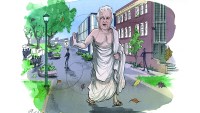
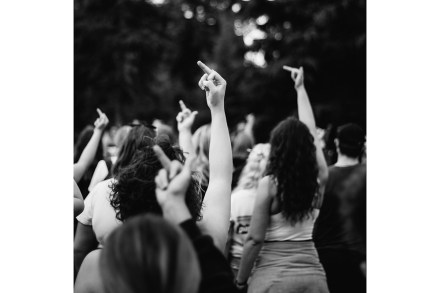
"Young people do not degenerate; this occurs only after grown men have already become corrupt.” — Montesquieu, The Spirit of Laws, 1748. The great test of a generation is whether it leaves better prospects for its descendants. Yet by virtually every indication, the baby boomers, and even the Gen Xers, are leaving a heritage of economic carnage — as well as a growing social and cultural dissipation that could shape our future and the fate of democratic self-rule, and not for the better. This legacy comes not from outside forces, but the investment bankers, tech oligarchs and their partners in the clerisy who have weakened their national economies and undermined the chances of upward mobility for most young people.
young

What is conservatism for?

Rick Scott recently managed to elbow his way into a jam-packed news cycle with an eleven-point plan to “rescue America.” The Florida senator did not, however, get the headlines he wanted. Senator Scott’s proposals ranged from the trivial, such as a suggestion to name the border wall after Donald Trump, to the obvious: growing the economy was one especially helpful idea. But it was a tax plan that landed him in hot water with colleagues. “All Americans should pay some income tax to have skin in the game, even if a small amount,” suggested Mr. Scott. “Currently over half of Americans pay no income tax.

conservatism

The United States of Uber

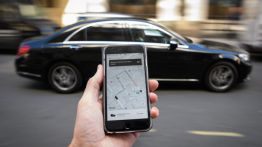
I’m getting into the backseat of an Uber in Washington, DC with a cup of coffee in one hand and a tattered, floppy cloth mask in the other. I’ll make a half-assed attempt to mask up! indulging the Democrats’ last gasps of Covid political theater, only on airplanes and in Ubers, and that’s just to avoid the hassle of getting banned if you don’t. My mask — I only own one — is about as snug as a Kleenex with too-wet noodles for straps. It covers my contagion holes for only a few moments at a time when the loose cloth rests on the tip of my nose. The struggle to keep it up for the duration of the journey is my own bit of theater. “Do you need to switch that mask out?” a flight attendant once asked me. “Oh, no, I could never do that.

uber

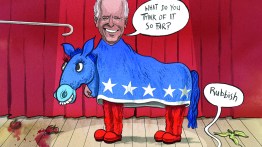
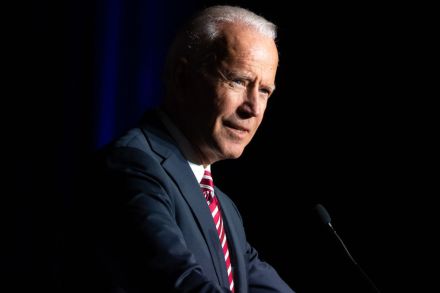
Joe Biden is winning

By the middle of January, I’d read some version of the headline “Biden Can Still Rescue His Presidency” so many times that it seemed an algorithm had taken over from the editors. The New York Times placed it above a column by Bret Stephens, a prominent anti-Trump conservative and a member of the pundit pack that earnestly wished the president Godspeed when he entered the White House more than a year ago. Stephens, like most of his colleagues, argued that Biden was “flailing — and failing” — because of what the paper’s news pages have described as a “legislative agenda in shambles.

biden

Fight for the right

Sohrab Ahmari Modern American conservatism is composed of three distinct traditions: libertarian economics, foreign-policy hawkism and social traditionalism. This “fusion” was born of a contingent historical moment, the Cold War, when the Soviet threat forced different social classes and their ideological spokesmen to band together in common cause. There was no eternal principle demanding that these groups tie their destinies together — a fact that became apparent with Donald Trump’s rise, which divided the three camps along various axes of alliance and enmity. Fusionism is dead. Well and truly dead.

conservatism fusionism
Joan Collins

Hollywood, fist-fights and getting canceled

Introductions Scene: a drawing room in London. When the recording starts, Taki is already mid-anecdote... Taki: I was sent out to Monte Carlo to speak to Roger Moore. The Spectator offered to pay all my expenses. I said thank you, I’ll pay my own. I went and had a terrific drunken dinner with Roger who really spilled the beans, cos we were buddies. I came back. The tape was empty because I’d never turned the recorder on. Joan: I’d known Roger since I was fifteen, because my father was a big agent in London and I came back from school — oh, fourteen actually, because I left school at fifteen — and there’s the most gorgeous man I’ve ever seen standing there. He came over and said, “How do you do? You must be Joan, my name is Roger Moore.

Penelope

Was Penelope really a ‘silenced’ woman?

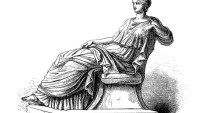
Problems about the misuse of history, especially on subjects such as race and colonialism, have been running for a long time. But when it comes to the ancient world, there are also problems about the misuse of literature. Dame Mary Beard’s “manifesto” Women and Power (2018) contains an example of the problem. Her thesis is that women’s voices in the public sphere (my emphasis) have been “silenced” by men ever since the West’s first literature (Homer’s Iliad and Odyssey) gave us our first access to “Western” thoughts, deeds, beliefs, hopes and fears (c. 700 BC). The problem exists in the first example of her thesis, to which she returns four times — Penelope, the wife of Odysseus.

science fiction

How science fiction novels read the future

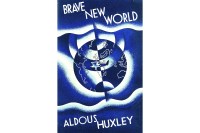
The pandemic is not quite over, but we are getting used to its inconveniences. What disaster will be next? An antibiotic-resistant strain of the bubonic plague? Climate collapse? Coronal mass ejection? Will the next catastrophe be natural — perhaps a massive volcanic eruption, the likes of which we have not seen for more than two centuries, since Tambora in 1815? Or will it be a manmade calamity — nuclear war or a cyberattack? And might we inadvertently descend into a new form of AI-enabled totalitarianism in our efforts to ward off such calamities? To all these potential disasters it is impossible to attach more than made-up probabilities. So what can we do about them? The best answer would be that we should strive to imagine them.

covid

I’m done being a crazy Covid lady

I was seven months pregnant in March, 2020. I had miscarried before, and it had taken a little while to conceive, so even before the world became anxious about reports of a novel coronavirus, I was a nervous wreck. When the pandemic came in earnest, I was utterly overcome. I had been working on a live news show. Every day in late February, and even at the very beginning of March, we were telling Americans to wash their hands, but that everything would be okay. Local politicians and medical experts came on the show to tell people it was all going to be fine. This was The Before. One day, I came into the studio during a commercial.

Mamet

Why David Mamet went right

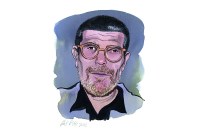
How did David Mamet spend the pandemic? The answer, as anyone familiar with the prolific, brilliant playwright and screenwriter would probably have guessed, is that he wrote. “I’ve been writing a lot of essays lately,” Mamet, seventy-four, says when we meet at his Santa Monica home on a cool January evening. “Because, you know, I don’t want to go and sit on a park bench. I’m a writer.” A collection of essays written during the tumultuous plague years is published this month by Broadside, an imprint of HarperCollins. Recessional: The Death of Free Speech and the Cost of a Free Lunch is combative, challenging, witty, and, as the title suggests, its prevailing mood is as dark as the “terrible” period in which it was written.

tourist

The last American tourist

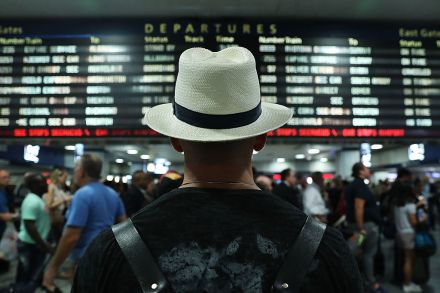
I was driving along a curvy English road outside a village in Gloucestershire a few weeks ago when a sign loomed on our left. It said: CATS EYES REMOVED My first thought was: What a horrible way to make a living in this day and age, even out here in the countryside. So much for All Things Bright and Beautiful... Maybe those people who said that Brexit would turn the English into depraved monsters were right. I was jumping to conclusions. It hadn’t been put up by an entrepreneur or veterinarian but by the highway authority. Cat’s eyes are what the English call those super-reflective bumps embedded in the stripes on minor highways to keep drivers from drifting across lanes. The sign was a warning that this curvy road had recently become much more dangerous.

Biden fails to fill his office

"The test of a first-rate intelligence,” F. Scott Fitzgerald wrote, “is the ability to hold two opposed ideas in the mind at the same time, and still retain the ability to function.” Fitzgerald wrote that in 1936 in an essay called “The Crack-Up.” At the time, the US economy was coming out of the Depression. A Democratic administration was expanding the reach and influence of the federal government, notably into areas of the economy where it did no good, and war was on the horizon. On the bright side, inflation in 1936 was 1.46 percent and GDP was growing at 12.9 percent per year, which is even higher than the capitalists of the CCP have recently claimed for China.

president

The US and India in a new world

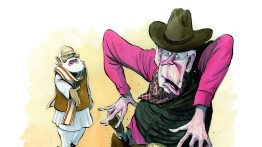
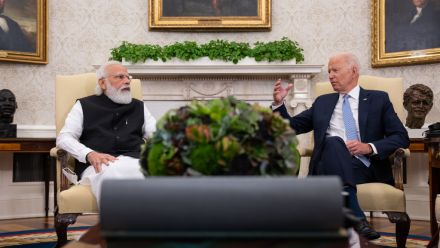
The world’s center of gravity is shifting to the Indo-Pacific. The new global order will be shaped by developments in a sprawling region where interstate rivalries and tensions are sharpening geopolitical risks. Building a stable balance of power in the Indo-Pacific has become more important than ever, but China’s territorial and maritime revisionism, and its heavy-handed use of economic and military power, are causing instability and undercutting international norms. Against this background, the expanding strategic partnership between the world’s most powerful and most populous democracies — the United States and India — has become pivotal to equilibrium in the Indo-Pacific.

india

#Wanderlusting

I’m twenty-seven weeks pregnant, which is technically the last week of my second trimester, and shit is getting real. Apparently, this is also the “longingly and obsessively scroll through Instagram travel pages” phase of pregnancy, so of course Facebook took it upon itself to remind me that nine years ago today I was in Sri Lanka. The algorithm is tormenting me. I’m wanderlusting. Wondering if I’ll ever travel again. Reminiscing about the good ol’ days. As I scroll through my photo albums on Facebook, I am reminded of how often people would comment, “You’re so free!” The people who said this to me over the years had “real” jobs and mortgages and pets and kids.

traveling

The quiet rise of the other Asians

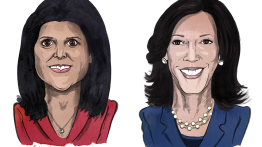
You don’t have to be obsessed with racial calculations to consider the possibility that the next presidential election in the United States could be fought between two American-born women with roots in India: Nikki Haley in the red corner and Kamala Harris in the blue, the Republican Sikh and the Democratic Tamil Brahmin (on the side of the sainted mother who raised her), duking it out for leadership of what’s left of the Free World. The probability of this happening dwindles by the day, of course, as Vice President Harris makes it ever clearer that she’s too lightweight for the White House, and that nominating her for president would be electoral suicide for the Democrats. (Besides, hubris may drive Joe Biden to run again.) As for Ms.

indian
sick

Man flu is real

Over New Year’s, I came down with the Omicron. Or as I put it to my wife, civilization as I knew it almost came crashing down around me. Why are men so bad at being sick? I ask that fully aware that even saying the word “men” is enough these days to get you tossed off a college campus by a mob of tots screaming about how they identify as Chevy Impalas. The fun and flirty battle of the sexes has given way to an assault on the very concept of sex itself. And patriarchal oppressors versus birthing people just doesn’t have that same snappy “Summer Nights” ring to it. Yet even allowing for the ongoing abolition of gender, the difference between how men and women get sick is one of the few sex distinctions we’re still allowed to notice.

boghossian

Peter Boghossian’s fight for freedom

The prospect of my meeting with Peter Boghossian seemed to have angered the gods, so furious was the disruption to road and rail as I tried to make my way from Seattle to Portland. Torrential rain and flash floods summoned a ricochet of mudslides which abruptly terminated my Amtrak journey in Centralia, a middle-of-nowhere town in Washington State. There was no rail in either direction for at least forty-eight hours, no buses and seemingly just one Lyft — which I managed to slip into an hour later with a few other stranded passengers. Or perhaps it was the anger of very particular gods that rule over the Pacific Northwest, that hotbed of wokeness so concentrated you can feel it like toxic humidity in the air.

milk

Mother’s milk is good for you

I had my first taste of breast milk after a training session at a garage gym. We swap tips and stories and we bond, so when a friend brought a bag of his wife’s frozen breast milk we thought it’d be fun to test the potential benefits to our lifting programs and physiques. I’m not sure whether he ever told his wife that I tried some, and I’ve not had the heart to admit it to her. It was sweeter and more watery than I expected, almost sickly. I didn’t enjoy it, but I was curious. Bodybuilders will chase any small benefit, and we’re always experimenting with our diet and exercise programs. Breast milk is a poor source of protein but it’s abundant in probiotics and valuable micronutrients such as human growth hormone IGF-1.