Features

Does Vance have a chance?

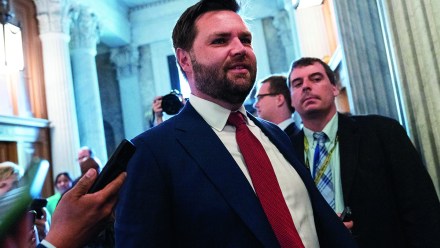
Six short years ago, J.D. Vance penned a piece in the Atlantic comparing Donald Trump to opioids. “Trump’s promises are the needle in America’s collective vein,” he wrote. “Trump is cultural heroin. He makes some feel better for a bit. But he cannot fix what ails them, and one day they’ll realize it.” In the six years since writing those words, it’s Vance, not Trump’s voters, whose mind has changed. Since announcing his run for Senate, Vance has become what he used to chastise: the worst kind of whiny, angry, instinctively hostile, dismissive, dog-whistling troll. Vance first burst onto the scene as the author of Hillbilly Elegy, a memoir which told the story of an often-forgotten cross-section of the American public. I loved Hillbilly Elegy.

vance

How the Supreme Court lost its real diversity

If you followed the nominations of Brett Kavanaugh and Merrick Garland, or the news after Stephen Breyer announced his retirement, you might have concluded that the country has never been more divided on what makes a good Supreme Court justice. Kavanaugh’s hearings were among the most divisive and brutal in history, but he at least had a hearing: Garland’s nomination was dead on arrival in the Senate. The selection of justices has become a preeminent political issue.

court

Hunting deer in the DC suburbs

I was driving along in my 2018 Honda minivan when I received a call from a member of the National Symphony Orchestra who has been on leave since March 2020: “Just bagged a doe. If you’re up for it, I’m going to gut this thing.” I regretted taking the call through the van’s speakerphone. A text message followed; thankfully the image did not project onto the dash display. I spent the rest of the drive to school explaining to my four daughters how Daddy had to dissect Bambi for work. My father took me hunting once in high school. He shook me awake at six in the morning, loaded me into the family car, a 1998 Chevy minivan, then drove it straight into a deer. I can still picture the white-spotted fawn’s body cascading across the asphalt. “Thank God it was just a baby.

deer

What’s in a name?

I used to have a cantankerous old relative who hewed to generalizations drawn from long experience. One of them concerned people named “Adam.” On a Sunday morning twenty years ago, as we sat around reading the papers, I mentioned Adam Sandler — or maybe it was Adam West or Adam Vinatieri. “All Adams are assholes,” he grumbled. “You ever notice that?” I tried to respond with some piety about how these people were not to blame for being called Adam. But I had a nagging sense that that was not how the Wheel of Onomastic Destiny spun. I had spent much of my adult life looking for heroic qualities in people bearing my own middle name, which is Scott. Even before I was fully emerged from childhood, Scott had acquired a bad name.

name

Joe Biden in the metaverse

Meta is meant to be better — better than Facebook, better even than reality. In the future, a second Edward Gibbon may wonder not just whether it was a good idea for the federal government to encourage Mark Zuckerberg and a handful of talented techies to launch a Revenge of the Nerds coup against the minds and manners of America, but also what it was about reality that made us want to escape it so badly in the first place. There has never been a society more blessed than that of the United States.

metaverse

Can Matt Gaetz survive a real world scandal?

The music blares, sparks fly from the pyrotechnics show, and the star walks out, pumping his fist and soaking in the cheers of the adoring crowd. A WWE wrestling event? No, it’s Congressman Matt Gaetz at AMERICAFEST, a Turning Point USA conference in December in Phoenix, Arizona. Gaetz was not there to deliver a substantive policy speech, educate the crowd about the dangers of inflationary spending or warn about Russia’s geopolitical machinations in Ukraine. Instead, the thirty-nine-year-old MAGA firebrand delivered the goods his audience expected.

gate

In the valley of the shadow of birth

I was five weeks pregnant when I found out. At that point, it’s nothing more than a little gestational sac of potential. My ob-gyn informed me it wasn’t technically viable and, given my age and history — I’d had an ectopic pregnancy in 2019—not to get my hopes up. “How do I make it stick?” I asked. “Honey, if I knew the answer to that I’d be a billionaire with a private island,” she said. “Yes, yes of course.” I felt stupid. It was seeing that sac for the first time that I felt the stirrings of a longing in my heart that terrified me. It still terrifies me. In fact, it has always terrified me. Still in shock and trying to guard my heart, I kept repeating psychotically, nervously, “Well, we’ll see!

pregnancy

Energy is the most important issue in the world

One issue more than any other will dominate airtime and influence policy in 2022: energy. Americans are seeing the highest prices at the pump in seven years. Since Biden took office, average gas prices are up by more than $1 a gallon. In November, gas prices in Mono County, California hit more than $6 per gallon, forcing some residents to drive to Nevada (where gas taxes are lower) to buy fuel. The price of natural gas in the US is at its highest in seven years, and up more than 180 percent in the last year alone. In Europe, the situation is even worse. Europe’s gas reserves are at record lows. In Germany, which already had the EU’s highest energy prices, bills are up 30 percent in a year.

energy
energy green biden

Biden’s big energy bust

"For too long, we’ve failed to use the most important word when it comes to meeting the climate crisis,” President Biden declared in his presidential address to Congress in April 2020. “Jobs. Jobs. Jobs.” Investments in jobs and infrastructure, the president pleaded, have often had bipartisan support in the past. In November, he got nineteen Republican senators to vote for his $1 trillion infrastructure bill, but the main planks of Biden’s climate plan were in the $2.2 trillion Build Back Better Act. The House passed it in November, only for it to fail in the Senate, thanks to opposition from the most powerful man in Washington, at least when it comes to passing legislation.

curse-tablet

Twitter has taken the place of the ancient curse-tablet

Twitter and other easily accessible means of online communication have encouraged the public to believe that Their Voice Will Be Heard. When it isn’t, they express their frustration through abuse and threats or by blocking roads. In this way, the mentality of the ancient curse-tablet lives on. In the Ancient world, the purpose of the curse was to “bind” the person you disliked — i.e. frustrate them from achieving the end they wanted and you did not. It was written on a thin lead plate, rolled up tight, sometimes twisted (to “hobble” the victim) and pinned (to constrain him), then placed into the tomb of someone who had died before his time. The belief was that the dead man, resentful of his early demise, would be happy to enact the curse against the named victim.

rome

New Rome, new home

I believe that Maximinus Thrax, whose brief reign ran from 235 to 238 AD, was the first Roman emperor never to have set foot in Rome. The Thracian brute started a trend. As the years went by, more and more Roman emperors gave the city a miss. Diocletian (284-305), who brought the crisis of the third century to an end, hated the city. Some later emperors settled on Ravenna as the seat of power for the Western empire. Constantinople emerged as HQ for the East. Rome retained a certain ceremonial significance but was increasingly irrelevant to the business of empire. The turn away from Rome happened for many reasons.

trump

Does the Orange Man have the juice?

The Democrats face so many problems that it’s hard to remember the Republicans face a big one of their own. Donald Trump is not just a problem for Republicans. He’s a problem for the Republic. The problem is not Trump’s policies, whether you agree with them or not. Their populist/nationalist thrust differs from traditional conservativism, but his policies are coloring within the traditional lines of American politics. Many of them — tax cuts, immigration enforcement, increased military spending, credible threats against foreign adversaries — worked well and received enthusiastic popular support. Trump’s emphasis on state and local solutions over centralized ones was a welcome return to standard Republican practice.

blackpill

Blackpill: inside the incel death cult

Young men are giving up. They are the losers of the endless beauty pageant that is online life, dating in particular. Their failure to attract women or find rewarding employment is the stuff of jokes: they are “incels” (involuntary celibates), basement-dwellers, forty-year-old virgins. Meanwhile, they sink into a digital swamp of gloom and isolation that leads to resentment, radicalization, murder and suicide. In their internet forums, they call this “taking the blackpill.” The blackpill had yet to be named in 2014, when twenty-two-year-old Elliot Rodger rampaged through Isla Vista, California, killing six people and injuring fourteen more before his suicide, but he was fueled by its spirit of nihilism.

camus

The other Camus

Nearly two-thirds of French citizens say they fear that Muslim immigrants threaten white Christians with “extinction.” That bodes well for Éric Zemmour, France’s ubiquitous right-wing polemicist, candidate for its presidency — and prominent popularizer of the concept of le grand remplacement, the conspiracy theory that a cabal of Jews and globalist elites are conniving to “replace” Europe’s native population with Africans and Arabs. This paranoid thesis has inspired white supremacists across the world, and is an increasingly popular import on the American right. The man who coined le grand remplacement is the seventy-five-year-old novelist and travel writer Renaud Camus — no relation to Albert, but a kind of philosopher nevertheless.

Youngkin

The multinational that ate Virginia

This time next year, Republicans expect to be back in control of Congress. They are already celebrating, as 2022 sees Glenn Youngkin newly sworn in as governor of Virginia. For a wide swath of GOP activists and consultants (and not a few voters, too), Youngkin is the face of a Republican Party that can win — with or without Donald Trump. Youngkin had Trump’s endorsement last November. Youngkin was as eager to promote this as his Democratic opponent was, but the endorsement helped rather than hurt him. Trump voters’ residual skepticism toward a nominee who had recently been head of the Carlyle Group — a private equity firm long synonymous with insiderdom and globalism — was overcome by the rise of Critical Race Theory as a pivotal campaign issue.

tweed

Tweed is of the essence

Rushing through Dulles Airport after a trip abroad this winter, I noticed a policeman following quickly but discreetly behind me. Not having smuggled any sausages or cigarettes on that particular flight, I was of clear conscience, and nodded hello at him when he caught up. All he said was: “Love the jacket.” It was a heavy, scruffy, brown herringbone tweed. People like tweeds. When I wore one, my parents’ friends used to tell me what a nice-looking young man I was. At college, women I didn’t know would occasionally run a fingertip down the sleeve and say, “Mmm.” Never found out what that meant. Too late now. The cop’s compliment was a bit different. There was pity in it. “My wife’s grandfather had one,” he said. “That’s old-school.” I suppose he was right.

manna

Downloading God in the App Store

Education at my Jewish private school was chock-full of religious instruction. Precisely half of our lessons were dedicated to Jewish studies. We had Bible classes (Chumash, we called it) every single day. As a child, I wasn’t particularly excited about most of the miracles. Sure, the staff turning into a snake was cool, but it felt like a parlor trick. The sea splitting felt too huge to even contemplate. The one miracle that seemed to get everyone in class thoroughly enamored with God’s power was the concept of manna from Heaven. The idea that you could just dream up what you wanted to eat — and for eight-year-old me that was infinite donuts, pizza and Dunkaroos — and it would just fall from the sky? Well, that was truly miraculous.

harvard

Harvard’s diversity disgrace

In 2014, the non-profit Students for Fair Admissions filed a lawsuit against Harvard University, alleging discrimination against Asian Americans in its admissions process — discrimination resulting from Harvard’s stated commitment to “a diverse class.” After defeats at the District and Court of Appeals level, the suit has arrived at the foot of the United States Supreme Court. The case will be argued in the 2022 term. Harvard’s reputation is not all that’s at stake. The case threatens to bring down the entire system of race-based affirmative action that dominates college admissions. Looking at the numbers, it’s easy to see why Students for Fair Admissions believe they have a case.