Features

The legal challenge to assisted suicide

Lonnie VanHook was preparing to board the train to Oregon when his body gave out. The Navy veteran is accustomed to these sorts of betrayals. He is quadriplegic and legless to boot; a rare form of cancer is eating away at his skeletal-muscle tissues and bladder. He awoke in a facility surrounded by medical professionals wearing the plastic countenances of concern and sympathy they picked up during the med school lessons on bedside manners. During the interaction, Lonnie told them about the reason for his upcoming trip. You can picture the Oakland native rolling his eyes as he has prepared for the rebuttal. The doctors, no doubt, exchanged astonished glances. Lonnie, what were you thinking?!? You don’t need to take the train. We can do that right here!

assisted suicide

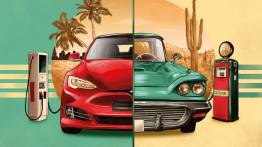
Are electric vehicles really the future?

It’s a cloudless spring day, made for a country drive. Chartreuse trees explode with pollen and glow to near neon. I wind past pastures and stone and brick farmhouses and amiable old barns that could set the scene of a Beatrix Potter story, elatedly adding to the hum of provincial enterprise by perfecting my rev-matching skills over the rolling hills and 8mph switchbacks that mark PA-74. The quiet two-lane road spits me out into city limits, and suddenly I’m crawling through a crowd at the Carlisle Collector Car Auction. I’m here to learn what classic car enthusiasts think of electric vehicles, or EVs. In 2021, President Biden issued an executive order establishing that, by 2030, half of new passenger cars sold must be all-electric or hybrid, going up to two-thirds by 2032.

electric vehicles

They wanted to break the internet. It broke them

Their declared intention was to break the internet. In November 2014, the winter issue of Paper magazine, a stalwart of the New York arts and music scene for thirty years, featured an image immediately declared iconic by social media: Kim Kardashian, her neck wrapped in pearls, popping a Champagne cork and catching the bubbly white stream that jets over her head in the coupe glass propped on her prominent derrière. And that was just the cover — the internet quickly shared photographer Jean-Paul Goude’s more pornographic images of an oiled-up Kardashian stripping out of her black evening gown to show off her famous buttocks, before going full frontal with a slightly unnerving smile. The gambit worked to the tune of 16 million views for Paper in a single week.

media

Is America a republic in name only?

Is the United States a one-party state? Surely not. Just look at the ballots the next time you vote. There are nearly always Republican as well as Democratic candidates, and often there are candidates from other parties as well (Green, Working Families, Libertarian, etc.). But when you go beyond the labels, what do you find? Tucker Carlson, a recent victim of the uniparty monopoly, put it very well. “Suddenly, the United States looks very much like a one-party state,” he said in a post-Fox video. “That’s a depressing realization,” he added. “But it’s not permanent.” I think he is right about both things: the depressing reality that the United States looks more and more like a one-party state and the fact that the situation is not, at least not necessarily, permanent.

republic
crypto

Welcome to the crypto winter

Last year, Austin scored a major coup when it landed Consensus 2022, a big in-person conference focused on the digital finance industry, specifically cryptocurrencies like Bitcoin and Ethereum. CoinDesk, a news and research company focused on the cryptocurrency industry, chose the Texas capital for its return to an in-person conference and it arrived splashy and huge, taking over not only the Austin Convention Center but several adjacent hotels and event spaces, its 17,000 attendees swarming downtown. This was June of last year. Three months earlier, South by Southwest, the city’s long-running big tech and culture conference had been a veritable playground for NFT enthusiasts, and dozens of panels hyped the transformative importance of the blockchain.

moving

Moving house sucks

Moving sucks. It’s hard on your body, mind and wallet. It’s stressful — so much so that people consistently report it in the top ten most stressful events of their life. There are a million moving parts, a never-ending to-do list. Cross state lines and that list gets even longer. The List haunts you the entire time you pack, inexplicably growing with every item you check off. Packing supplies. Call movers to get quotes. Logistics: how are we getting the cars there? Shipping? Driving? The dog should drive. The baby should fly. I moved almost every year and a half growing up, so the sound of packing tape gives me PTSD. When that sound made my eleven-month-old daughter cry, I became a believer in generational trauma.

Hitchens

The afterlife of Christopher Hitchens

In 2011, a terminally ill Christopher Hitchens faced death with droll stoicism: “To the dumb question ‘Why me?’ the cosmos barely bothers to return the reply: ‘Why not?’” he wrote. As his health declined and the end drew nearer, the skeptical Hitchens stuck to his atheist guns, clear-eyed in his confidence that death was final. Hitchens died in 2011, but his work and reputation live on. No paradox there, of course, but just how large Hitchens looms twelve years after his death would surely have surprised even this immodest author. It’s certainly a surprise to me, a reformed Hitchens fanboy. The face of twenty-first-century atheism is having quite the afterlife.

influencer

Has the influencer bubble burst?

If you ask anybody under twenty about their life plan, social media will likely play some part in the answer. A friend’s nine-year-old son has just launched his own YouTube channel. My prepubescent cousins are telling their parents that TikTok is “the key to financial freedom.” When I was their age, my entrepreneurial skills went as far as selling single cigarettes to my classmates for loose change. The appeal of the influencer life isn’t hard to understand. Over the last decade, it’s been touted as the sexy, well-paid, democratic career of the future. A 2019 Morning Consult survey found that one in ten young people consider themselves “influencers.” But now these micro-celebrities are trading in their tripods and ring-lights for real jobs.

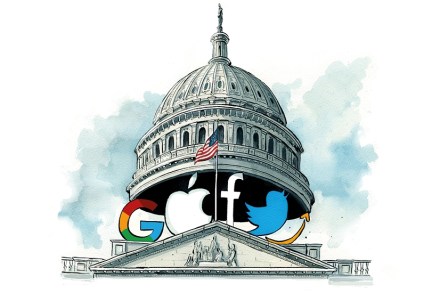
Make tech great again

Mark Zuckerberg has dubbed 2023 Meta’s “year of efficiency.” The slogan is a corporate euphemism for layoffs, of course — and not an especially subtle one. Zuckerberg’s company has parted ways with tens of thousands of employees this year. Other tech firms are following suit. Crunchbase estimates that US tech firms fired more than 118,000 employees in the first quarter of 2023. These are lean times in Silicon Valley — and, as Joel Kotkin explains in this month’s cover story, there is more to this tale than Big Tech belt-tightening after a pandemic-era hiring spree. The Valley, Kotkin explains, is in trouble. A place that America, and the world, once looked to for an ambitious and optimistic vision of the future, has grown sclerotic.

tech

I was injured covering Ukraine — but I’ll work my way back

A little over a year ago, I was gravely injured in a missile blast while covering the Ukraine-Russia war for Fox News. The severity of my injuries has made recovery a very long and arduous process. Every day I have a number of things I have to do. So in the morning, I’ve got about an hour and a half or so of facing all the problems that have popped up overnight. I do a lot of exercises, a lot of stretches. I do a lot of balance work. Everything from using rubber bands to try and get my thumb to move a little bit more to taking care of my burns because if I don’t, they break open and bleed a lot. I do that every single day. The list is honestly endless, and the beginning of every day is tough. I tell myself that the worst part of the day is finished in the morning, which is great.

recovery

Charles III is fighting for the monarchy’s life

On September 10, 1946, British foreign secretary Ernest Bevin remarked, “kings are pretty cheap these days.” His comment was directed at the displaced monarchs who floated, dispossessed, around Europe, but it might also have been a dig at the ailing king George VI, who had found his métier in wartime but struggled to regain it afterwards. Less than six years after Bevin’s comment, the king died and Elizabeth II assumed the throne, leading to an unprecedented period of monarchical duration, stability and popularity. Yet after her own death last September, at the age of ninety-six, and the subsequent accession of her son, Bevin’s statement has assumed new and unlooked-for relevance.

Charles

A lament for the Los Angeles we lost — and why I’m off

Like so many wannabe actors before me, I came to this gritty city with big dreams of “making it” in Tinseltown. I thought I wanted to be an actress until I got here and realized that driving around begging casting directors for approval wasn’t for me. Nonetheless, I stayed in Los Angeles — and over the last sixteen years, this big, messy, giant suburban sprawl has become a part of me. My husband and I have agonized over the decision of whether to stay or go. Making a cost-benefit analysis — like whether to stay near family in perfect weather or go where we can provide a better quality of life for our daughter in a place with unbearable heat — has felt like trying to solve an impossible math equation.

Los Angeles

Why Ron DeSantis should wait for 2028

Maybe Niccolò Machiavelli was not the first political consultant, but he remains one of the best. Ron DeSantis might solicit his advice before deciding whether a 2024 campaign for the White House is wise. DeSantis could start with the penultimate chapter of The Prince, “What Fortune can do in human affairs, and how it can be resisted,” which is famous for its imagery. Machiavelli first likens fortune to a raging river, whose flood cannot be met head on but whose fury can be dissipated by dams and dykes built in advance. Later he says Fortune is a woman who yields to a young man who comes on strong, even roughly. The lesson for a forty-four-year-old DeSantis is obvious: seize the moment. She’s yours for the taking — if you’re bold.

metaverse

Good riddance to the metaverse

So pack it all in then. Away with the wisecracking butterfly that sits on your shoulder during work meetings. Out with the Gamorrean Guards who play Texas Hold’em with you around a floating table. The metaverse, Mark Zuckerberg’s fever dream of a virtual-reality infused world, is dead. That’s assuming it was ever alive and kicking in the first place. To assess just how “real” the metaverse ever was, we need to go back to its inception in the fall of 2021. That was when Zuckerberg released a video of himself in suspiciously Steve Jobs-esque garb — black shirt and pants, sneakers — tooling around what he called a “home space” that brimmed with holographic bric-a-brac.

wawa

Inside Pennsylvania’s gas station wars

Travelers road-tripping across Pennsylvania this summer, take heed: a war is brewing in the center of the state. Buildings have been flattened. Families have been torn apart. The threat of an emerging third power regularly captures headlines and fuels the local rumor mills. I am referring to the competition among three gas stations-cum-convenience megastores — Sheetz, Rutter’s and Wawa. It is said to be the “most heated food rivalry in the country.” Food? A lot of what these places pass off as “food” is up there with the cosmic chicken sponge found at airports. Nonetheless, the rivalry is real. It’s palpable. It’s all-American. And as for the rural places benefiting from this capitalism, as the kids like to say, we’re here for it.

Neumann

Inside the unlikely return of WeWork’s Adam Neumann

Imagine for a moment you are Adam Neumann, the slick, smooth-talking Israeli-born entrepreneur who took the world by storm thirteen years ago with WeWork, his ultimately failed effort to rethink the way we office. After your start up took a tumble and your IPO failed, you nonetheless walk away with roughly $600 million in cash, plus another $400 million loan, and a new lease on life. You head underground, lick your wounds and claim to be trying to learn from what went wrong, including the relentless overhyping, the mismanagement and the enormous losses that your investors suffered. When you re-emerge, you decide to start again and persuade one of Silicon Valley’s most respected investors to back you. Whoa.

america

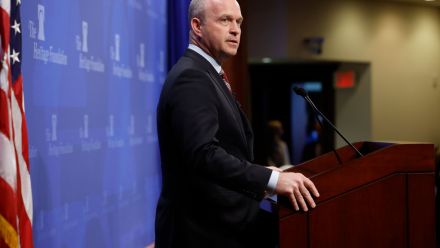
Is it too late to save America?

Regular readers may recall how fond I am of a mot from the British diplomat, author and art collector Edgar Vincent, the first (and, as it happened, the last) Viscount d’Abernon: “An Englishman’s mind works best when it is almost too late.” When I first encountered Lord D’Abernon’s saying, I was impressed by its slightly disabused cheerfulness. “Whew,” I thought. “As usual, some impending disaster was neatly avoided at the last moment by the wit and pluck of the doughty Brits.” The drama of the near-escape added to the sweetness of relief. Surely we Yankees — most of whom, until recently, were basically displaced Brits — could also be counted on to display the requisite derring-do at the critical moment. Could we though? “Almost too late.

famous neighbor celebrity

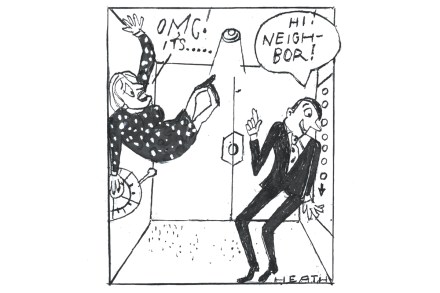
The A-lister next door

For most of my life I’ve been chronically awkward around anyone who’s even remotely famous. I once effusively greeted former British chancellor of the exchequer George Osborne because I knew I recognized him from somewhere. I just assumed he was a friend of a friend. At a conference in Berlin circa 2010, I spilled coffee on the back of former German chancellor Gerhard Schröder’s suit. On another reporting assignment I tripped and lost a shoe while trailing the late Fiat Chrysler CEO, Sergio Marchionne. Stopping to retrieve it would have caused me to surrender my coveted spot in the press scrum, so I obtained my soundbite barefooted, triggering the notoriously grumpy Italian to crack a pitying smile.