Books and Arts

The perception of doors

The architectural historian Andrew Alpern has for decades done the dirty work when it comes to pre-war New York apartments. Others have presented glossy coffee-table books full of newly commissioned professional photographs. Alpern has focused on the practical details of apartment design, especially floor plans, which tell us so much about how people actually live in their apartments, or at least were originally meant to. His Apartments for the Affluent (1975), Historic Manhattan Apartment Houses (1996) and New York Apartment Houses of Rosario Candela and James Carpenter (2002) are essential compendia; anyone with an interest in New York residential architecture, especially of the magnificent variety, must have them. The more industrious uptown real estate agents also find them useful.

doors
stuart evers

Modern English

A decade ago — eheu fugaces labuntur anni — Stuart Evers’s debut story collection, Ten Stories About Smoking, was one of the first books I ever reviewed, and I’ve kept tabs on his career ever since, in that spirit of comradely competitiveness one feels for a writer of a similar age launching at the same time. I spoke warmly of his first novel If This Is Home and enjoyed his second collection, Your Father Sends His Love, when it appeared in 2015. But there was nothing in those earlier works to prepare me for the scale and ambition of The Blind Light. This extraordinary novel about Britain and Britishness spans six decades and uses the stories of two men and their families to delve revealingly into complex questions of class, fate and history.

The art of the presidency

The Obamas loved Hamilton. It was the biggest show to hit Broadway since Cats or Rent, with ticket prices reaching four digits. Michelle, who urgently needs to read Buddenbrooks or visit the Sistine Chapel, called Lin-Manuel Miranda’s musical the ‘best piece of art in any form that I have ever seen in my life’. Hamilton was present at the dawn and eclipse of the Obama years. Miranda first publicly shared material from the musical at the White House’s inaugural Spoken Word evening in 2009. Seven years later, Lin-Manuel joined Barack for a cringe-inducing freestyle rap in the Rose Garden.

art presidency

Out of Nam’s way

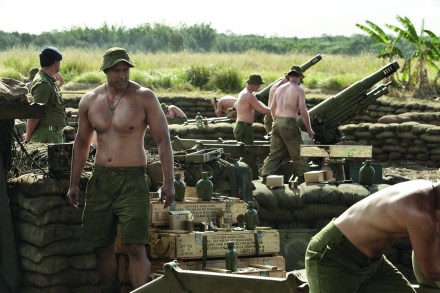
When I was a teenager whiling away the endless hours with VHS video rentals, Vietnam movies were pretty much the only game in town. I must have watched The Deerhunter a dozen times, and the scene in the rat-infested river cage well over a hundred times. Even now, I can’t watch it without being surprised at how De Niro manages to pull off that extraordinary escape stunt. My, how I covet those tiger-stripe Special Forces camouflage fatigues. The problem is, The Deerhunter has loads of boring non-war stuff either side of the good bits. That’s why I much prefer Platoon — controversial choice, Oliver Stone being a pinko — all of which takes place in-country.

nam

Mart and marketing

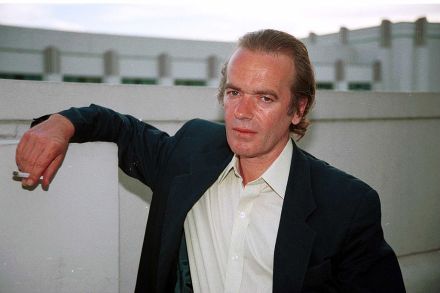
George Orwell once proposed that the specimen literary career takes the form of a parabola in which the downward curve is implied in the upward. You can see immediately how this theory might work with a major-league titan such as Thackeray (promising early sketches leading to Vanity Fair, then downhill to the trackless waste of The Virginians) or James Joyce (peaks in the early stretches of Ulysses before descending to the dream language of Finnegans Wake). But how does it apply to the 71-year-old former enfant terrible and, to borrow another useful French phrase, one-time jeune premier of English fiction, Martin Amis?

martin amis
steinberg

The eyes have it

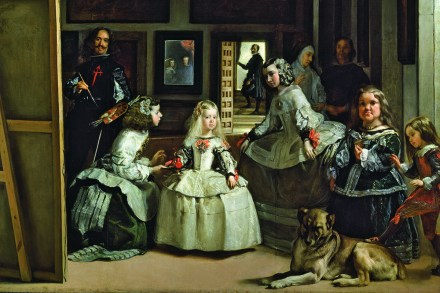
Art historians do not generally become household names, as Kenneth Clark did later in life after embracing television, most famously with Civilisation (1969). They can, however, acquire legendary or semilegendary status within the profession and among amateurs. One such was Leo Steinberg (1920-2011), who taught for many years at the City University of New York and the University of Pennsylvania. Academic art historians are expected to ‘publish or perish’: college texts, monographic studies on individual artists, or down-the-rabbit-hole treatises on arcana that seem to require more pages of footnotes than text. Steinberg mainly wrote for professional journals. He also lectured widely, testing ideas that later might make their way into print.

We’re not going to take it — again

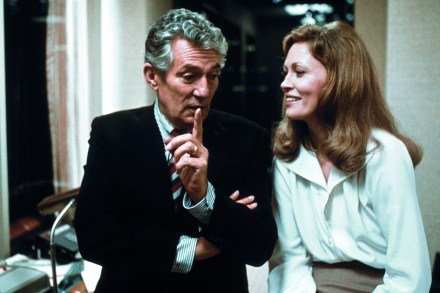
The everyday experience of 2020 includes televised demagogy and a national media making pure spectacle out of domestic terrorism and race riots. The less we believe what we see, the stranger the sights become. These experiences are also the story of Network, the 1976 Paddy Chayefsky/Sidney Lumet hit which won four Oscars out of its 10 nominations. We must ask ourselves why are we living out the 1970s again and, indeed, enacting its satire in deadly earnest. Marx said history repeats itself, first as tragedy, then as farce, but what did he know of Hollywood? A remake is the safest bet. We, however, have reversed Marx’s sequence.

network

Know better

We live at a time of universal polymathy. We don’t know everything, but there’s not much difficulty in being able to discover any given truth. But it’s also worth remembering just how hard it used to be to find things out. Thirty years ago if you wanted to research it meant a trip to the public library — and perhaps filling out a form for an inter-library loan. Or you could try your luck in a bookshop, new or secondhand. The whole process took a long time, and most people stayed within their professional competence or enthusiasm, frankly admitting to ignorance outside those limits. It was the age of the specialist, memorably captured by Michael Frayn in Donkeys’ Years and the character of Kenneth Snell.

polymath

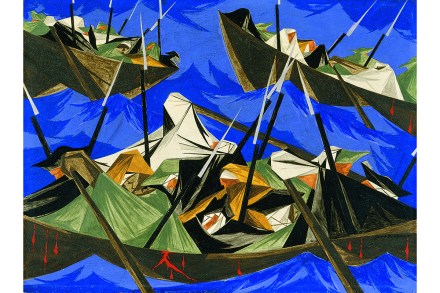
Liberty and death: Jacob Lawrence’s struggle for freedom

Few artworks could be more responsive to the current upheaval than Jacob Lawrence’s 1954-56 series ‘Struggle...From the History of the American People’. Painted during the dawn of the Civil Rights movement, the cycle of 30 panels tells a history of the American Founding through punchy modernist vignettes, engaging with timely and timeless topics such as brutality, race, memory, justice and our shared national heritage. At the Metropolitan Museum of Art, 24 of the original panels have been reunited for the most complete exhibition of the series since its original showing more than six decades ago. The exhibition will travel to Birmingham, Seattle and Washington, DC from New York.

jacob lawrence

Rock, a hard place

‘It’s a woman’s thing, creation,’ says Sarah, a girl accused of witchcraft in 18th-century Scotland, in one of the three storylines in Evie Wyld’s powerful new novel. Sarah is pregnant, having been raped and nearly killed. She is looking at a piece of sacking sewn by a sister and mother and continues: ‘You can see how they felt in each stitch, you can hear the words they spoke to each other and into the cloth.’ The Bass Rock is in many ways an amplification of these words spoken into the cloth, a feminine counterforce to the masculine violence that pulses viscerally throughout.

bass rock wyld

Office romance: I’m loving The Bureau

One of the many things I love about the horribly addictive French spy series The Bureau is that it never attempts to improve you with pious little homilies about how foreigners are just the same as us, with values just as worthy as our own, so they should be treated with the same amount of respect, for are we not all children of God? If The Bureau — about the DGSE, France’s equivalent of the CIA — had been made in the US, there would be a specially created nice, upstanding, Americanized Muslim character like the agent in The Looming Tower or the implausible black Muslim character in Jack Ryan.

bureau

The doctor’s dilemma

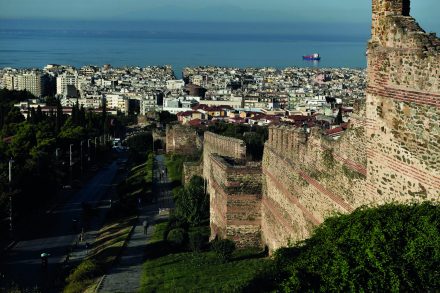
The facts are stark, if little known. Before World War Two, the Jewish community of Thessaloniki, Greece (Salonica, in its old Ottoman name) numbered over 50,000. Jews were this Mediterranean port city’s most numerous ethnic minority and had shared in many of its past glories. When the war was over, only 5,000, less than 10 percent, of the Salonica Jews survived. Between March 15 and August 10, 1943, the local Greek police, supervised by the SS, arranged the deportation of 45,000 men, women and children in 19 convoys, most of them bound for death at Auschwitz-Birkenau. My grandmother’s family was among them. Talking Until Nightfall is a grim and gripping family saga. It compiles the testimonies of three generations of the Matarasso family.

Human after all

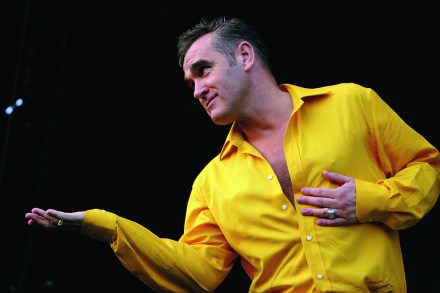
As the weird world of lockdown winds down, we might pause to consider what we’ve learned. I am hardly alone in my heightened hankering to unravel, synthesize, undo and discard. In this mission a voice from the past is helping me piece things together anew as the strange tyranny begins to dissolve. It began when Google started throwing videos of the Smiths in my daily cyberpath, prompting a non-essential trip down Memory Lane. Back in the day, I was, as David Cameron used to boast, a ‘huge fan’ of the Smiths. Precisely, I was a fan of Johnny Marr’s guitar literacy and the persona of Morrissey, the enchanting singer who had jettisoned his given names.

morrissey

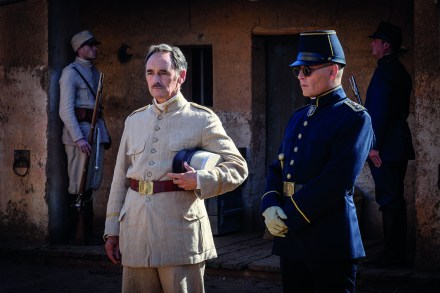
Guerra goes to war

Every civilization needs its barbarians. Lazy, filthy, dumb and dangerous, the barbarian, real or imagined, is the eternal grindstone on which the civilized sharpen their prejudices. They are, as the Greek Alexandrian poet Constantine Cavafy wrote, ‘a solution of a sort’ — but to what? In Cavafy’s poem ‘Waiting for the Barbarians’ (1898), an unnamed city is gripped by cultural torpor and political sloth. The gridlocked citizens, weakened by indolence and luxury, dream of a bloody release from their troubles. Disaster, a visit from the barbarians, becomes their last hope for rebirth. You don’t need to be a specialist to see the parallels between the poem and the illicit undercurrents of politics in the 2010s.

barbarians guerra

The spy’s spy

Sitting beneath the pergola of the historic Roycroft Inn, J.R. Seeger looks the part of a successful thriller writer. He is wearing an immaculate white shirt, blue jeans and boat shoes, his blue-green eyes peering over a camouflage-style face mask. The western New York hotel, some 20 miles from the city of Buffalo and the Peace Bridge crossing into Canada, was a centerpiece of the American Arts and Crafts movement when it opened in 1905. It is also the setting for one of the most gripping scenes in Seeger’s debut novel, Mike 4, in which a Russian double agent tries to lure an American protégé into a life of treason. The rendezvous involves a splintered oak door, a Colt Python .

seeger
john giorno great demon kings

Last of the red-hot lovers

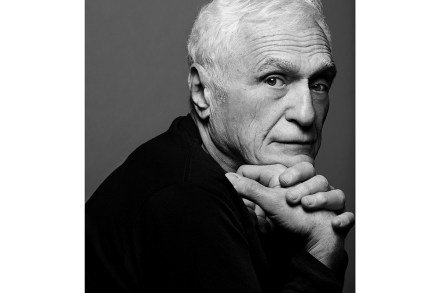
John Giorno’s breakthrough work, he explains in his richly salacious telltale memoir of the Sixties New York art scene, was ‘Pornographic Poem’. In 1964, Giorno took phrases from mimeographed erotica and reconstituted them as homosexual lyric poetry: ‘I shivered/ looking up / at these erect pricks/ all different/ lengths/ and widths/ and knowing/ that each one/ was going up/ my ass hole.’ ‘Pornographic Poem’ is a ‘readymade’ or ‘cut-up’ that follows Andy Warhol, Robert Rauschenberg, Jasper Johns and William S. Burroughs — all of them artistic appropriators, and all of them Giorno’s lovers. These revolutionary artists are Giorno’s ‘great demon kings’.

Mountain heir

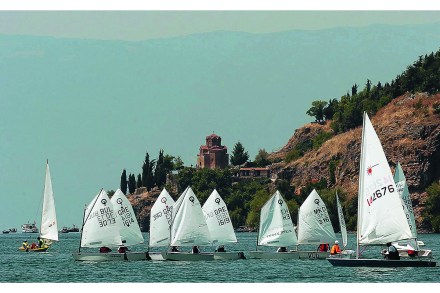
Kapka Kassabova’s previous travel book, Border, was rightly acclaimed and won several prizes. The author traveled to the edge of Europe, between Greece, Bulgaria and Turkey, and teased out ‘where something like Europe begins and something else ends, which isn’t quite Asia’. This is a sequel of sorts. She now travels to another border, that between Macedonia, Albania and Greece, where the vast and beautiful Lake Ohrid remains one of the Balkans’ surviving religious melting pots, despite considerable nationalist pressure. It is where her mother was originally from, so her journey is partly a rediscovery of her own roots.

kassabova

Meet the Mozarts

It’s 1771, you’re in Milan, and your 14-year-old genius son has just premiered his new opera. How do you reward him? What would be a fun family excursion in an era before multiplexes or theme parks? Leopold Mozart knew just the ticket. ‘I saw four rascals hanged here on the Piazza del Duomo,’ wrote young Wolfgang back to his sister Maria Anna (‘Nannerl’), excitedly. ‘They hang them just as they do in Lyons.’ He was already something of a connoisseur of public executions. The Mozarts had spent four weeks in Lyons in 1766, and, as the music historian Stanley Sadie points out, Leopold had clearly taken his son (10) and daughter (15) along to a hanging ‘for a jolly treat one free afternoon’.

mozart

Cormac McCarthy, brutal but brilliant

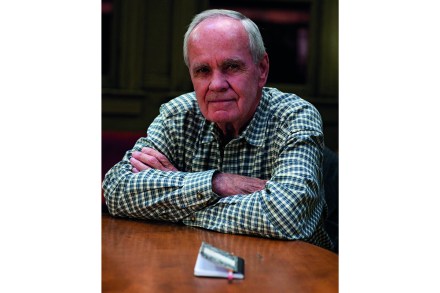
Cormac McCarthy of all living American novelists has realized most fully the potential grandeur of his métier by revealing the spiritual condition of our time in the old epic language. In this sense, he is the most serious American novelist of the post-war era. McCarthy’s work is magnificently oblivious to modern industrial and technological society and to the post-urban and suburban culture of consumerism, triviality and superficiality that are its fruits: the penalty a decadent civilization pays for its self-alienation from nature, humanity and metaphysical reality, and its embrace of an artificial world in which what is real and human withers and dries up, and art becomes well-nigh impossible.

cormac mccarthy

Purple podcasters

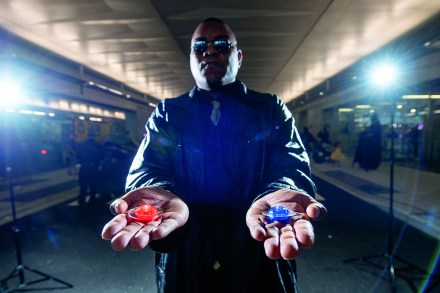
You’re familiar, no doubt, with the term ‘red pill’, the Matrix-inspired metaphor that’s become a catch-all for the type of right-wing thinking that thrives in the dark corners of the internet. Now the journalist Katie Herzog, in an admittedly tongue-in-cheek comment, might well have given us a new term: the purple pill. To take the purple pill, inferring from Herzog’s outlook, is to oppose the dangerous excesses of identity politics, but also the reactionary extremes of the red-pillers. This is, simply, a compromise — or the kind of terminally sensible position that shouldn’t need corny movie metaphors in the first place. But you see her point.

purple pill katie herzog