Books and Arts

Twenty years on from Jonathan Strange & Mr. Norrell

"Some years ago there was in the city of York a society of magicians. They met upon the third Wednesday of every month and read each other long, dull papers upon the history of English magic.” So begins Susanna Clarke’s modern masterpiece Jonathan Strange & Mr. Norrell, first published two decades ago and now regarded, rightly, as the greatest work of British fantasy literature since the Gormenghast novels. Revolving around two indelible characters — the fussy, pedantic “practical magician” Gilbert Norrell and the swashbuckling, Byronic Jonathan Strange — it has an epic sweep and dares to take the existence of magic, and magicians, wholly seriously, giving its oft-maligned genre an intellectual and emotional heft that few other comparable books possess.

Clarke

Giles Milton retells the story of the Grand Alliance as a cinematic thriller

On June 22, 1941, the German army invaded the Soviet Union. Over the next four months, the Wehrmacht blasted through the Soviet defenses, taking millions prisoner and destroying thousands of tanks. By early December, German scouts were purportedly within site of the Kremlin. Even though the Wehrmacht was forced back from the gates of Moscow by the Red Army, the renewed German offensive in spring 1942 threatened to deliver the coup de grâce to the Soviet Union. That it didn’t was due to an unlikely alliance between British prime minister Winston Churchill, US president Franklin D. Roosevelt and Soviet dictator Joseph Stalin.

Alliance

The peculiar appeal of ‘sad-girl literature’

A stack of books balances on a fluffy white Michael Aram bedspread: Ottessa Moshfegh’s My Year of Rest and Relaxation, Lisa Taddeo’s Animal, Candice Carty-Williams’s Queenie and Lily King’s Writers & Lovers all touted as “sad-girl lit-fic book recs.” Lana Del Rey’s lugubrious melodies play on repeat; “I’m pretty when I cry” and “baby blues / baby blues,” in particular, are favored lyrics. This is a specific quarter of TikTok (or BookTok), the lachrymose world of “sad-girl lit.

sad-girl

Examining children’s literature and its enduring worth

My first reaction, on tipping this vast compendium — soaring toward 600 pages — out of its padded bag onto the kitchen table, was straightforward envy at the thought of anyone being paid what, you infer, was quite a reasonable sum of money to spend several years on the intoxicating trail of the children’s book. My second was intense curiosity over the procedural approach employed, which is to say that there are a variety of well-worn pathways into the heart of the genre; it would be fascinating to see which ones Leith, the literary editor of The Spectator in the UK, had chosen to follow. The first path, exemplified by Francis Spufford’s 2002 The Child that Books Built, involves writing a memoir that broadens out into a consideration of the form as a whole.

Leith
Thynne

Jane Thynne pulls off a new kind of spy novel

To some, the female sex might seem ideally suited to spying, and as their exploits in the Special Operations Executive showed, women on both sides of the Atlantic could certainly match men in courage and daring during World War Two. Yet espionage fiction has tended to be a male preserve. Jane Thynne is one of the handful of women novelists to have absorbed the lessons of John le Carré: a spy novel can also be a love story, a quest for institutional integrity and an exploration of inconvenient truths. The female perspective on all this, unsurprisingly, turns out to be worth having. Set in 1938, Midnight in Vienna introduces us to poor, thirtyish, Oxford-educated Stella Fry.

In the studio with Merche Gaspar

I was sitting cross-legged on the floor of artist Merche Gaspar Caro’s studio in Barcelona on a rainy Monday morning when I asked myself, “Why isn’t this artist better known?” We had met by chance some months earlier, when I passed by the Galeria Subex, which at the time was hosting a show of her recent work. I was initially drawn in by the exhibition poster, which displayed a stunning image of a young woman wearing a dark-blue dress and a white apron. Once inside the gallery, I was enthralled by canvases of mothers and daughters, drawings of birds and paintings of children playing or curled up in bed reading stories. Many featured a wonderfully cool, contemporary palette of mauve, gray and sapphire.

Sylvester

The life of David Sylvester

It’s 1960, and the clock has struck seven in the morning on Manhattan Island. A car weaves through the clamorous city as the morning sun settles. In the front seat are the Canadian-American painter Philip Guston and the British art critic David Sylvester; the pair have just enjoyed a sobering Chinese meal after a long night of drinking with Willem de Kooning and Franz Kline, which called for the digestif of a drive. It has been an epochal night for Sylvester; he just doesn’t know it yet. In 1996, Sylvester, who would have turned 100 this year, wrote his essay “Curriculum Vitae” later reproduced in his acclaimed About Modern Art: Critical Essays 1948-2000.

Culture

This month in culture: September 2024

Slow Horses, season 4 Apple TV+, September 4 Apple TV+’s adaptations of Mick Herron’s excellent espionage novels, led by Gary Oldman on magnificent form as the belching, flatulent, brilliant Jackson Lamb, have quietly become the streaming service’s MVP, and their strong showing in this year’s Emmy nominations has reinforced the company’s continued faith in the unmissable series. This fourth installment, based on Herron’s novel Spook Street, guest stars the ever-excellent Hugo Weaving as a mysterious interloper with a close personal connection to Jack Lowden’s bratty Bond-in-training River Cartwright. Expect the usual mixture of big laughs, shocking twists and high-octane action scenes.

A superbly written and insightful account of the contemporary American military

Four-star Marine General Kenneth “Frank” McKenzie headed US Central Command — CENTCOM, covering the Middle East — from spring 2019 until spring 2022. It was an eventful, and stressful, three years: taking out long-time Islamic State head Abu Bakr al-Baghdadi in 2019, then notorious Iranian Quds Force commander Qasem Soleimani in early 2020 and overseeing the disastrous final withdrawal from Afghanistan in 2021. Prior to CENTCOM, McKenzie had spent four years in two top-level Joint Chiefs staff posts, and before that he served multiple tours of duty on the ground in Afghanistan. As a younger officer he had been in the Pentagon on September 11, 2001, when American Airlines Flight 77 hit; he was commissioned in the Marine Corps right out of the Citadel in 1979.

McKenzie

A compelling and evocative biography of the redoubtable Mrs. Mandelbaum

If you thought organized crime in the United States had its roots in the Prohibition era, think again. As Margalit Fox demonstrates in this compelling and evocative biography, its seeds were sown half a century earlier, when a resourceful, daring and ingenious woman enjoyed a long and successful career as a forerunner of the familiar twentieth-century “Godfather” figure. By the mid-1880s, she was the boss of America’s most notorious crime syndicate, presiding over a multimillion-dollar criminal empire which stretched across the country and even into Mexico and Europe. Born in Kassel, Germany in 1825, Fredericka “Marm” Mandelbaum came to America in 1850, part of the mass exodus of European Jews in that period.

Mandelbaum

Pat Nixon, ambassador of goodwill

The Watergate scandal already commands a wide bookshelf. In the fifty years since Richard Nixon fell on his sword, we’ve had the big-ticket books by the tag-team of Woodward and Bernstein, and others, by contrast, seeking to exonerate Nixon and pin the whole thing on his adversaries; tales about secret sources and White House interns and plucky whistleblowers like the oleaginous John Dean and that human hand grenade Martha Mitchell; not to mention self-serving memoirs from all the principals, some now on their second or third helping at the table; or the ones saying it was all a conspiracy involving an unholy alliance of the FBI, MI6 and KGB, with the little green men from Mars thrown in.

Pat

James Shapiro’s timely account of the rise and fall of an influential public theater

James Shapiro, a distinguished Shakespeare scholar, has turned his attention to the seeds of today’s culture wars in this fascinating, timely and deeply researched book. He unearths them in the demise of the New Deal’s Federal Theatre Project, brought down by a Red-hunting congressional committee. Shapiro’s is an unexpectedly gripping tale, as he exposes the “playbook” of the Texas Democratic congressman Martin Dies, a white supremacist and glory hound who seems to have settled on destroying the Federal Theatre simply as a means of boosting his profile, while also exploring the relationships between politics, plays and propaganda. The Federal Theatre was a utopian project of galactic size, of a kind which, in these days of funding cuts, now seems impossible.

Shapiro
devil

Devil in the detail

When I was offered the chance to review two new books about the Devil, I thought, “what fun!” I wouldn’t describe myself as a particularly diabolical person, but as someone whose deep love of Paradise Lost has made me, as good old William Blake didn’t quite put it, “of the devil’s party while very much knowing it,” I rubbed my hands together in glee at the prospect of getting down and dirty with Old Nick. Not, you understand, that my purely literary interest can begin to compare to the “Satanic Panic” outbreak that gripped the imaginations of middle America in the late 1980s and 1990s. “Satanic cults! Every hour, every day, their ranks are growing!

Jedermann

The Jedermann, the myth, the legend

The telephone was ringing. On the other end was Markus Hinterhäuser, artistic director of the Salzburg Festival. “Robert, would you like to direct a new production of Jedermann for us next year?” A new Jedermann at the Salzburg Festival, but with only a few months to prepare? I hesitated for about one second before saying I would be delighted and honored to direct. Jedermann is the complex, frightening, inspiring and fascinating German adaptation by the great Austrian writer and poet Hugo von Hofmannsthal of the English medieval morality play Everyman. Hofmannsthal’s adaptation premiered at Berlin’s Circus Schumann theater in December 1911.

Gatsby

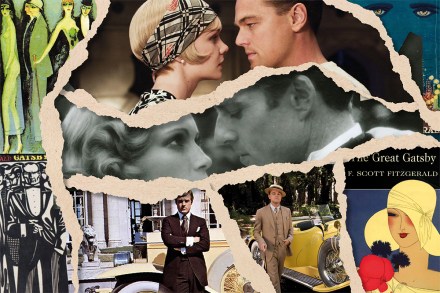
A new adaptation of The Great Gatsby is enrapturing and impressive

In F. Scott Fitzgerald’s classic 1925 novel The Great Gatsby, Daisy Fay is a mercurial character. The popular rich girl from Louisiana — married to Tom Buchanan, an adulterous brute — is ravishing and entrancing and, at times, cruel. It is her voice that most draws Jay Gatsby to her years after their initial fling when he was a poor officer, as he longs for her across the bay. As Fitzgerald describes it, Daisy’s is a voice that rises in dramatic swells and falls to intimate murmurs, coaxing its listeners to draw closer. Gatsby, the nouveau-riche rumored bootlegger from an impoverished farming family, is obsessed with Daisy: her class, her beauty, her unattainability, her voice. It is a voice, he tells the book’s narrator Nick Carraway, that is “full of money.

Philbrick

Inigo Philbrick, the art world’s wheeler dealer stealer

A few months after going on the lam in late 2019, the thirty-two-year-old wunderkind art dealer Inigo Philbrick sent his friend and colleague Orlando Whitfield a trove of documents. Philbrick wanted his old friend to write a sympathetic account of the misdeeds he stood accused of — since described as the biggest art fraud perpetrated in US history, for which Philbrick was later convicted and imprisoned. Whitfield has instead written All That Glitters, a memoir chronicling their friendship and dealings during a heady “gold rush” decade in the art world. Going through Philbrick’s correspondence and the court documents, Whitfield realized his friend was not the person he purported to be, certainly not the one his clients believed he was.

Resch

A beginner’s guide to buying art

Perceived barriers to entry often keep potential art collectors from taking the step beyond admiration to acquisition. Sometimes this results from neither liking nor understanding what’s available, but basic hurdles can involve learning how best to source and price what you are collecting — and the terminology can be daunting too. In his latest book, How to Collect Art, art-market expert Magnus Resch puts forward the most comprehensive, clearly explained guide to art collecting that I’ve ever read. A best-selling author, an entrepreneur and an art collector himself, Resch not only teaches art management at Yale, but has written and commented on the art market for years.

culture

This month in culture: August 2024

The Instigators In theaters August 2, Apple TV+ August 9 Boston crime movies are back! Starring Matt Damon and Casey Affleck — and produced by Ben Affleck, of course — The Instigators is a heist comedy-thriller about a robbery that goes wrong, causing Damon’s therapist to get dragged along for the ride. Affleck/Damon productions have consistently been solid — from the ultimate Boston crime movie The Town to last year’s Jordan 1 sneaker-origin story Air — and this is directed by one of the best working action directors around, Doug Liman, who was responsible for The Bourne Identity, Mr. & Mrs. Smith, Edge of Tomorrow and (the underrated) American Made.