Theatre

One for hardcore Stoppard fans: Indian Ink reviewed

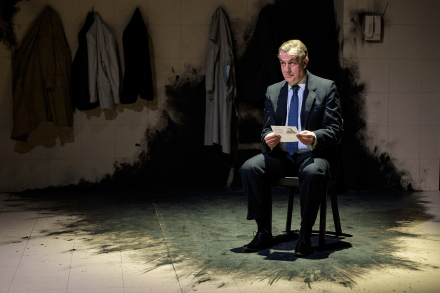
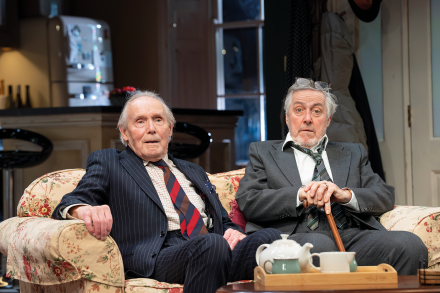
Unusual. After the press night of Indian Ink by Tom Stoppard, no one leapt up and cheered. The crowd applauded politely at the amusing dialogue and the marvellous acting in Jonathan Kent’s handsome three-hour production but there was no standing ovation. The script feels like a literary novel overstuffed with detail. Flora Crewe is a ravishingly beautiful but utterly sexless poet who floats around India in the 1930s provoking the adoration of lustful men. But she doesn’t evolve or change during the action. And she’s maddeningly indifferent to the romantic attention she excites. A maharajah tries to impress her with his fleet of Rolls-Royces. A dashing English captain proposes marriage and she laughs in his face.

Paddington – The Musical is sensational

Who doesn’t love Paddington? The winsome marmalade junkie has arrived at the Savoy Theatre in a musical version of the 2014 movie. First of all, the show is sensational. Absolute box-office gold, full of joy, mirth and spectacle. It’s also quite pricey but never mind. Sceptics who feel indifferent to children’s fiction will be relieved to learn that the dyspraxic Peruvian asylum seeker doesn’t feature much in the story. Paddington’s main attribute is his physical clumsiness and once he succeeds in destroying the crockery and furniture at the Browns’ family home, he runs out of narrative possibilities. His fur is invitingly combustible. Could someone set him on fire? Not quite.

Ivo van Hove tries and fails to destroy Arthur Miller

All My Sons, set in an American suburb in the summer of 1947, examines the downfall of Joe Keller, a wealthy and patriotic arms manufacturer. During the war he was falsely accused of selling wonky parts to the US military which caused the deaths of 21 airmen. He blamed his partner for the blunder but when the truth emerges he also finds out why his eldest son, Larry, went missing in action. The plot is one of the greatest inventions in world drama and it deserves to be presented with candour, simplicity and naturalism. Director Ivo van Hove dislikes Miller’s decision to set the play on Joe’s front lawn where the neighbours mingle, chat and exchange secrets. In his version, the vacated stage is overlooked by a huge blank wall decorated to resemble a doormat.

The wit of Tom Stoppard

The playwright Peter Nichols created a character based on Tom Stoppard. Miles Whittier. On a car journey across London, I once asked Peter why he was so irked by Stoppard. Thelma, his wife, answered for him: ‘He uses all the oxygen.’ But Stoppard was miles wittier. Asked by a punter, after the New York first night of Rosencrantz and Guildenstern are Dead, what his play was about, he replied: ‘It’s about to earn me a great deal of money.’ Think about it: the only person capable of preserving that bon mot was the playwright himself. He knew how funny he was. Later, he was more careful.

A sack of bilge: End, at the Dorfman Theatre, reviewed

End is the title chosen by David Eldridge for his new relationship drama. Clive Owen and Saskia Reeves star as Alfie and Julie, a pair of wildly successful creative types who live in a mansion near Highgate. Both are 59. Alfie is a retired DJ who made a fortune touring the world at the height of the ecstasy craze and Julie earns a living from crime fiction. But she’s bored with detective stories and wants to publish her memoirs and to write a state-of-the-nation novel set during the 2012 Olympics. Despite their amazing careers, both characters are moaning dimwits who swear constantly and have nothing of value to say about their lives, their professions, or anything else. Listen to them discussing an unseen character named Boring Tone.

The babyishness of Hunger Games on Stage

The Hunger Games is based on a 2008 novel  about a despotic regime where brainwashed citizens are entertained with televised duels between teenagers. Not a bad idea. We go behind the scenes and watch Katniss (Mia Carragher) being selected to fight Peeta (Euan Garrett) who secretly adores her. As soon as the plot starts, it seizes up. Instead of a gripping tragedy about two lovers forced to kill each other on TV, we’re given a masterclass in the show’s elaborate format. The duellists take part in interviews, coaching sessions, target practice, public parades and a popularity contest which permits them to attract ‘sponsors’ whose role is opaque. At the same time, we get a civics lesson.

This Othello is almost flawless

Othello directed by Tom Morris opens with a stately display of scarlet costumes and gilded doorways arranged against a backdrop of black nothingness. This is Venice at night with no hint of sea or sunshine. Crimson-robed senators gather to discuss Othello’s alleged abduction of Brabantio’s daughter. And here he comes, David Harewood as the Moor, wearing a gauche two-tone suit like a tasteless guest at a wedding. The scene is stiff, arid and over-ornate but the show opens up when the location shifts to Cyprus. Warmth and light fill the stage and the costumes improve. Othello and his men wear creamy white battle fatigues that look stylishly and subtly masculine.

One of the best plays about the 1980s ever staged

Alan Hollinghurst’s The Line of Beauty has been turned into a stage show directed by Michael Grandage. We’re in the early 1980s and Nick has just left Oxford with a literature degree. He lodges with his wealthy friend, Toby Fedden, in their family home and he offers to keep an eye on Toby’s troubled sister, Cat, who suffers from depression. Despite her disorder, Cat is a rebellious type who quizzes Nick about the intimate details of his casual flings with men. Her father, Gerald, wins a safe Tory seat and persuades Mrs Thatcher to attend a ball at their mansion in the country. The prime minister’s arrival throws the Feddens into a panic but Nick saves the day by smoothly asking Mrs Thatcher for a dance. ‘Do you know,’ she says, ‘I would like that very much.

Perfection: Hampstead Theatre’s The Assembled Parties reviewed

The Assembled Parties, by Richard Greenberg, is a rich, warm family comedy that received three Tony nominations in 2013 following its New York première. Hampstead has taken a slight risk with this revival. The cryptic title doesn’t suggest an easygoing drama full of excellent jokes. The Yiddish slang may be unfamiliar to English ears, and the social pedigree of the family needs explanation. These are wealthy New York Jews living in a 14-room apartment which they rent but don’t own, so their fortune is insecurely anchored. And the action starts in 1980 and fast-forwards to 2000 so it feels like a period piece aimed at the over-sixties. Those drawbacks aside, the show is a sensation.

Why was the 19th century so full of bigots and weirdos? 

Da Vinci’s Laundry is based on an art world rumour. In 2017, Leonardo’s ‘Salvator Mundi’ sold at Christie’s for $450 million but some experts claimed that the attribution was inaccurate. Could the world’s costliest artwork be a fake? Writer, Keelan Kember, considers the provenance of a fictional Leonardo owned by a thuggish oligarch, Boris, who claims to have bought the masterpiece at a flea market. He invites two posh British experts, Christopher and Milly, to authenticate the painting and when Christopher questions its origins he earns Boris’s instant displeasure. Boris threatens to toss Christopher from the roof of his luxury mansion. Enter a brash American, named Tony, who wants to buy the Leonardo on behalf of a rich Saudi clan.

Tracy Letts’s magic touch

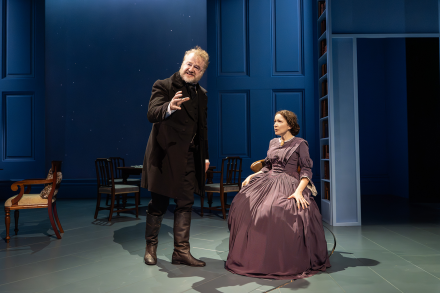
Tracy Letts’s Mary Page Marlowe is a biographical portrait of an emotionally damaged mother struggling with romantic and family problems. Susan Sarandon shares the lead with four other actresses which makes the show a little hard to follow. And the timeline is jumbled up so that the audience has to find its bearings at the start of each new episode. Why? Perhaps to give the material a complexity it doesn’t deserve. We first meet our heroine, aged 40 (played by Andrea Riseborough), as she tells her kids that they’re moving to Kentucky without their dad. This unpromising scene is hilarious because the word ‘Kentucky’ is repeated so often that it becomes a profanity. Pinter loved verbal games like this.

What does it feel like to perform the same show 355 times in one year? 

I have my routine down to a science. At 6.59, I’m sitting in the stairwell, typing on my laptop or scribbling in a book. At 7.01, I’m speeding down the hall to Dressing Room 18, where the rest of the girls are semi-apparelled, laughing, blasting out Tyla; or some days, silent, headphones in, munching pre-show snacks and staring blankly into space. From 7.01 to 7.05, I’m putting on my costume as the ambient noise of my cast mates getting dismantled by the demogorgon plays over the intercom. At 7.07, I’m sprinting down the dozens of stairs between Dressing Room 18 and the ground floor. And at 7.09, I’m stepping out on stage, wearing an orange tartan two-piece set and a pair of horn-rim glasses, where 2,024 eyes are watching me.

Stephen Fry is the perfect Lady Bracknell

Hamlet at the National opens like a John Lewis Christmas advert. Elegant celebrations are in progress. The stage is full of dining tables draped in white linen and adorned with flowers and beautiful glassware sparkling in the candlelight. Elsinore is reimagined as the home of a multicultural royal family. Claudius, resplendent in a dark dinner jacket, toasts his Asian bride, Gertrude, who wears a banana-yellow sari. Enter Hamlet, hunched and mutinous, in a snaky black suit like a moody star at a film première. He cheers up when he reaches his first soliloquy which he delivers to the crowd like a larky routine at a comedy club. Hiran Abeysekera (Hamlet) is a talented and hyperactive clown who gets big laughs from unpromising material. But he lacks the substance for the role.

A dazzling musical celebration of the 1970s

Clarkston is an American-backed production featuring a Netflix star, Joe Locke. He plays a young graduate with a terminal illness, Jake, who works at a Costco warehouse in a failing midwest town. Jake is a brainbox with an IQ of 140 who takes a scholarly interest in early American history. On his first day at work, he befriends a bookish intellectual, Chris, who loves literature and wants to dazzle the world with his fiction. The entry requirements for this branch of Costco seem to be tougherthan Harvard’s. The romance between the two boys is impeded by Jake’s clingy mum, Trisha, who feeds her meth habit by stealing his money and forbids him to leave town. Chris would have escaped from his mother ages ago but the playwright, Samuel D.

An amazing piece of entertainment: Reunion, at the Kiln Theatre, reviewed

What a coincidence. Two plays running in London have the same storyline: an obsessed lover bursts into a family gathering to reclaim the woman who spurned him.The Lady from the Sea, written and directed by Simon Stone, is based on a late drama by Ibsen. Alicia Vikander stars as the neurotic Ellida, who feels repelled by her charming, erudite, handsome and successful husband, Edward. Ellida can’t shake off the memory of a fat, bearded eco-warrior, Finn, who raped her when she was 15. And when Finn shows up at her beautiful home in Cumbria, she has to choose between Edward (Andrew Lincoln) and her rapist (Brendan Cowell). It’s Paul Newman vs Shrek. Naturally Ellida chooses Shrek. After all, this is Ibsen. Poor Edward has other problems.

When Freud met Hitler

A new play by Lawrence Marks and Maurice Gran, the writers of Birds of a Feather, feels like a major event. This is a period drama that examines an imaginary association between Hitler and Freud and develops into an enquiry about the nature of evil. As Hitler grows into adulthood he gravitates towards the Freud family, muscling in on their summer holidays The play opens with a scene from Hitler’s childhood, as his father, Alois, thrashes the young boy while his mother watches and weeps helplessly. This tableau is oddly hilarious because it explains in simple domestic terms the unimaginable horrors of the 20th century. As a teenager, Hitler meets Freud by accident and shares his dream of becoming a painter and an opera composer. ‘A Renaissance man,’ chuckles Freud.

Shallow and silly: Born With Teeth, at Wyndham’s Theatre, reviewed

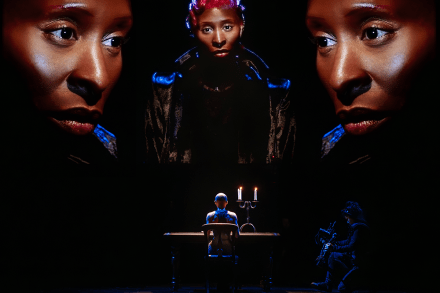
Born With Teeth is a camp two-hander starring a pair of TV luminaries, Ncuti Gatwa and Edward Bluemel, as Marlowe and Shakespeare. The year is 1591 and the great dramatists are holed up in a tavern working on an early draft of Henry VI (Part 3). Not much writing gets done. It’s all rhetoric and bombast. Marlowe is a bullying egomaniac who boasts of his ‘throbbing quill’ and parades a peacock’s feather which he strokes lasciviously. Both playwrights are gay, of course, and they live in a world that views heterosexual couplings as a mystifying aberration. Marlowe prances about on the table and re-enacts his conquests of grateful gay aristocrats. He peels off his undershirt and flings himself at Shakespeare who responds with fake reluctance.

Mercifully short: Interview at Riverside Studios reviewed

Interview is a blind-date play. Only it’s not a blind date but a showbiz interview for a journal called the New York Chronicle. The characters (played by Robert Sean Leonard and Paten Hughes) bicker, flirt and get emotionally involved during a 90-minute conversation. Naturally it all starts badly. The interviewer, Pierre, arrives at Katya’s Brooklyn apartment and tells her straight off that he’s never seen her perform on TV or in a movie. He hates covering the lives of brattish starlets because he used to be the Courier’s ace political reporter but his career has been terminated. At least his journalistic skills are still intact and he makes her admit that she can’t name her mother’s birthplace in Georgia. She’s fibbing. So the games begin.

The time Spike Milligan tried to kill me

The theatre impresario Michael White rang me one day in 1964, and said he was presenting a play at the Lyric Hammersmith, where there was a small role he thought might suit me. The play was an adaptation of the novel Oblomov by Ivan Goncharov, where the eponymous hero spends most of his life in bed, unable to see the point of engaging with the world outside. It was being put on as a vehicle for Spike Milligan, who was said to be jealous of the success of his longtime partner in The Goon Show, Peter Sellers. Sellers had recently made a seamless transition from the world of anarchic comedy to film, where he proved himself to be an accomplished ‘straight’ actor.

An English Chekhov: The Gathered Leaves at Park200 reviewed

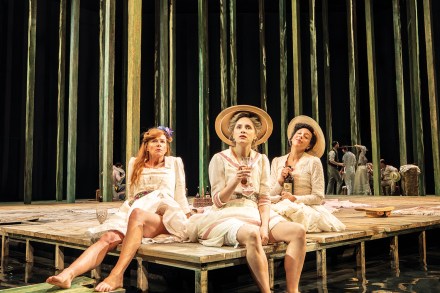
Chekhov with an English accent. That’s how Andrew Keatley’s play, The Gathered Leaves, begins. The setting is a country house where a family of recusant English Catholics meet for a weekend of surprises and high drama. The audience was on its feet, cheering and clapping, some of them in tears At first, the main conflict seems a little flimsy. William Pennington, a pompous grandee born in the 1920s, won’t forgive his children for being who they are. His daughter Alice scooted off to the south of France where she raised an illegitimate girl whom William has never met. His sons, Giles and Samuel, were sent to boarding school where Giles had to protect the autistic Samuel from bullies who mocked his eccentric behaviour.