Theatre

The Standard of Living didn’t make me feel anything

James Graham’s new play is a biography of John Maynard Keynes, known as ‘Mennid’ to his friends, which feels like a visit to a stately home. Mennid narrates the show and introduces us to the main events and personalities of his life but he doesn’t get involved. This is a eulogy, not a drama. He’s a civilised oddball, a highly polished introvert, a maths geek with a saviour complex. His mission is to rescue Britain from the Great Depression by increasing the national debt and blowing the loans on railways and power stations. He uses his lectures to tell a fairy tale about a mythical traveller who finds a dying village and revives its economy by spending £1 in the local tavern.

​The problem with Sting’s musical

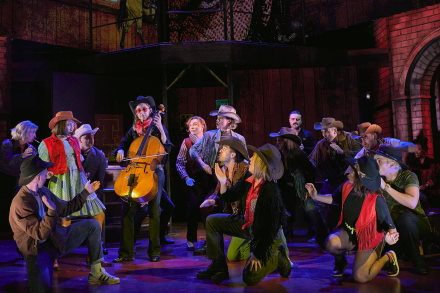
The Last Ship, a musical written by and featuring Sting, is touring Europe, Australia and America. The show is a class-war parable set in Newcastle during the 1980s. A team of shipbuilders are about to complete a new vessel, the Utopia, when a bossy government minister, Baroness Tynedale, arrives at the docks to deliver bad news. With her bright- blue suit and posh hectoring voice, she’s a pantomime Mrs Thatcher and she announces that the yard will be seized and flogged to private investors. The shipbuilders establish a Marxist committee and plot to overturn her evil scheme. A gripping start. Plucky Geordies pitted against yuppie scavengers from London. The show even features a song about the competing merits of collectivism and monetarism. Then it all implodes.

One for hardcore fans: Golden Boy reviewed

Golden Boy, written by Clifford Odets in 1937, feels like a Norman Wisdom movie. A talented boxer wants to become a great violinist so he refuses to throw heavy punches in case he damages his fingers. The boxer, Joe, comes from a loving family who urge him to pursue a musical career but he meets a greedy, fast-talking agent, Tom, who promises him wealth and fame in the ring. To prise Joe away from his family, Tom encourages his adorable girlfriend, Lorna, to use her influence on him. Lorna promptly falls in love with Joe and the romantic triangle adds heaps of conflict to his career as a boxing champ. Josh O’Connor, looking more like a Hungarian philosopher than a streetfighter, brings an arrogant physicality to the role of Joe.

A sumptuous set that’s too good for the play

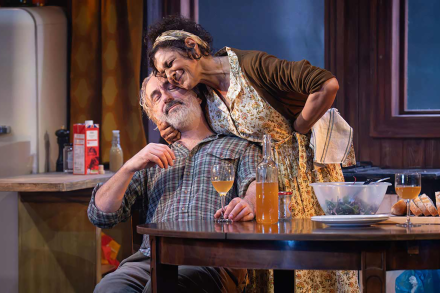
The Children by Lucy Kirkwood is a life-or-death drama about three ageing boffins invited to fix a broken atomic power station and save Britain from nuclear disaster. There’s one snag: radiation poisoning will end their lives. Should the old crocks accept the kamikaze mission? The setting for this macabre tale is a cosy farmhouse occupied by 64-year-old Hazel (Meera Syal) and her chattering Irish husband Robin (Declan Conlon). Their colleague Rose (Kerry Fox) shows up after many decades working abroad and she urges them to join the suicidal engineers working on the radioactive site. The stakes are low because the characters are too old for their love lives to matter much The script contains a lot of chit-chat that relates only tenuously to the main story.

Why has the National chosen to put on this cumbersome old play?

The National Theatre’s latest show, written in 2003, has bundles of energy and ideas. A thrusting young reporter, Yvonne, investigates the shooting of a yuppie in a rundown part of a teeming US metropolis. She learns that the murder was committed by a cross-dressing gang of all-female muggers, known as AOBs, whose leader, Latisha, is a teenage genius. Her parents were alcoholic derelicts and yet she taught herself several European languages while growing up in poverty. Yvonne, who also happens to be multilingual, banters with her in Italian and German. But will Latisha confess and give the newspaper an exclusive?

Marilyn Monroe was a bore

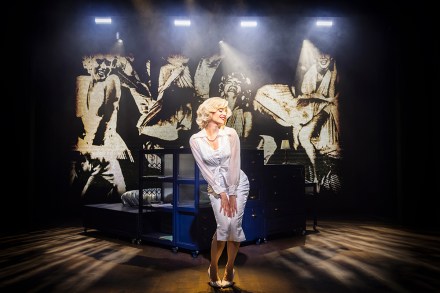
Who Killed Marilyn? is a new show about an old subject. Sharleen Cooper Cohen’s play examines the circumstances surrounding Marilyn’s suspicious death in 1962. Three possible culprits emerge. The mob, the Feds and the Kennedys. Bobby and Jack were desperate to hide any trace of their romantic links with Marilyn. The mob may have rubbed her out by order of the Feds whose boss, J. Edgar Hoover, paid gangsters to conduct irregular assassinations. Hoover hated JFK, we’re told. And Marilyn kept a secret diary that might have ruined JKF’s career. But that gives Hoover a reason to protect Marilyn and to use her testimony against the Kennedys. The mob also hated JFK because he failed to oust Fidel Castro from Cuba. So they had a powerful motive to keep her alive as well.

A classic Alan Ayckbourn that’s made for Roger Allam

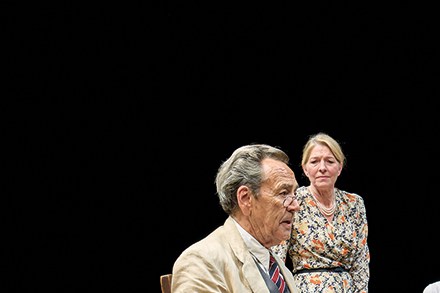
How the Other Half Loves is the play that established Alan Ayckbourn’s name as a writer of farce. Frank and Fiona, a posh, sophisticated couple, encounter problems in their marriage when Fiona has a fling with Bob, a handsome junior at Frank’s firm. Bob’s wife, Teresa, suspects Bob of infidelity and starts to investigate his social life. An innocent couple, William and Mary, are drawn into the muddle thanks to a series of misunderstandings. The centrepiece of the elaborate plot is a pair of dinner parties on successive nights performed simultaneously on a single set. Roger Allam is as cuddly as Paddington and as caustic as Peter Cook The complications are enjoyable to watch because you have to keep adjusting the pieces in your mind to make it all fit together.

The star of the Fringe

Attention spans at Edinburgh are brief. With thousands of shows on offer, the punters have to make a split-second decision based on the title and the poster. A blunt descriptive name works best, hence the popularity of Dan Kelly: How I Went to Every Supermarket in the World. Kelly spent 11 years as a data analyst collecting the prices of 164 basic items from supermarkets on every continent. The information was sold to international firms that needed to calculate the salaries of their overseas staff. Kelly, a solitary and obsessive character, liked to tour the shops with a dictaphone taped to his chest and to record the prices by muttering into the hidden microphone, like a spy. His adventures are limited to shopping centres in large cities so his observations lack surprises.

The slow death of the Edinburgh Fringe

The Edinburgh Fringe is getting bigger. Last year’s total of 3,893 shows is surpassed this year by 4,206 productions. More people are coming to Edinburgh in search of fame but the pressure of numbers doesn’t guarantee quality. Rival events are treading on Scotland’s turf. London produces two festivals in August that appear to challenge Edinburgh directly. The Camden Fringe offers 450 shows covering theatre, comedy, opera and dance, while the Greenwich and Docklands International Festival stages a mix of theatre, circus and street art. The Edinburgh Fringe used to hold a unique place in the world of British entertainment as an informal talent contest where newcomers were spotted, nurtured and launched as stars.

An enjoyable circus show masquerading as education

Brainiac Live! is a ‘family science’ show based on a popular Sky TV programme. It’s ideal for children under 12 and for mums and dads who want an hour-long break from their normal parenting duties. The show is performed by a trio of lab-coated ‘brainiacs’, Ed, Ned and Raz, whose antics centre around loud bangs, naked flames, puffs of smoke and the destruction of props. The fun kicks off with a helmeted Ned preparing to dive into a sheet of cling film stretched across an empty doorframe. He runs. He leaps. He plunges through the transparent barrier which rips apart as he crash-lands on to a discarded mattress. Is that science? Not really. It’s a low-level stunt performed in conditions of extreme safety.

The Trainspotting musical is made for cruise ships

Plenty of critics have mocked Trainspotting – the musical (with lyrics and music by Irvine Welsh and Stephen McGuinness, respectively) but the producers know their audience’s mind. They want to see live theatre without taking the risk of a new play, which might be gruesome, and they prefer a dead-safe replica of a glamorous movie to something by Chekhov or Pinter. Reviewers admire novelty and inventiveness so they tend to punish theatre-makers who reheat leftovers. The show follows the book more closely than the film, where Renton was the central figure, and here he blends in with the community of wasters and criminals who mope around Edinburgh trying to raise cash for smack. The characters are reduced to simplistic gestures, as easy to read as hand signals. Begbie is a cocky thug.

This J. Edgar Hoover musical is destined for Broadway

Here Comes J. Edgar! has a brash poster featuring a cross-dressing FBI agent in fishnet tights with his thighs splayed aggressively towards the viewer. He points a warning finger as if to say, ‘Enjoy this show or go to jail.’ The abrasive imagery aligns with the arrogant tone of most LGBTQ+ advertising but the show itself has a more humane and playful temper. Harry Shearer and Tom Leopold have written a superb tragicomedy about a powerful homosexual who wants to conceal his love life while hunting down America’s most notorious criminals. We first meet Hoover as he lies in a hospital bed flanked by two chain-smoking nurses who discuss his health while filling the room with tobacco fumes. This quietly amusing scene sets the mood.

A funny, unorthodox Much Ado About Nothing

You may need to do a spot of homework before attending Tilly No-Body at the Arcola. Acted and written by Bella Merlin, the play examines the sufferings and blunders of Tilly Newes, an actress born in 1886, who married the experimental German dramatist Frank Wedekind. At first sight the show looks like a lesson for newcomers but the content is bound to confuse anyone who lacks a working knowledge of German theatre in the early 20th century. The ideal viewer is a literary expert familiar with the whole of Wedekind’s dramatic output. Numerous lines from his plays are quoted, not always with intelligible citations. ‘Women are natural actors’, runs a typical aphorism, and ‘no woman can keep a man happy by behaving sincerely.

Springwood is a waste of time

Springwood, set in June 1939, looks at a series of tricky meetings between the American president FDR and George VI at the Roosevelts’ family retreat in upstate New York. George and Queen Elizabeth are guests at the poky old house and although they complain to each other about their sleeping quarters they hide their dismay from their hosts. The writer-director, Richard Nelson, evidently despises the main characters apart from FDR (Robert Lindsay) who comes across as a genial old buffer addicted to whisky. The dialogue is divided into easy-to-handle segments. First, we get the history bit. FDR tells George that the US ought to join Britain in the coming war but pro-German sentiment is very strong and the majority of Americans may support Hitler. Then we get the therapy bit.

A Sinatra musical for hardcore fans

Sinatra: The Musical dramatises the star’s career during a minor wobble in the early 1950s. After falling from grace, Sinatra stages a comeback and becomes an Oscar-winning film actor. Joe DiPietro’s script gives the impression that Sinatra’s world is ruled by wise, powerful and well-connected women. Billie Holiday teaches him how to sing with feeling: ‘Bend the notes at the end of the phrases.’ His mother explains the secret of a happy marriage: ‘One talks, the other doesn’t.’ When Sinatra punches and injures a photographer, his wife tries to restore his image by ordering him to play a priest in The Miracle of the Bells. Sinatra obeys. The film bombs so badly that his press agent, George, severs all contact with him.

The power of Glengarry Glen Ross

The Old Vic presents an eccentric new version of David Mamet’s ultra-masculine play, Glengarry Glen Ross. Director Patrick Marber populates the show with middle-aged actresses. And why not? Devotees of Mamet may find it patchy but the play is so powerful that it can survive any amount of experimental tinkering. The visuals are pretty incoherent and the Old Vic’s configuration gives the cast no help at all. The playing area is surrounded by concentric rings of seats, cage-fighting style, which makes the actors feel unsure where to pitch their performance. It’s like trying to post a letter while doing a twirl on the doorstep.

A play that shows Iranian society is like our own

Under the Shadow is a timely drama set in Tehran in 1988 during the Iran-Iraq war. Saddam’s missiles are raining down on the city which puts an additional strain on the troubled marriage of Iraj and Shideh. Iraj is a doctor. Shideh is a part-qualified doctor. During quiet spells, they chat about humdrum stuff. Iraj wants Shideh to have another baby. Shideh prefers to leap around doing her Jane Fonda exercises. Her mother-in-law potters in and out and fusses over bits of crockery. Their daughter snuggles on a sofa with a rag doll. The low-energy dialogue flits from one issue to the next without any sense of direction. The characters tell each other jokes to pass the time.

Michelle Terry is ferocious in Brecht’s simplistic tutorial

Bertolt Brecht’s classic, Mother Courage, is about a female war profiteer who drags a wagon of supplies through no man’s land and sells them to bedraggled soldiers. During the story, she loses both her children and she discovers that war is not as marvellous as she previously thought. This spiritual journey evidently mattered to Brecht, who was born in 1898 in Augsburg, and who greeted the outbreak of the first world war with enthusiasm only to become disillusioned by the mechanised slaughter of the trenches. His play is aimed at wrong-headed militaristic numbskulls who believe that war is good rather than bad. If you already hold pacifist views, you may find his tutorial a little simplistic.

Are we ready for the truth about Judy Garland?

End of the Rainbow feels like a prison drama set in London in 1969. Judy Garland is about to give a string of solo shows in the West End and she’s preparing at the Ritz under the supervision of her cruel boyfriend, Mickey Deans, who doubles as her publicist and drug dealer. Her British pianist, a friendly queen named Anthony, tries to protect her from Mickey’s manipulative bullying. Judy, the captive, forfeits our sympathy straight away by complaining about everything. Her suite is too poky. She’s desperate for liquor to improve her mood. And she reacts with outrage when the Ritz manager asks for payment in advance so she forces him to back down by threatening to commit suicide. She rehearses the stunt by standing on a balcony and daring herself to dive into the street.

Haphazard and bitty but Rosie Holt is superb: Churchill’s Urinal reviewed

When Rachel Reeves became Chancellor she found a lavatory in her private suite which had been used by Churchill in the 1920s. She vowed to remove it. ‘Smashing glass ceilings and urinals’ was her policy. The actor, Rosie Holt, felt inspired by Reeves’s petulance and she wrote a satire about a female politician who sets out to refit the pipes at No. 11. The Chancellor sits in her office taking phone calls from a secretary, a spin doctor and a divorce lawyer who wants her to finalise a settlement with her awkward ex-husband. Her campaign to replace the loo sparks national outrage and her office is besieged by throngs of far-right agitators. All are men. The urinal itself, played by a Churchill lookalike, becomes a personality in the play and offers advice: ‘Stand your ground.