The Wiki Man

Why the young are fleeing to Portugal

The legendary music producer Rick Rubin once asked me why I had never moved to the United States. The answer, I think, comes down to an important trade-off: quantity of earnings vs quality of consumption. Historically, once you had a job, there was a limit to the lifestyle choices you could make Whereas the United States is certainly a better place to earn and accumulate money, Europe is, on balance, still a better place to spend it. (Which may explain why Rick asked me that question at his summer home in Italy.) This imbalance partly arises from a fundamental asymmetry in the transmission of ideas.

Beware the ‘sourdough effect’

As the joke goes, there are two ways to become a top judge. You can study law at university, then enter one of the Inns of Court as a trainee barrister, before embarking on a period of pupillage. If all goes well, you may be called to the bar. Play your cards right and you might take silk, and then as you reach your fifties, with a following wind, you may be invited to become a judge. Ten years later, with a few widely admired judgments under your belt, you may reasonably claim to be a ‘top judge’. If I am to endure the peculiarly dysfunctional queue at Gail’s, I want choice. Where is the cornbread? The alternative is to become a minor local magistrate and get caught in flagrante with a farm animal.

The Mad Men theory of drunk decision-making

In electing this government, we seem to have picked the worst of both worlds: higher taxation combined with austerity in the public finances. The one bonus I had hoped to see from a left-wing regime was a healthily indulgent approach to spending. Instead we get a Chancellor of the Exchequer who is a former Bank of England economist. Voting Labour and getting a neo-liberal Chancellor is like going on a Club 18-30 holiday and bringing your parents along. It defeats the purpose of the exercise.

Is protest counterproductive?

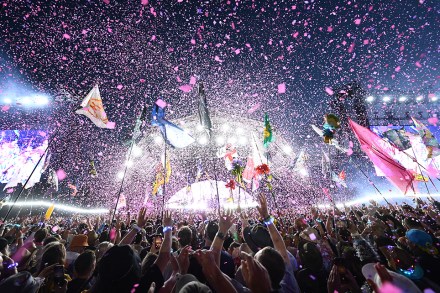
If I had my life again and was asked to choose a superpower, I’d like to come back as one of those people who can enjoy crowds. As superpowers go, I acknowledge this isn’t all that rare, given the bizarre popularity of events such as Glastonbury, or the widespread compulsion to buy Oasis tickets. But what qualifies it as a superpower for me is that I cannot imagine myself enjoying being in a crowd any more than I can envisage having the power of telekinesis or levitation. I don’t really understand why people pay huge amounts of money to watch live sporting events when you can watch them on television for free. I’d choose staying at home stabbing my hand with a fork over joining a demonstration Is this a genetic thing?

Lucy Letby and the problem with statistics

First Fred West, now Lucy Letby. At this rate, it won’t be long before Herefordshire has produced more serial killers than it has miles of dual carriageway. You might assume growing up in one of England’s loveliest counties would make people placid, but then you haven’t spent half your life stuck behind a caravan on the A465. They may not all kill people, but Herefordshire people overtake like psychopaths. It only takes one dodgy assumption to reach a conclusion that is diametrically wrong But I’m going to park my Monmouthshire prejudice here and suggest that something about the Lucy Letby conviction seems off to me. I’m not going to talk about the medical aspects, because I’m not qualified to comment.

The myth about electric car owners

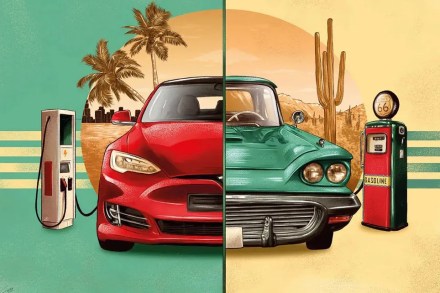
Every time I write about electric cars, there is an explosion of hostile comments online in which readers angrily denounce electric vehicles and the people who drive them. Much of this animus rests on a plausible yet mistaken assumption – that EV owners are all passionate environmentalists, sanctimoniously swanning around in their zero--emission vehicles while disdaining the ghastly, planet-killing masses burning dinosaur juice. Let me disabuse you of this. That stereotype was perhaps partly fair when applied to the Toyota Prius – although even then I suspect it concerned only a minority of owners.

Nothing beats a 1980s brick phone

In the late 1980s, a story entered advertising folklore. A group from an ad agency had boarded an evening train from Newcastle to travel home from a client meeting. On boarding, they learned that the buffet was out of action, and they were hungry. Happily, one of them was carrying in his briefcase a wondrous new brick-sized device called a mobile phone. After a series of rebuffed calls, he managed to find a lone Indian restaurant in Peterborough willing to deliver to their train when it stopped en route to London; there our hero duly handed a wedge of cash through the carriage window before taking delivery of the food.

The myth of collective wisdom

After 250 years of American independence, a nation home to many of the smartest and most talented people in the world may have to choose as its leader one of two people, each of whom is in many ways worse than His late Majesty George III, the man whose role the entire system was designed to replace. It is dangerous to assume that the more people who are involved in a decision, the better the outcome will be The absurdity emerges from the nature of the system – which, like many such systems, works very well right up to the point where it suddenly doesn’t. Faced with an unexpected combination of events, even good systems can produce an outcome far sillier than any sane individual would choose when acting alone.

How Elon Musk could solve the housing crisis

People sometimes ask me why I don’t go into politics. Why on earth would I do that? No, if you want to exercise power and imagination, the only remaining role which appeals is to be some kind of Bond villain. To anyone familiar with modern bureaucracy, there’s something hugely attractive about an organisation where the HR department is replaced by a pool full of sharks. I think this fantasy largely explains why electorates are now drawn to candidates who seem a tiny bit sinister or weird. ‘Who knows?’ they think. ‘They might actually do something different.’ Never mind Trump: my guess is that if Elon Musk were eligible to run for president, he’d get 60 per cent of the vote.

How to hack your summer holiday

Since it’s June, here is your cut-out-and-keep guide to hacking your summer holiday. One possibility. Don’t bother. Unless you have school-age children, why book your main overseas holiday in what is the nicest part of the year at home? As my late father often reminded me: ‘The three worst things about living in Britain are January, February and March.’ If you head south in these three months, almost anywhere will be an improvement. When flying in July, you risk sitting on the tarmac at Gatwick on a perfect summer’s day destined for a place where your shoes will catch fire. And you miss out on the long, light evenings, too.

Why being anti-car is a luxury belief

It happened six years ago on a flight back from the United States. ‘Sir, I’m pleased to say you’ve been upgraded to first class.’ ‘Wonderful! Where would you like me to sit?’ ‘Anywhere you like, you’re the only passenger.’ The anti-car movement is idiotic – a luxury belief shared by deluded metropolitans For the next few hours I dined on fine food brought to me at any time I chose and drank the finest wines known to humanity. I had a staff of three to myself. At one point they brought me a silver tray with magazines on it, one of which was The Spectator. ‘Would you like anything to read, sir?’ ‘Yes, I’d like to read something written by, let me see… oh, I know – me!’ I didn’t actually say that, you understand, but I thought it all the same.

Harris Tweed, the miracle fabric

To understand the development of technology, you may be better off studying evolutionary biology rather than, say, computer science. A grasp of evolutionary theory, with the facility for reasoning backwards which it brings, is a better model for understanding the haphazard nature of progress than any attempt to explain the world by assuming conscious and deliberate intent. One useful concept from evolutionary thinking is the idea of the ‘adjacent possible’. As the science writer Olivia Judson explains: ‘Evolution by natural selection only works if each mutational step itself is advantageous. There’s no such thing as advantageous in a general sense. It’s advantageous in the circumstances you’re living in.

How to solve ‘range anxiety’

In ‘The Adventure of Silver Blaze’, Sherlock Holmes mentions ‘the curious incident of the dog in the night-time’. ‘But the dog did nothing in the night-time,’ argues Inspector Gregory. ‘That was the curious incident,’ replies Holmes. You never hear anyone say: ‘We finally stumbled across a charming little petrol station nestling among the trees’ Along with Donald Rumsfeld’s ‘Unknown unknowns’, this is perhaps the most famous example of what you might call ‘perceptual asymmetry’. We mostly act instinctively based on what is salient, giving little thought to what is easily overlooked. It is hence surprisingly easy to change what people do simply by changing what they pay attention to.

Louis XIV would envy your life

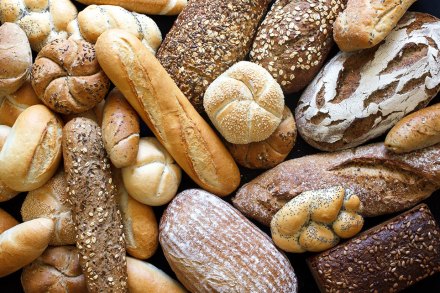
Some things in life acquire an outsize popularity which defies all common sense. The outlandish appeal of such things cannot be explained except by reference to René Girard’s theory of mimetic desire – the idea that there are many things we value not for their intrinsic utility and enjoyment but because we see that other people want them. Examples of such positive feedback loops in excess fashionability would include sourdough bread, Miss Taylor Swift and houses in Clapham or Fulham. Property is simply a stupid, rivalrous, uninnovative, rent-seeking repository for people’s money Fulham, for instance, is so far west it should have its own time zone.

There are three sides to every story

The psychologist Daniel Kahneman, who died last month aged 90, was perhaps most famous for his dictum that: ‘Nothing in life is as important as you think it is when you are thinking about it.’ This is often known as the focusing illusion. The theory explains, say, why a recent Lottery winner with bad toothache may, in the moment, be little happier than a skint person with bad toothache, since in both cases their attention is focused on the pain, not their financial situation. When Trump rails about ‘fake news’, I suspect this resonates with voters much more than journalists actually realise It is an important bias to understand, not least because it gives us a vital and often overlooked insight into media bias.

The case for driverless cars

I can’t remember the name of the comedian, but he had a wonderful ambition, one which will sadly now never be realised. He wanted to interview Neil Armstrong for an hour on live television without mentioning the moon landings once. I wish he’d succeeded. In fact Armstrong might have leapt at the opportunity to pontificate about baseball or gardening, rather than the Apollo missions. It must be maddening when every conversation with a stranger turns to one brief event in your life: rather like being in the Eagles and knowing that, in a two-hour concert, 90 per cent of the crowd is only there for ‘Hotel California’. Following in this vein, I have a secret retirement project where I interview the world’s leading minds on trivial and tangential topics.

The problem with self-checkout tills

Our national malaise arises in part from the poor state of many of Britain’s private services. No, not a misprint. I mean private services. Many on the political right berate public services, implying that were they only to be privatised everything would be sweetness and light. Yet modern technology now makes it all too easy for companies to treat their customers with just as much high-handed disdain and bureaucratic inflexibility as any state enterprise. Drive into a pub car park and forget to record your number plate and you’ll receive a fine of £100. Contesting this requires several hours of your time trying to find a receipt to prove you bought a drink.

A miracle has happened in Britain’s pharmacies

A small miracle happened in politics recently. Someone had a good idea, and then enacted it really quickly. I popped into my local chemist’s last week and the nice chap behind the counter recommended a few treatments, adding that if I still felt rough in a few days, he could give me some antibiotics. Eh? Wouldn’t I have to contact my GP? Apparently not. I could just come back to the shop. This was handy. Unlike doctors’ surgeries, shops tend to be open at the weekend, when people are actually free to buy things. They’re funny like that, shops.

Why are bosses so suspicious of remote working? 

The swimmer Michael Phelps is the most decorated Olympian of all time, with 28 medals, 23 of them gold. He is a former world record holder in the 200m freestyle, 100m butterfly, 200m butterfly, 200m individual medley, and 400m individual medley. But let’s just analyse his world-record time for the 200m freestyle – an amazing one minute and 42.96 seconds. Amazing, that is, until you do the maths. Over 200 metres I make that 6.99km/h or 4.34mph. Here’s my problem. I am a fat 58-year-old man, and I can run faster than that. In wellies. In Alabama there are 300lb, heavily tattooed chain-smokers who can pull a Mack Truck for 200 metres faster than Phelps can swim it. It’s true that Michael Phelps is an amazing swimmer.

The lesson AI must learn from nature

What’s the difference between a café and a restaurant? It’s not as simple as it seems. Yes, the food at a restaurant will be fancier and more substantial. But there is a social distinction too: a restaurant places you under an obligation; a café does not. When you enter a café you order something out of courtesy – but it can be as insubstantial as a cup of tea. How long you stay, and what you choose to eat or drink, remains up to you. A café, as Nassim Taleb would say, is ‘high in optionality’. By contrast, entering a restaurant is like missing the Wrotham exit on the westbound M26 – you’re stuck there for ages with no chance of escape. Once you sit down in a restaurant, you’re in for at least two courses and a bottle of wine.