The Wiki Man

A foolproof way to pick a leader 

Our esteemed editor was once excoriated for saying that the public had had enough of experts. ‘The people of this country have had enough of experts from organisations with acronyms saying they know what is best and getting it consistently wrong.’ His remark sits within a fine conservative tradition: there is William F. Buckley, who stated: ‘I would rather be governed by the first 2,000 people in the telephone directory than by the Harvard University faculty.’ If the candidate hasn’t been to university, add five points. If they’ve done a proper working-class job, add ten There is Thomas Sowell, who wrote: ‘Intellectuals are people whose end products are intangible ideas…Whether their ideas turn out to work... is another question entirely.

The ‘airport effect’ that’s ruining modern life

The phrase ‘computer says no’ now has its own Wikipedia page. The first recorded use dates back to a Stasi-era 1970s East German film segment titled ‘Der Computer Sagt: Nein’. However, its idiomatic use arose in 2004 via a series of sketches in Little Britain, each illustrating an example of technology-enabled bureaucratic intransigence, typically flying in the face of common-sense human judgment. It is perhaps the 21st-century equivalent of ‘jobsworth’. To behavioural scientists, the phrase illustrates something known as ‘defensive decision-making’, whereby the primary motivation for a decision is not the likely quality of the outcome but the decision-maker’s often unconscious urge to use any available means to offload accountability for his actions.

The BBC’s shameful treatment of Top Cat

Films nowadays often come with warning of ‘smoking’, ‘partial nudity’, ‘drug use’ or something called ‘language’ (presumably to prevent alarming people un-aware of the invention of the talkies). Yet language can be triggering. I know that from watching the BBC as a child, when two linguistic absurdities drove the seven-year-old me practically insane. One was the Blue Peter habit of referring to Sellotape as ‘sticky-backed plastic’, a phrase unspoken by anyone else in any other circumstances, except in parodies of BBC children’s programmes.

The real reason we should be burning our own gas

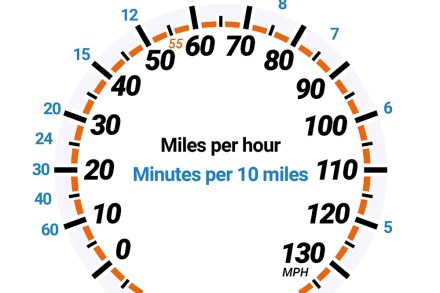
Regular readers of this column will be familiar with my promoting an idea called a ‘Paceometer’ (pictured). Rather than presenting speed in, say, miles per hour (distance/time), it presents speed the other way round, in minutes per ten miles (time/distance). Created by the cognitive scientists Eyal Peer and Eyal Gamliel, the Paceometer shows something which is mathematically trivial but completely non-intuitive. Quite simply, the faster you are going already, the less time you save by going 10mph faster still. Accelerate from 20-30mph and you save ten minutes on a ten-mile journey. Accelerate from 70-80mph and you save just over a minute.

Why engineers beat lawyers

I once asked my friend, the engineer Guru Madhavan, why engineering faculties at most universities were outliers in containing more than a small minority of conservatives and political moderates. He explained it in a single sentence: ‘In engineering, you are peer-reviewed by reality.’ In any field where you are judged more by the quality of the outcome than the quality of your argument, there is a limit to the extent to which you can adhere to some all-encompassing ideological world view. If a bridge falls down, it is not a good bridge. The opposite is also true: in real life, if something works, you don’t always need a theory to explain why.

‘Life, Liberty and the pursuit of Happiness’ is genius marketing

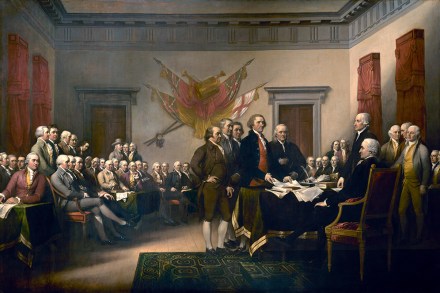
Last Monday, I delivered a speech to mark the 250th anniversary of Adam Smith’s second-best book: An Inquiry into the Nature and Causes of the Wealth of Nations. The year 1776 was a momentous one for many reasons. It saw the installation of James Watt’s first steam engine, the recognition of Captain Cook by the Royal Society for his work in preventing scurvy, and his departure on his final and ultimately fatal voyage. It witnessed the publication of Gibbon’s The Decline and Fall of the Roman Empire and Common Sense by Thomas Paine.

Does The Spectator hate the Welsh?

This St David’s Day weekend, I devote this column to a celebration of the world’s most under-appreciated ethnic group. Under-appreciated, certainly, in the pages of The Spectator, whose editorial policy suffers from a Pictish delusion that its readers are eager to hear of the appointment of a new procurator fiscal in Ayrshire, or political divides on Pitlochry council, while having zero interest in the finer country to the west. Sometimes mere exposure to Wales may be enough to inspire greatness, as in the work of Alfred Russel Wallace or Led Zeppelin Now in celebrating Wales, we need some ground rules. Since the Welsh are much more agreeable than other Celtic tribes, they are widely content to have sex with people from other cultures and ethnicities.

The real cost of the bureaucratic mindset

If you ever want to drive online commenters insane, all you need do is write an article headlined ‘Why it’s often right to drive in the middle lane of the motorway’. Many people insist that there is a clear-cut rule. These motoring Prussians claim that, unless overtaking a slower vehicle, you must drive in the left-hand lane at all times. But if you think about it, this rule only works if some people break it. The modern organisation is in thrall to a tight fitness function that leaves little room for inventiveness In reality, if everyone followed this keep-left rule assiduously, then at busy times traffic in the left-most lane would become excessively dense, forcing everyone to slow down, causing frequent braking and uneven use of the road.

The stealth philanthropy of buying a Range Rover

Even though Christmas is over, I’ve been thinking about the season just gone. There is a tradition of complaining about its commercialisation, portraying Christmas as a grotesque manifestation of consumer excess. But it’s strange to use our seasonal extravagance to attack consumer culture. That’s almost diametrically wrong. What Christmas really shows is that consumer capitalism is doing a cracking job: it’s the rest of the economy that’s a mess. Consider food. The median family today, even if they’d spent December shopping at Fortnum & Mason and Daylesford Organic, would have spent a lower proportion of their income on food than an equivalent family would spend just to survive in the 1970s. Most consumer durables have similarly plummeted in price.

The speed-camera approach to government

I was recently shown an AI analysis of long-term trends in the public’s attitude to government. The AI had been designed to look at changing attitudes to brands, but its creator had been curious to see what it revealed if the brand in question was The State. It was remarkably insightful. ‘New behavioural data reveals a structural shift: The State has moved from episodic authority to ambient friction.’ And ‘modern governments are, on the whole, stable – but increasingly so for structural rather than relational reasons. Stability is maintained through procedure… and compulsion, not persuasion… Authority now operates in an environment that never turns off – and never waits’.

Where are you on the tightwad scale?

I once stood in a queue behind a Scotsman checking out of a hotel in Germany. After he had finished scrutinising his bill in agonising detail, he demanded that it be reprinted, this time removing the €1 discretionary charge which had been added in support of the local homeless. More recently some friends of my daughter’s met a Yorkshire-born Spectator writer at a local fête. They mentioned the connection, expecting some mild pleasantries. Not so. ‘’Appen that reminds me: he still owes me for a taxi.’ When I heard this, I was bemused. Then I remembered I had indeed shared a taxi with the Yorkshireman in question, requesting a minor diversion to drop me off at Cannon Street. This, granted, would have added two quid to the overall fare. Point taken.

AI will take jobs – the wrong ones

As those of you familiar with this column will know, I am always eager to distinguish between an option and an obligation. For instance, a dinner party is usually more enjoyable than an indoor drinks party. Yet in one respect a drinks party wins out: the moment you accept an invitation to a dinner party, you are committed. By contrast, when you accept an invitation to a drinks party, you can bunk off at short notice and spend quality man-time watching YouTube documentaries about steam engines instead. A dinner party is an obligation, while ‘drinks’ is an option. This is also the principal distinction between a restaurant and a café. In a restaurant you are obliged to eat, in a café it’s an option. In some countries I confuse the two.

Could a degree make you less employable?

A few years ago my employer, the advertising agency Ogilvy, introduced a recruitment scheme called ‘The Pipe’. It was a ‘non-graduate’ recruitment scheme, the name a pun on the smoking implement of choice of the company’s founder, David Ogilvy. Ogilvy himself was kicked out of Oxford in 1931, so this seemed doubly appropriate. The idea was conceived and promoted by two people in our creative department alarmed by the risk of monotone uniformity which results from formalised, risk-averse recruitment procedures. Our aim, in short, was to introduce a kind of stereophonic sound to hiring. Just to be clear, we did not exclude university graduates from applying: it was simply that a degree was not mandatory.

Why don’t we order houses from a catalogue?

One possible solution to the housing crisis is to convene a group of experts in property, housebuilding, planning and local government and then ask them for proposals to put an end to the appallingly slow rate of construction and development. Another possible solution to the housing crisis is to convene a group of experts who know absolutely nothing about property, housebuilding, planning or local government and ask them for proposals to put an end to the appallingly slow rate of construction and development. My money’s on the second group to solve the problem. We vastly underestimate the value of healthy ignorance in overcoming seemingly intractable challenges. There is a Chinese proverb which states: ‘If you want to know what water is like, do not ask a fish.

My portable charger obsession

A femtosecond, derived from the Danish word femte meaning ‘fifteen’, is a unit of time in the International System of Units equal to 10-15 or 1⁄1,000,000,000,000,000 of a second; in other words one quadrillionth, or one millionth of one billionth, of a second. A femtosecond is to a second as a second is to approximately 31.69 million years. Similarly, a femmosecond, from the French femme meaning ‘wife’, is a slightly briefer unit of time equivalent to the twinkling of an eye. It defines the imperceptibly fleeting interval between my wife saying ‘Rory, why on earth have you bought another portable charger?’ and my wife saying ‘Rory, could I borrow your portable charger?’ I am obsessed with portable chargers.

Why men are the disposable sex

I am a proud father. Both my daughters got good degrees. But better still, they smoke, go to pubs and drink Guinness. I suspect they may sometimes drink rosé or prosecco behind my back, but I soldier on. You see, if you are the lone man in an otherwise all-female family, it’s important to make sure overall testosterone levels don’t decline too far. Kanye West found much the same thing when he lived with the Kardashians. It is a man’s ‘job’ to be stupid – to take rapid, risky decisions with high variance outcomes in the hope that they pay off And at least neither of my daughters likes Taylor Swift. So that’s another small win for the Y chromosome.

To win, the Tories should be the party of motorists

The path to electoral success at the next election is straightforward. Just follow what I call the Channel 5 strategy. Channel 5 is a rare success story in the world of free-to-air broadcasting, a feat attained by following a simple playbook: making programmes the public likes to watch, but which people working in television are mostly too precious to make. Channel 4 got there first. By broadcasting American football, it found a sport which was far more popular with the public than most ‘people in television’ realised. Every NFL game played in London since 2007 saw sold-out crowds at Twickenham or Wembley; when the Pittsburgh Steelers made an appearance in Regent Street, more than 250,000 people turned up.

The customer isn’t always far-right

One of Dominic Cummings’s many insights in the run-up to the Brexit referendum was that ‘most people were both more right-wing and more left-wing than politicians ever realise’. Political obsessives naturally frame all questions – indeed shape their own identities – along a left-right spectrum, and so assume everyone else sees the world in similarly clear-cut terms. They really don’t. Indeed one of the most dangerous habits of journalists is their readiness to brand as ‘far-right’ opinions which are held by fairly large swaths of the population, many of whom might be otherwise left-wing in other contexts. What is risky about this is that it may achieve nothing other than promoting greater self-identification around the very causes it is attempting to disparage.

Why YouTube Premium beats the BBC

YouTube has now overtaken ITV to become Britain’s second most watched media service, beaten only narrowly by the BBC. Hardly surprising. For many of us, YouTube has become the answer to more and more of life’s questions. True, you may never want to watch a film which explains how to unstick the filler cap on a Volvo XC60. Until, that is, you rent a Volvo XC60 and find yourself stranded at a Portuguese petrol station in 100˚F heat. At that moment, the 30-second explanation by Olivia from York, Pennsylvania, is better than Martin Scorsese. If I were destitute, the last expense I’d forgo would be my YouTube Premium subscription. At £13 a month, it is cheaper than the BBC licence fee.

My plan for a wealth tax – with a difference

Reading Careless People, an exposé of life within Facebook written by a Kiwi, it occurred to me that one potential advantage that the UK, Australia, Canada and New Zealand have over the US is we do not unthinkingly idolise the very rich. Americans sometimes find this confusing: it always irked transplanted American bankers in London that local employees were eager to make a few million quid, but lost interest beyond a certain threshold. Once they had a rectory in the Cotswolds, an Aga, two labradors and a Range Rover it was game over, you win. This is because the US is more of a money/power economy, whereas the Commonwealth countries are to a greater extent prestige economies. We shouldn’t bemoan this, but turn it to our advantage instead. Here’s how. It’s a wealth tax.