The Wiki Man

Why the four-day week could work

Most people were scandalised by John McDonnell’s proposal to promote a four-day working week. But before we get incensed about giving people more leisure during their working life, we need to ask another question. If it really is so vital to the economy that people spend more time at work, then why does the government spend £41 billion every year (a third of the cost of the NHS) providing tax relief on pension contributions? This merely encourages older and more experienced employees to leave the workforce several years earlier than necessary. Remember, five years needlessly spent in retirement is 20 years that could have been spent enjoying a working life of three-day weekends.

Why better beats bigger

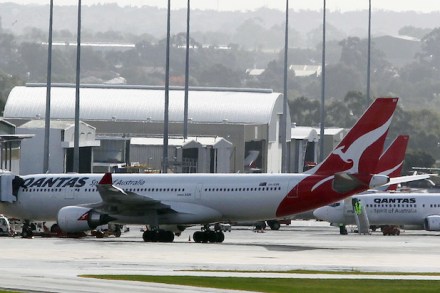
A few weeks ago I flew to Sydney to speak at a conference. The first leg was on the new Qantas route non-stop from London to Perth, the UK’s longest flight. Two million people live in Perth, of whom 250,000 were born in the UK, so the route makes sense. But I was dreading the length of the flight. Granted, I wasn’t travelling at the back of the plane, but I was surprised to find the 16-hour flight little worse than an eight- or ten-hour one. For one, there is the unexpected bonus that you can fall asleep whenever you like. On shorter flights, if you miss a narrow window-of-nod an hour or so after take-off, you are doomed to get too little sleep; here you could flip between sleeping, watching films and reading at your whim. But the real difference is the airliner.

Clever websites only make the market dumber

A month ago I wanted to travel to Bath for a 60th birthday party. From Kent, this either involves a Tube journey to Paddington or traversing the south-western stretch of the M25, where — in the rare moments you are not in stationary traffic — you have the even worse experience of driving over 10,000 misaligned slabs of ribbed concrete. But deep in my hippocampus, I remembered seeing a train to Bath on the departures board at Waterloo. This would let me travel from Seven-oaks to Waterloo East, avoiding the Tube. I looked online, but the website denied all knowledge of such trains. It told me to take the Underground to Paddington and board there. Following a hunch, I searched Waterloo to Bath via Salisbury.

The weird world of Silicon Valley

Which is more diverse: London or Devon? That’s not a trick question. London is much more diverse than Devon. But let’s tweak the question slightly. Which is more diverse: a pub in London or a pub in Devon? Here the answer is not so easy. Though low in ethnic diversity, a pub in Devon might contain a more representative mix of ages, educational backgrounds, earnings, wealth, sexual proclivities and political opinions than a pub in central London. London, for all its vaunted diversity, is a place where you can practise extreme homophily — spending your time exclusively with people nearly identical to you. People largely socialise with contemporaries from work. Social life is delineated by age and education more than in smaller cities or towns.

Back to the USSR

Is it me, or is business becoming a teeny-weeny bit Stalinist? Common features include 1) Paranoia about political ideology; 2) Snitching; 3) Fatuous targets and metrics; 4) Unquestioning faith in technology; 5) Huge, economically unproductive bureaucracies; 6) Overinvestment in education; 7) Preference for theory over experience; 8) An obsession with rockets. An acquaintance in the US has been denounced for racial insensitivity for asking whether a colleague was Jewish. (Funnily enough, I was asked this all the time when I visited New York in the 1990s. I had to explain that my curly hair originates in a country that’s the same size as Israel, and with slightly annoying neighbours, but it’s called Wales.

What data does not tell us

In late 1973 the graduate admissions department at UC Berkeley discovered that for the forthcoming year it had awarded places to 44 per cent of male applicants and only 35 per cent of women. Concerned about possible lawsuits or bad publicity, they approached Peter Bickel, a professor of statistics, to analyse the data in more detail. Looking for patterns of prejudice, Bickel broke down the data by university department. He was suddenly presented with a contradictory picture. Department data suggested Berkeley was mostly even-handed in admissions. Stranger still — though a minority of departments exhibited some gender bias, it was more likely to be a preference towards female candidates than the other way about. Eh? How so? I mean a 44:35 ratio seems clear-cut, no?

Wealth vs freedom

H.L. Mencken once said that a rich man is anyone who earns more than his wife’s sister’s husband. The anthropologist David Graeber takes a slightly different view. When I interviewed him about his wonderful book Bullshit Jobs, he explained that, rather like the Laffer curve, there is an optimal amount of wealth for anyone to have: if you have too little wealth, you spend all your time worrying about money. If, on the other hand, you have too much wealth, you spend all your time worrying about money. I’d always noticed a similar middle ground with cars. You want a car that’s nice enough not to fret about whether it will start; equally you don’t want your car to be so perfect that you worry about parking on the street.

We’re all Luddites at heart

When I saw my first jogger in Wales in the early 1970s, I assumed he was running away from the police. Presumably joggers were familiar in California by then, but not elsewhere. I can’t imagine any of the characters in Goodfellas going jogging, any more than I can imagine Rick in Casablanca going to a spinning class. Nothing was stopping you from running around the streets back then. It was simply that there is always a high social cost to doing things most people don’t do. Our brain’s two most powerful default settings are social copying and acquired habit. Hence our preferences are not independent of our past behaviour, nor of that of others.

The price of looking busy

The behavioural scientist Dan Ariely once found himself chatting to a locksmith with a curious problem. The better he became at replacing locks, the less he got paid. In the early days, he explained, he might wrestle for hours with a jammed lock, but because his inexperience made his job look difficult, his customers would pay without demur, often adding a tip. Eventually, however, he became highly expert, and could fix the same problem in minutes. Now his customers resented paying his call-out fee, and never tipped him at all. Thirty years ago, companies buying a mainframe computer soon outgrew their first machine. The firm would duly write an huge cheque to a hardware provider to upgrade their struggling Zogvac 701a to a mighty Zogvac 709c.

Gastropolitics give us food for thought

An Iranian friend of mine recently brought me some gaz from Isfahan. Commonly known as Persian nougat, gaz is perhaps the most delicious thing I have ever eaten. The only thing to avoid is learning how it is made. Pistachio nuts are mixed with ‘honeydew’ collected from the angebin plant of the Zagros mountains, a sticky white substance often believed to be the manna of the Bible. It sounds glorious. That is until my friend told me that honeydew is not the sap of the plant — but is exuded from the anus of an insect which feeds on it. So one of the tastiest things on the planet turns out to be louse crap. What we know of something strangely affects how it tastes.

Why most economic models are doomed from the outset

History records many well conceived and apparently logical grand plans for the betterment of mankind. Sadly such ideas almost always fail. Why is this? One possibility is that they fail precisely because they are logical. The dictates of logic require the existence of universally applicable laws. But humans, unlike atoms, are not consistent enough in their affinities for such laws to hold very broadly. For example we are not remotely logical in whom we choose to help. Will wealthy Germans help poorer Germans? Yup. Greeks, however? No chance. Utilitarianism makes perfect sense — right up to the point you try to apply it. As Orwell said, ‘To an ordinary human being, love means nothing if it does not mean loving some people more than others.

Netwór Krail has outdone himself yet again

In the shadow of the Shard, not far from Borough Market, is a £1 billion public artwork, an allegorical sculpture entitled ‘What is wrong with the world today’ by the reclusive wunderkind Netwór Krail. It was officially unveiled by the Duke of Cambridge earlier this month. The reason you may not have read about this monumental piece is that most of the press coverage failed to notice this structure was a landmark in experiential art. They mostly used its banal official name: the new London Bridge station. Next time you visit this ‘station’, I urge you to appreciate this installation for what it really is — a brilliant, scathing commentary on the modern age.

Keep your DNA to yourself

Nearly ten years ago, a lorry driver known only as ‘Michael Harry K’ adopted an extreme response to combating what he saw as declining standards on the autobahns: he started shooting at other vehicles. In a four-year spree he fired around 700 rounds at cars and trucks before his arrest in June 2013. What helped him evade justice for so long was the same thing that prevents us learning his full name: German privacy laws. Trucks pay tolls on autobahns, and so CCTV records the number plates of vehicles passing through toll booths. After the first 30 shootings, it could have been a routine procedure to identify the one vehicle in the right places at the right times. But the police were not allowed to see the data. It’s hard to imagine this happening in Britain.

Could an owl make video conferencing finally take off?

When I was ten, the two things we all expected to enjoy by 2020 were flying cars and videotelephony. What never occurred to us was that we might successfully invent one of these things and then fail to use it. Yet that has largely been the case with video conferencing. Is its day still to come? Will there be some tipping point when we start to hold virtual meetings routinely? Or will video conferencing turn out to be one of those technologies whose promise is never fulfilled: something which ‘has a great future — and always will’. I don’t know. Certainly it suffered from being oversold too soon.

We’re still waiting for the internet revolution

At the risk of sounding like Jean Baudrillard, I would like to suggest that the internet revolution has not yet taken place. So far, lots of very clever people have performed amazing feats of technical ingenuity. But for the most part our collective behaviour has so far failed to change enough to truly benefit us. Rather than making us freer, more relaxed and more efficient, in general everyone seems busier, more distracted and more tense. Unfortunately, technology is a bit like Hitler: it doesn’t know when to stop. No sooner has it annexed the Sudetenland than it starts invading Czechoslovakia. The world might be happier if Silicon Valley were put on a two-day week, to give us — and our social norms — time to catch up.

The long and the short of political advertising

Nine years ago, before Cambridge Analytica existed, I caught wind of a research project at Cambridge involving the online measurement of the ‘big five’ personality dimensions. These are usually listed by the acronym OCEAN or CANOE: Conscientiousness, Agreeableness, Neuroticism, Openness and Extraversion. I made a note to go to Cambridge to learn more but, being low on conscientiousness, I never got around to it. Perhaps I dodged a bullet by not getting involved. When people say ‘It’s the early bird that catches the worm’, I always reply, ‘Yes, but what about the early worm?’ Besides, does personality alone predict behaviour? Perhaps not as much as Cambridge Analytica promised.

ISA limits discourage ordinary people from saving

The maximum amount you can save in an ISA for the tax year 2017-2018 is now £20,000. The maximum annual pension contribution is £40,000. Counterintuitively, these huge allowances are actually a disincentive for ordinary people to save. With a £5,000 ISA maximum, a modest saver had an impetus to save each year for fear of missing out; with an ISA ceiling of £20,000, anyone can postpone saving until next year. But you don’t have to be a Marxist to wonder why a household which can save £60,000-120,000 a year is in need of extra help from the state. Figures released this year by HM Revenue & Customs forecast that tax relief on pensions will cost £24.1 billion, with a further £16.

Why I’m not on board with quiet carriages

Every now and then I try to invent a new scientific unit. I’ll never come up with anything as good as the millihelen — a unit of beauty sufficient to launch one ship — or the Sheppey, which is a distance of approximately seven-eighths of a mile defined as ‘the minimum distance at which sheep remain picturesque’. But I do have hopes for the tedion, which measures the half-life of boredom: it denotes the time you must spend in a location to enjoy a 50 per cent chance of overhearing someone say something interesting or funny. On a train to Cardiff or Manchester, a tedion is probably around five to ten minutes. On a Home Counties commuter train it runs into days — or in London, the conversational nadir of the UK, weeks.

Reducing activities to their core misses the point

There may be a very simple evolutionary reason why water does not really taste of anything, as I learned from the psychophysicist Mark Changizi. Pure water has no taste because our taste buds have been calibrated, very sensibly, not to notice it. For a few million years, the most important contribution taste buds made to survival were to detect things in water that weren’t water: the very things, in short, which might indicate that the water wasn’t safe to drink. If we had evolved perception so that water tasted like Rioja or Dr Pepper, the sensory overload might have overpowered that hint of dead sheep from a rotting carcass 100 yards upstream: our taste buds are calibrated with water as the base line, the better to notice things which shouldn’t be in it.

The Presidents Club was on to something

There exist in the annals of salesmanship certain ideas that are both highly immoral and wickedly clever. Before P. T. Barnum attached his name to circuses, he ran Barnum’s American Museum in Manhattan. From 1841 until its destruction by fire in 1865, this received more than 38 million visitors, each paying 25c. The entry fee entitled visitors to stay all day; congestion often prevented new paying visitors from being admitted, so to hasten traffic to the exits, Barnum placed signs throughout reading ‘To The Egress’ or, according to some reports, ‘The Great Egress’. Enticed by the prospect of seeing what they imagined was some exotic bird, less literate guests followed these signs through a door and promptly found themselves locked out on the street.