The Wiki Man

The keys to ending lockdown – introverts and brown M&M’s

Once we’ve flattened the curve of infection with mass self-isolation, the next debate will concern how to soften the restrictions on movement and work without causing a second wave of the pandemic. Behavioural science, abused as it has been to date, may be useful in formulating the new rules for social behaviour. That’s because it is no good simply to come up with rules which are optimal in epidemiological terms: such rules might well be too complicated for people to follow, and impossible to encode in habits or social norms. Instead you need cautious rules-of-thumb which are both simple and visible. For rules to work, it helps if it is immediately apparent when someone is breaking them.

My Japanese toilet has made me a lockdown hero

Compared with every other household chore, progress in bum-wiping has been glacially slow. It’s only in living memory that schools and institutions stopped using something called Izal, a box of medicated toilet wipes similar in texture to greaseproof paper, and thus spectacularly ill-suited to its purpose. It was characteristic of the Britain of my childhood, where things were made gratuitously unpleasant on purpose, since to do anything nice was seen as effeminate. The Muslim world is far ahead of us here. In most Islamic countries a toilet cubicle comes with a bum gun — a kind of handheld spray. Yet in the supposedly enlightened Anglophone world we think dry paper is fine.

NHS workers deserve our applause – but so does the telecoms industry

Next time there is a highly deserved round of public applause for NHS workers, do add one additional clap for the tele-communications industry for — so far — keeping the show on the road. High-speed broadband, for those lucky enough to have it, has made self-isolation more tolerable, and may have significantly reduced the impact of the disease in Britain. I say this because, for several weeks before it became mandatory to stay indoors, a large number of people did so voluntarily. That includes me. Ever since my grandfather contracted jaundice and so avoided landing at Suvla Bay in Gallipoli, there has been a proud family tradition of calling in sick at the first sign of a sniffle.

The trick that will let you have a conference call from your home phone

For the past 12 years, Roger Alton and I have shared this half page like Box and Cox: he writes fortnightly about sport and I write fortnightly about technology. Normally it would be Roger’s turn this week to cover sport. Unfortunately there isn’t any. So we’ve reached an agreement. For now, while there’s no longer any sport, I may write a little more frequently about technology. Then, in six months’ time, if there’s no longer any technology, Roger can write more frequently about the newly popular sports: bare-knuckle pugilism, dog-fighting and Mad Max-style steel-cage jousting. He could even throw in some nostalgic pieces recalling the golden age of football, when fans could still afford to throw toilet rolls on to the pitch.

Will quarantine for travellers become normal again?

It wasn’t a coincidence that the US government chose Ellis Island as an immigration station. The crucial word is ‘island’. Had the RMS Titanic missed that fateful iceberg in 1912, she would eventually have taken up station at a quarantine area at the entrance to the Lower Bay of New York Harbor, to await medical inspectors who would board the ship from a cutter. The quarantine exam would have been performed aboard, but only for first- or second-class passengers (US citizens were exempt). These would have been inspected for cholera, plague, smallpox, typhoid fever, yellow fever, scarlet fever, measles and diphtheria. A few might have been marked to be sent to Ellis Island for further examination.

Why the BBC licence fee makes sense

A consensus seems to be forming that the BBC licence fee is for the chop. In a digital age, the reasoning goes, we should not be forced to subscribe to huge bundles of content, with no choice over what we pay for and what we don’t. This argument, intriguingly, is both true and false at the same time. It is worth remarking that Netflix and Spotify succeeded by adopting a very similar model to, er, the BBC What’s true is that technology has removed two constraints which made the licence fee necessary in the first place. At the BBC’s outset, the airwaves were limited, creating a monopoly. Moreover it was impossible to charge for specific content: anyone with a wireless set could freely enjoy anything on air. Other than advertising, a licence was the only option.

The simple trick that will hugely boost your phone coverage

In the recent debate over Britain’s 5G infrastructure, one dog didn’t bark in the night. At no point did anyone dare suggest that, regardless of the supplier, upgrading our mobile networks to 5G might be premature. In saner parts of the economy, an investment requires something called a ‘use case’ or a cost-benefit analysis. In other words, you need to provide some immediate benefits which will arise as a result of your investment. Anything that can be dressed up as next-generation technology is somehow spared that tedious level of scrutiny. All it takes is for the techno-consulting complex to claim that ‘without this we risk being left behind’ and next thing you know there’s a blank cheque.

The real reason I am against HS2

Some years ago, two British supermarket chains needed to place a large order for replacement trollies. They had to decide what ratio of full-depth and shallow trollies to order, and how best to allocate them between stores. One of them amassed mounds of demographic data and tried to construct an elaborate optimisation model. The second took a different approach: ‘We already employ people to collect trollies in the car parks — so why don’t we ring them and ask what they need?’ The second approach worked much better. How often are problems best solved not centrally but by devolving decisions to people on the ground? How often are problems best solved not centrally but by devolving decisions to people on the ground?

The great train robbery: why Britain’s rail prices need a rethink

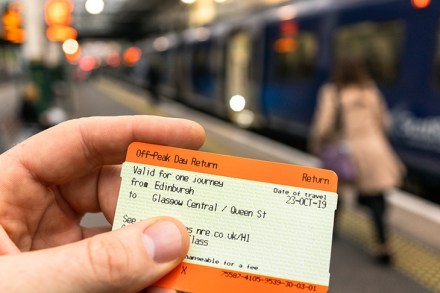
Outside mathematics, the word ‘commute’ can mean two things. Mostly it refers to the act of making a daily journey between one’s home and work; more rarely it describes replacing one penalty with another — as in ‘the Home Secretary commuted the death sentence to one of life imprisonment’. The curious may wonder why one verb is used in two different ways. The reason is intriguing. In the early days of rail travel, workers in Chicago could ‘commute’ the cost of a daily rail ticket into a lower price per journey by buying an annual, or ‘commutation’ ticket. The word commuting originally referred to the act of reducing your ticket cost, then later came to denote the resulting travel.

Something is badly wrong with the housing market – so why aren’t we talking about it?

In 1991, 67 per cent of 25- to 34-year-olds owned their own home. In 2016, that figure had fallen to 38 per cent. The average house price in the UK is eight times the average wage, this ratio having doubled since 1998. Half of first-time buyers in Britain are now dependent on the Bank of Mum and Dad, rising to two-thirds in London and the south-east. Over the past 20 years, the proportion of people living in the private rented sector has doubled. There are one million more 18- to 34-year-olds living with their parents than there were in 2002. Between the mid-1950s and the mid-1990s (expressed in 2016 prices) the average price of residential land rose from £150,000 per hectare to £1.3 million. By 2007 it was £5 million.

Technological progress is as messy as Darwinian evolution

There is a famous chart which shows the time it took for various technologies to be adopted by 50 million people. From its introduction, the telephone took 75 years to reach 50 million users. For radio, it was 38; for television, 13; for the world wide web, merely four. Online services are faster still. Facebook reached the 50 million mark in two years, YouTube in ten months, Twitter in nine months. Pokémon Go reached the same watermark in 19 days — as did Pornhub. (For the benefit of the uninitiated, Pokémon Go was a 2016 augmented reality game where you used your phone to catch animated monsters; Pornhub is a helpful website which kindly reminds men to set their laptops to ‘mute’ after their wives have gone to bed, to avoid waking them.

This year’s top gadgets – according to my inner chimp

I’d hoped to spend this week writing about my new Geberit Japanese-style toilet, but since the grout is not yet dry, all you filthy toilet-gaijin will have to wait until the new year for my review. So I thought I’d write instead some reviews of my favourite gadgets of the year. But since our real reasons for buying gadgetry have nothing to do with the hastily contrived post-rationalisations created in the prefrontal cortex, in the interests of impartiality, I have asked my inner chimp to provide an honest second opinion on each.   1) Smart energy meter (free). Prefrontal cortex verdict: ‘Blah blah blah energy reduction, green industrial revolution, global warming, polar bears.’ Inner chimp: ‘Sod the bears —they’re terrifying.

No one else has the weird levels of self-regard shown by people who appear regularly on TV

One of the more tedious tropes of recent years is for journalists to bemoan the rise of populism while busily casting about for some dark force to which to attach the blame. Mark Zuckerberg, Google, nameless Russians, an uneducated populus, social media, whatever. One avenue that is rarely explored is that a major cause of the rise of populism might be the journalists themselves, and the extent to which the once noble aim of impartiality has led to something ridiculous — where almost everyone in authority is treated as a liar. For the past three decades, Britain has had centrist governments led by mainstream politicians. And in that period, did we find that journalists devoted much airtime and column inches to reporting this as a good thing? We did not.

How veganism became mainstream

I have just returned from Canada, which seems to share Britain’s new-found obsession with veganism. There, chains such as Burger King and KFC are offering plant-based alternatives to meat-based meals. Five years ago could anyone have predicted this? True, vegetarianism has been growing for many years, but did anyone foresee its most extreme variant rapidly ‘crossing the chasm’ to go from an oddball niche to a standard lifestyle choice? The ‘chasm’ is that mysterious and often impermeable barrier all technologies and behaviours must traverse if they are to make the critical leap from being a weird minority interest to an unquestioningly accepted option.

Plumbers always have the best restaurant recommendations

Whenever I use the security lane at an airport, I enjoy watching people retrieving their bags and metallic items when they emerge from the X-ray machine. You can quickly divide the population into two: a small minority of ‘logistically aware’ systems-thinkers and the logistically challenged majority. To anyone with a grasp of systems thinking, it is obvious that the throughput of a security line is reduced when only a few people can retrieve their belongings at once. People who self-importantly collect their stuff as soon as it exits the scanner are slowing the queue by 70 per cent or more.

Why averages don’t add up

I recently learned from a doctor friend that salt isn’t necessarily bad for you. Yes, there is a minority whose blood pressure isdriven haywire by eating the stuff, but most people can consume it without much risk. The reason we are formally advised to avoid salt is that lowering salt consumption improves public health on average: salt reduction is helpful to the few who are affected, while being generally harmless for everyone else. This makes sense at first. Except it leads to a problem. Because if you demonise every food that is harmful only to a minority, you risk recommending so many dietary restrictions that life becomes intolerable. A better answer may lie in personalised medicine: ‘In your case, I’d concentrate on avoiding three things first.

Why business is perfectly relaxed about Brexit

It’s difficult to go into the office nowadays, since most of my colleagues are so distraught by the prospect of a no-deal Brexit that they rarely speak. The finance department have painted European flags on their faces for solace, and spend the day staring blankly out of the window sobbing over a tear-stained picture of Guy Verhofstadt. Except, um, no. None of this has happened. In fact, most businesses seem weirdly calm in contemplation of a no-deal Brexit. I have met people from multinationals who are sanguine about Brexit, and those who are worried, but few get emotional about the subject as, say, academics, politicians or journalists do. Brexit has all along been a political problem, not a commercial one.

Business is the only area of human activity where you get paid to change your mind

In 1891, a 29-year-old man moved from Philadelphia to Chicago intending to start a business. With $32 to his name, he began by selling scouring soap. Hoping to boost sales, he gave away small packets of baking powder with every purchase. Soon he found that the baking powder was more popular than his soap, so he quit the soap market and started selling baking powder instead. But now he needed something to give away with his baking powder. Eventually, for reasons I cannot begin to fathom, he took to giving his customers two free packs of chewing gum with each tin of baking powder. And then the same damned thing happened again. He found that the free gum was more popular than the baking powder.

Why no one ever moves back to London

In last week’s Spectator, Martin Vander Weyer replied to a couple with a baby who had sought his advice on accepting a low offer for their cramped London flat to buy a house in commuterland. Their fear was that, if Brexit led to a property crash, they could face negative equity. Should they call the whole thing off? Emphatically not, said Martin. ‘Buying a family home is a long-term choice, rarely regretted, in which fluctuating value matters far less than whether you love the house.’ He’s right, I’m sure. But I’d like to add a further thought experiment which may reaffirm their decision. I recently heard of a different property dilemma: two married London teachers in their early fifties owned a small house now worth just under £1 million.

Looking for a new idea? Try borrowing an old one

Recently I suggested a new approach to commuter-train overcrowding. It simply involved reformulating the problem by accepting that not all overcrowding is equally bad: 100 people forced to stand 10 per cent of the time do not experience anything like the same irritation as ten people who have to stand 100 per cent of the time. So my suggestion was that a proportion of peak-time train seating — even a few peak-time trains — should be reserved for annual season ticket holders. But when I mentioned this to a group of engineers, one pointed out something that hadn’t occurred to me: ‘Airlines already do that.’ ‘They do?’ ‘Well, airlines don’t have season tickets, but they do have frequent flier programmes.