Television

Bearers of bad news

When President Trump refused to take a question from a CNN reporter at the Chequers press conference last week, I imagine a lot of British viewers thought —as Theresa May clearly did — that he was being graceless, capricious and anti-freedom of speech. But I think we’re in danger of underestimating the extent to which the media landscape has changed in the past few years. Gone are the days — if they ever existed — when political interviewers were dispassionate seekers-after-truth on a mission to get the best out of their subjects. Now, it’s mostly activism-driven, the aim being to advance your preferred narrative while showing up your ideological opponents in as unflattering a light as possible.

Between a rock and a hard place

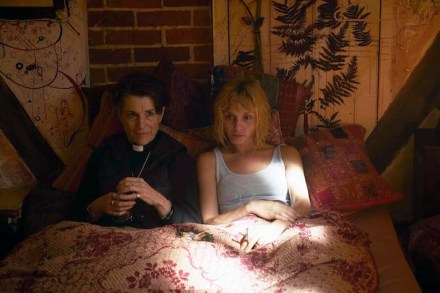
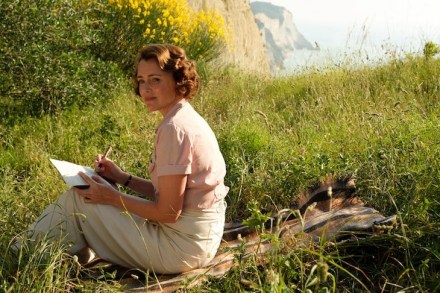
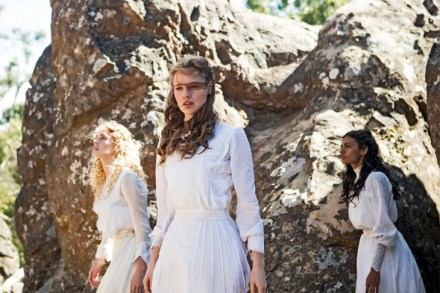
According to the opening captions in Picnic at Hanging Rock (BBC2, Wednesday), ‘the infamous events’ it depicts ‘began whena mysterious widow purchased a mansion out in the Australian bush’. The first few scenes, set in the late 19th century, were then dedicated to proving quite how mysterious she was: Hester Appleyard (Natalie Dormer) wasn’t merely veiled, but also filmed largely from behind and — just to be on the safe side — in the dark. What she might not be, though, is a widow. As she explored her new house, her voice-over dropped a series of dark hints that her mourning dress was a cunning disguise — and that she was in hiding from someone or other after doing somethingor other.

The great escape

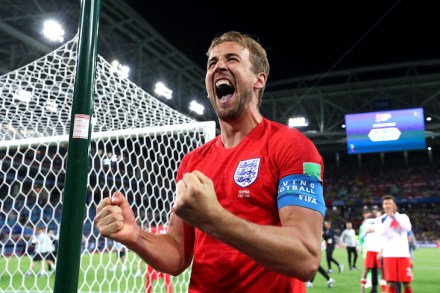
Even though I don’t watch much football I love the World Cup because it’s my passport to total freedom. I can nip off to the pub, slob indoors on a sunny Sunday afternoon, leave supper before we’ve finished eating, let alone before the dishes are done. And where normally that kind of behaviour would at the very least get me a dirty look, during World Cup season it actually gets me brownie points. Why? Because it’s a sign that I’m being a Good Dad. It worked in the old days with the Rat. And now it works with Boy. Mothers are absolutely potty for their sons and will look fondly on any activity that makes them content.

Coming up Trumps

Back when his country was controlled by the USSR, the Czech writer Milan Kundera pointed out that ‘Union of Soviet Socialist Republics’ was ‘four words, four lies’. It’s a strike rate that even the current US president has yet to match. Nonetheless, at one stage in Reporting Trump’s First Year: The Fourth Estate (BBC2, Sunday) we did see him pull off an impressive three-sentences, three-lies sequence in a speech about — inevitably — the mainstream media, including the New York Times. ‘They have no “sources”,’ said Trump baldly. ‘They just make ’em up. They are the enemy of the people.

Hell on earth

There were 1,500 punters in the audience when Eagles of Death Metal played their fatal gig at the Bataclan theatre in Paris in November 2015. By midnight, every one of those fans would either be dead, bereaved, in hospital with gunshot wounds or so traumatised that the horror would haunt the rest of their lives. But obviously none of them knew this when they woke up on that sunny autumn morning (though it was a Friday 13th). One remembers that his first thought that day was to make sure he wore some nice trousers. Another recalls being puzzled when his father — ‘a typical Chilean dad’ — embraced him, asked him anxiously where he was going that night (‘I’m 23!’) and then said what now sounds eerily prophetic: ‘No one can steal your soul.

Unintelligent design

On Wednesday, BBC Four made an unexpectedly strong case that the human body is a bit rubbish. Our ill-designed spines, for example, guarantee that many of us will suffer from chronic back pain. Our joints wear out long before we do. Our skin even gets damaged by sunlight. So what can be done about it? Obviously the answer is not much — but that didn’t prevent Can Science Make Me Perfect? With Alice Roberts from pretending to give it a go. The premise was that Roberts would draw on other, less incompetently constructed life forms to create an improved version of herself — the way she’d be if evolution hadn’t cocked things up so badly. As befits someone whose name appears in programme titles, Roberts clearly relished her God-like role.

Unholy land

‘The rule in our household is: if a TV series hasn’t got subtitles, it’s not worth watching,’ a friend told me the other day. Once this approach would have been both extremely limiting and insufferably pompous. In the era of Netflix and Amazon Prime, though, it makes a lot of sense. There’s something about English-speaking TV — especially if it’s made in the US — that tends towards disappointment. Obviously there have been exceptions: The Sopranos; Band of Brothers; Breaking Bad; Game of Thrones. But too often, what’s missing is that shard of ice in the creative heart that drama needs if it’s to be truly exceptional. American drama is a slobbering puppy dog.

Fresh and wild | 31 May 2018

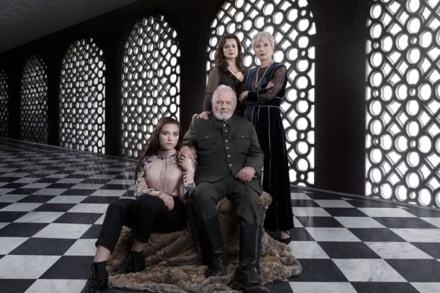
I recently came across a theory of the American poet Delmore Schwartz’s that Hamlet only makes sense if you assume from the beginning that all the characters are drunk. Given Schwartz’s own fondness for booze, this idea perhaps smacks of drunken hyperbole itself. But it certainly sprang to mind while watching BBC2’s King Lear (Monday), where Anthony Hopkins spent quite a lot of the first half swigging enthusiastically from a hipflask.

Notes on a scandal | 24 May 2018

Every time a friend succeeds, I die a little, so you can imagine how sickened I was by the magisterial TV adaptation of John Preston’s A Very English Scandal (BBC1, Sundays). I’ve known Preston for years. It’s himI have to thank for the compendious collection of CDs rotting in my attic, from the ten years or so I spent working under him (he was the arts editor) as the Sunday Telegraph’s rock critic. But though I’ve hugely enjoyed all his quirky, low-key, sardonically amused novels — loosely on the theme of ‘quiet desperation is the English way’ —I never imagined he’d luck out quite so spectacularly as he has with this truly splendid all-star production. Script: Russell T.

Sins of the father | 17 May 2018

Warning: if you haven’t seen it yet, the first episode of the much-anticipated Patrick Melrose (Sky Atlantic, Sunday) contains scenes of drug-taking. Further warning: it contains an awful lot of them. The series is adapted from the five justly celebrated autobiographical novels by Edward St Aubyn, which trace the long-term effects on Patrick of an upper-class childhood in which his psychotic father intersperses horrifying emotional cruelty with regular bouts of rape. By his early twenties, Patrick is a full-blown drug addict, and even when he marries and settles down, what he settles down to is mostly depression and alcoholism. All of which might make the books sound punishingly grim.

Question time | 10 May 2018

Twenty years after it first appeared, Who Wants To Be A Millionaire? is back for a brief, week-long anniversary run on ITV —with only a few small amendments to the near-perfect original formula. Along with 50/50, Ask the Audience and Phone a Friend, you also get the option to Ask the Host. Given that the presenter is now Jeremy Clarkson (replacing Chris Tarrant) this is an option as risky as it is amusing. As Clarkson cheerfully explained in the first show: ‘If it’s 1970s prog rock I’ll probably know the answer. If it’s anything other than that I probably won’t.’ The first contestant to test this theory was flummoxed by a question about which county cricket club is based at the Oval.

Partners in crime

It’s not every day that a television screenwriter is threatened with a trial for sedition, but G.F. Newman was after his series Law & Order aired on BBC2 in 1978. ‘The political fallout was enormous and there was a move to try and get me prosecuted by Sir Eldon Griffiths and a gang of MPs, but it didn’t go anywhere,’ Newman remembers. ‘It would have been a wonderful case had it done so.’ Law & Order rocked the boat by doing the unthinkable, so much so that BBC director-general Sir Ian Trethowan was hauled over the coals by the Home Office minister John Harris (later Lord Harris).

Recipe for success | 3 May 2018

From time to time, a TV show comes along which is so thrillingly original, so wildly imaginative, that you can’t even begin to think where the makers got the idea. Britain’s Best Home Cook (BBC1, Thursday) isn’t one of them. Nevertheless, it has a serious claim to being the most important new programme of the week — if only to the BBC which, despite the failure of The Big Family Cooking Showdown (whose title I just had to check via Google), clearly hasn’t given up on the possibility of finding a way to replace The Great British Bake Off. But in fact there’s another series that some viewers might feel is lurking in the background here — and that’s W1A.

Missing the point | 26 April 2018

Because I’m a miserable old reactionary determined to see a sinister Guardianista plot in every BBC programme I watch, I sat stony-faced through much of Cunk On Britain (BBC2, Tuesdays). Philomena Cunk (played by Diane Morgan) is a spoof comedy character who used to appear on Charlie Brooker’s Weekly Wipe and has now been given a full series. Though the character is amiable enough — a heroically thick Northern woman in a smart jacket who goes around Britain making stupid observations and asking celebrity historians dumb questions — I can’t quite work out what the point of the joke is. Is it a send-up of dumbed-down Britain? Is it designed to make TV history experts look pompous?

The great pretenders | 19 April 2018

For a while now, the Korowai people of Western Papua have been the go-to primitive tribe for documentary-makers. The Korowai were unknown to the outside world until the 1970s — but they’ve certainly made up for it since, with their Stone Age tools, jungle treehouses and penis gourds becoming almost as familiar to TV viewers as Brian Cox on top of a mountain. No wonder, then, that Will Millard’s introduction to My Year with the Tribe (BBC2, Sunday) smacked of mild desperation as he sought to distinguish his new series from its many predecessors. (No fixers laying on anything in advance! Not just one snapshot of Korowai life, but four over 12 months!) In the event, however, he needn’t have worried.

It’s a cult thing

I have decided to set up a cult, which you are all welcome to join, especially those of you who are young and very attractive or stupendously rich. The former will get exclusive membership of my JiggyJiggy Fun Club™, while the latter will be essential in financing all the cool shit I need on my 500-square-mile estate, viz: hunt stables and kennels, helipad, private games room with huge comfy chair, water slides, grouse moor, airstrip, barracks for my cuirassiers, volcano with battery of rockets inside, and so on. What gave me the idea was this new Netflix documentary series everyone is talking about called Wild Wild Country.

Friday night refreshment

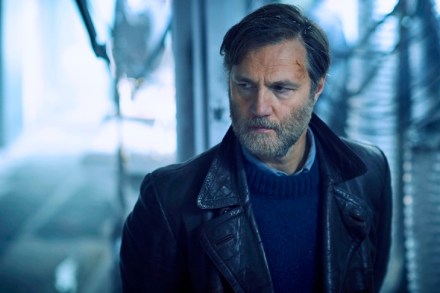
BBC2 has a new drama series for Friday nights. The main character is a world-weary middle-aged police inspector with an unshakeable commitment to smoking. His work partner is a feisty female officer in her twenties who combines salt-of-the-earth irreverence with being a damn good cop. Between them, they’re investigating the murder of an attractive young woman who their colleagues immediately assumed was a prostitute, and whose death reminds the inspector of a previous investigation that continues to haunt him — which is why his boss is constantly trying to take him off the case. But if this makes you think that The City & The City is yet another identikit crime drama, then you couldn’t be more wrong.

Village voice

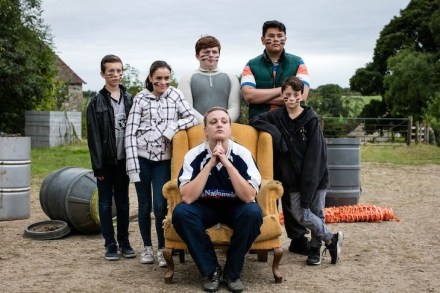
Sometimes — really not often but sometimes — a programme that’s good and honest and true slips under the wire of the BBC’s jealously guarded PC agenda and makes a home run. The latest to do so is a deadpan comedy series called This Country (BBC3). It’s so deadpan that it’s easy to see why an earlier pilot episode for ITV crashed and burned. If you were channel-hopping and lingered on it for five minutes, you might easily mistake it for an earnest, worthy, achingly tedious fly-on-the-wall documentary series about the poverty and despair of left-behind rural England. This impression is enhanced by screeds that occasionally appear on screen giving you, say, statistics illustrative of the funding crisis in healthcare outside the big cities.

Sunday best

For as long as I can remember, Sunday nights have been the home of the kind of TV drama cunningly designed to warm the sternest of heart cockles. Think, for example, of Robert Hardy cheerfully bellowing his way through almost every scene of All Creatures Great and Small (‘PASS THE SALT, JAMES!’). Or of Pop Larkin’s impressive commitment to chuckling indulgently in The Darling Buds of May. Or of Heartbeat somehow racking up 372 episodes. Even so, ITV has now taken this tendency to surprising new lengths, with not one but two Sunday-night dramas that run consecutively and contain such traditional elements as gorgeous sun-dappled scenery, cute animals, gruff old-timers with hearts of gold and any number of lovable eccentrics. First up, at 8 p.m.

The beautiful and the damned

Babylon Berlin (Sky Atlantic), the epic German-made Euro noir detective drama set during Weimar, is so addictively brilliant that I’d almost advise you not to start watching it. After the two seasons to date you’ll be left feeling like the morphine-addicted hero Gereon Rath (Volker Bruch) when deprived of his fix.