Pop

The problem with pop-literary collaborations

‘We all secretly want to be rock stars,’ the 2022 Booker Prize-winning author Shehan Karunatilaka said recently. By ‘we’ he meant novelists, and he was more or less right. Most authors want to be rock stars, just as many rock stars aspire to bookish credibility. The former crave a whiff of glamour and instant gratification; writing offers precious little of either. Musicians seek gravitas and some wider recognition that they possess the tools to extend their literary genius beyond three verses and a killer chorus. Both parties tend to discover that they do what they do as a day job for a good reason.


A giddy delight: Regina Spektor, at the Royal Festival Hall reviewed

We’ll get on to the brilliance of Regina Spektor in a moment. But first a question: why are pop music fans treated so abysmally? The afternoon of Spektor’s second sold-out show at the Royal Festival Hall, the venue tweeted that she would be on stage at 7.30 p.m. She actually took to the stage a few minutes past 8 o’clock. Spektor was absolutely magnificent once she did come on. She filled the room with charisma, charm and wit If that were a one-off, so be it. But anyone who goes to a lot of shows is familiar with how malleable the concept of stage-time is in pop music. Lana Del Rey had her Glastonbury set cut short because she was so late coming on – apparently she was having her hair done. It’s maddening. Why can they not meet their call times?

An album of not terribly happy ballads: Blur’s The Ballad of Darren reviewed

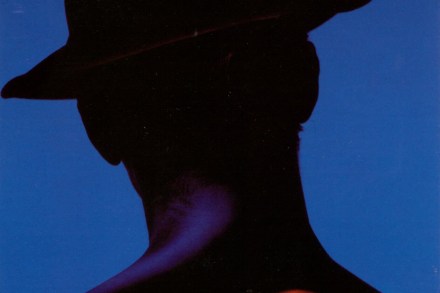
Bands that have hung around, or gone away and come back again, occupy an increasingly sizeable percentage of pop’s bandwidth. When it comes to making new music, many are happy not to rock the boat, scraping by on the goodwill accumulated from past endeavours. Others strive to present a moving target, enjoying a more evolved, even argumentative, relationship with the sounds of their glory days. Two new albums tackle this dilemma, with varying degrees of success. Together for the first time since 2015, Blur do a fine job of straddling past and present.

Intoxicating: Bruce Springsteen, at BST Hyde Park, reviewed

Seven years ago, I asked Bruce Springsteen what he meant when he talked of the covenant between himself and his audience. It was a long, thoughtful and thorough answer, and when I transcribed it, I realised he would have won Just a Minute, so clear was his reply. Part of what he said was this: ‘I have built up the skills to be able to provide, under the right conditions, a certain transcendent evening, hopefully an evening you’ll remember when you go home. Not that you’ll just remember it was a good concert, but you’ll remember the possibilities the evening laid out in front of you, as far as where you could take your life, or how you’re thinking about your friends, or your wife, or your girlfriend, or your best pal, or your job, your work, what you want to do with your life.

Still one of the great vocalists: Peter Gabriel, at OVO Hydro Glasgow, reviewed

Most artists begin an arena show with a bang: emerging from the floor, the gods, on a hoist, everything short of being sprung headfirst from a cannon. Touring for the first time in seven years, Peter Gabriel shrugged off such rote conventions. At 8 p.m. on the dot, he shuffled on alone in a flat cap, for all the world a man with nothing more on his mind than inspecting his spuds down at the allotment. He offered a few words, some avuncular jokes, a self-deprecating jibe at his appearance. I found myself bracing for a PowerPoint presentation, but the message was simple enough not to need one: there are no stars here.

Why aren’t Spoon filling stadiums?

Here’s a mystery for you. Why were Spoon, one of the most dynamic, sharpest rock bands in the world, playing a single night in a north London town hall (capacity 890) while Arctic Monkeys were playing three nights at Arsenal’s ground (capacity 59,000) as part of a UK tour that encompassed eight other stadiums in the UK, plus one arena, one park and Glastonbury? It’s not that Arctic Monkeys aren’t good – no one gets that kind of critical unanimity without being good. It’s just that Spoon are better, and better than almost everyone else. Onstage in London, aided by a genius sound engineer, Spoon were perfection So why aren’t Spoon filling stadiums? First, they rarely come to the UK.

Is Richard Thompson Britain’s Bob Dylan?

There are artists you go to see expecting to be challenged, surprised, even let down. And there are artists you can rely on to deliver more or less the same experience every time. Each approach has its merits. Richard Thompson is a ‘death and taxes’ kind of guy. The fact that his excellence feels inevitable can make it seem less excellent somehow, which doesn’t entirely seem fair. Richard Thompson’s greatest songs drink deeply of the dark stuff A founding member of folk-rock pioneers Fairport Convention, Thompson has been described as the British Bob Dylan. This makes sense in some ways.

Brilliantly unhinged: Grace Jones, at Hampton Court Palace, reviewed

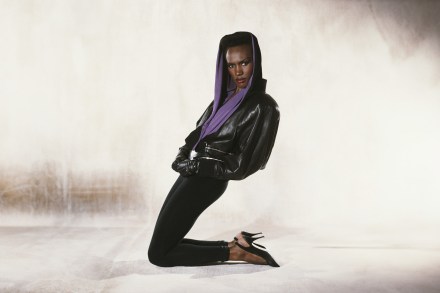
Some artists need flash bombs to make an impression on stage. Some need giant screens. Some need to run around like hyperactive toddlers. All Grace Jones needed was a hula hoop – not the delicious potato snack, but the plastic ring. For the ten minutes or so of ‘Slave to the Rhythm’ that ended her set on a balmy evening in the courtyard of Hampton Court Palace, she languidly rotated the ring around her hips, all while she strode across the stage, then climbed a set of stairs. Not a single revolution was missed. I realise that you don’t come to these pages for reviews of hula hooping, but by God, it was astonishing. I like to think it was what Henry VIII would have wanted. It was a fitting end to a brilliantly unhinged show.

Let’s hear it for the lesser-spotted nepo daddy

Rob Grant releases his debut album, Lost at Sea, this week. A 69-year-old millionaire and former ad man, furniture exec and domain developer, Grant has made a record of ambient, ocean-themed piano doodles glorying in titles such as ‘In the Dying Light of Day: Requiem for Mother Earth’, ‘A Delicate Mist Surrounds Me’ and ‘The Mermaids’ Lullaby’. Not incidentally, he is also the father of one of the world’s biggest (and best) alt-pop stars, Lana Del Rey. The title track features his daughter’s unmistakeable contralto, while her name is emblazoned on the front cover. Father’s Day is just around the corner, and Ms Del Rey has delivered a pearl of a present for Pappy: his very own album.

One of the most tuneless, vapid, dismaying things I’ve ever seen: Mötley Crüe, at Bramall Lane, reviewed

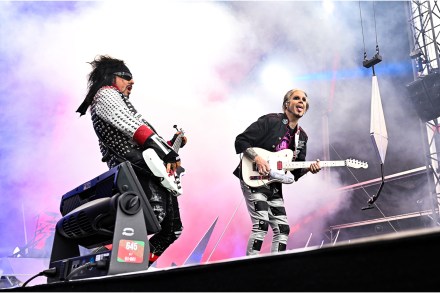
I’m not sure I’ve ever seen anything worse than Mötley Crüe in Sheffield. Nothing more tuneless, empty, vapid and dismaying. The Los Angeles glam-metal band became superstars in the 1980s, largely by wearing lots of make-up and doing terrible things, but I’ve never understood why. Even those who weren’t repulsed by the band members’ behaviour and personalities surely couldn’t have detected any actual tunes in there. At Bramall Lane, with a viciously loud PA, the few melodies that were there were largely undetectable. And the band – now in their sixties – still gloried in their obnoxious infantilism.

Dazzling – if you ignore the music: Beyoncé, at Murrayfield Stadium, reviewed

Scheduling open-air concerts in mid-May in northern Europe is a triumph of hope over experience. I last spent time with Beyoncé – I’m sure she remembers it fondly and well – in 2016, in a football stadium in Sunderland on a damp, drizzly, early-summer English evening of the type that even strutting soul divas struggle to enliven. I don’t think it was merely the weather which left me underwhelmed by her brutalist attack, the sheer choreographed drill of the show, the lack of engagement, of spontaneity, of joy. By then, Beyoncé was no longer seeking to be regarded as a mere pop star. She had recently taken on the unearthly qualities of an alien presence, entirely unrelatable, tilting for something far more culturally significant than a spot in the charts.

The new Pogues: The Mary Wallopers, at O2 Forum Kentish Town, reviewed

I was listening the other week to a solo album by an ageing rock guitarist, once terrifically famous. It was really very good, but I couldn’t bring myself to care about it because it clearly didn’t matter: this man’s career is static and it is likely to remain so. The album will make no impact on the wider world and, despite liking it, I felt no need to listen again. Had it been the debut by a band of 21-year-olds, on the other hand, I would have been all over it. Rock and pop musicians are most interesting in the transitions; that is, on the way up or on the way down. The journey up always – but always – accounts for the most interesting bit of any musician’s memoir, because they’re remembering when life was exciting.

Heartfelt but bland: Ed Sheeran’s – (Subtract) reviewed

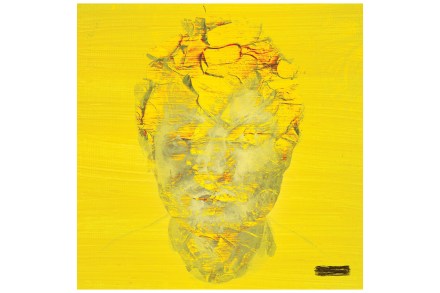
Whether by accident or design, the mathematical theme of Ed Sheeran’s previous album titles (+, ×, ÷ and = respectively) resolves rather neatly with – (Subtract). I interviewed Sheeran around the time of × and found him likeable enough but a bit out of reach. Multiplication did indeed seem to be foremost on his mind. Perched on the edge of a bed in a room above RAK studios in central London, he came across as a man obsessed with sales figures and chart placings, a coolly pragmatic mix of talent and ambition. (You don’t think Sheeran is talented? I watched him entertain 60,000 people in a football stadium for two hours with just a guitar, loop pedals and a lot of chutzpah. He’s got talent, all right.

A phenomenally exciting new band: The Last Dinner Party, at Camden Assembly, reviewed

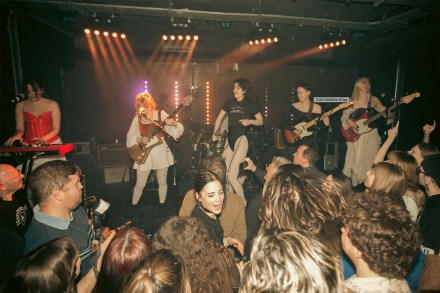
A user’s guide to how pop music works in the 21st century. Step one: you see a great new band. Step two: you tweet about them being very good. Step three: you get told by people that they are clearly nepo babies, denying crucial exposure to other bands. Step four: you discover that newspaper articles are using these Twitter conversations as evidence of a backlash about said new band. That’s what happened after I went to see the Last Dinner Party. For reference, the Last Dinner Party have released precisely one song: their debut single ‘Nothing Matters’, which had come out a few days before. On YouTube you can find complete recordings of some of the few shows they have played, filmed by zealous young fans.

Americana Coldplay: The National’s First Two Pages of Frankenstein reviewed

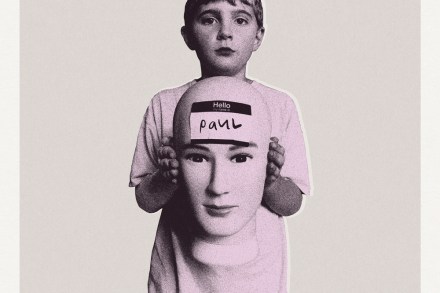
Once upon a time, rock bands wished for nothing more than to look as though they posed a clear and present danger to your children. Though a few true believers still hold to this honourable creed, nowadays most groups are comprised of the kind of people one might expect to be grading your offspring’s dissertation at a respected Russell Group institution. If the National were an author, they might be Anne Tyler The National exemplify rock’s professorial bent: bespectacled academic types, bearded, literate, wry and congenitally suspicious of happiness. Relatability sells, apparently.

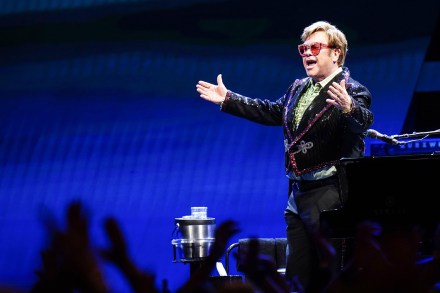
Glorious: Elton John’s farewell tour, at the O2 Arena, reviewed

Elton John has now been retiring for nearly five years. The Farewell Yellow Brick Road tour began in Allentown, Pennsylvania, in September 2018. Why there? Because it’s a hop and a skip from the small town of Lititz in Amish country, where scores of the big arena shows are built – it’s the real rock’n’roll capital of the world. Since then, with breaks for Covid and other health worries, he has played roughly 300 shows, grossing north of $800 million as of January this year – this is the most commercially successful tour ever. Retirement, or the threat of retirement, has always been a canny career move: Frank Sinatra played more than 1,000 concerts and recorded ‘Theme From New York, New York’ after he quit the business in 1971.

Why can’t I let go of my records?

I’m not a natural lender. I’m a reasonably soft touch when it comes to money, but regarding the important things in life – books, music, pens – I loan with a gently thrumming underscore of anxiety. While I’ve weaned myself off my mother’s habit of writing her name in every book she buys, I still tend to keep an internal inventory of where each one has gone, and when I’d like it back. Add in the fact that I’ve never possessed the zealot’s desire to convert others to my enthusiasms, and I’m forced to concede that I make a poor practitioner of the art of lending. Leonard Cohen was the same, apparently. As he confessed in ‘The Land of Plenty’: ‘Don’t really have the temperament to lend…’ In his case, it was a helping hand. In mine, it is mainly records.

Why supergroups nearly always suck

Recently in these pages, ruminating on the ghastly Rock and Roll Hall of Fame, I wrote that music does not conform to any equation. I should have added: except, of course, for the occasions when it does. One tried-and-true formulation is that ‘super-groups’, those bespoke vehicles bringing together artists best known either for working alone or within other bands, tend to add up to considerably less than the sum of their parts. Supergroups are in thrall to the idea of their own existence; the music trails sluggishly behind We could blame Eric Clapton. Indeed, it seems remiss not to. Blind Faith – a fatally untidy union of Clapton (ex-Cream), Steve Winwood (ex-Traffic) and Ginger Baker (exhausting) – started the whole thing off in 1968, and not in a good way.

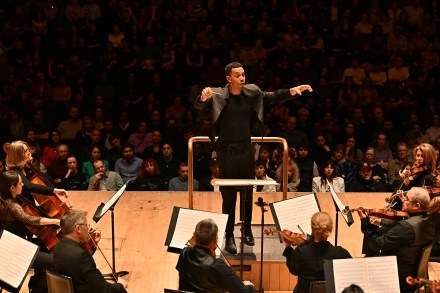
Pretty, charming and largely unremarkable: Devonte Hynes & the LSO reviewed

Think of pop music as being like the parable of the sower. These days the seed falling on stony ground comes from the young rock bands, while the stuff that’s finding fertile earth is on the edges of R&B where it shades into other styles, especially psychedelia. It works from both ends: the Australian group Tame Impala went from being a workaday psychedelic rock band to being festival headliners by bringing dance music into their sound. Meanwhile within black music, Janelle Monae – perhaps better known as an actor – and Solange Knowles are regarded by critics as something not far short of deities for their Afrofuturist, trippy takes on R&B. In the UK, Devonte Hynes has become our leading representative of the unlimited possibilities of combining genres.

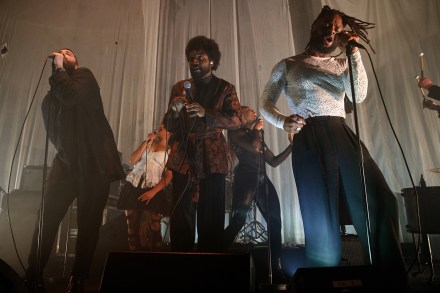
The most exciting live band in Britain right now: Young Fathers, at the O2 Academy, reviewed

There are several reasons why Young Fathers currently feel like the most exciting live band in Britain, but for now let’s concentrate on effect rather than cause. The Edinburgh trio have somehow managed to dispense with all the froth and blather of concert-making – gratuitous chat; choreographed audience interaction; the fat and gristle – to deliver a show that is all attack. Every minute is a prime lean cut, direct and thrilling. They don’t mess about during the first of two sold-out Glasgow shows, but then brevity appears to be a kind of manifesto. The new album, Heavy Heavy, their fourth and not quite their best, lasts barely 30 minutes. Tonight, they perform 17 songs in an hour. The set is similarly minimalist.