Pop

The real death of rock

What would a rock band have to do now to be seen as heralding the future? Twenty years ago, it was enough to be in possession of sharp cheekbones, tight jeans and 11 fantastic songs. The first album by the Strokes, Is This It, was released 20 years ago this month. It spread around the world in a way that would be impossible now. Only Australia got the album in July 2001. The UK release was not for another month, to tie in with the Reading and Leeds festivals. The US vinyl version was released on 11 September, but the CD edition was held back, so they could remove the song ‘New York City Cops’, whose refrain of ‘they ain’t too smart’ didn’t itself seem too smart in the wake of 9/11.


The joys of musical comfort food

I’ve given up comfort food. I’m trying to shift lockdown pounds that have left me with the physique of the kind of ageing second-string wrestler you used to see on World of Sport early on a Saturday afternoon in the 1980s. It’s all eschewing oils and measuring portions round these parts, and so I have been seeking my comforts in music. Enough with your Lithuanian drone and your polyrhythmic technical metal from Indonesia! Bring me verses and choruses and melodies and vocal harmonies! Katy J. Pearson — a young woman from the West Country who perhaps wishes she were, instead, from the American west coast — was true comfort food. The whole thing also felt unnervingly like a real gig, the kind one used to go to Before All This.

How Trojan Records conquered the world

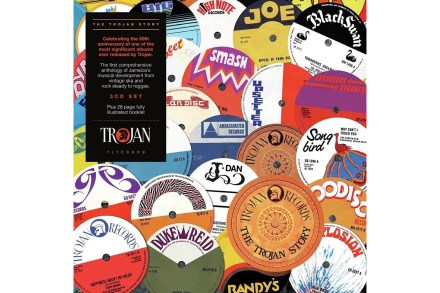
When Trojan Records attempted to break into the United States music market in the early 1970s, it hit an insurmountable barrier: the company shared its name with America’s most popular brand of condom. ‘It was a case of commercial coitus interruptus,’ says Rob Bell, at the time the label’s production manager. In America, Trojan signified rubber, not vinyl. The label proved to have greater staying power in the UK, where it was at the forefront of popularising Jamaican music.

Wispy, gauzy beauty: This Is The Kit, Barbican, reviewed

On the way home from This Is The Kit’s show at a socially distanced Barbican, I listened to Avalon by Roxy Music, which had been brought to mind by the previous 90 minutes or so of music. It’s perhaps worth saying that This Is The Kit — the nom de chanson of Kate Stables, backed by a three-piece band and three horn players — have absolutely nothing in common with Avalon by Roxy Music, visually or musically. Stables, hair piled on top of her head, and dressed for comfort, not speed, did not look as though she intended to boost the Colombian export trade after the show; perhaps, instead, she would be offering forthright opinions about agribusiness over a lentil bake.

A perfect welcome back to live music: Sarathy Korwar at Kings Place reviewed

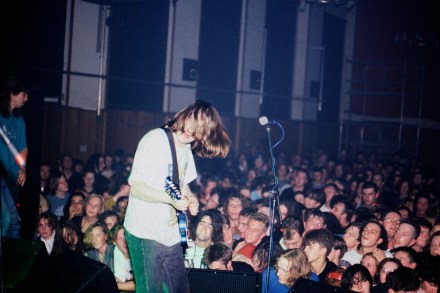
There is a reason music writers tend to stick with music writing rather than transferring their manifold talents to the business side of things. Our dirty secret is that, for all our exquisite taste, most of us — with a few exceptions — have no conception of what the rest of the world actually wants from their music. The first piece I ever wrote was a student newspaper review of a gig in a Leeds pub, in which I gushed about the headliners but noted, with a sneer, the fact that the support didn’t appear to have any actual tunes. We would be hearing no more from them, I cautioned. The headliners were a long-forgotten band called Tad. I forget what happened to the other band; their name was Nirvana.

The sermons poked out of the songs like busted bed springs: Van Morrison livestream reviewed

Over the decades, Van Morrison’s role within the tower of song has shifted from chief visionary officer to head of complaints. It’s not a promotion. The title track of his new album, Latest Record Project, Volume 1, is a rebuke to those who insist on living in an artist’s past rather than his present. A laudable sentiment, perhaps, but one less easy to put into practice when Morrison’s present consists of 28 tracks which hone an already ornery world view to a paranoic peak. When he isn’t griping about his divorce he’s peddling half-baked conspiracy theories, sneering at internet users and ‘media junk’, and bitching about modern music, crooked politicians and false prophets.

Watch kids go giddy in Niamey: Mdou Moctar live in Niger reviewed

The other week someone posted on Twitter a link to a YouTube clip titled ‘Family Lotus and D.J. Cookin’ at the Golden Inn, July 4 1981’. It showed a bunch of long-haired people on a makeshift stage in the New Mexico desert and a handful of people dancing around in the dust to the music, which was a weird, trippy, hyper-freaky form of electrified banjo music: ‘psychedelic bluegrass’, apparently. Watching the stream of the Tuareg guitarist Mdou Moctar was an unnervingly similar experience: he and his three-piece backing band were set up in the dust outside a friend’s house, watched by whoever came along. And Moctar’s guitar playing — blurrily deft repeating patterns — was deeply reminiscent of the banjo playing in the YouTube clip.

A redemption song, conventionally sung: Sky’s Tina reviewed

It has never been easy for women in the music industry. Once upon a time the evidence was largely anecdotal. Now it’s being recorded for posterity, frame by frame. Recent documentaries about Britney Spears and Demi Lovato exposed the trauma inflicted on post-millennial pop stars. Two new portraits of Anna Mae Bullock and Marianne Elliott-Said, better known as Tina Turner and Poly Styrene from punk group X-Ray Spex, ponder the price paid by their forebears. Turner’s story feels archetypal, a tale extracted from deep within the DNA of showbusiness. An abandoned child — ‘my mother didn’t like me’ — from a poor Tennessee background, the opportunity to fulfil her gifts came with the classic caveat: subjugation by an older, controlling man.

Moments of pure wonder: Folk Weekend Oxford reviewed

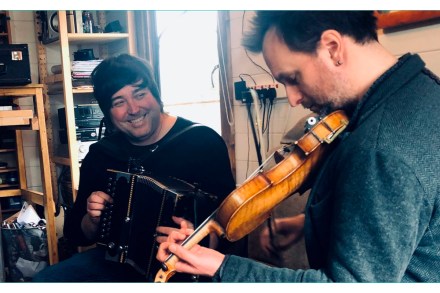
Has any musical moment extended its tendrils in so many unexpected directions as the English folk revival of the mid-1960s? In its beginnings, it was a source of pilgrimage for Bob Dylan and Paul Simon, who pinched his arrangement of ‘Scarborough Fair’ from Martin Carthy way back in the dim and distant past when the Beatles walked the earth. It spread into progressive rock and heavy metal (the black metal musician Fenriz, of the Norwegian band Darkthrone, told me recently that he considered Steeleye Span to be an important band in promoting pagan traditions).

The songs are still as fresh and appetising as a hot loaf: The Lightning Seeds livestream reviewed

One thing about a streamed festival is that the toilets are better than at the real thing. The other thing, though, is that it’s not really a festival. That’s not to knock the North Will Rise Again (TNWRA), which took place over Saturday and Sunday nights a few weeks back, the first featuring Liverpudlian bands and filmed in that city, the second coming from Manchester, with Mancunian groups. The simple fact is, you can’t replicate a festival online: what the best festivals offer is chance, when one stumbles across something wholly unexpectedly on some outlying stage at an unpromising time of day. Simple economics make that impossible for an event charging a tenner: unless you were to get Woodstock levels of attendance, there would be no way to pay the bands.

Reminiscent of Roxy Music’s cocktail sound: The Weather Station reviewed

One of the unforeseen consequences of the rise of streaming was a change in the very structure of the pop song. Listeners who needed only to click a button to explore an unfathomable amount of music rapidly lost patience. They were less willing to listen to long songs; they were less willing to wait for songs to develop, even over the course of three minutes; they liked songs that sounded the same as other songs they were familiar with. And so, over the past decade or so, pop has adopted a formula: songs now tend to open with a huge hook, then throw more hooks on top of that, and then — because a small cadre of songwriters and producers are viewed as safe hands — they get remade in barely different forms again and again.

Revelatory and grubby: Framing Britney Spears reviewed

The most headline-grabbing of these three pop docs was Framing Britney Spears, part of the New York Times Presents documentary series, and a bit of a worldwide sensation. It was both revelatory and grubby. As many have noted, the footage of interviews with Spears as a prepubescent and teenager was so deeply unpleasant, so unrelentingly sexual, that it seemed to come not from 20 years ago, but from Neanderthal times. The simple accumulation of the public record was horrifying. No wonder people such as Jimmy Savile were able to thrive. If television interviewers could ask a teenage girl about her breasts, about whether she was having sex, then is it any wonder young women could be treated as sexual chattels behind closed doors?

The death of the mainstream band: Black Country, New Road reviewed

Twitter was awash with mockery last week, after Adam Levine, the singer of the American group Maroon 5, was interviewed on Apple Music and told Zane Lowe: ‘It’s funny, when the first Maroon 5 album came out there were still other bands. I feel like there aren’t any bands any more, you know?’ Out came the outraged, citing their favourite bands with fanbases numbering in the dozens. What about the fertile deep sludge scene based around Pimple Nose Records of Butt Wipe, Montana, eh? Then there were the K-Pop stans, demanding BTS — a seven-piece vocal group who, had they been formed in England in the 1990s, would clearly have been a boyband — be recognised as functionally equivalent to the Rolling Stones (there’s no moral judgment there, BTS stans.

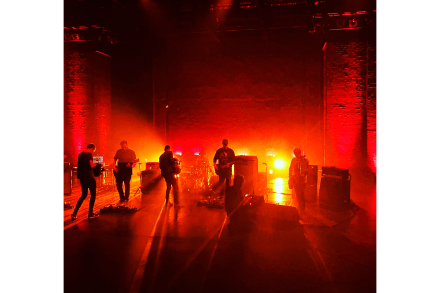
Epic prog rock without the widdly-woo solos: Mogwai at the Tramway reviewed

You very possibly know the music of the Glaswegian band Mogwai, even if you don’t think you do. You might well have not listened to a note of their ten studio albums, their three live albums, or their four compilations. You may never have seen one of their pulverisingly loud live shows, or heard them on BBC 6 Music, their natural home. But you may well have heard them on TV, either as background music, or on one of their commissioned soundtracks — seven of them now, including the current Sky Atlantic mob series ZeroZeroZero.

Makes me nostalgic for an era when music was more than a click away: Teenage Superstars reviewed

In Teenage Superstars, a long and slightly exhausting documentary about the Scottish indie scene of the 1980s and ’90s, there was a moment when a man revelling in the name of Stephen Pastel — his real name is Stephen McRobbie, and he must be pushing 60 now — was described as ‘the mayor of the Scottish underground’. Such a position — even one, as this, necessarily unelected — would be all but impossible to occupy today. With the internet and democratisation of music — its creation, its distribution, its consumption — has come the fallowing of what were once its most fertile fields: the local scenes created and inhabited by small numbers of interconnected people and encouraged by confident tastemakers — such as Pastel.

One of the few genuine British visionaries at work today: Richard Dawson at the Barbican reviewed

How hard must it be to make music that sounds like no one else? And how unrewarding, often, as well? Music consumption has been refined by streaming services to encourage listeners towards songs that sound like ones you already like; pop songwriters, driven by those same algorithms, strive to write songs whose entire purpose is to deliver something familiar within the first 30 seconds. Richard Dawson, a partially sighted and portly Geordie with lank, greying hair, who walked on to the Barbican’s stage wearing a vintage Newcastle United tracksuit top and blinking as if he’d expected the room to be empty, makes music that sounds like no one else, even with the sparsest of accompaniment.

There’s a magic to hearing music in such small audiences: Divine Comedy reviewed

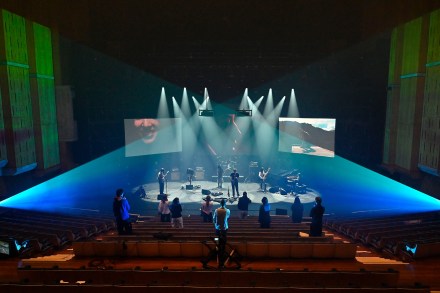
Three shows in a week! Why, it was just like the first week of March. There was, however, little of that last-days-of-Weimar giddiness about these. How could there be, when there were 300-odd people dotted around Barbican Hall’s 2,000 seats, and 50 or so of us at Oslo — normally a packed, standing-only club — sat on stools, unable even to waggle a hip? One felt sad for Working Men’s Club, a young quartet from Yorkshire whose first album — released earlier this month — had critics cheering. They should have been swanning around the country, heading off to Europe, maybe popping across the Atlantic, to play in New York and LA at least. Instead, their tour was three half-hour shows in one evening in a single London club.

Spiky, sticky, silly: interviewing Van Morrison

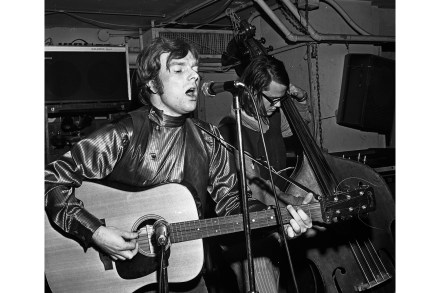
Q: ‘How would you define transcendence?’ A: ‘Well, how would you define it?’ I interviewed Van Morrison last year. (I’m fine now, thanks.) While the exercise wasn’t quite the near-death experience of industry legend — he was polite and accommodating, if not always exactly forthcoming — it got sticky at times, as the above exchange illustrates. Let’s call it a solid 6.5 on the Lou Reed Scale. Morrison, who turns 75 on the last day of this month, was formed in an age when a people-pleasing public persona wasn’t essential for musical success.

There’s scarcely a dull track: Deep Purple’s Whoosh! reviewed

Grade: B+ Less deep purple than a pleasant mauve. Ageing headbangers will note a lack of the freneticism that distinguished Fireball and ‘Highway Star’. But by the same token they may be relieved that there are no six-minute drum solos, songs about the devil, or Jon Lord demonstrating that he can hammer the organ fairly quickly for an unimaginably long time. Instead you have extremely well played 1980s arena rawk — think Guns N’ Roses with a touch of prog thrown in. And decent tunes that do not outstay their welcome — Ian Gillan always was a catchy mofo, however ludicrously vaudevillian his vocals may be.

‘Cocaine addiction is time-consuming’: the rise and fall of Kevin Rowland and Dexys

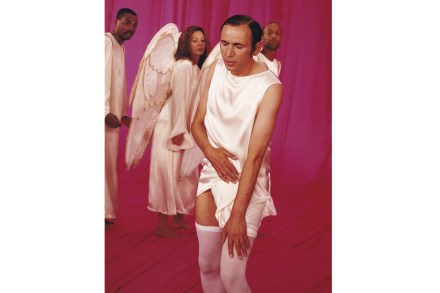
When Dexys Midnight Runners reached No. 1 in the singles charts in spring 1980 with the song ‘Geno’, the band had to travel to London for their coronation appearance on Top of the Pops. For the first time they could afford the train fare. But Kevin Rowland — their singer, leader, creative director, boss, whatever you want to call him — insisted they continue to jump the barriers at Birmingham New Street. ‘I said, “Come on lads, we’re still going to bunk the trains.” And they went, “What?” “Come on, the inspector’s coming. We’ve got to get in the toilets.” And the drummer said, “Kev. We’re No. 1 in the charts and we’re bunking the trains…”. “GET IN!