Pop

The problem with the Beatles

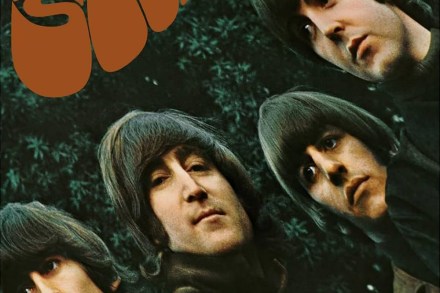
It’s become hard to imagine that there was once a time when the Beatles were more or less just another 1960s group. For most of the 1970s and 1980s, the Fabs were neither overly fêted nor weirdly fetishized. Writer and filmmaker Grant McPhee recently posted a fascinating Substack detailing how sidelined they became in Liverpool during this period. McPhee recounts Roger Eagle, co-owner of the pivotal punk club Eric’s, expressly telling young musicians such as Ian McCulloch not to listen to them. Reverence was thin on the ground. Sgt. Pepper’s Lonely Hearts Club Band and Revolver had not yet been dully canonized as the Best Albums Ever Made; the Red and Blue compilations, released in 1973, were about as much Beatles as most people really needed.
beatles

Billy Strings’s extraordinary and exhilarating new album

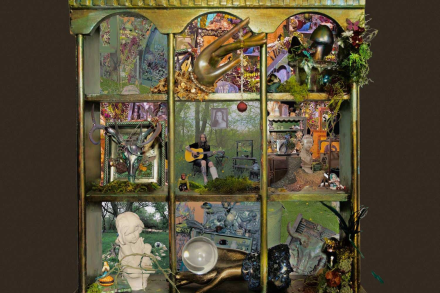
It’s easy to get the wrong idea about bluegrass – to imagine that this flinty shard of American traditional music is baked centuries deep into the soil of Appalachia. In fact it developed in the 1940s, pioneered by Kentucky maestro Bill Monroe, and only truly flourished during the American folk revival of the 1960s. Bluegrass was one of the few places where the hippies and good ol’ boys found communion; the Grateful Dead’s Jerry Garcia was a devotee. The style has evolved, generation upon generation, via exponents such as Lester Flatt, Earl Scruggs and Del McCoury. The latest bluegrass star is William Lee Apostol, aka Billy Strings, a 33-year-old guitarist, singer and songwriter from Michigan, whose backstory reads like some grisly American gothic melodrama.

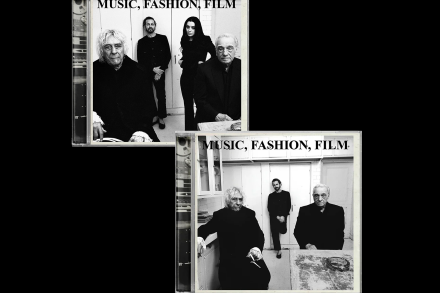
Is Music, Fashion, Film really the best Charli xcx can do?

Of the three creative pursuits that give Charli xcx’s eighth album its title, the English pop star seems least interested in the first. She admits as much on “Camera,” the best song on Music, Fashion, Film, which makes clear her obsession with acting and a desire to pursue it more fully. “Do I want to make music?” she asks herself. “Am I being fucking stupid if I try to be a girl on the screen and I’m turning 34?” Even without this clue – which, like much of the album, is presented via the singer throwing out rhetorical spiel more or less unexpurgated – it is no great stretch to surmise that the pursuit of making music is struggling to fully hold her attention.

brat

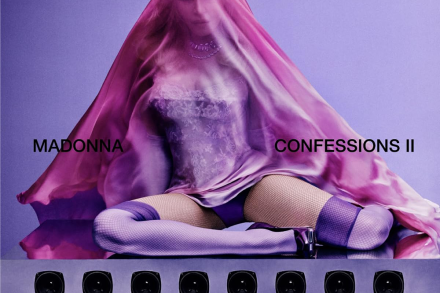
Confessions II gets thrillingly close to vintage Madonna

There comes a point in the career of any established artist when looking backward seems to be the only possible way to move forward. Madonna was a great pop star until she wasn’t. Confessions on a Dance Floor, released in 2005, was her last really successful record; “Hung Up,” from that album, her last truly unforgettable single. Ever since she has been chasing musical trends with increasingly diminishing returns, the heavy-handed concepts and contrived personae – Madame X, anyone? – no longer supported by anything approaching a properly decent song. Ms Ciccone seems to have belatedly remembered that Madonna is, and always has been, the concept So Confessions II is an act of both commercial and creative necessity. Its reclamation of the past is twofold.

None of McCartney’s new songs will trouble his setlist for long

On May 30, 1966, the Beatles released “Paperback Writer” – a fortnight after “Paint It Black” by the Rolling Stones and only days before Bob Dylan released “I Want You” as a single. Paul Simon wrote and recorded (with Art Garfunkel) “A Hazy Shade of Winter” not long after. Yes, yes, what bliss it was in that dawn etc. But anyone predicting back then that, 60 years later, all four artists would still be releasing new music and touring to large and appreciative audiences would have been laughed clean out of the Bag O’Nails. Even when glossy monthly music magazines such as Q started appearing in the 1980s, 40 was regarded as the dark side of the moon for the foundational pop stars of the 1960s.

paul mccartney

How good are the Rolling Stones’ alter egos, the Cockroaches?

Would you pay a tenner on the door to see the Cockroaches, the Fireman, Patchwork, the Network and Bingo Hand Job play your local pub? This unpromising lineup becomes a little more appealing (perhaps) upon learning that these are pseudonyms used by, respectively, the Rolling Stones, Paul McCartney, Pulp, Green Day and R.E.M. over the years. Pop stars spend the first part of their careers trampling over their grandmothers in the unseemly rush to demand the world take notice of who they are, and the second part whining about being pigeonholed. The only thing harder to escape in the music industry than your name is your original haircut. Hence, the pseudonymous offshoot, offering a degree of separation with very little sense of jeopardy.

Unrelentingly entertaining: Basement Jaxx reviewed

How would you like your nostalgia served, sir (and it is usually “sir”): in mist-shrouded monochrome or crazed lysergic Technicolor? Earlier this month, I saw two bands in the same venue, a few days apart. Neither having released any new material for more than a decade, both duly crammed their sets with their greatest hits. And yet one felt like the future, and the other like the past. Felix Buxton and Simon Ratcliffe, aka turn-of-the-millennium electronic duo Basement Jaxx, should be credited for having great sport with that in-built characteristic of almost all electronic outfits. Namely, that two or three blokes pushing a bunch of keys and buttons cannot ever hope to forge the kind of compelling visual identity so crucial to rock groups.

basement jaxx

Anthemic angst from The Twilight Sad

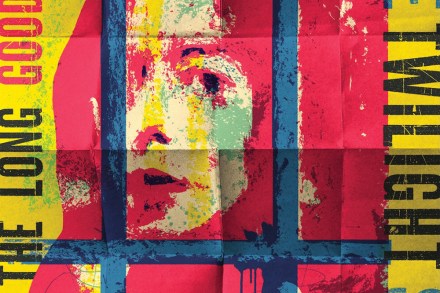
The only thing misery loves more than company is a backbeat. While capturing pure happiness surely remains the Holy Grail of any artistic endeavor, the blues is the bedrock of popular music for a reason. Sure enough, as we ready for the clocks to go forward, two albums arrive which could hardly be said to be full of the joys of spring, although they approach personal crisis – and catharsis – in very different ways. It’s The Long Goodbye, the sixth album by Scottish indie-rock band the Twilight Sad, is their first in seven years. During that hiatus lead singer and lyricist James Graham was dealing with his mother’s decline and eventual demise from early onset dementia, while also becoming a father.

twilight sad

David Byrne has done it again

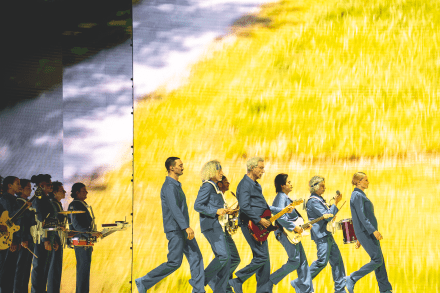
The title of David Byrne’s most recent album and current tour is Who Is The Sky? The phrase works two ways. Read literally, it has the playful 1960s feel of a Yoko Ono film or some absurdist Fluxus piece; firmly on brand, in other words, for someone as steeped as Byrne in New York’s downtown art lore. Read it aloud, however, and it becomes “Who Is This Guy?,” a more pointed title for an artist who has always seemed – to reference an old Talking Heads song – one of rock’s more slippery people. At the second of two recent Glasgow dates, both interpretations seem to fit. In Talking Heads, Byrne was a jerky, remote presence, aloof to the point of alien.