Opera

No-hoper

As I sat fuming through the latest absurd production of Carmen, this one directed by the controversial Daniel Kramer for Opera North, it struck me that this opera, like one other of the trio of popular masterpieces set in or around Seville, Mozart’s Don Giovanni, suffers because its central figure leads a separate life of her or his own; though they are most famous in the context of these works.

Ruffled feathers

The Royal Ballet could not have timed better its new run of Swan Lake. Swans — and black ones, in particular — are all the rage these days. The Royal Ballet could not have timed better its new run of Swan Lake. Swans — and black ones, in particular — are all the rage these days. Unsurprisingly, the first performance played to a packed house, although the sell-out could not be entirely credited to the swan-o-mania prompted by Aronofsky’s movie Black Swan. Sarah Lamb starred in the demanding double role that the ballet is famous for and which the film focuses on. Not unlike the character portrayed by Natalie Portman, she is a diaphanous beauty, who knows how to turn into a splendidly vicious and irresistible seductress.

Gender problems

It’s sometimes intriguing to speculate, as you go to an opera in a fringe production of one kind or another, about how much messing around (used neutrally) this or that popular work can take. It’s sometimes intriguing to speculate, as you go to an opera in a fringe production of one kind or another, about how much messing around (used neutrally) this or that popular work can take. OperaUpClose scored an enormous success with its version of La Bohème in 2009/10 (though its claim to be the longest-ever run of an opera should be balanced by the fact that The Cock Kilburn could seat only about 40 people).

Witch craft

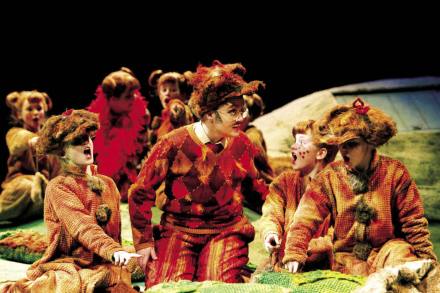
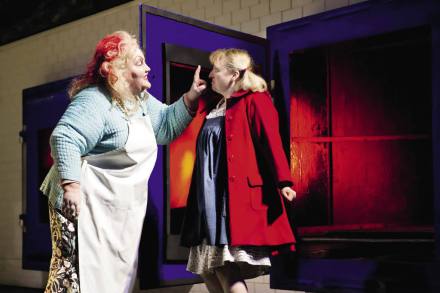
Is Humperdinck’s Hänsel und Gretel an opera for children of all ages, or for grown-ups and for children, or mainly for grown-ups? I went to the Royal Opera’s revival of it just after Christmas, to a 12.30 matinée (there were several), which I took to be for the benefit of children, as well as possibly being an unusual piece of thoughtfulness about transport on the part of the management. Is Humperdinck’s Hänsel und Gretel an opera for children of all ages, or for grown-ups and for children, or mainly for grown-ups? I went to the Royal Opera’s revival of it just after Christmas, to a 12.

Vapid Wagner

It is characteristic of Wagner’s operas, in their remarkable urgency and depth, that initially one thinks they are dealing with one or another opposition, for instance, Power versus Love in the Ring, only to find, as one gets further into them, that they are very much more complicated than that, and often that what seems to be their subject matter is not what actually is. It is characteristic of Wagner’s operas, in their remarkable urgency and depth, that initially one thinks they are dealing with one or another opposition, for instance, Power versus Love in the Ring, only to find, as one gets further into them, that they are very much more complicated than that, and often that what seems to be their subject matter is not what actually is.

Gruesome fun

Having been away, I only got to Alexander Raskatov’s opera A Dog’s Heart at its fifth performance by ENO, by which time everyone knew that it was brilliantly mounted, but not of much musical substance. Having been away, I only got to Alexander Raskatov’s opera A Dog’s Heart at its fifth performance by ENO, by which time everyone knew that it was brilliantly mounted, but not of much musical substance. Actually, you could say the same for most of the new operas that ENO has mounted over the past decade, and from composers much better known than Raskatov. I’d be happy to volunteer a list.

Interview: Semyon Bychkov: his own man

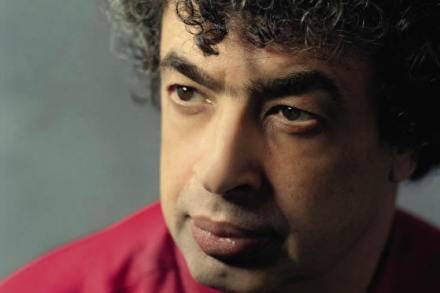
Semyon Bychkov has rather unspectacularly become one of the world’s most sought after conductors, and at present he is in London to conduct a series of performances of Wagner’s now least often staged canonical opera, Tannhäuser, at the Royal Opera House. Semyon Bychkov has rather unspectacularly become one of the world’s most sought after conductors, and at present he is in London to conduct a series of performances of Wagner’s now least often staged canonical opera, Tannhäuser, at the Royal Opera House.

Magnificent Mozart

The subtitle of Mozart’s Don Giovanni is ‘Il dissoluto punito’ (the rake punished), that of Rossini’s La Cenerentola is ‘La bontà in trionfo’ (goodness triumphant), while Monteverdi’s L’Incoronazione di Poppea might well be subtitled ‘Vice rewarded’. The subtitle of Mozart’s Don Giovanni is ‘Il dissoluto punito’ (the rake punished), that of Rossini’s La Cenerentola is ‘La bontà in trionfo’ (goodness triumphant), while Monteverdi’s L’Incoronazione di Poppea might well be subtitled ‘Vice rewarded’. They are the three operas that Glyndebourne is taking round the country this year, whether with moralistic intent I don’t know.

Conflicting passions

Francesco Cilea’s Adriana Lecouvreur, his biggest success, dating from 1902, leads a fringe existence, but it persists thanks primarily to the name role, dramatically meaty and not imposing too great a strain on the performer. Francesco Cilea’s Adriana Lecouvreur, his biggest success, dating from 1902, leads a fringe existence, but it persists thanks primarily to the name role, dramatically meaty and not imposing too great a strain on the performer. It has been mainly associated with singers at a fairly late stage — or thinking they were — of their career, Magda Olivero and Renata Tebaldi being the most notable.

Anthony Whitworth-Jones: Garsington on the move

When is a country-house opera not a country-house opera? When it no longer has a country house attached. This is what is about to happen to Garsington Opera, which is moving, lock, stock, barrel and picnic basket, from the exquisitely planned and intimate gardens of the Bloomsbury-redolent Garsington Manor near Oxford to the wide-open rolling hills of the Wormsley Estate in nearby Buckinghamshire. The move is a change and a challenge that the company’s general director, Anthony Whitworth-Jones, seems thoroughly to relish. ‘It’s enormously exciting,’ he says.

Mangled Mozart

Don Giovanni is an opera which gives plenty of scope for alternative interpretations, as has been very clearly demonstrated in the past 30 or so years, since directors took over as the determining force in productions. But there are certain basic features which any production, to be taken seriously, must respect. The two most obvious are that the Don must be a figure of riveting allure, and that social position is a key factor in the development of the action, at any rate until that gets dispersed in the ill-organised Act II.

Spellbound

Jonas Kaufmann’s ascent to the position of the leading German lyric-dramatic tenor has been surprisingly gradual. I first saw him in Edinburgh in 2001, giving a Lieder recital in the Queen’s Hall, and was immediately astonished that I hadn’t heard of him before. For the next few years, I heard him there in more recitals, and in concert performances of Der Freischütz, Capriccio and culminating as Walther in Die Meistersinger in 2006. Jonas Kaufmann’s ascent to the position of the leading German lyric-dramatic tenor has been surprisingly gradual. I first saw him in Edinburgh in 2001, giving a Lieder recital in the Queen’s Hall, and was immediately astonished that I hadn’t heard of him before.

Static and staid

The Royal Opera last revived its production of Gounod’s Roméo et Juliette ten years ago, with what were then known as the lovebirds, Gheorghiu and Alagna, who imparted their own kind of glamour to the work. The Royal Opera last revived its production of Gounod’s Roméo et Juliette ten years ago, with what were then known as the lovebirds, Gheorghiu and Alagna, who imparted their own kind of glamour to the work. Nicolas Joël’s production badly needs some pepping up, since it is a desperately static and staid affair, as revived by Stephen Barlow, with some hyperactive running around on the part of the principals, while the chorus remain rooted to whichever spot they are on.

Northern lights

It’s been too long since I saw The Merry Widow. I have been thinking that for some time, and the superb new production of it by Opera North only made me feel that we should be able to go to more performances of it than we get a chance to. It has been newly and wittily translated by Kit Hesketh-Harvey, and the production is in the safe hands of Giles Havergal, with set and costume designs by Leslie Travers. It’s been too long since I saw The Merry Widow. I have been thinking that for some time, and the superb new production of it by Opera North only made me feel that we should be able to go to more performances of it than we get a chance to.

Who’s deceiving whom?

The more often I see Britten’s The Turn of the Screw, the more I am bewildered and fascinated by it. The more often I see Britten’s The Turn of the Screw, the more I am bewildered and fascinated by it. There is no question that it is one of his most brilliant operatic scores, if not the most brilliant of all. One thing that never fails to astonish is the variety of interpretations that the work is susceptible of, both the score and the drama, though of course in a fine production they are complementary — and almost every production I’ve seen has been good. The latest version, from Opera North, is one of the most bemusing so far.

Opera Perfect performance Michael Tanner

Promised End Linbury Studio, in rep until 16 November Radamisto English National Opera, in rep until 4 November ‘There is perhaps no play which keeps the attention so strongly fixed; which so much agitates our passions and interests our curiosity. Promised End Linbury Studio, in rep until 16 November Radamisto English National Opera, in rep until 4 November ‘There is perhaps no play which keeps the attention so strongly fixed; which so much agitates our passions and interests our curiosity. The artful involutions of distinct interests, the striking opposition of contrary characters, the sudden changes of fortune, and the quick succession of events, fill the mind with a perpetual tumult of indignation, pity and hope.

Visual tricks

Any seasoned opera-goer is likely to have had the experience of attending a performance where most things are right, but the overall impression is dismal; and also where, even more puzzlingly, most things are wrong but somehow the total effect is good or even overwhelming. To some extent it is relative to the work being performed, but not entirely; and to a much greater extent it depends on what your expectations are — I always try to have low ones, but expectations aren’t voluntary, alas. Last Sunday’s performance of Tristan und Isolde at the Royal Festival Hall was, emphatically, the second kind of occasion. It’s not hard to list what was wrong with it, and that will sound damning.

Without harmful intent

Hänsel und Gretel Royal Albert Hall How frightening an opera is Humperdinck’s Hänsel und Gretel, or how frightening should it be? The answer to the first question, if one had only encountered Hänsel at the Prom performance which Glyndebourne brought to London last week, was ‘not at all’. It was given in a semi-staged version, but virtually nothing of Laurent Pelly’s distinctive production survived.