Opera

Spurned women

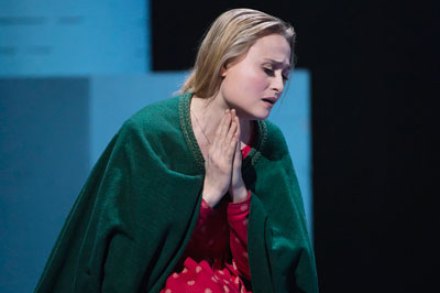
I saw three operas this week, all centrally concerned with spurned women. That’s not surprising, given the general subject matter of the art form, but it sometimes makes me wonder why we prefer to see, and more importantly to hear, love-tormented women more than men. The only major exception to spring to mind is Wagner’s Ring, which gets under way with a dwarf teased and rejected by three mermaids. But even Alberich spends much more time elaborating on his plans for world domination than on lamenting lost love; the Ring is quite a big exception, but one still wonders why it is female suffering from despised love rather than the male version of the same complaint that excites operatic composers and their listeners so much.

Double vision | 14 February 2013

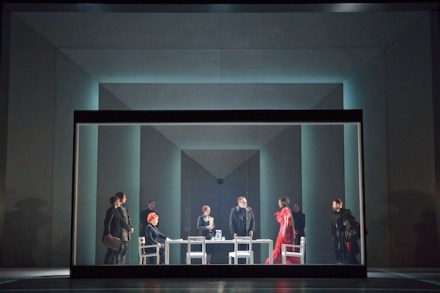
This week has featured new productions at the Royal Opera and English National Opera of staples of the repertoire, both subjected to drastic rethinking. Tchaikovsky’s Eugene Onegin is the first production at the Royal Opera of the new Director of Opera, Kasper Holten, and on this showing I very much hope it will be the last. It has been reviewed coolly on the whole, but I haven’t read anyone being sufficiently abusive — adequately, that is, to the experience of sitting through a flawed but moving masterpiece that is systematically, though I’m sure involuntarily, slaughtered from the opening moments to the wretched close. This is an opera that Holten loves, and he has made clear that he learnt Russian to get to the heart of it.

Blank canvas | 7 February 2013

I approach any production of Mozart’s last opera, La clemenza di Tito, in a state of acute trepidation: it’s not pleasant sitting bored through nearly three hours of one of your favourite two or three composers, one whom you regard as perhaps the most astonishing artist who ever lived. But that is how La clemenza di Tito has nearly always affected me — first, before it was revived in theatres, on a dodgy old Nixa recording, then, fairly often since, in various opera houses, its having now become a repertoire piece, something which was inconceivable only 40 years ago. Still, despite its canonisation, its defenders — its admirers still, significantly, regard themselves in that way — tend to strike one or another defiant or uneasy note.

Addicted to myth

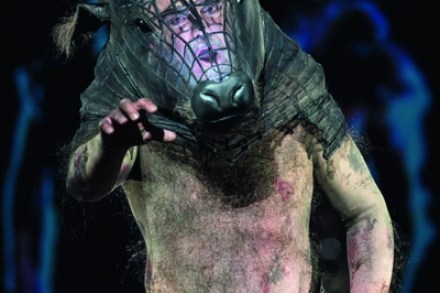
The revival of Harrison Birtwistle’s opera The Minotaur is the most significant artistic event at the Royal Opera since its première, almost five years ago. Unlike Thomas Adès’s more immediately accessible The Tempest, The Minotaur has not gone on to have an international career, though it unquestionably deserves one. With its ideal cast and direction, this production should tour the world’s major opera houses, demonstrating that at irregular but not too large intervals a new masterwork can still be forthcoming in this form, whose decline and decease has often been announced.

Orchestral tour de force

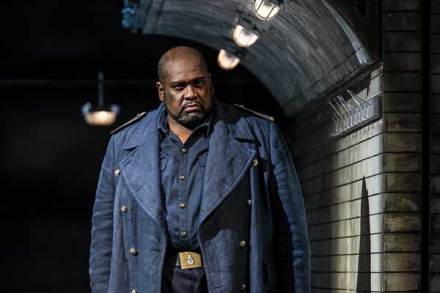
There is only one test that a performance of Verdi’s Otello has to pass: do you come out of the theatre drained, desperate at the suffering that human beings who love one another can nonetheless inflict, so that they torture or even kill the object of their love? Shakespeare’s play is about other things besides, indeed that may not be the major test of a production of it.

Acting up | 17 January 2013

There was a time when the major objection to operatic performances, by those who were wondering whether or not to give them a try, was the level of acting in them. That was in the days before ‘elitism’ and other excuses had been invented. I haven’t heard much about that lately, though of course there are complaints about specific singers and performances. But 30 to 40 years ago people who were used to going to plays would regularly contrast the level of acting in them with the alleged level in opera. So I’m led to wonder whether there’s a general feeling that things have improved. My own feeling is that they have got more complicated, with many more factors to consider.

Trojan triumph

Opera has naturally made no start at all in 2013 in the UK, the month surrounding Christmas being a culture-free zone. By contrast the New York Met has entered the new year with a thrilling production, revived from 2003, of Berlioz’s Les Troyens, a resounding success in all major respects except one. Lovers of this great masterpiece usually have a chance to see it about once a decade, but only a few months ago it was staged by the Royal Opera in a production that had a muted response.  Les Troyens is one of those works which either shakes you to the core or leaves you mildly, or even very bored.

Dutch treat

The Flying Dutchman, Wagner’s first masterpiece, has had a rough passage in the UK over the past few decades. I recall a production at the Royal Opera in the mid-1980s which revealed to me for the first time the possibility that an insensitive director can completely destroy a great work, something which is now commonplace. In between there have been further productions, in London and in Wales, which have done nothing to penetrate the work’s grandeur and freshness, so that the idea of a concert performance was even more welcome than usual. Zurich Opera came over for one night to the Royal Festival Hall and can have left no one in doubt as to the stature of Holländer or the quality of the performers, with one minor exception.

Talk of the devil

In one of his finest essays, Gore Vidal recalls that when he worked as a scriptwriter for MGM the Wise Hack always used to advise his toffee-nosed team that ‘shit has its own integrity’. If crap is what you’re producing, make sure there are no signs in it that that’s what you think it is. Meyerbeer’s Robert le diable fails that test, I think, as do the rest of his operas. And at the Royal Opera, where a new production by Laurent Pelly, shared with Geneva, is on display, there are plenty of indications that no one involved takes it seriously either.

Jumping the gun

2012 has been an undistinguished year in opera, at any rate in the UK. A combination of cutbacks and the promise of stops being pulled out next year for the bicentenaries of Verdi’s and Wagner’s births and the centenary of Britten’s has led to the big companies counting on our anticipation. Except that, in the case of Wagner, though oddly not of Verdi, the gun has been jumped. We have already had the Royal Opera’s Ring, four cycles of it in just over a month, so that there will be no staged Ring in London next year, only a concert version. It will be left to Longborough, for those who have the money, the time and the transport, to see it on stage, and judging from the individual parts that have been mounted in the past four years, the results should be tremendous.

Scandal at court

The way the director James Conway sees it, Monteverdi’s last opera L’incoronazione di Poppea is about that most delicate of subjects, adult abuse by youngsters. That isn’t what he says in his programme note for his production at the Royal College of Music, where he claims that the opera is about power, ‘love, yes, but love’s power’. That is tendentious: you might as well say that Otello is about the power of jealousy, which is true, but that doesn’t make it ‘really’ about power; or that Wozzeck is about the power of powerlessness, etc. Poppea is about several things, power among them, but also love, jealousy, ambition, ruthlessness, the abuse of power.

Decline and fall

Some operas become, thanks partly to the frequency with which they are produced, victims of their own popularity. The most obvious sufferer is Carmen, which is a no-winner for singers and directors alike. As soon as the curtain rises and you see lemon trees and swaying hips, your heart sinks and you spend the interval agreeing with everyone that it’s just another tired old cliché; while if the scene is a mortuary or a garage you complain — and fairly — that it’s wholly inappropriate for the drama and the music that gives it substance. Last time it was produced at ENO, in 2007, it failed on all scores and it’s almost unseemly to mention it.

Change of heart | 22 November 2012

I think I have developed a crush on Donizetti’s L’elisir d’amore, which is strange, considering that it is so evidently adorable a work that most opera-goers fall for it straight away. I have never been averse to it, in the way that I am to quite a lot of Donizetti’s work, but in the light of the last two performances I’ve seen, within a few weeks, it has risen in my estimation to the level of being a masterpiece. The first was the Met’s broadcast, delightful in all respects, but with an interestingly unusual balance of sympathy towards the characters. Now, at the Royal Opera, Laurence Pelly’s production is revived for the second time, the revival director being Daniel Dooner, who has been unusually active, unless my memory fails me.

Slow progress

As usual on the rare occasions when Vaughan Williams’s last and largest opera, The Pilgrim’s Progress, is performed, the new production at English National Opera has been greeted antiphonally, with cries of ecstasy mingled with indignation that it is so little performed from one side, and moans of boredom and weariness from the other. Though I am temperamentally disinclined or even unable to take a compromise position on almost any subject, in this case that is what I find myself doing. It seems to me that there are long stretches where The Pilgrim’s Progress is serene, noble, elevated, radiant and life-giving, others where it stalls, nothing much happens (in the music more than on stage) and it belies its title: progress is just what, sometimes, we don’t get.

Triple time

The Guildhall School of Music and Drama is outdoing itself in putting on a triple bill of little-known operas, two by Massenet and one by Martinu. What is still more remarkable is that GSMD has put them all on before, though I think in different productions. This time round the designer Yannis Thavoris has produced a set of which the main ingredient, a heap of miscellaneous broken or discarded objects, remains throughout the evening, while other props are introduced that are sufficiently striking to create a quite different mood as the curtain rises on the three little operas. The first, Massenet’s La Navarraise, goes so against everything we associate with the composer that it must have been written partly in order to demonstrate how wide his range was.

Sideshow winner

I thought my 27th Wexford Opera Festival since 1972 was going to be one of the best. I had seen and enjoyed the Cilea and Chabrier operas on the bill at Holland Park and Opera North in the 1990s, and I was intrigued whether Delius’s A Village Romeo and Juliet was viable music theatre. Wexford veterans are used to disappointment and surprise success. We know why Glyndebourne audiences go with the flow and enjoy themselves, there being dinner, gardens, atmosphere and ticket prices to dissolve criticism. Wexford is cheaper: €25 to €130 a night for the main operas, less for sideshows. But most visitors make a three-night excursion with b&b as minimum. In the old days, it was a drinking as well as an opera festival — a tradition started by Compton Mackenzie.

Creeping confusion

The legend of Faust is perhaps the dominant one in post-Renaissance Europe, yet it resists satisfactory artistic realisation. The most celebrated versions of the legend, such as Marlowe’s and Goethe’s, seem to me to be utter messes aesthetically, retaining their status through the great passages they include rather than through any coherence. Thomas Mann’s Dr Faustus is a very great novel with a fundamental structural flaw.

No laughing matter | 25 October 2012

About two of the operas I saw in Leeds this week there is a serious question as to whether or not they are comedies. The third, Gounod’s Faust, is clearly not meant to be; I’ll be writing about it next week. The new production of Mozart’s Don Giovanni by Alessandro Talevi is jokey and fast — or, anyway, the arias and ensembles are fast, the recitatives less so — but it’s not particularly funny, and what humour there is would certainly not have been available to da Ponte and Mozart: peasants rocking and rolling in the finale to Act I, for instance.

Dazzling Donizetti

The Met Live in HD series for 2012–13 got off to a brilliant start with a new production of Donizetti’s L’Elisir d’Amore, the most warm-hearted of comedies — in fact, a work so genial that I’m always surprised it doesn’t lapse into insipidity. This production by Bartlett Sher made that seem less of a danger than usual, because although it would be an exaggeration to say he had rethought the piece, he did make it into a more three-dimensional work than usual, Donizetti edging more towards Bellini and away from Rossini, whereas Don Pasquale is the other way round. There are fewer laughs in Sher’s production than you might expect, but far more involvement with the characters.

Meltdown in Valhalla

What begins with the borrowing of some capital ends 14 hours later with cataclysmic disaster. It is a drama thousands and thousands in the western hemisphere watch these days — from Seattle to New York, from London to Milan, and from Munich to St Petersburg. Ticket prices are high, although sponsorship money flows in luxuriant quantities hand-in-hand with public subsidies; after all, the show (which originally was intended to be produced only once, the set consumed for ever in the last scene’s flames) is notoriously expensive to produce. The show in question is, of course, Wagner’s Der Ring des Nibelungen, arguably the greatest and surely the longest piece in the repertoire that the opera houses of the world have to stage in order to be taken seriously.