Low life

Low life: Staying in Channel 4’s hotel

In the last Channel 4 series of The Hotel, we saw Mark Jenkins, ex-owner of the Grosvenor hotel in Torquay, campaigning to attract more ‘posh people’ to his failing Victorian hotel. He was apprehensive, though, that he might not know how to handle any posh people that were seduced by this and did come. Posh people, he opined, ‘can be a nightmare because they want things done properly. The good thing about poor people is that they are just happy to be on holiday. Mind you,’ he added, ‘some poor people can be quite demanding, so you can’t win.’ It was possibly owing to statements such as this that Mr Jenkins was dubbed the ‘real life Basil Fawlty’. Mr Jenkins also smoked and was not ashamed of it.

Low life: My head felt like an aquarium

Five of us, standing in a semi-circle on a varnished wooden floor facing the yoga teacher, breathing deeply in concert. In through the nose, hold, out through the mouth. Easter Sunday morning. Christ is risen. We slowly inhale and exhale to the sound of distant church bells and the cheeping of a pair of sparrows nesting somewhere in the eaves. We’re learning Kum Nye, a type of Tibetan yoga. An all-day beginners’ ‘workshop’. I feel guilty about learning Tibetan yoga on Easter Sunday morning. Raised a Baptist, as a youth I was warned strongly against yoga. It empties the mind, I was told, leaving it open and unprotected. Satan, a ravening lion always on the prowl, spots his opportunity and rushes in.

A babe in arms in a hard hat: health & safety gone mad

Look, I was in a bad mood. Again. No particular reason, or possibly the weather. The silly thing is I’d been looking forward to it so very much. The builders are about to start work on an £8.5 million extension to the local school, and my grandson, aged three and a quarter, as the youngest pupil, was elected to dig the first turf in front of the town’s great and the good, and have his picture taken for the local paper. Oscar is a bright lad, but too young to comprehend what exactly was being asked of him and why. But we impressed on him the need to have his cheesy camera smile ready for the right moment. It was all he needed to know. I wasn’t officially invited. But I wasn’t going to miss that.

Low life | 21 March 2013

The final few passengers straggled aboard and a sulky, petulant-looking BA steward, his orange face creased with sleep, passed through economy slamming up the overhead lockers. Though trained to be cheerful, democratic and polite, tonight, at least, none of these crowd-pleasing attributes came naturally to him. The rictus grin said: Economy, I despise you all. I had a row of seats to myself and fervently hoped this state of affairs would prevail. The last to board was a young couple burdened with hand luggage and a sleepy child each. Mum and the kids arranged themselves in the row in front of me, while Dad, a huge blond-haired man, squeezed himself into the end seat of my empty row, from where he leaned forward and continued to direct, encourage and make suggestions to his wife and kids.

Low life: Wearing chalk on the Jubilee Line

On the wall at home is a framed photograph of T.E. Lawrence taken in his chunky forties. The photo, a postcard advertising an exhibition of historical artefacts, is a close-up of his face. Knowing what we do about his pathological aversion to most human contact, the camera’s nearness is startling. And the thing is, in spite of all those biographies telling us what a sensitive aesthete Lawrence was, the face confronting the onlooker is that of a thug. The Desperate Dan-sized chin, the eyes too close together, the cruel mouth: it’s the kind of face one saw frequently in the away ends of football grounds in the 1970s, especially among the police. The impression of thuggishness is here emphasised by a surly gaze. He’d shoot you as soon as look at you.

The woman on the airport bus

By jogging from the railway station to the grim concrete underpass outside the arrivals terminal, I caught the last courtesy bus from bus stop K to the budget hotel with seconds to spare. Cheapskate that I am, I was glad to be spared the humiliation of being charged £20 by a cynical cab driver to be taken the long way round the one-way system to a destination less than a mile away. Which is what normally happens to me at Gatwick. I was tired after a long journey and the issue had assumed an importance in my mind that was perhaps disproportionate. So my euphoria at seeing hotel bus number H2 cantering between the concrete pillars towards me was probably also disproportionate. The driver was genial; his bus like an empty cavern.

Low life | 28 February 2013

Neil Clark’s wonderful piece three weeks ago, ‘Running out of sweeties’ (The Spectator, 16 February), has lingered in my mind. He pointed to a type of Englishness characterised by kindness, eccentricity and a complete absence of malice, which used to be known, he said, as ‘sweet’. Like rare and delicate flowers, our nation’s sweeties are facing extinction, he claimed, in the harsher economic and social climate. These holy innocents see no evil, hear no evil, speak no evil, and are always the first to volunteer, yet today’s rigorously equal society allows them no room. Sad. I’ve known sweeties from all walks of life. There used to be more in the country than the town. But Neil Clark is right: there are fewer around.

Low life | 21 February 2013

Last week I drove an elderly car-less neighbour to the city hospital to visit her ailing husband. I was glad to oblige because I hadn’t visited a city for a while and I planned to do a bit of shopping while I waited. I dropped the old girl outside this hideous edifice on the outskirts, and, as I am on a health and fitness phase of my headlong descent into the grave, I went first for a swim at the leisure centre. One lane only of the pool was open for public swimming; the rest were devoted to school kids’ swimming lessons. This one lane was narrow as public swimming lanes go, and it contained more swimmers jostling for sea room in a single lane than I have ever seen.

My encounter with a Bond girl

It’s my birthday. Four in the morning and I’m in the back of a cab coming back from a night out in town with Trev. He’s in the front, telling the driver about this 18-year-old he’s been seeing. You’d think an 18-year-old would be a sort of Holy Grail to a 51-year-old, but no. Far from it. She’s a nice-looking maid, he says, but talks a load of crap. Drives him nuts. The taxi driver nods sympathetically, the tart. He can well believe it, he says, youngsters being what they are these days. I worked on a men’s long-stay ward of a mental hospital in the early Eighties. Chronic schizophrenics who’d been stuck in there 20, 30, 40 years. Albert Marples. Reg Ford. The hospital mascots. Institutionalised institutions. Completely gone, they were.

Low life | 7 February 2013

I’ve been to Mali. Oh, yes. We went overland from the east, 23 of us in the back of a Bedford truck, via the Congo, Cameroon, Nigeria and Niger. And even after that succession of astonishing countries, Mali stood out as having a unique flavour of its own. The first intimation that we ain’t seen nothing yet came at the border. Border crossings were usually surprising or infuriating, one way or another. At the one between Niger and Mali, the Malian authorities surprised us by stipulating an extraordinary condition of entry. This was that we must take on board our truck a representative of the Mali tourist board who would ride and live with us for as long as we were in the country.

Low life | 31 January 2013

A superstitious Devon woman who lived and died in the residential home run by my parents, used to reckon that, if her first glimpse of a new moon was through a window or in a mirror, she was in for a month of rotten luck. If she first saw the new moon when she was out of doors, however, she was pleased, because that meant she was in for a month of good luck. If she glimpsed the new moon first over her right shoulder, she said, that would be very lucky indeed. It had happened to her mother once in her lifetime, but never to her. She’d lived all of her life in an isolated village. If she saw me sit on a table, she’d say, ‘Sit on a table, meet a stranger!’ If I dropped a spoon, she’d say, ‘Dropped spoon — stranger at the door!

Dr Muk

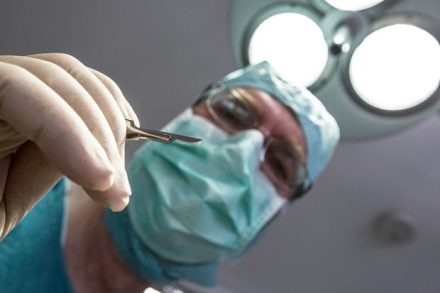
Dr Muk asked me whether I’d heard any more news about the Algerian hostage crisis. Had the number of hostages killed been announced yet, for example? ‘I simply don’t understand these Islamist terrorists,’ he added, sadly. ‘They seem absolutely crazy to me. They are brainwashed, I suppose.’ I hadn’t listened to the radio so far today, I said, so I wasn’t up to date. But if you asked me, I said, they quite possibly have a point. Maybe our secular, materialist society is as contemptible as they claim it is. ‘Mm. Mm,’ agreed Dr Muk with surprising readiness. I was lying on my back and he was slicing open my upper chest with a scalpel. The local area was anaesthetised, so I couldn’t feel a thing.

Low life | 17 January 2013

I woke in an upstairs room, face down on bare floorboards, my body wedged into a coffin-shaped space between a divan bed (unoccupied) and a chest of drawers — which wasn’t half as uncomfortable as you might imagine. I stood up, checked for phone and wallet, and looked out of the window. Although the sun wasn’t visible in the sky, it was possible to tell by the latter’s lighter shade of grey that the day was well advanced. I went downstairs to look for my coat and to see if there was anyone else in the house. It wasn’t a big place. Downstairs consisted of kitchen and living room, both about eight feet square. The two rooms were connected by a doorless doorway. I found my coat without having to look very hard.

Low life | 10 January 2013

Waiting at a country bus stop in a downpour. Not sure if I’ve just missed one. No raincoat. No phone signal. Two o’clock in the afternoon and already too dark to write a will. No wonder everyone that can do leaves the country at this time of the year. There isn’t a bus shelter so I insinuate myself backwards into the hedge. A passing car sends a spray of rainwater up my legs. A motionless row of Devons, fetlock-deep in mud beside the five-bar gate opposite, contemplate me miserably. I try to remember what sunshine is like. I close my eyes and try to imagine hot sun on my face. I can’t. It’s impossible. A month ago I stepped off a plane in Antigua.

Low life | 3 January 2013

I’ve been away for three months but now I’m back in my gym shoes, gym glasses and faithful old gym pants with the colour washed out of them and I’m presenting my membership card to the bloke behind the desk. It’s the same old unfit unfriendly fat bloke. He probably hasn’t broken into a run for 20 years, but because he works on the membership desk of a gym he dresses like an Olympic athlete. Think Gordon Brown in a shell suit. ‘Gym and swim,’ I tell him. ‘Long time, no see,’ he says, not particularly glad to see me. ‘I’ll put the cardiac unit on speed dial,’ he adds, wafting my card under his reader.

Low life | 28 December 2012

My grandson turned three last week. His mum blew up balloons and laid on a sumptuous spread of artificial colourings, preservatives, thickeners, acidity regulators, stabilisers, emulsifiers, flavour enhancers, silicates, stearates, sweeteners, anti-caking agents, gelling agents, paraffins and waxes. We stood lovingly to one side while he, his four brothers and sisters, and an assortment of neighbouring hag-ridden young mums and their sullen kids dived in. The Mayan Diet, observed a wit. Eat as much sugary crap as you want because the world is ending next week. The naughtiest boy present was my grandson’s cousin, name of Landen.

Low life | 12 December 2012

At the end of the carol service, the vicar invited us to stay for a cup of tea and a mince pie, to be served at the back of the church. Seeing me standing alone with my cup and saucer, one of the elderly parishioners approached with a smile of Christian welcome. I was afraid she was going to ask me if I knew that Jesus loved me. But instead she wanted to tell me how many squirrels she’d shot — 35 of the ‘beggars’ since October. They plunder her hanging bird feeders. She leans out of her bedroom window and pots them, she claimed, with a .22 air rifle. Though delighted to hear it, I didn’t fully believe her. Years ago I tried to kill a rabbit with a .177 airgun and the business was so horrible and prolonged I vowed never again.

Low life | 6 December 2012

When I rang for an appointment, the receptionist said, ‘Can you be here within the hour?’ I arrived with ten minutes to spare and presented myself before her. ‘Have you been here before, Mr Clarke?’ she said. ‘I have, yes,’ I said. ‘Ah, yes,’ she said, studying her computer screen with interest. She wrote a six-figure number at the top of an appointments card in black Biro and pushed it across the counter. On this visit and on any subsequent visit, she said, I would always be referred to by this number instead of by my name. I took a seat in the waiting area. In the past I’ve always been perfectly happy to have my surname yelled out when it was my turn to go in.

Low life | 29 November 2012

Last week I received by post an invitation card from The Spectator office to the Parliamentarian of the Year Awards at the Savoy. My goodness, you should have seen this card. It was handsomely embossed, printed in beautiful copperplate, and so large that the postman couldn’t fit it through the letterbox. The Spectator requested ‘the pleasure of my company’, it said, and underneath there was a brief outline of the beano. From 12.30 p.m. we would be drinking Pol Roger champagne; at 1.15 we would be toddling in for the lunch and the awards ceremony; and at 3.45 ‘carriages’ would be outside to wheel away the fallen. I was very excited. I hadn’t had a decent drink for about six weeks.

Low life | 22 November 2012

After the open-air night drawing class, the teacher invited anyone who felt like it to repair to the pub afterwards to have a drink and maybe something to eat and maybe a discussion about art. On the way to the pub I’d nipped off to the cashpoint. By the time I got to the pub, the night drawing gang were already seated around a cosy table with their coats off and my bird had saved me the place between her and the art teacher. I squeezed in between them and took in the new faces ranged opposite me. They were two women and a bloke. The younger of the two women was a straight-backed, handsome, pleasant-looking woman with whom I fell in love on the spot. The elderly woman smiling humbly beside her she introduced as her mother-in-law.