Letters

Letters | 9 June 2016

War and Brexit Sir: Over the past few weeks every underemployed academic, hack or backbencher has come forward offering opinions on the Brexit dispute. The result has been one pool of confusing sludge. I wonder if, as a nonagenarian, I could contribute a view before the deadly vote comes along? After four years’ service in the wartime army I was appointed to Germany as Daily Telegraph correspondent. Though it was several years after the war, what I saw appalled me. I don’t think I realised quite what a job the RAF had done; or imagined the appalling suffering of the enemy civilians. What would another European war do? We were fearful, and grasped at straws.

Letters | 2 June 2016

Cameron’s bluster Sir: Peter Oborne is surely right that lying and cheating are now commonplace in the heart of government (‘The new dodgy dossiers’, 28 May). If David Cameron truly believed that exit from the EU would mean economic meltdown, a third world war and always winter but never Christmas, his decision to hold a referendum would be the most irresponsible act of statesmanship since Chamberlain signed the Munich agreement. But he doesn’t believe it. Something else entirely is bringing out his inner Pinocchio. Having promised a referendum at a time when a Tory majority in the Commons seemed unlikely, the personal political risk to Cameron must have seemed remote.

Letters | 26 May 2016

Leave’s grumpy grassroots Sir: James Delingpole should join us at a Remain street stall. He would soon be disabused of his idea that Remainers are ‘shrill, prickly and bitter’ and Leavers are ‘sunny, relaxed and optimistic’ (‘What’s making Remain campaigners so tetchy?’, 21 May). We can often spot a likely Leaver by their angry expression. As we offer a leaflet with facts about the EU to counter the lies and distortions our acquaintance has imbibed from the Leave campaign, we are lucky to escape with anything less offensive than ‘Piss off’. If a leaflet is taken, we often see it torn up. At the grassroots, Leave is certainly grumpy.

Letters | 19 May 2016

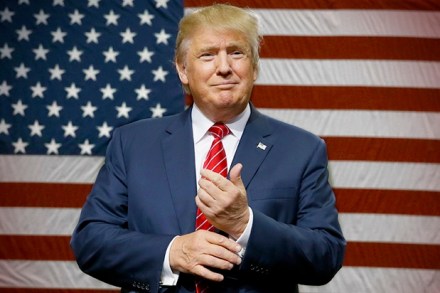
Republican party schisms Sir: Jacob Heilbrunn astutely analyses the predicament Donald Trump creates for America’s neoconservatives (‘Lumped with Trump’, 14 May). But the ideological schisms within the Republican party are even more profound than he indicates. In fact, Trump not only divides the populist right from movement conservatives — and neoconservatives — based in Washington, DC, he also divides neoconservatives against themselves. William Kristol, the neoconservative kingpin in Washington, has lately found himself under intense attack by David Horowitz, a California-based ex-radical-turned-rightist in the classic neoconservative mould. Horowitz has excoriated Kristol for dividing Republicans and effectively helping Hillary Clinton.

Letters | 12 May 2016

Europe is already divided Sir: The Archbishop Emeritus of Westminster writes eloquently about the historical purpose of a ‘union’ in Europe as being primarily to eliminate the wars that for centuries had characterised Europe (‘Let’s renew the EU’, 7 May). He, and Pope Emeritus Benedict, both point to the shared Christian beliefs that defined all nations of Europe. But the EU, as it has evolved, is now no expression of such an underlying faith — in fact, the opposite. As he points out, it has removed any official reference to Europe’s common heritage, and is increasingly set on a shallow, utilitarian course. Europe is now more divided than ever, and it will become more so under its present policies.

Letters | 5 May 2016

The EU gravy train Sir: Despite his splendid forename, your deputy editor Freddy Gray has a very tenuous grasp of human nature. Having accurately detected a simmering voter mutiny across much of Europe and the UK, he decrees that those heartily sick and tired of being constantly lied to and thus treated with contempt by the EU gravy-train-riding establishments must be either extreme right-wing or mad (‘A right mess’, 30 April). Actually, we are neither. Does he really believe it to be coincidental that 95 per cent of the UK establishment (there are still a few good ’uns in the mix) are screaming, desperate that their gravy train not be derailed by mere electors?

Letters | 28 April 2016

Green reasons to stay in Sir: As Conservatives we are clear that the European Union has been central to improving the quality of the UK’s environment. European policy is not always perfect, but on environmental issues it has allowed us to move forward in leaps and bounds. The wealth of the environment on which our economy depends is not confined to national boundaries, which is why the EU has become such a vital forum for negotiating Britain’s interest in maintaining healthy seas, clean air, climate security and species protection. It is largely thanks to European agreements that we now have sewage-free beaches in Britain. Because of tough European vehicle standards, British car drivers spend less on fuel.

Letters | 21 April 2016

Safe keeping? Sir: James Delingpole will be relieved to hear that not everyone follows the fashion for demanding repatriation of historical treasures (‘Give thanks for the tomb raiders’, 9 April). When presenting my ambassadorial letters of credence to the President of Haiti, René Preval, in 2010, I mentioned in passing that a rare (possibly unique) copy of Haiti’s Declaration of Independence had recently been discovered in our National Archives at Kew. At this point Preval’s foreign minister leaned forward and suggested that Her Majesty’s Government might wish to repatriate the document. Preval laughed at the suggestion.

Letters | 14 April 2016

In defence of Charles Sir: As a former full-time member of the Prince of Wales’s office, and a part-time equerry for 20 years, I can identify with some of HRH’s interests, just like Geoffrey Wheatcroft (‘How to save the monarchy’, 9 April). In my case we share a passion for churches and other historic buildings. I also share some of Mr Wheatcroft’s frustrations — the chaos of the prince’s office has at times driven me to distraction. As the product of a Yorkshire grammar school, I have never considered myself part of any ‘Highgrove set’: the prince calls me ‘Matthew’, and I call him ‘Sir’.

Letters | 7 April 2016

Gene genies Sir: ‘The return of eugenics’ (2 April) links a new technology of gene modification to historic dreams of genetic purification. But we are of course more than our DNA; each of us is a unique person, each mortal, and each worth the attention of science and medicine to alleviate our suffering. This means we must not totally ban the technology of crispr-CAS9, which allows specific editing of even a single letter within our 3 billion-letter human genomes, because it opens many doors to medicine. The single distinction that would allow this technology to serve medicine without also bringing down the curse of rational eugenics would be a ban on all manipulation of cells that make sperm or egg cells; that is, the human germ line.

Letters | 31 March 2016

Amber warning Sir: James Forsyth’s interview with Amber Rudd (‘The Amber Express’, 19 March) was very revealing, but also slightly disappointing. She is right about the succession of ‘zealots’ who preceded her in setting British energy policy, but after the billions wasted on wind and solar, paid for by stealth taxes added to our electricity bills, and now providing around 2 per cent of capacity, does she still support the drive towards ‘renewable energy’? Britain now has the most expensive electricity in Europe, hardly an encouragement for business investment.

Letters | 23 March 2016

PC and abortion Sir: It is heartwarming that Simon Barnes’s son should not suffer the stigma experienced by those with Down’s syndrome in earlier generations (‘In praise of PC’, 19 March). But is it not ironic that in this kinder, more generous and respectful age, over 90 per cent of fetuses diagnosed with Down’s are aborted? Rather than hiding the children away, we now ensure that most of them are not even born. If political correctness had really become sane, surely our kindness, generosity and respect would extend to the womb as well? Matthew Hosier Poole, Dorset Naming conditions Sir: Simon Barnes, makes a couple of assumptions which do not bear scrutiny.

Letters | 17 March 2016

More things to ban Sir: In the light of Mick Hume’s piece about politically correct students (‘The left will eat itself’, 12 March), should not Cambridge University be taking immediate steps to remove the works of Cicero from its classics curriculum? After all, like George Washington, he owned slaves. I would only add that, as a former member of Jesus College, I was utterly appalled at its abject surrender to adolescent bigotry and ignorance by the removal of the Benin cockerel. The totalitarian impulse is alive and well. Chris Arthur Durham Scotland and the EU Sir: In half a dozen articles now, your writers have stated that a vote to leave the EU would precipitate Scotland voting to leave the Union.

Letters | 10 March 2016

Democracy or bureaucracy Sir: Professor Garton Ash makes a scholarly appeal for us all to be content with government from Brussels for the foreseeable future (‘A conservative case for staying in’, 5 March). The alternative would involve possible risk. Very true. But the professor skates animbly round two words: governmental system. After numerous combats and enormous suffering, the British live within and are ruled by an elective democracy. In a reference to his Churchillian quote, it may be an imperfect system but it is better than all the others. Read the works of Jean Monnet and one will understand why the governmental system of the EU was never designed to be a democracy, is not a democracy and never will be. It is a non-elective bureaucracy.

Letters | 3 March 2016

What might have been Sir: Harry Mount points out that Boris Johnson is two years older than David Cameron (Diary, 27 February). Both, however, began their careers in the same year. On 15 June 1988 I interviewed David Cameron for a post in the Conservative Research Department; on 26 July it was Boris’s turn (‘Johnston’ in my diary). The former was signed up to cover trade and industry issues (memorably forgetting the trade figures when Mrs Thatcher asked him for them). Boris was invited to follow in the footsteps of father Stanley, who had been the department’s first environment expert in the Heath era. But journalism lured him away. Would they have forged a lifetime’s close and harmonious friendship if Boris had reached a different decision?

Letters | 25 February 2016

In defence of the heads Sir: It is fair for Ysenda Maxtone Graham to criticise heads who garner publicity but neglect the core business of good teaching, if such people exist (‘Big heads’, 20 February). However, targeting Anthony Seldon and Richard Cairns was a mistake. Although both may be what my wife calls ‘media tarts’, Seldon saved two schools which were in great financial difficulties by hugely increasing the number of applicants and Brighton College under Cairns has maintained its trajectory to the upper reaches of the league tables, becoming one of the largest independent schools in the country in the process. Both heads have been outstandingly successful, creating secure and dynamic schools. Both, incidentally, are great classroom teachers.

Letters | 18 February 2016

Governmental ignorance Sir: Your leading article (13 February) blames junior doctors for playing with lives in their dispute; but what alternative do they have when confronted with the monumental ignorance of our present government (and the last, and the one before that, for that matter)? The NHS, when it started, was propped up by the amazing dedication of the post-war generation and then the baby-boomers. Even so, by the 1960s it was dependent on cheap foreign labour. If people want a first-class service they have to pay for it. It is about time somebody made our government aware of the facts of life — and the junior doctors seem to have stepped up to the plate.

Letters | 11 February 2016

What’s best for Europe? Sir: It seems that the British negotiations in Europe have produced little, and even at this late stage they would surely be more effective if the tone were based more on what is best for Europe as a whole (‘Fighting over the crumbs’, 6 February). If we leave, we will desert our friends among the nations of Europe and make them more beholden to the largest members. Surely the difficulties of immigration, the euro and muscle-bound regulation will sooner or later force Europe to make changes of the kind we wish to see, and we should be there to help make them happen. History teaches us that Europe is too large, and too near, for us to consider abandoning any influence over what they do there.

Letters | 4 February 2016

Leave those kids alone Sir: Melanie Phillips was right to raise serious concerns about the emerging practice of challenging children to define their gender identity (‘In defence of gender’, 30 January). She quoted justice minister Caroline Dinenage as saying that the government was ‘very much on a journey’ on this issue. The government should therefore give children space and time to follow their own ‘journey’ of self-discovery and discovery of the world without pressure from above to choose labels to define their own sexuality. They have enough pressure of this kind from their peers.

Letters | 28 January 2016

Levelling the cricket pitch Sir: As a cricket addict and believer in state education, it pains me to agree with Michael Henderson’s assertion that the future of England’s Test side rests in the hands of private schools (‘Elite sport’, 23 January). The high-performing, 1,700-strong school where I am the head teacher has a grass area for sport that is not large enough for a rugby pitch, let alone a cricket square. As far as the coaching, equipment and pitch maintenance required to play our summer game properly, money talks. While we receive £4,000 a year from the government for each sixth-former we educate, at a local independent school parents are charged over £5,600 per term even before ‘extras’ such as exam entry fees are added in.