Letters

Jack Rankin: No to Reform

No to Reform Sir: Perhaps because I have been candid about the Conservative party’s failures in office, I am mooted as being of interest to Reform by your political editor (‘14 questions for 2026’, 3 January). But acknowledging failures is not a prelude to defection; it is the necessary starting point of renewal. When Reform speaks of a ‘uniparty’, it implies that swapping politicians is enough. It is not. The crisis of the British state runs far deeper. Governments are in office, not power, because of the pernicious shift we have seen over the past 30 years from a political constitutionalism to a legal one.

Letters: Don’t let Labour kill off trail hunting

Man with man to dwell Sir: Your editorial (‘All ye faithful’, 13-27 December) suggests that scepticism about Stephen Yaxley-Lennon’s (Tommy Robinson’s) Christian faith tends to coincide with credulity about conversions among refugees from Muslim-majority countries, and vice versa. This does not reflect the experience of many churches. Over the past year in our congregation, several young men have come to faith alongside a larger number of Iranian asylum seekers. One of the former was so affected by the murder of Charlie Kirk that he came to church the following Sunday. Many of the latter are sincerely seeking Christ, having become disillusioned with Islam in their homeland.

Letters: Why I quit Your Party

Party’s over Sir: My departure from Your Party, described as ‘disputed’ by Douglas Murray (‘Where was my invitation to Your Party?’, 6 December), was in truth rather mundane: I had naively assumed that a party born to challenge the narrowing horizons of British politics might permit more than one world view at a time. This proved to be a radical proposition. I had signed up to build a broad, pluralistic church; what I encountered instead was a dogmatic project. The boundaries of acceptable opinion narrowed by the week, policed with a zeal that would make a Victorian temperance society blush. To suggest that segments of the working class might hold views formed by family, faith or local tradition was treated not as an insight, but as a form of contamination.

Letters: How to clear the courts backlog – without scrapping juries

Tried and tested Sir: Your otherwise excellent leading article opposing proposed restrictions on jury trials (‘Judge not’, 29 November) misses two important points against the proposals. First, one can go much further than pointing to 3,000 days of unused capacity. The capacity itself can be expanded quite readily. It was once normal for courts to sit on Saturdays. Moreover, the court day once started at 9 a.m. and, after a break for supper, could go on well into the late evening – the ‘black cap at midnight’ is not a myth. The modern court day is 10.30 to 4.30, with an hour for lunch. A 9.30 to 5.30 day would add another 40 per cent capacity. Including Saturdays would increase capacity by 68 per cent.

Letters: Britain’s energy policy is unsustainable

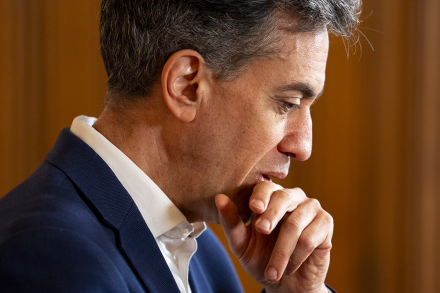
Unsustainable energy Sir: Sir Richard Dearlove (‘Net cost’, 22 November) succinctly sums up the views of many of us who cannot understand the whole lemming-like net-zero policy. This leap into the abyss was precipitated by Boris Johnson and the torch is now carried by Ed Miliband, who seems to have carte blanche to make matters worse. The destruction of our automobile and energy industries in terms of GDP and Treasury receipts is mindless – more so in a country producing less than 1 per cent of the world’s CO2 emissions. Interestingly, Matt Ridley’s article in the same issue (‘Star power’) gives longer-term hope regarding fusion energy generation, but it will be years before this becomes reality.

Letters: can you ever come back from Siberia?

Cross channel Sir: As a supporter of the BBC, it pains me to say that Rod Liddle and Lara Brown both made excellent points in their articles (‘Agony Auntie’ and ‘Pushing it’, 15 November). It strikes me that the BBC could help itself by appointing journalists to the key BBC News roles who are not also seen as being campaigners. Contrast the consummate professionalism of Hugh Pym, the health editor, with the hyperbole of Justin Rowlatt, the climate editor, who gleefully predicts doom every time there’s a storm. It would be interesting to see what would happen if they swapped roles.

Letters: The case for decriminalising cannabis

Back to reality Sir: The harms caused by cannabis are not a result of a failure to police it properly (‘Stench of failure’, 8 November). They are primarily because the distribution of it is controlled by criminals rather than corporations. Criminal gangs maximise their profits by pushing more addictive forms of drugs, and their activity wreaks misery on their families and communities. Psychosis is only associated with skunk, which is a more addictive form of cannabis, high in THC relative to CBD. Smokers of this are estimated to be 2.6 times more likely to have psychotic-like experiences than non-smokers. Herbal cannabis is not associated with psychosis; in fact, the high levels of CBD in it have some therapeutic and even antipsychotic benefits.

Letters: Venezuela’s middle-class exodus

Minimum requirement Sir: Some of Charles Moore’s observations about the minimum wage are pertinent (Notes, 1 November). However, what many also lose sight of (most of all our Chancellor) is that by government raising the minimum wage, those employees who were just above it usually seek pay rises to stay ahead of it, or employers risk losing those staff. This can then have a ripple effect through the whole organisation. It is another reason the Chancellor’s last Budget had such a profound impact on companies and, in turn, the economy at a delicate time. With employers’ NI rises as well, company cost bases have risen significantly, stifling investment, growth and recruitment and leading to our worsening finances and the tax rises that are now on their way.

Letters: The difficulties of reporting on Gaza

Future proof Sir: Douglas Murray asks why Enoch Powell’s ‘Rivers of Blood’ speech understated the problems (‘Imagine what Enoch Powell might have said’, 25 October). The simple answer is that it couldn’t have said everything, but many of the omissions cited are referred to in Powell’s later speeches. During the 1970 general election campaign in Birmingham, for instance, Powell noted that ‘this country is today under attack by forces which aim at the actual destruction of our nation and society as we know or can imagine them’. He gave many examples of a ‘new psychological weaponry’ rendering the majority ‘passive and helpless’ by asserting ‘manifest absurdities as if they were self-evident truths’.

Letters: Trump’s true heir

SEN and sensibility Sir: As a former teacher and long-standing chair of governors in a local school, I share Rosie Lewis’s frustration at the parlous situation regarding special educational needs (‘Fare play’, 18 October). I also sit on a weekly area admissions committee and many schools in our area are full, often with long waiting lists. The main reason given why children are denied a place is the number of SEN pupils already in a year group, normally, incredibly, in excess of 30 per cent – sometimes 50 per cent. To admit another pupil with special needs or behavioural issues would be detrimental to the education of children already there. This causes appeals, further discussions and headaches for parents, heads and local education authorities.

Georgia Toffolo: In defence of my husband James Watt

Rough justice Sir: The Church Commissioners’ plan to establish a £100 million (rising to £1 billion) fund for ‘reparative justice’ is indeed ‘the most egregious example of lanyard Anglicanism’ as your leading article says (‘Laud’s prayer’, 11 October). It is deeply flawed in conception, substance and process – and is especially ill-judged when parish clergy are atrociously paid and many parishes face an existential crisis. The critique made by the Policy Exchange paper ‘The Case Against Reparations’, written by Professor Lord Biggar, Dr Alka Sehgal Cuthbert and me, is reasonably well known.

Letters: Why shouldn’t we eat swan?

Zero chance Sir: In Tim Shipman’s wide-ranging article on Kemi Badenoch (‘I have a lot of self-belief’, 4 October), she claims that net zero has become just a slogan and that we can’t tackle climate change alone. In that she is right, but she fails to recognise that unless we can be seen to be world leaders in reducing emissions, then we will never be in a place to lecture other countries – many of whom just want what we have already had. By being the ‘goody-two-shoes’ in the fight against climate change, we will have the very best chance of bringing the rest of the world with us, without exposing ourselves to neo-colonialist aspersions.

Letters: the Church of England still has something meaningful to say

Moscow mule Sir: While visiting Russia, James Delingpole learned from the patriarchate’s press officer that under communism the Russian Church wasn’t allowed to exist (‘Letter from Moscow’, 27 September). However, that doesn’t accord with my own experience of being in the USSR during the Brezhnev era. As a student, I visited the 14th-century Zagorsk monastery complex just outside Moscow one Sunday and was spellbound by the heavenly chant of the Orthodox liturgy which lifted my soul. The church was full of babushkas as well as younger believers crossing themselves and kissing the icons. For all his faults and human-rights violations, Brezhnev, unlike Vladimir Putin, had not been indicted by the International Criminal Court for war crimes.

Letters: French universities still offer a proper education

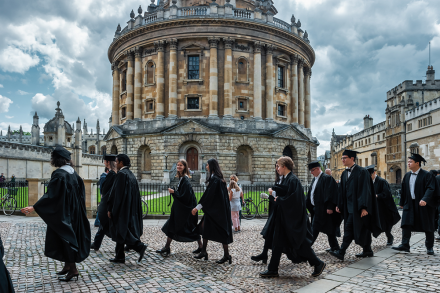
Unhappy Union Sir: John Power is correct about George Abaraonye, the president-elect of the Oxford Union (‘Violent opposition’, 20 September). Abaraonye appears to advocate that most extreme form of censorship: the bullet. As such, he poses an existential threat to the Oxford Union, which for 250 years has been a beacon of free speech for the world. Invited speakers are dropping out. Donors to the much-needed building repairs appeal are snapping shut their chequebooks. Freshmen with a belief in free speech and open debate will not join. If Abaraonye cared about the institution, he would resign. Evidently, he cares not one jot. He seems to want its destruction. For this reason, he must be removed as soon as possible.

Letters: The shale gas illusion

The shale illusion Sir: Your leading article rightly makes the case for extracting as much of our North Sea resources as we can (‘All at sea’, 6 September). However the enthusiasm for developing shale gas is misplaced. As energy minister, I commissioned work to establish how much of the onshore gas in-place could be recovered. The truth is just a small proportion – maybe 10 per cent. An energy policy based on shale would put our energy security at risk. Economically, at a time when global gas prices are expected to fall, UK shale would simply not be competitive and projects would fail. It is no accident that none of the large energy companies thought it was worth seriously exploring shale.

Letters: White working-class pupils have been forgotten

In the way of justice Sir: Robert Jenrick is right to suggest that, as well as leaving the European Convention on Human Rights (ECHR), Britain needs to reform its judiciary (‘Something’s gone very badly wrong’, 6 September). Although Britons already had all the rights and freedoms we needed under common law, Tony Blair, for entirely political reasons, granted the ECHR jurisdiction here for the first time under his 1998 Human Rights Act. Unlike common law, continental law, beloved of the ECHR, does not rely sufficiently on either precedent or the letter of the law. This permits continental judges too much latitude, obstructing certainty, permitting political judgments and inviting activism.

Letters: I’ve earned my final salary pension

Waning interest Sir: Michael Simmons correctly points out that the Treasury’s large-scale issuance of inflation-linked debt is adding heavily to the government’s interest bill at a time of relatively high inflation (‘Borrowed time’, 30 August). What he may not know is how complacent the Treasury has been about this matter. On the day Vladimir Putin invaded Ukraine in February 2022, I was interviewed for the role of chairman of the Debt Management Office. I suggested that a post-Covid inflation surge had started and that additionally oil prices might increase significantly because of the invasion leading to a need for higher interest rates.

Letters: Bring back the hotel bath!

Moore problems Sir: Many years ago a colleague warned me that I was so impossibly uncool that one day I was bound to become hip. Has this moment arrived? Charles Moore (Notes, 23 August) informs me that there is a ‘currently fashionable conservatism’ which is ‘militantly against Ukraine’. By this he presumably means not regarding Ukraine as a sort of lovely Narnia, full of birdsong, democracy and honesty, which – as it happens – it isn’t. Even so, I wonder where this ‘fashionable conservatism’ is to be found? After more than a decade of suggesting the Ukraine issue is not as simple as many believe, I have – as far as I know – failed to change a single mind.

Letters: Village cricket is the highest form of the sport

Fighting dirty Sir: John Power is very interesting (‘Dark matter’, 16 August) when outlining the ‘dark arts’ being proposed by Labour to counter the political threat of Nigel Farage and Reform. This is nothing new of course, with one of the most divisive examples being during the Batley and Spen by-election in 2021, when Keir Starmer’s future was on the line if Labour had lost. During the campaign, a controversial Labour leaflet, clearly designed to appeal to Muslim voters, made a number of criticisms against the then prime minister, Boris Johnson, including a picture of him shaking hands with the Indian prime minister Narendra Modi, with the words: ‘Don’t risk a Tory MP who is not on your side.

Letters: Nigel Farage’s biggest weakness

Bad friend Sir: Tim Shipman’s examination of Reform’s success in attracting female voters contains an important warning for Nigel Farage (‘March of the mums’, 9 August). He cites Luke Tryl of More in Common, who points out that Farage’s main Achilles’ heel when it comes to support among women is his closeness to Donald Trump. The US President has undermined Nato and western security, fawned over our enemy Vladimir Putin, damaged the world economy with his tariffs and promoted dangerous conspiracy theories, not least by appointing a vaccine-denying health secretary. Unless Farage can distance himself decisively from this arrogant and ignorant narcissist, it is not only women who will turn against Reform.