High life

Island life is not for me

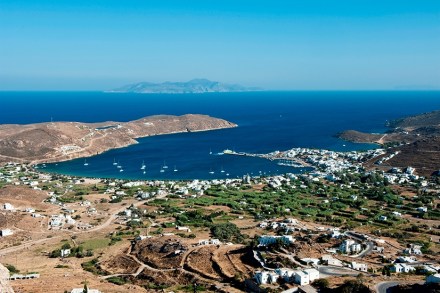
Island of Serifos Let’s get one thing straight: island life is not for me. Island life off a boat, jawohl, but island life without a boat, nyet! Family czars insisted that living in tight quarters with Covid-ignoring sex-starved sailors would not be conducive to the health of my four grandchildren. Better safe than sorry and all that, but from now on, Covid-carrying and sex-starved or not, I’m spending my summers in the company of sailors going from isle to isle like a drunken Flying Dutchman. Serifos is an island in the western Cyclades that once upon a time was a place of exiles. Roman emperors banished criminals there, probably because it’s windswept, poor and insignificant.
I love Greece and the Greeks but they have destroyed Athens

Athens This ancient city without tourists reminds me of the Athens I once knew and loved, but for the hideous 1960s modern buildings that have defaced its beauty like plastic surgery gone wrong. Walking around the Old Royal Palace and the National Gardens I point out some old beauties to the wife on Herod Atticus and King George II streets. They are the chic addresses of friends, now mostly gone forever, and I include number 13 Herod Atticus, where in six weeks the greatest classic since the Iliad was written by the famous scholar Taki back in 1974. (My publisher and dear friend Tom Stacey made close to a billion from it, and built numerous Xanadus the world over, each palace containing ten floors, each floor ten beauties.

In memory of the man who never slept

The enforced boredom of lockdown has been replaced by a feeling of loss. My nephew by marriage, Hansie Schoenburg, died aged 33 from a brain tumour, and then there was the death of my close friend Shahriar Bakhtiar, aged 72. Hansie was tall, blond, a Yale grad, and extremely handsome. Recently married, he died surrounded by his family. He was very close to both my children. Shahriar was the Persian Boy who, as a slender, bright-eyed six-year-old with not a word of English, was dispatched from Persia to an English school known for its cold rooms and strict rules. The Persian Boy learned early to do without parents. The bitter irony of their respective deaths was that while Hansie had been willing himself to live these past 15 years, Shahriar had had enough.

My advice to Johnny Depp

Gstaad Are any of you tired of reading about Ghislaine Maxwell and her sleazy life? Bored by old news repeated ad nauseam by people who hadn’t — and still don’t have — a clue? Well, your intrepid High life correspondent does have a clue, so here goes. But before I go on about la Maxwell, a few thoughts about the drama taking place in Court No. 13 of the Royal Courts of Justice on the Strand, where I had the leading role in a 1986 drama — also starring Charles Moore and some lesser characters — that almost broke the poor little Greek boy and also impoverished our great ex-proprietor Algy Cluff.

The forgotten victims of communism

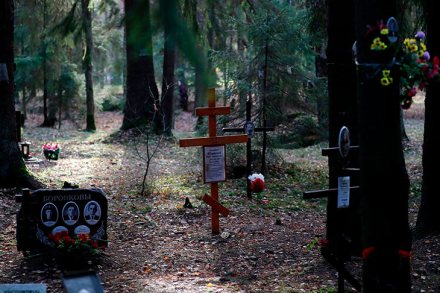
I just read a piece by Scott McConnell in the American Conservative, a magazine we co-founded 18 years ago. He writes about how the victims of communism are less commemorated than those of fascism. The death toll under communism was 100 million (see the Black Book of Communism). And as the mass murders continued, your Cambridge Joseph Needhams and his fellow apologists insisted that Maoism represented mankind’s best hope. Maoism never received the moral obloquy that Nazism did. The United States Holocaust Memorial Museum, which documents the horrific enormity of the Nazi project, has had 40 million visitors since 1993; the victims of communism are marked by a ten-foot statue in a tiny park near Union Station, tended by private donations.

How not to run a literary festival

Gstaad A friend of mine who lives here wants to start a literary festival and asked me if I had any advice for him. He’s a nice fellow and very friendly with my daughter, but he’s also the type who, had he been on board the Titanic, would have thought that the engines had stopped in order to take on some ice. In other words, he’s a naive man who believes in literature and writers and doesn’t realise that both commodities are unknown and probably deemed dangerous up here among the glitterati. Perhaps I exaggerate, but I have yet to see any lovers of literature among the new arrivals: pushy, hungry bankers from Geneva, newly minted Brits who can’t pronounce the letter ‘H’, vulgar short and stubby types from the Gulf, and women-abusing Saudis.

The mob mentality of the elite

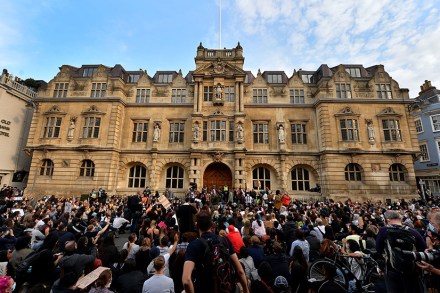
Gstaad I thought of Nietzsche while the mayhem and destruction of monuments was going on. Decadent bourgeois society was in the great man’s sights, but then he went bananas. Later on, young Nietzscheans believed that what was needed to save the world was an insurrection of sons against their fathers. But things do change, and mostly for the worse. Imagine if Mr N. and his followers were around today — the past four weeks to be exact. They’d be exhorting fathers to kill their sons. And daughters. My higher thoughts were interrupted by a telephone call from a woman who spoke with what sounded like a parody of a female voice.

The death of free speech

Oh, to be in America, where cultural decay and self-destruction compete equally with hyper-feminist and anti-racist agendas. Gone with the Wind is now off limits and Robert E. Lee’s statue in Richmond is unlikely to remain standing (I give it a week at most). And over here poor old Winnie is also in the you-know-what. Why didn’t anyone tell me Churchill was a Nazi? The Cenotaph also has to go; those guys it honours were racists. Two weeks ago in these here pages Douglas Murray said it all about a US import we can do without. Alas, when Uncle Sam sneezes, the British bulldog gets the flu. The scenes may be less dramatic in the UK, but the hypocrisy is the same, if not greater.

An elegy for Vienna

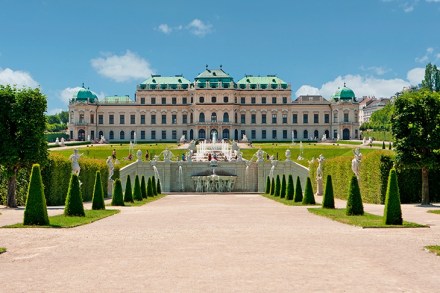
Vienna Somebody once described Vienna as a top opera performed by understudies. The remark was unquestionably witty, but utterly false when it was made. It is perfectly true today, however. During the 650-year rule of the Habsburgs, Vienna reigned supreme, an opera sung by its greatest stars. It is the present-day Vienna, which has lost its empire, its imperial family and its power, that is sung by the understudies. I’ve just spent three days there, in Harry Lime time.

I went to hell and back to meet my new granddaughter

Wolfsegg, Austria I have finally understood what’s wrong with the modern world: motorways. These dehumanising slabs of asphalt covering our continents are Prometheus-like chains that lure us into non-stop movement and uniformity. But before you start screaming that you’ve been isolated for months and would give up a night with Jennifer Lawrence to roar down a highway, let me explain. It all began when Alexandra and I decided to visit my daughter and the new baby in Austria. It was my idea to drive there, the Swiss-German-Austrian borders having opened that very day. When the wife suggested a chauffeur, I said no. When the son assured me that I’d get lost, I threatened financial repercussions that I can no longer enforce.

I’ve made up for missing all my children’s and grandchildren’s births

Gstaad Well, Theodora did not wait and I missed yet another grandchild’s birth (the prettiest little blue-eyed thing ever, even if I say so myself). The funny thing is, I’ve never been able to be there when it counts. I missed my daughter’s birth because I was playing tennis in Palm Beach and got to the Bagel ten minutes too late (she rarely forgets to mention it). I missed my boy’s because I went to sleep and Alexandra chose not to wake me. My grandchildren Taki and Maria were born in Rome, and Antonius and Theodora in Salzburg. That makes it children and grandchildren: six; yours truly: 0. Nothing to be proud of but I make up for it. For example, after my father died I instructed the household always to refer to me as the GP.

Switzerland is now an enemy of the rich

Gstaad The staff are back and all is well, as they used to say long ago in faraway places. The gardener and the cleaner are Portuguese, and they greet me, with their inherent dignity, from afar. The Filipina maid and cook almost gets me in a headlock trying to thank me for keeping her on salary while she rested at home. I shoo her away. Who does she take me for, a lowlife cheapskate like Philip Green? I didn’t hesitate to send them all home. Mind you, I’ve taken such a shellacking on the stock market that I’ll soon be applying for a job myself, perhaps as an ageing gigolo to some fat old tart from Marienbad. I tango well and can waltz, so all I need to do is grow a pencil-thin moustache. But I’ll start with the bad news.

Envy is the greatest blight of all

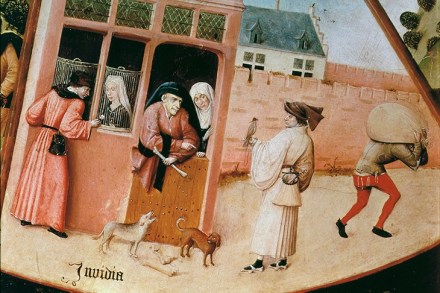
Gstaad Hippocrates is known as the father of Western medicine and he discovered and named a disease known as ‘micropoulaki’ during the Periclean period, in around 430 BC. He did not call it a virus, but a sickness of the brain. Some years later, Aristotle described micropoulaki syndrome as a disease but one that was not contagious, ‘no more than a fool can influence an intelligent fellow to act foolish’. Micropoulaki in classical Greek translates as having a tiny willy. Women should, by definition, be immune from the disease. But they are, strange as it may seem, known to suffer from it, although not as often and as badly as men do.

I salute Professor Neil Ferguson

Gstaad Let me begin with a salute to the winner of this year’s Sir Jimmy Goldsmith prize: Professor Neil Ferguson. The prize is awarded every year to a man who casts convention aside and — lockdown or no lockdown — continues to shag his mistress and to hell with the coronavirus. The professor has apologised but Antonia Staats, the mistress, has not. Neither of them has anything to feel sorry about. When the urge comes, social distancing grows smaller, pardon the reverse pun. We all want to flatten the curve, and Ferguson did just that. He has proved by his rash action that sex conquers all, following in the tradition of England’s greatest hero, Horatio Nelson, and countless others, unsung heroes all.

The night I danced with Ginger Rogers

Gstaad When indolence becomes intolerable, remembrances of things past become a lifesaver. Charles Moore’s Spectator Notes also helps. His recent item about his friend Lady Penn reminded me of events long ago that had slipped my mind because at the time I was under the influence and without sleep. About 20 years ago, the designer Carolina Herrera rang to invite me to a dinner in New York for Prue Penn, who was staying with her and her husband. When I was introduced to Lady Penn, she laughingly told me that we had met before, ten years earlier, ‘when you tried to pick me up at ten in the morning in a petrol station on the M4’.

Writing my High Life column made a man of me

As Cole Porter might have said, only second-rate people go on and on about their inner lives. Self-analysis, according to Cole, is the twin of self-promotion. Yet in this 10,000th issue of the world’s oldest and best weekly, and in my 43rd year of writing High Life, I have to admit to a bit of both of the above. So before any of you retreat into laptops and mobiles, some nostalgia is called for, starting in the spring of 1977. Many of the writers back then sent in their longhand-written copy via messenger, paid for by The Spectator. I used to type mine and slip it under the door at Doughty Street before heading for Berkeley Square and Aspinall’s.

The joy of pumping iron at 83

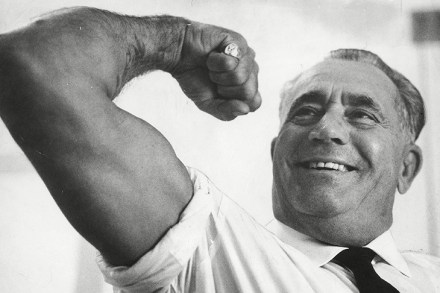
Gstaad So the days — and months — drift by. This once peaceful Alpine town is packed with rich refugees fleeing the you-know-what. They come from nearby cities crammed with real migrants. There isn’t an empty apartment left, and the locals are raking it in. Two good friends have died, the village is supposed to be locked down, but God awful bikers are everywhere. Yes, they are biking down the middle of narrow paths which makes it impossible to keep your distance from them. What boggles the mind is the mentality of the morons who refuse to practise social distancing. The hotels, clubs and restaurants are shut, so surely they must be aware that there’s a virus making the rounds. But they persist in brushing past one as if it’s touchy-feely season.

The way Greece has conducted itself in this pandemic is an example to us all

Aristophanes was a comic genius long before the Marx Brothers, but he also gave good advice to the Athenians: stop the war! In his play Lysistrata he had the women going on strike — no more nookie — until the men stopped fighting. During the plague that killed the greatest Athenian of them all, Pericles, Aristophanes advised the young to isolate, meditate and masturbate, advice still valid to this day. Greece, with roughly the same population as Switzerland and faced with a surge of migrants turned loose by the dreaded Turks, has handled the crisis well. The American media is using the virus crisis in order to attack Trump, but the Greek people will not tolerate such craven opportunism and dishonesty.

Covid-19 shows us that virtue trumps freedom

Look at it this way: we’re all doing Desert Island Discs nowadays, and unless you’ve got the bug, it’s a damn good thing, too. I did the desert island bit around 30 years ago, when Sue Lawley was the presenter, and we got along fine, even after I commented on air that she had nice legs. I suspect it would have been a different story today, but another good thing about the virus is that it has knocked #MeToo off the front pages. For good, I hope, but I doubt it. Among my desert island picks was a version of ‘Lili Marlene’ sung by an army choir that I first heard as a four-year-old in an Athens street sung by a group of marching German soldiers.

How tennis went socialist

Desperately boring times but very healthy ones. No parties, no girls, not too much boozing, lots of smoking and reading very late into the night. And non-stop training and sport. What else can one do when locked in with one’s wife and one’s son and with nostalgic thoughts of a time when people gathered in groups? It seems very long ago but do any of you remember when people gave parties? Desperate times demand desperate measures and make for desperate columnists. Meditation might be good for philosophers and their ilk, but correspondents need to get out and get the story.