High life

Succession gets the rich and powerful all wrong

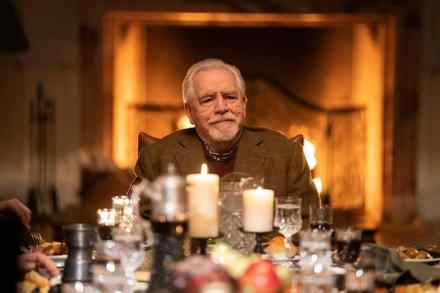
They have stepped into the pop-culture spotlight via the HBO hit Succession, a hatchet job on the very rich and powerful produced by the very rich and much more powerful Adam McKay (The Big Short). McKay started off by doing a lot of cheesy comedies, made a large fortune, and then went after Wall Street types. Nothing wrong with that; films are supposed to go after the rich and powerful, and always have. It’s the media’s coverage of a TV series about a fictional family that is slanted and totally false. The media hint that the mogul and patriarch Logan Roy is based on Rupert Murdoch, and that Roy’s dysfunctional family represents Rupert’s. In reality, the Roy bunch are freaks and drug addicts who are incapable of getting anything right.
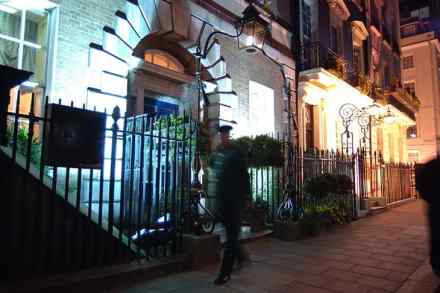
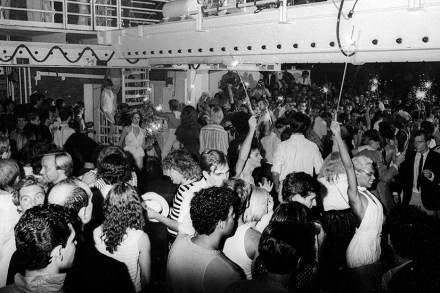
I’d pick the Vero Beach retirement home for old ladies over Annabel’s

Around 20 or so years ago I had a point for match point on a perfect grass court at Fort Belvedere. We’d been playing for close to two hours. I remember hitting a topspin backhand down the line, going to the net and seeing my ball just miss the tramline. I was perfectly positioned to call the ball out. My opponent, thinking I would approach with a crosscourt, was covering his backhand side. He called my ball in. ‘Ball was out,’ said I. ‘I saw it in and it was in,’ said Galen Weston, my host at the Fort and a very good tennis player. It verged on the parodic, the ensuing so-called argument about who was right. Galen prevailed, and I eventually won the match. He then lent me his best pony to stick and ball on his polo ground and play one against one.

I miss life before Big Tech

Do any of you remember the time when everything took place on the terraces and in outdoor cafés? Before everyone retreated into laptops and mobile telephones and Twitter? When the streets thrummed with possibility and the potential for new encounters was everywhere? Well, that’s all gone now, thanks to some pretty ugly-looking fellows with names such as Dorsey and Zuckerberg. But we’re the ones who adopted their useless inventions and live by them as if they were the Sermon on the Mount. The social consequences have been devastating — the young make noises instead of articulating speech — and had Cassandra been around 20 or so years ago she would have warned us against the tech companies that have the power to change our way of life. Never mind.

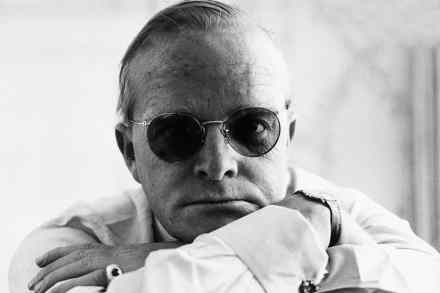
I was the next Truman Capote

It’s nice to be back in London, and Glebe Place is a delight. Mind you, it’s not the mansion I was expecting, just a very nice mews house on a very quiet part of the street away from the King’s Road. The noise of the city gets on my nerves, which means that I’ve lived on an island, and among cows, for too long. Alexandra seems to like London more than I do nowadays, and that’s a switch if ever there was one. Knightsbridge was home for 40-odd years, but the wife hated it. Writing about one’s wife is a bit like kissing your sister and all that, but ensconced at home the other night I asked her: why London all of a sudden. ‘You were playing Don Giovanni all those years, and I found it humiliating to be near those women,’ was her answer.

I loved prison

Memories for me are like beautifully edited copy: all cleaned up and retaining only the good parts. The wife tells me that I’m quite lucky in choosing to remember just pleasant things, and of course I agree. Actually it’s not really a choice; it is almost automatic. Bad things are tucked away immediately, never to return. I suppose many idiots enjoy such forgetfulness, but then I’d rather be called an idiot than a surly grouch, complaining and finding fault with everything and everyone. Needless to say, I cannot forget Pentonville. Looking back, I recall only fun times among my fellow convicts. There was Warren, the large black man whose appeal I had to draw up because he was illiterate.

The folly of American imperialism

Gstaad Mercedes Benz heir Mick Flick and I have been friends for more than half a century. We both married Schoenburgs, both like the odd drink, both adore the fair sex, and we are now both candidates for a visit from the man in the white suit, yours truly first in line. Mick gave a wonderful dinner the other evening for around 30 of us. It was in his upper chalet, the one that’s half art gallery and half live-in space. He also has a lower chalet for his two sons and daughter. The dinner was seated and the wine was Latour. I think I had two bottles before the wife dragged me away using all sorts of excuses. The last thing I remember was Mick laughing as I was being led out. I had hosted a somewhat similar shindig the previous week, and Mick sat on my wife’s right.

My literary heroes have led me astray

Gstaad   Good manners aside, what I miss nowadays is a new, intelligent, finely acted movie. Never have I seen so much garbage as there is on TV: sci-fi trash, superhero rubbish, dystopian crap and junk about ugly, solipsistic youths revolting against overbearing parents. The director Jimmy Toback blames the subject matter for the lousy content, driven as it is by the need for diversity. I think lack of talent is the culprit. The non-stop use of the F-word is a given in Hollywood productions. Combined with constant violence, it makes for a lousy and unwatchable film.

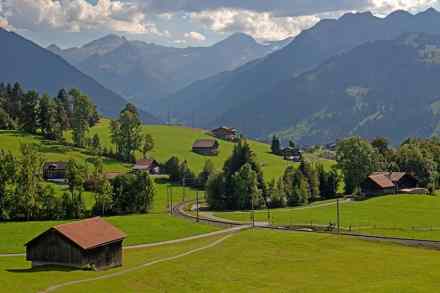
The Swiss are united by a common cause — making money

Gstaad When Gerald Murphy and Cole Porter discovered the French Riviera as a summer resort during the early 1920s, the swells and avant-gardes still spent the warm months in cool places like Deauville and Baden-Baden. I think of the deserted summer Riviera and how marvellous the place must have been when people like Picasso and Hemingway joined forces with Cole and Gerald and launched the resort to end all resorts. No longer. The place is now an overcrowded hellhole, expensive, dirty and dangerous, but not to worry.

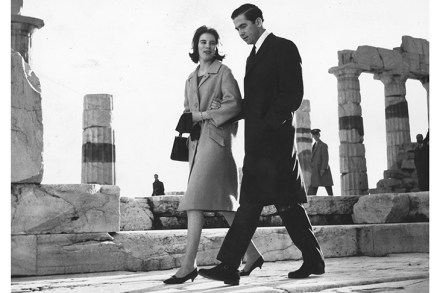
Why is an Athens paper going after my old friend King Constantine?

 Gstaad It seems to be open season on the royals, starting with Prince Andrew and the charges against him by Virginia Roberts Giuffre. I’ve met Andrew a couple of times, but he wouldn’t know me from Adam. I’ve never met anyone who has had anything to do with Jeffrey Epstein except for Ghislaine Maxwell, who has problems of her own just now. Like everyone else, however, I have my opinions about this motley crew. Lawyers have already killed some of my columns on this subject these past three years alone, so I better lay off the subject. What I am certain of I cannot publish, so I will write only that in my view the prince is a fool but no rapist.

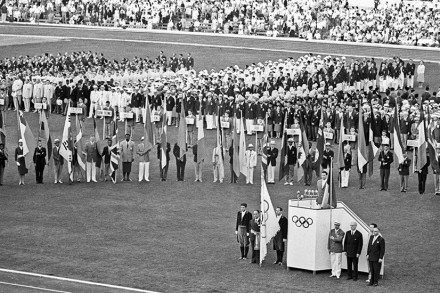
The Olympics have become a celebration of human frailty

Coronis Embracing one’s vulnerability seems to have replaced the higher, faster, stronger ethos of the Olympics. The very frailty that makes us human appears to have triumphed over the need to excel, or so the Games sponsors tell us. Not that I watched any of it. Not a single second, so help me you-know-who. I liked Sebastian Coe’s remark in last week’s Speccie about taking advice from Djokovic, who quit the mixed, thus leaving his partner in the lurch. I’ve always liked and admired Coe and always mistrusted the Serb, but then I’m a small-timer where sport is concerned. One thing I’ve never done is quit, however, and I did compete at a high level in tennis, karate, even polo.

An elegy on yachting

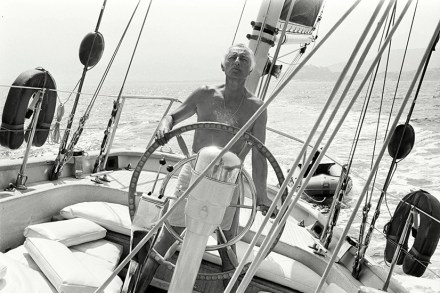
Patmos A very long time ago I wrote in these here pages that spending a summer on the Riviera or the Greek isles without a boat was as useless as a eunuch in a cathouse. That was then and this, alas, is now. The French and Greek seas are the same, if a little bit more crowded, but the people with boats are very, very different. Back then one knew almost everyone worth knowing — that is, everyone with a smart sailing boat, and a few with gin palaces that were graceful. These modern horrors that look like refrigerators on steroids, with top-heavy superstructures from bow to stern, helicopters, jet skis and even submarines on board, chartered to celebrities with hookers included, have killed elegant yachting and then some.

The joys of uninhabitable islands

Isle of Patmos Two hundred years ago last March, the Greeks rose up against the hated Turks who had occupied most of the mainland for 400 years and, with the help of Britain, France and Russia, drove the infidels back to where they had come from. The war ended with the London Protocol of 1830, which recognised the creation of the independent nation-state called Greece. Hellas, as we call her, became the first independent nation in the Balkans and the first to break away from the Ottoman Empire. The Society of Friends, which had been founded in 1814 outside Greece and included members of my family, had established the groundwork for the uprising. The seed was the American Revolution, followed by the French one.

In praise of Patmos

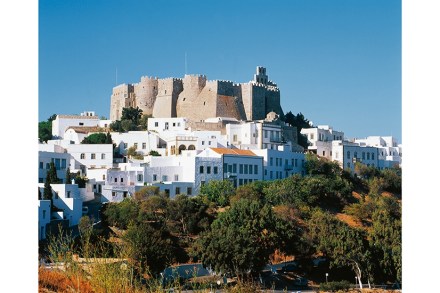
Patmos I’m in Patmos with four grandchildren, two children, and a wife. I know, I know, it sounds very lower--middle-class and only Bournemouth and some sunbeds are missing, but who cares. Children have friends, and grandchildren even younger friends, so it’s not all gloom and doom. The princely Schwarzenbergs are here — the mother is Greek — and so is half of Vienna, not to mention Florence, Venice and Rome. At dinner the other night up at the piazza, which holds about 40 tables, there was not a single Philip Green-type among the guests, and looking back I cannot remember having had a more pleasant dinner setting ever, other than perhaps once in Sienna long ago.

A brief history of harlots

I write this as a follow-up to last week’s essay on muzzling after making whoopee. I’m on my way to Patmos, an island so difficult to get to, it has kept the great unwashed away. From now it is the only island I will grace with my presence, until the next time, that is. It was Kipling who quipped about journalists having ‘power without responsibility’. He then added the phrase ‘the prerogative of the harlot throughout the ages’, which was repeated by Stanley Baldwin, not Stanley Johnson. Comparing hacks to harlots is, of course, unfair to the girls. Some of them have risen to the highest offices in the past due to their discretion, whereas the only journalist I know who made it to the top is our very own Boris.

How to have an affair

Gstaad After six-and-a-half months apart, I had no trouble recognising my wife. Out she came on to the driveway to greet me as Charlie the horny driver brought a sleepy Greek boy home after a long flight from the Bagel. I pretended not to know her and embraced the maid instead, but it didn’t work. My son and two grandchildren added to the merriment, playing along when I asked them who that lady was who tried to kiss me. Here’s some advice to all you young whippersnappers: women will forgive anything as long as you keep it light and make them laugh. I’ve been in trouble with women throughout my long life. That’s because I like them so much I can’t keep my hands off them. By that I don’t mean inappropriate touching.

The dying art of sports commentary

Wimbledon is here at last, after its absence in 2020. What struck me watching the French Open on television a couple of weeks before was just how much rubbish I had to listen to if I kept the sound on. There are now too many matches broadcast, which means more and more commentators spouting off about the game in the middle of rallies. I don’t know why viewers don’t raise hell with the networks about these non-stop blabbermouths who interrupt our viewing. We’ve become a nation of sheep, accepting everything so-called experts throw at us. Televised sport needs commentators only before and after the event.

The art of Dolly Parton’s bra

New York I hope this is my last week in the Bagel. I plan to fly first to Switzerland and then on to London. There’s the annual Pugs Club lunch I cannot afford to miss, but now that Boris is married I don’t suppose he gives a damn about the poor little Greek boy and his club lunches. Incidentally, the little bird has answered my last week’s query about The Spectator bash: the sainted editor is waiting to hear what, yes you guessed it, the new bridegroom premier will allow this summer. Boris doesn’t seem to be able to make up his mind whether the magazine he headed for close to eight years should go two years without a party. Oh boy, it’s getting very confusing, and I for one have lost the trust I once had in science.

A nicer side of Nero

New York I haven’t felt such shirt-dripping, mind-clogging wet heat since Saigon back in 1971. The Bagel is a steam bath, with lots of very ugly people walking around in stages of undress that would once upon a time have embarrassed that famed stripper Lili St Cyr. How strange that very pretty girls do not shed their clothes as soon as the mercury hits triple figures, but less fortunate ones do even if the number is a cool 80. June is my London party month, or used to be before the city was transformed into a prison camp. And what about The Spectator party? I haven’t heard a woid, as they say over here, so I’m sending a little boid over to find out. I have ordered a brand new white suit for the occasion — if it takes place, that is.

In praise of chastity

New York It’s party time in the Bagel, or at least private party time. Yours truly is an extra man nowadays as my wife and I have been separated by pandemic restrictions for six months. Alexandra is in London, quarantining after visiting two little blond things in Austria for my fourth grandchild Theodora’s first birthday. I am doing dinner parties non-stop in the Bagel, as if I were a gaywalker back in the 1970s. Actually, I’ve been seeing a lot of old friends who have thrown dinners for Lita and George Livanos. We have mostly been the same crowd, as New York society types have gone the way of wooden sailing boats and tennis players wearing all whites.

Why night-clubbing in New York is a risky business

New York The acerbic writer Gore Vidal was once asked which period of history he would choose to have lived in. ‘The 17th century with penicillin,’ was his answer. It was a good sound bite but I don’t agree. Just the smells back then would be enough to kill me, and what about the people without teeth? And the plague of 1665 makes today’s virus seem like a slight head cold. Personally, I’d choose post-second world war New York City, as described in Jan Morris’s wondrous Manhattan ’45. I got there three years later, to Manhattan, that is, and the place was as fabulous as I had heard and imagined it as a child. Beautiful limestone skyscrapers lined the wide avenues, men and women were dressed to the nines, and the place reeked of wealth and power.