Columns

Filming Bono, fighting Balls – how George Osborne’s preparing for his autumn statement

James Forsyth and Isabel Hardman discuss George Osborne's 2013 Autumn statement: [audioboo url="https://audioboo.fm/boos/1763353-isabel-hardman-and-james-forsyth-discuss-george-osborne-s-autumn-statement"][/audioboo] Next week’s autumn statement looks at first as if it should be easy for George Osborne. For the first time, he’ll arrive with unambiguously good news. He can announce an upgrade of the growth forecasts and that borrowing has come in lower than expected. Politically, however, his task is as difficult as ever. He has to wrestle back the initiative from Labour. Preparations for this ‘fiscal event’, to use the Whitehall parlance, have been intense.
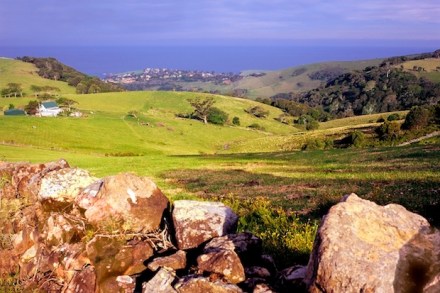
Matthew Parris: The secret Australia – and why I love it

Nations seek their souls in the strangest places. We English, for instance, have illustrated ourselves to the world and to ourselves with a stark choice between Cool Britannia and Ye Olde Tea Shoppe. When not hawking to tourists in London those T-shirts scrawled with obscenities, we picture ourselves in country lanes and rose-covered thatched cottages. A few of us actually seek out the vestiges of that countryside world and live a pretend-rural life there; but most Spectator readers would be bored to tears after ten minutes of Morris dancing; and a fortnight of hobnobbing over a honeysuckled garden fence with a rosy-cheeked jam-maker who had never heard of the Today programme would have us screaming for release, almost as horrified as we’d be in a Soho nightclub.

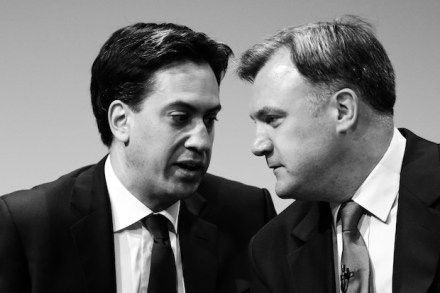
How the Blair-Brown tussle influences the top Tory and Labour partnerships

Listen to James Forsyth discuss the tale of two political partnerships: [audioboo url="http://audioboo.fm/boos/1746142-james-forsyth-on-david-george-and-ed-ed"/] Six and a half years after Gordon Brown finally badgered Tony Blair out of Downing Street, the relationship between these two men still dominates British politics. Why? Because David Cameron and George Osborne, and Ed Miliband and Ed Balls are, in their different ways, doing what they can to prevent history repeating itself. Their relationships are both informed by the Blair-Brown breakdown. Cameron and Osborne have quite deliberately structured their working lives to avoid replicating the tensions within New Labour. The pair shared a set of offices in opposition with their aides sitting in the same room.

James Delingpole: I told Radley school pupils how to rebel. But I’m not sure they want to

For two blissful days last week I was at Radley College — what you might call the posh person’s Eton — as the school’s Provocateur-in-Residence. Delightful place: like an especially agreeable gentleman’s club with a first-rate school attached. My only criticism — and it’s not really a criticism, more a rueful observation — is that even in this Helm’s Deep of immense soundness, the Orcish forces of lentil-eating progressivism have begun tunnelling beneath the walls and infecting the defenders of western civilisation with their malign and slithy creed. Or to put it another way: if you cannot rely on the boys of Radley College to stick up for man’s unalienable right to hunt foxes, what the hell can you rely on?

Hugo Rifkind: From porn to Bitcoin, governments can’t control the web — so why is Cameron trying? 

What people don’t seem to realise is that the geeks are winning. Actually, scratch that. They’ve all but won. The world just hasn’t realised yet. So, when the likes of David Cameron talk of, say, blocking regular porn, or eradicating child porn, people take him seriously, as though this might actually be a thing in his power to do. Rather than what it truly is, which is something between a cynical gimmick and a last, desperate, deluded grasp at a dissolving straw. I mean, look, it might work a bit. Aspiring nonces, I suppose, will be set back by a week or two. People who just stumble upon kiddie porn while searching for somebody else — a kipper pan, say — will, indeed, be warned off going any further.

Which female media star wrote the right-wing Revolt? It says a lot that we can’t think of many candidates

I am still trying to get some sort of closure. For almost three weeks now I have been tormented by memories of Newsnight’s Kirsty Wark dancing to the song ‘Thriller’ at the close of her programme, something presumably intended as a light-hearted Halloween treat for the eight or nine remaining viewers. It was not a light-hearted treat for me. I have always harboured the suspicion that Ms Wark is indeed a zombie, an innocent cadaver disinterred by shadowy persons within the left-wing Scottish establishment — the Baron McSamedis — and subjected to some awful supernatural process before being released into the world to do their vile bidding. Watching Kirsty lumber along with a troupe of dancers dressed as pretend zombies served merely to confirm this fact for me.

John Bercow must rein it in — Parliament can’t afford to depose two Speakers in a row

John Bercow could go down as a great reforming Speaker of the House of Commons. It’s thanks to him, in large part, that the Commons chamber once again seems like the cockpit of the nation. But he now risks becoming the second successive Speaker to be ousted from his job. Even his friends admit that his inability to conceal his dislike for David Cameron and various Tory backbenchers has put his position in jeopardy. Bercow is a contrast to his predecessor Michael Martin. He is razor sharp and confident in his own judgment. No one doubts his intellectual ability. But Bercow has a large number of detractors. He’s gone from being on the hard right of the Tory party to a darling of the Labour benches — and he has picked up many enemies on the way.

Matthew Parris: I’ve been living with a miracle for 60 years

This is probably the most self-indulgent column I’ve written. I hope not to make a habit of it. It’s an ode to — and something of a lament for — my own right arm. I was six when I fell off a small cliff above a disused railway embankment in Nicosia, Cyprus. The blue bicycle I was wheeling was new: a birthday present and my first bike. A novice, I let the back wheel slip over the edge — and if you’re holding the handlebars and the back wheel slides, a bicycle moves in counter-intuitive ways. Mine pulled me with it. I refused to let go. I came to in a heap, in the dust, bicycle beside me and blood everywhere. Two small Greek boys were staring at me in horror. I struggled to my feet.

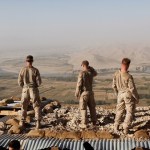
Soldiers aren’t social workers, Mr Cameron. Remember that before taking on hopeless wars

The ghost people, the letter people. The ones we hear about in court but never call by their real name; instead, Baby P and Girl A. And now Marine A. They remain hidden from us for reasons which are, one supposes, rational and sensible, but somehow this non-naming magnifies our shame or abhorrence at whatever has befallen them, or what they have done. It must be bad if we’re to strip them of their identities, no? Eventually they shuffle off the stage, after some sort of justice has been dispensed, still in some cases anonymous, shrouded. Shuffle off, indeed.

Aren’t we already losing Scotland?

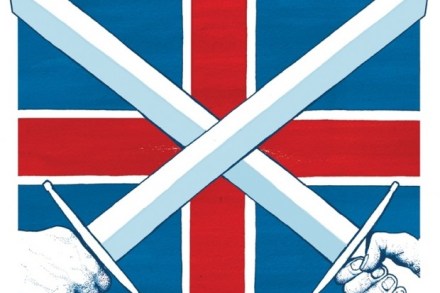
Westminster has been gripped by talk of a referendum this week. But the excitement hasn’t been about the vote in ten months’ time that will decide whether Scotland remains part of the United Kingdom, but about the possibility of an EU referendum in four years’ time. South of Hadrian’s Wall, Scotland’s vote on independence is fast in danger of becoming the forgotten referendum. If the Scottish referendum is the forgotten one then the Welsh one is the one ‘nobody’s ever bloody well heard of’. Last week, David Cameron announced that there would be a vote in Wales to decide whether the assembly there should be able to vary the rate of income tax. This is, by any reasonable standard, a significant change to the fabric of the United Kingdom.

Hugo Rifkind: Yes, I’m apathetic about politics. But isn’t Russell Brand?

Since I was a child, pretty much everybody I have ever met has asked me if I want to be a politician. The answer has always been no. Once, at university, I dimly remember giving this answer with so much vigour and conviction that I was escorted from the room, and the guy I’d given it to — an almost perfect stranger — came back to find me the next day, to apologise for asking in the first place. Even these days, the phrase ‘follow in your father’s footsteps’ drifting across the table at a dinner party can cause my wife to shoot me a warning look. My point here being, it’s never been ‘maybe’.

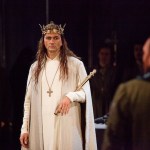
James Delingpole: I’m in love with Shakespeare — and with David Tennant’s Richard II

‘Dad, it’s three hours long,’ says Boy, worriedly. ‘Yeah. And whose bloody fault is it we’re going?’ I want to reply but don’t because I know, as a dad, you’re not supposed to say discouraging things when your child has asked you to take him to see his first ever Shakespeare play at the RSC. Still, I can’t pretend I’m happy with the arrangement. Partly it’s the cost of the tickets: £50-plus each, with no student discount for Boy because the show has long since sold out and you don’t get special deals on last-minute returns. Partly it’s just that, well, it’s the theatre and I’m not that keen on going to the theatre.

The next election will break all the rules

Ed Miliband’s aides used to scurry around the parliamentary estate, their shoulders hunched. A look in their eyes suggested that they feared their boss’s harshest critics were right. But times have changed. Now Team Ed marches with heads high. The success of his pledge to freeze energy prices has given them a warm glow. Five weeks on from the Labour leader’s conference speech, his commitment still dominates political debate. It has boosted his personal ratings, helped his party increase its support in the polls and convinced his supporters that he might be Prime Minister after the next election. In these circumstances, one might expect the Tories to be panicking. But they’re not.

You’re not as special as you think

My preferred route from the Times’s offices in Wapping on to the main road takes me across a precinct then down a short flight of concrete steps to the pavement below. Across the top step (for reasons unclear to me) a yellow line has been painted behind the step’s edge, like those lines you’re supposed to stand behind on railway platforms. Crossing this, and turning right when I reach the pavement, takes me straight to the right-hand side of the steps. A rational pedestrian seeking to shorten his journey would choose such a route, but not with any precision: one could plot a range of courses down the steps, all about the same length, the very shortest taking one right up against the border of the steps.

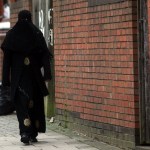
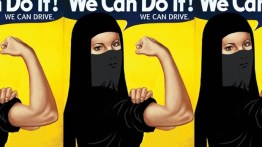
Rod Liddle: How I was bullied when I wore a burka

I dressed up in a burka to wander around the streets of Canterbury recently, to see what level of Islamophobic abuse and discrimination I suffered from the infidel locals. This was a groundbreaking piece of campaigning journalism done at the request of the Sun newspaper, which had bought me an XXL black nylon burka just for the job. I still have the burka and wear it on occasions, when nobody else is in the house. It frightens the dog. It yaps and yaps at me, with an uncomfortable expression on its face, exactly the same expression it uses for wasps. Wasps the insects, not Wasps the ruling and oppressive hegemony: it doesn’t mind them. Anyway, the burka thing went OK until the police got involved.

Growth is not enough — the Tories must show they’re not the party of the rich

The mood was grim when David Cameron, George Osborne and their advisers convened for a crunch meeting on 4 February this year. The economy had shrunk in the final three months of last year; the country was on the verge of a triple-dip recession, unprecedented in modern times. The government was in dire political straits. Those present discussed the situation with appropriate solemnity. But the tension was broken when Rupert Harrison, the Chancellor’s chief economic adviser, passionately declared that the economy would be going ‘gangbusters’ by late summer, early autumn. Ed Llewellyn, the Prime Minister’s chief of staff, chuckled and joked that he would take a note of that confident prediction.

Rod Liddle: What do you call travellers when they are no longer travelling? 

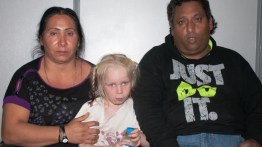
How should we describe the people who allegedly abducted that little girl in Greece, after a neighbour claimed that they actually paid £850 for her to a passing Bulgarian? It is a minefield we are entering now, having asked this question. Clearly the terms which hitherto some of us may have employed, not always affectionately — pikey, gyppo, tinker — are likely to get you into trouble with the police these days. Probably more trouble than if you, for example, dug up the road to remove a few hundred yards of fibre optic cable, or declined year upon year to pay your taxes. So those three are out.

Hugo Rifkind: What is Facebook? 

I’d never noticed that there aren’t any tits on Facebook. The place always seems brimming with right tits to me. But no. According to this week’s mumbling bien-pensant scandal, the world’s largest social network has decided to allow newsy videos of murder and beheading and all the rest, but still not tits, and this is an outrage. Strangely enough, it’s mainly regarded as an outrage by the sort of people who are normally to be found slamming publications such as men’s mags and the Sun because they minimise the proper news and have tits all over the place. Honestly. Anybody would think these people just like to be cross, or something. In fact there’s very little to get properly cross about on Facebook.

James Delingpole: Why can’t the BBC be impartial in the climate change debate? 

 ‘Well, you’re arguing facts against opinions. OK, I mean, the fact that the amount of carbon dioxide in the air has rocketed up since the Industrial Revolution, and continues to rocket up, is a fact. Now, it’s so much a fact that even the climate change deniers look away from it and don’t deny it.’ — Professor Steve Jones, Feedback, BBC Radio 4, 18 October Have a look at that last sentence. It represents such a cherishably stupid, rude, fatuous, crabby, bigoted, ignorant, petulant, feeble, fallacious, dishonest and misleading argument that if it turned out the speaker in question was a professor of logic or philosophy you really might want to shoot yourself in despair. Can you see what the problem is? Let me explain.

What must Cameron give to Clegg for the Lib Dems to stay loyal?

Ten days before polling day in 2010, it was clear that a hung parliament was the most likely result of the election. But when interviewed by The Spectator at the time, David Cameron refused to discuss what parts of the Tory manifesto were up for discussion in any possible coalition. He said simply that ‘all the things in our manifesto are what we want to achieve’. When pressed, he rather irritably replied, ‘I am not going to go through the manifesto in that way. The manifesto is what we believe in, that’s what we want to achieve and that is what matters.’ Even the offer of a pen and a copy of the manifesto, so that he could underline his core commitments, didn’t tempt the Tory leader.