Barometer

When did football first get referees?

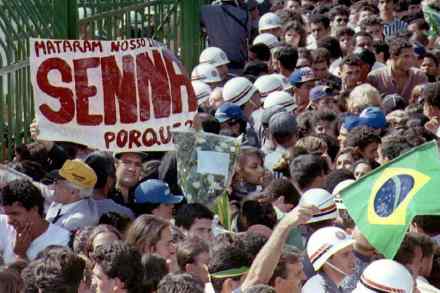
For reference The Referees’ Association complained at the level of abuse against officials in amateur football games. Referees go back further than you might think: the first reference to one was in 1842 – meaning someone to whom gentlemanly players might turn if they could not sort out disputes between themselves. The role acquired an extra notoriety in 1874, when referees were first allowed to send players off.   Who works from home? Between September 2022 and January 2023, 16% of workers reported working from home only, 28% reported hybrid working, 10% said they could work from home but chose to go to work, and 46% said they travelled to work because they could not work from home. But there are big differences across the workforce.

Who first floated the idea of spy balloons?

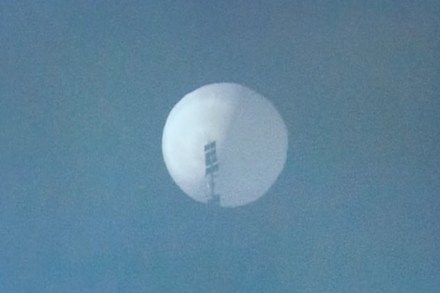
Something in the air A US fighter plane shot down a Chinese surveillance balloon which had drifted across Canada and the US. Balloons have a long history in military operations, being deployed widely in the American Civil War and in the Siege of Paris in 1870, when they were used to get messages out of the city. But the first use of a balloon in wartime goes back to the Battle of Fleurus in 1794, when the French flew a hydrogen balloon, L’Entreprenant, over the battlefield for nine hours to spy on Austrian positions. The French won the battle but Napoleon was not convinced of the role of military balloons and later disbanded his balloon corps. Major scale Turkey was struck by a series of earthquakes measuring up to 7.8 on the Richter scale.

What’s moved the Doomsday Clock the most?

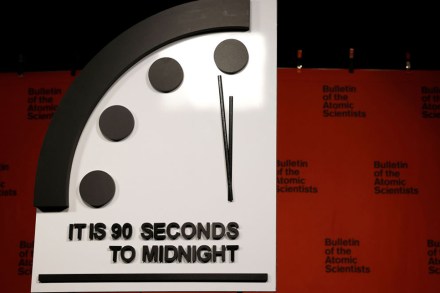
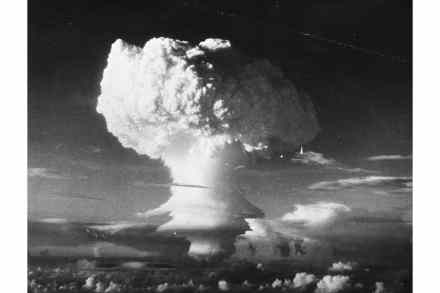
The final countdown The Bulletin of Atomic Scientists moved its ‘Doomsday Clock’ from 100 seconds to midnight to 90 seconds to midnight – the closest it has ever been to our apparent annihilation. How close was it during other periods of history? Cuban missile crisis, 1962 The standoff between the US and the Soviet Union brought the world to the brink, yet it was apparently a time of optimism compared with today – a few months later the clock was moved back from 7 to 12 minutes. Chernobyl, 1986 The world’s worst nuclear accident didn’t register on the clock: the hands were not moved for two more years, and then back from 3 minutes to 6 minutes.

How did ‘mummies’ get their name?

Preserve us The British Museum said it would stop referring to ‘mummies’ and call them ‘mummified persons’ instead, out of respect to their dignity. How did they come to be called mummies in the first place? – The term has been traced back to 1615, and derived from the Latin Mumia, and the Arabic Mumiya, referring either to an embalmed body or the bituminous substance in which they were embalmed. The terms ‘mummified’ and ‘mummification’ did not come into use until the 19th century. Spent Has the Conservative government cut health and social care funding? NHS and social care funding in England at 2022/23 prices: 2008/09   £121.5 bn 09/10   £129.7 bn10/11   £130.2 bn11/12   £130.9 bn12/13   £131.

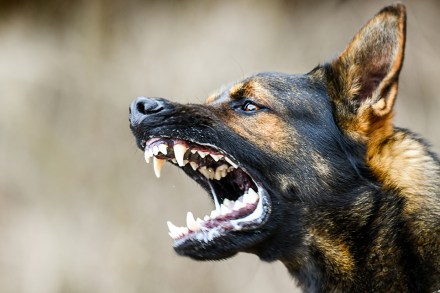
How many people are injured by dogs?

Duke out Will the Duke and Duchess of Sussex be invited to Charles III’s coronation? The royal family faced a similarly tricky decision over the Duke of Windsor, the former Edward VIII, at Elizabeth II’s coronation in 1953. Documents released by the National Archives in 2007 reveal that the matter was handled by the Prime Minister, Sir Winston Churchill, who contacted the Duke in November 1952 and ‘advised’ him not to attend, adding that the Prime Minister would tell the press that ‘it would not be consistent with usage for coronation to be attended by any former ruler’. That such advice was necessary suggests that the Duke might have been sent a invitation as a formality. Whether he was or not, he did not attend.

Who was the monarchy’s original wicked stepmother?

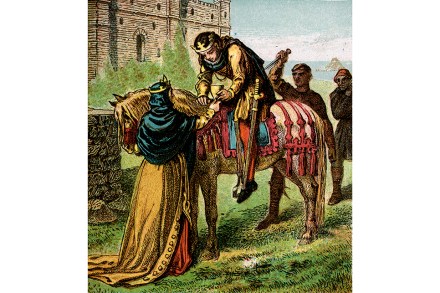
Wicked stepmothers Prince Harry said that he was worried Camilla would become his ‘wicked stepmother’. But she would have to be rotten indeed to match the English monarchy’s original wicked stepmother, Aelfthryth, who married King Edgar in 965. Upon Edgar’s death the succession should have passed to his elder son, Edward, but Aelfthryth had other ideas, wanting her own son, Aethelred – King Edgar’s younger son – to take the throne. She invited Edward to meet at Corfe Castle, Dorset, where, according to the Anglo-Saxon Chronicle, she sent out her servants to stab the boy – then aged about 16 – to death. As a result, it was Aethelred who became king, with Aelfthryth becoming regent until he reached adulthood. Crime time Why are people in prison?

How often do you see a walrus in Britain?

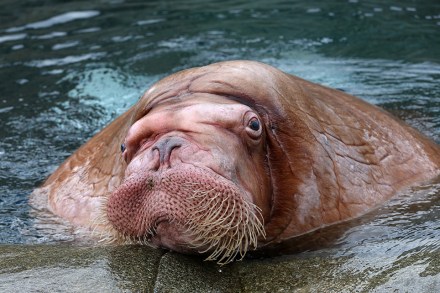
Tusk force A new year firework display in Scarborough was cancelled for fear of disturbing a walrus which was resting on the seafront. How unusual is it to see a walrus in Britain? – There have been 27 recorded sightings in UK waters in the past 130 years, the most recent in Seahouses Harbour, Northumberland, in November 2021. – In the same year a walrus continued even further south, visiting northern Spain before returning to the Arctic. – There have been 11 sightings in Irish waters over the past century. A 125-stone walrus was responsible for sinking several anchored boats in Irish harbours in 2021. Top of the crops A Radio 4 programme, Rethink, repeated claims that crop yields could fall by 30 per cent by 2050 as a result of climate change.

What did psychics say would happen in 2022?

Bank on it One event in 2023 which the government and Bank of England will not want to draw attention to is the 100th anniversary of the peak of the Weimar inflation. – The value of the German mark had already been plummeting in the early 1920s as the German government printed money to pay reparations to the victors of the Great War. But inflation was given a further boost in early 1923 as yet more money was printed in order to pay striking workers in the occupied Ruhr region. Between the beginning of 1923 and November of that year, prices rose a billionfold. Stabilisation was only achieved after the Weimar government issued new banknotes backed by mortgage securities, which in turn were backed by the price of gold. Inflation, strikes, demands for reparations.

Will the World Cup final be better attended in 2022 or 1930?

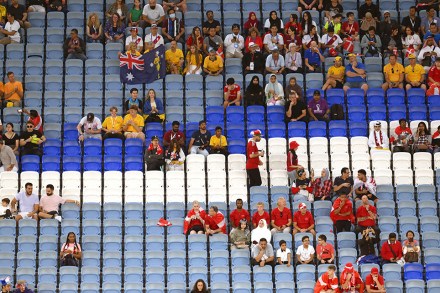
Final countdown Could fewer people watch the 2022 World Cup final in the flesh than watched the inaugural 1930 contest? The first World Cup final, won 4-2 by Uruguay, was held in the Estadio Centario in Montevideo on 30 July 1930. The stadium officially held 93,000 people. That is more than the present Wembley stadium and 4,000 more than the capacity of the venue for this year’s final, the Lusail Stadium in Qatar. There are conflicting accounts of how many attended the 1930 final, however, with some sources saying it was full and others giving an official attendance of 68,346. A Brexit blow? Is it true that trade with the EU has declined since Brexit?

What was in the Wellcome Collection’s Medicine Man exhibition?

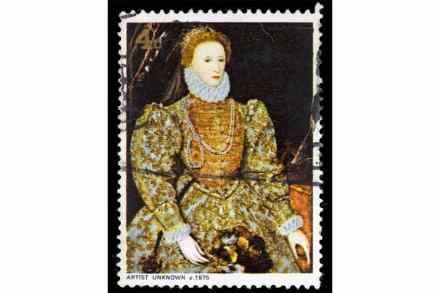
Not Wellcome The Wellcome Collection closed its own Medicine Man exhibition on the history of medicine, complaining that it was racist. Some of the treasures it displayed: – Wax and cloth head of Elizabeth I, half of which shows a face and the other half a decomposing skull being consumed by insects. – Pair of bellows used for blowing smoke into the rectum of people fished out of the Thames, which some doctors believed could revive them after near-drowning. – Charles Darwin’s walking stick, topped with a skull. – Napoleon’s toothbrush, made from silver and horsehair. – A Japanese papier-mâché figure adorned with acupuncture points, used as a teaching aid.

How much alcohol is drunk in Qatar?

Cornish pasting Malcolm Bell, the chief executive of VisitCornwall, complained in an online interview about ‘emmets’ – an emmet being a derogatory word for an outsider, derived from a local dialect word for ‘ants’. Some more insults in Cornish dialect: Bimper, a peeping Tom; Dobeck, a fool; Gocki, stupid; Piggy-whidden, a weakling; Squallyass, a crybaby; Janjansy, a fibber; Timdoodle, a fool; Tuss, an offensive person. Team building Ten players in Qatar’s World Cup squad were born outside the country. Only 12% of Qatar’s population are native Qataris. Where are the rest of its citizens from? India 22% Bangladesh 13% Nepal 13% Egypt 9% Philippines 7% Pakistan 5% Sri Lanka 4% Sudan 1.9% Syria 1.7% Jordan 1.

Who has lost the most money in human history? 

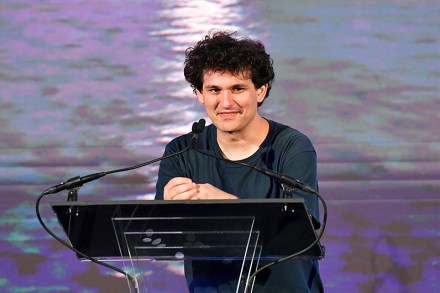
Billion-dollar losers Sam Bankman-Fried, the 30-year-old founder of FTX, saw his wealth plummet from $16 bn to zero when the company collapsed. Other big fortunes lost: – Masayoshi Son, founder of Softbank, lost paper wealth of around $70 bn (in today’s money) during the dotcom crash of 2000-2. The company later floated and now he is reckoned by Forbes to be worth $22.8 bn. – Yasumitsu Shigeta, founder of mobile phone company Hikari Tsushin, lost a paper fortune of $42 bn in the dotcom crash, but thanks to a partial recovery in shares he is now worth $3.4 bn, says Forbes. – John Rockefeller, the oil magnate and America’s richest man at the time of the Wall Street Crash, is reckoned to have lost the equivalent of $10 bn.

Who first started burning fossil fuels?

Carbon dating Did burning fossil fuels begin with the industrial revolution, or is there someone else from whom we could claim reparations for carbon emissions?  — Artefacts made from coal and dated to 4000 bc have been uncovered in the Shenyang province of north-eastern China, with a formalised industry using coal for copper-smelting in operation by 1000 bc. In Britain, coal has been traced to bronze-age funeral pyres lit prior to 2000 bc. The Romans began mining for coal in the Midlands, and the first deep coal mine was opened in Ashby de la Zouch around 1450 ad. The earliest-known oil product is asphalt used in the construction of the walls of Babylon c. 2000 ad. China probably started using oil as a fuel in around 400 bc.

Has Elon Musk picked up a turkey in Twitter?

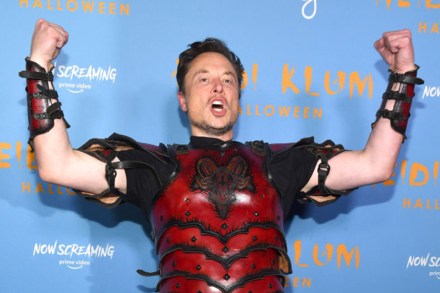
Talking gobblers Has Elon Musk picked up a turkey in Twitter? – Musk paid $54.2 per share. The share price reached $41.57 on its first day of trading in 2013. It slumped to $14.62 in April 2016 and peaked at $77.06 in February 2021. In the first quarter of 2022, it claimed 229 million active daily users, a rise of 15.9% year on year. There were 39.6 million users in the US. – In Q1 2022 the company raised $1.2 billion in revenue: $1.11 billion from advertising and £94 million from subscriptions. However, in the same quarter the company ran up $1.33 billion in costs. Dirty Cop How are Cop conferences doing at cutting their own carbon emissions?

Who was Britain’s youngest prime minister?

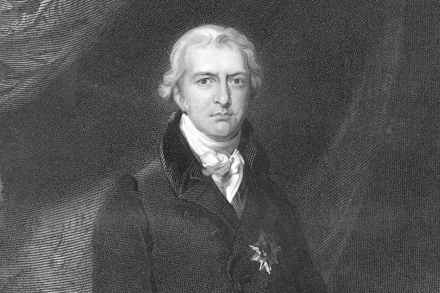
Prime numbers At 42, Rishi Sunak is Britain’s youngest PM since Lord Liverpool took office the day after his 42nd birthday in June 1812. He replaced Spencer Perceval, the only British prime minister to be assassinated. Much is made of Sunak’s wealth, but he hasn’t enjoyed the privilege Lord Liverpool did (his father was an adviser to George III). Thanks in part to his connections, Lord Liverpool was elected to the Commons as member for Rye at the age of just 20. As he had to be 21 to sit in the Commons, he went on a Grand Tour of Europe until he came of age. He was PM for 15 uninterrupted years. Asian heritage How large is the Asian British population? – According to the ONS, there are 4.2m people in England and Wales – 7.

Has the pandemic made us appreciate nature more?

Out to grass If Liz Truss is forced out of office (and doesn’t also resign her parliamentary seat as Tony Blair did on resigning as prime minister), there will be three ex-PMs sitting on the backbenches of the Commons. When was the last time this happened? — Between Jim Callaghan’s defeat in the 1979 general election and Harold Wilson’s retirement from the Commons four years later, Callaghan, Wilson and Edward Heath were all still in parliament. As for the number of living ex-PMs, we are already at a modern record, with Boris Johnson, Theresa May, David Cameron, Gordon Brown, Tony Blair and John Major.

What does Nicola Sturgeon want for Christmas?

Dying of heat The former government chief scientific adviser Sir David King predicted that the heatwave in mid-July could cause up to 10,000 excess deaths. Was he right? — The ONS says there were 2,227 excess deaths from 10 to 25 July: that is compared with the five-year average (which excludes the Covid year of 2020). This amounted to a 10.4% rise in excess deaths. The ONS recorded 3,271 excess deaths during the five ‘heat periods’ of the summer months (when the mean Central England Temperature exceeds 20˚C). There were nearly twice as many excess deaths among females (2,159) as among men (1,115), a reversal of previous heatwaves. There were 5,017 excess deaths among the over-seventies.

Who has the most nuclear weapons?

Out of office Could Liz Truss end up being Britain’s shortest-serving prime minister? She would have to remain in office until 2 January to outlast George Canning, who was PM from 12 April 1827 until his death on 8 August of that year. Like Truss, Canning had served as foreign secretary, where he was credited with boosting trading opportunities for British merchants. However, he became leader of a divided Tory party, which split between his supporters and those of Sir Robert Peel and the Duke of Wellington. Tax returns Some countries by the top rate of income tax: Japan 56% Denmark 55.9% Sweden 52.9% Belgium, Israel 50% Netherlands 49.

Who was the first monarch to live in Buckingham Palace?

Fit for a king King Charles III, it has been reported, is reluctant to move into Buckingham Palace. Who was the first monarch to live there? – The core of what is now the palace was built as a townhouse, Buckingham House, for the Duke of Buckingham in 1703 and purchased by George III as a home for Queen Charlotte and her children – while he lived at St James’s Palace. – His successor, George IV, started work on enlarging what by then was already called a palace, intending to use it for his own residence. He died before it was complete, however, as did William IV. William IV was not so keen on it as a residence but considered moving parliament there. – The first monarch to live there permanently was Queen Victoria upon her accession in 1837.

Who had the most highly attended state funeral?

The namesakes Some of history’s other Charles IIIs: – Charles III, King of Naples (1382-86): forced Pope Urban VI into exile, then moved to Hungary, whose throne he had assumed through marriage. Was assassinated. – Charles III, King of Navarre (1387-1425): made peace with France. – Charles III, Duke of Savoy (1504-53): lost when France invaded Savoy in 1536. Remained king in name but spent the rest of his life in exile. – Charles III, Duke of Bourbon (1505-21): tried to regain independence from France by partitioning the kingdom. Fled to Italy when the plot was discovered. – Charles III, King of Spain (1759-88): invaded the Kingdom of Naples and claimed it for Spain.