Barometer

Barometer | 8 October 2015

The death of Diesel The Volkswagen scandal has brought into question the future of the diesel engine. A century ago its inventor, Rudolf Diesel, was himself the subject of scandal. On 29 September 1913 he disappeared from the steamship Dresden on its way from Antwerp to Harwich. He had retired to his cabin after dinner but had not changed into his bedclothes. His body was found off Norway ten days later. He was apparently on his way to discuss selling diesel engines to the Royal Navy for submarines, leading to suspicions that he had been murdered to prevent the technology falling into British hands. His financial situation, however, pointed to possible suicide. The Royal Navy went into the first world war with steam-powered submarines.
Barometer | 1 October 2015

Water worlds Nasa announced it had found evidence of running water on Mars in the form of dark streaks on mountains and cliff edges. On which other planets and celestial bodies can you slake your thirst? — Ganymede, a moon of Jupiter, is believed to have an ocean of liquid water 60 miles deep, beneath 90 miles of ice. — Two other moons of Jupiter, Europa and Callisto, are also believed to have liquid oceans beneath ice crusts, the former having more water than Earth. No other planets in our solar system, however, are believed to have liquid surface water. Card check How many members does Labour have?

Barometer | 24 September 2015

Available for parties Labour deputy leader Tom Watson said that leaving his party to join the Liberal Democrats would be like ‘leaving the Beatles to join a Bananarama tribute band’. Is there such a thing? Bananaruma is a Leicester-based band led by the head of arts at a local secondary school. They advertise an hour-long show, for which they bring their own professional PA system with full lighting show. So far they have had one booking, at the Stamford Arms in Groby on 25 July. Tickets cost £20, including a three-course meal, with a bottle of bubbly thrown in for tables of six who booked before 1 July. Sporting chances The chief medical officer for World Rugby suggested that the game’s rules might have to be changed to reduce the risk of serious injury.

Barometer | 17 September 2015

It’s their party Jeremy Corbyn won the Labour leadership contest with 60% of the vote among four candidates in the first round. Which leader has the largest mandate from their party? — David Cameron was elected in 2005 with 28% of the vote out of four candidates in the first round (held among MPs only). He won 68% of the party vote in the run-off with David Davis. — Tim Farron won 57% of the Lib Dem vote this year. Only two candidates stood. — Nicola Sturgeon was appointed as SNP leader unopposed last November. — Nigel Farage was elected Ukip leader in 2006 with 45% of the vote (among four candidates) in a first-past-the-post system. — Natalie Bennett was elected Green leader in 2012 with 59% in the final round of voting.

Barometer | 10 September 2015

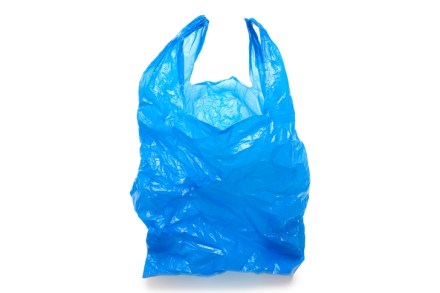
Old bags The government announced details of a compulsory 5p charge for single-use plastic bags in shops. Plastic bags have only been around since 1960, when they were first produced by the Swedish firm Akerlund and Rausing, later to give the world the Tetrapak. The first store to use them was Strom, a shoe-shop chain whose owner had complained paper bags were too weak. The first plastic bags had cord handles; a design with integral handle was patented in 1965 by the Swedish company Celloplast, which went on to enjoy a decade of monopoly. Places of refuge David Cameron said that Britain would take 20,000 more Syrian refugees over the next five years. According to UN High Commissioner for Refugees, the UK had a population of 126,055 in 2013, the 25th highest in the world. Who had the most?

Barometer | 3 September 2015

Peers’ peers Forty-five new peers were created. Are we alone in having an upper house of parliament made up of appointed cronies? FRANCE Senate has 348 members elected for six-year terms by 150,000 state officials known as ‘grandes electeurs’. GERMANY Bundesrat is made up of 69 members delegated by governments of individual states. ITALY Senate composed of 321 members, of whom 315 are elected for five-year terms by voters aged 25 and above, and 6 appointed as senators for life. JAPAN House of Councillors composed of 242 members elected for six-year terms under a system of proportional representation. UNITED STATES Senate has 100 members, two for each state excluding Washington DC, directly elected by the public.

Barometer | 27 August 2015

How many cheats? More data on members of extramarital dating site Ashley Madison were put online. How widespread is adultery? — The 2000 National Survey of Sexual Attitudes and Lifestyles found 15% of men and 9% of women admitted an ‘overlapping relationship’ within the previous 12 months. — In 2010 an opinion poll for a dating site found 25% of men and 18% of women had ever cheated on their current partners. — In most cases, however, the cheat seems to get away with it. In 2012, adultery was cited as the reason for one in seven of 118,140 divorces. This accounts for just 0.07% of the UK’s 24 million marriages. Shock figures A man was tasered on an easyJet plane at Gatwick in a row over hand luggage. Which police forces tasered most people last year?

Barometer | 20 August 2015

No sex, please Several friends of the late Sir Edward Heath asserted that he could not be guilty of sexually assaulting children because he was asexual. How many adults do not experience sexual attraction? — A 2004 study by Anthony F. Bogaert, of Brock University, Ontario, Canada, analysed responses to a British questionnaire ten years earlier. Of 18,000 respondents, 195, or just over 1%, had agreed with the statement ‘I have never felt sexually attracted to anyone at all’. — A 1983 study by a student at the University of Michigan classified 5% of males and 10% of females as asexual. Unaccountable spending The EU declined to offer a breakdown of the £86m spent by staff on EU credit cards.

Barometer | 13 August 2015

Caught working The government announced a crackdown on illegal workers. How many illegal workers are caught in Britain? — From October to December last year, 716 illegal workers were caught, 337 in London and the south-east. Among those caught were restaurant workers in Chinatown, a takeaway worker in Norwich, a fish-and-chip shop worker in Lincoln and a shopworker with sideline in counterfeit tobacco in the Forest of Dean. — In the four years to 2010, 349 were caught working in government departments, councils and the NHS, including 12 in the Home Office. One was caught after spending 19 months working as a security guard, opening the door for ministers and senior civil servants.

Barometer | 6 August 2015

Rogue traders Former UBS trader Tom Hayes was jailed for 14 years for rigging the Libor market. How long could you go down for financial misconduct? 19 months (plus a £100,000 fine) in the case of Julian Rifat, former trader at Moore Capital, convicted of insider trading in March this year. 7 years in the case of rogue trader Kweku Adoboli, convicted of fraud in 2012 after trading at UBS without taking out parallel hedged positions. 7 years for Alex Hope, who conned £5.5 million out of 100 investors via an unauthorised collective investment scheme. 13 years in the case of Nicholas Levene, convicted in 2012 after running an illegal £32 million Ponzi scheme.

Barometer | 30 July 2015

Safe house Lord Sewel is unique in leaving the House of Lords in disgrace. Until the House of Lords Reform Act 2014, only a treason conviction earned you expulsion from the House of Lords, and that only since 1870. At least two peers have been executed for treason, Simon Fraser, 11th Lord Lovat, and William Maxwell, 5th Earl Nithsdale, but both well before this date. — Thanks to the 2014 Act it is now possible to have your Lords membership terminated on two grounds: being jailed for a criminal offence with a sentence of more than one year, or failing to turn up for a whole session. But you cannot be ejected for non-attendance if prevented from attending through disqualification: by, say, an 11-month jail sentence.

Barometer | 23 July 2015

Gesture politics A royal home movie from 1933 apparently showed the future Queen, aged seven, and her mother giving a Nazi salute. Like the Swastika, the stiff-armed salute was not invented by the Nazis. In this case they took it from the Mussolini and his Fascists, who thought it came from ancient Rome. Three Roman soldiers are shown making such a gesture in Jacques-Louis David’s 1784 painting ‘Oath of the Horatii’.But the US beat both Nazi Germany and Fascist Italy by using the gesture to accompany the pledge of allegiance. Hitler himself claimed the salute was one of peace, saying it meant ‘Look! I am holding no weapon.

Barometer | 16 July 2015

Ties that bind Lewis Hamilton was ejected from the royal box at Wimbledon for not wearing a tie. Some places he would have been welcome: — In 99 out of 100 of the most expensive restaurants surveyed in 2010. — For four evenings a week on a Cunard cruise (he would need a tie after 6 p.m. on the other three). — Driving a cab in Dubai (ties are no longer compulsory after a customer pulled one driver’s). And some places he wouldn’t: — Visiting Lloyds of London. — Competition days at Knebworth Golf Club (though socks are not usually compulsory). — Bicester Community College (ties compulsory for pupils from September).

Barometer | 9 July 2015

Naming terror David Cameron and the BBC argued over what to call the terror group most papers refer to as Isis — with the PM preferring Isil and the BBC continuing to call it Islamic State. Two more terror groups whose names caused problems in Britain: — The Red Army Faction was a German terror group which existed between 1970 and 1998, when it declared itself dissolved. Faced with the acronym RAF, British media preferred to call the group by its nickname the Baader-Meinhof Gang. — In the 1970s Italy was terrorised by a group known as the Red Brigades, most notorious for kidnapping and murdering the former prime minister Aldo Moro in 1978.

Barometer | 2 July 2015

Bank job Should we buy shares in companies which print banknotes in expectation of one getting to print millions of drachma notes? — In May, according to the ECB, there were a total of 17.6bn euro notes in circulation. Given that Greece accounts for approximately 2.5% of the GDP of the eurozone, 441m of these were Greek, and might need replacing with drachma notes in the event the country leaves the euro. — However, there is already a good business in printing replacement euro notes. In May, 2.76bn notes were taken out of circulation and 2.88bn new ones were put into circulation.

Barometer | 25 June 2015

The spirit of 1945 No one would have been more surprised at the sight of 100,000 people marching in London under the banner ‘End Austerity Now’ and demanding ‘Tories Out’ than Sir Stafford Cripps, President of the Board of Trade and briefly Chancellor of the Exchequer in Attlee’s government. — Hard though it might be to remember now, but austerity was once a proud Labour policy. The rationale of the policy, devised by Cripps, was that by suppressing private consumption, resources could be spent instead on boosting exports. — Any anti-austerity march in 1947 would have been led by the Conservatives, whose slogans of the time included ‘Starve with Strachey’ and ‘Shiver with Shinwell’.

Barometer | 18 June 2015

Dropping the Clangers The Clangers made a comeback on BBC television. Some Clanger facts: — The actors doing the voices worked from a script in English, even though they were playing seemingly unintelligible noises on the swanee whistle. It was a good job the young viewers didn’t understand Clanger-language, because the creatures were known to tell each other to ‘sod off’. — The last Clanger episode, made after a gap of two years, was made specially to be broadcast on the evening of 10 October 1974, polling day in the second general election of that year. It consisted of the Clangers being taught how to play party politics, but rejecting the concept. It was written by co-creator Oliver Postgate after he become angry about the miners’ strike.

Barometer | 11 June 2015

Forty years on The forthcoming EU referendum has rekindled memories of the in-out Common Market referendum of 1975. But it seems a strange looking-glass world now. — Mrs Thatcher was a keen ‘yes’ campaigner, sporting a jumper with the flags of EC member states. Neil Kinnock campaigned for a British exit. The SNP and Plaid Cymru campaigned to leave the EC, the former calling it a ‘dangerous experiment in gross over-centralisation’. — The worry then was that England would vote to stay while Scotland and Wales would vote to leave. — But the most surprising supporters now seem the Daily Mail and the Daily Express, the latter declaring after the ‘yes’ vote had been confirmed that Britain was now ‘irrevocably’ European.

Barometer | 4 June 2015

First test The driving test celebrated its 80th anniversary. The first person to take the test, R.E.L. Beene of Kensington, passed. Here is some of the advice given to candidates on a Pathé newsreel: — ‘Don’t flick your cigarette ash outside. It’s very confusing.’ (The driver behind would have been looking for hand signals.) — ‘Never drive on the crown of the road.’ — ‘Don’t look down at the gear lever while you change gear.’ — ‘Don’t be nervous. The examination is not an inquisition but a series of very reasonable tests.

Barometer | 28 May 2015

Steam privatisation Cunard celebrated its 175th birthday by sailing three liners down the Mersey. The formation of the Cunard Line was an early triumph of privatisation. — The Post Office had been operating a monthly service to New York with sailing brigs since 1756. In 1836 a parliamentary committee decided that a steamship service should replace it, and that it would be more efficient for the Admiralty to put it out to tender to private operators. — Samuel Cunard defeated the Great Western Steamship Company and the St George Steam Packet Company by offering a fortnightly service from Liverpool for an annual subsidy of £55,000. The service, which at first only reached Halifax, began in May 1840.