Barometer

Are there any mountains left unclimbed?

Bad service Economic growth fell by 2.6% in November, the month of the second lockdown, compared with falls of 7.3% in March and 18.8% in April. The pandemic has achieved what has eluded recent governments, in rebalancing the economy away from services. Since February: — Services have contracted 9.9%— Manufacturing has fallen 4.9% — Construction is up 0.6% The most affected sectors of the service economy were: — Hair and beauty: 24.4% of businesses reported zero turnover— Pubs: 27.4% reported zero turnover Source: ONS Unclimbed peaks A team of Sherpas made the first winter ascent of K2, the world’s second-highest mountain. Are there any mountains left to climb?

How close have protestors got to entering parliament?

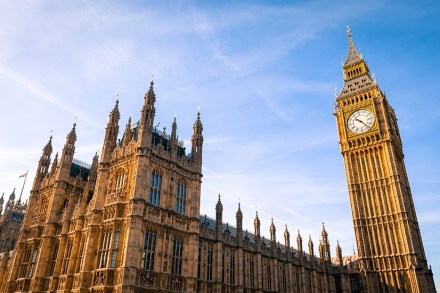
Parliamentary objections The US Capitol was raided by Donald Trump supporters trying to prevent the confirmation of Joe Biden’s election victory. How close have protestors come to entering our own parliament? — In May 2004, protestors calling for fathers’ access rights to their children threw a condom full of purple flour from the public gallery of the Commons, hitting the then prime minister, Tony Blair. — Four months later, five pro-hunt protestors succeeded in entering the Commons chamber, after getting into parliament by posing as building contractors. — In January 2008, protestors against airport expansion tried to storm parliament but got no further than hammering on St Stephen’s door.

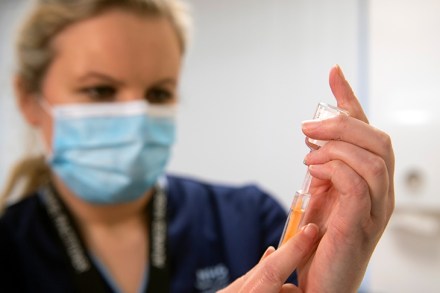
How quickly could we vaccinate the entire country?

A ferry tale Gerry Marsden, who died aged 78, was credited with making the ferry across the River Mersey world-famous. But it has another claim to fame: as possibly the oldest continuously operated ferry service in the world. The earliest record of a regular ferry was in 1150, when monks at the then newly built Benedictine Priory in Birkenhead set up a ferry service. It was not, however, reliable; bad weather frequently caused delays, so that in 1317 a licence was granted to build lodging houses for people waiting to cross the river. Those who didn’t want to wait, or wanted to avoid the fare, could try their luck wading across: until the river was made navigable for large boats the Mersey was fordable at low tide.

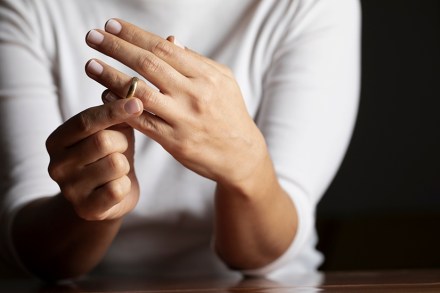
Do divorces really increase after Christmas?

Now and then Were households allowed to mix at Christmas during the plague? Samuel Pepys’s diary entry for 25 December 1665: ‘To church in the morning, and there saw a wedding… which I have not seen many a day; and the young people so merry one with another, and strange to see what delight we married people have to see these poor fools decoyed into our condition… thence to my Lord Bruncker’s by invitation and dined there…’ Festive fights Do divorces really increase thanks to Christmas? Divorce lawyers often say they’re especially busy after Christmas, as couples seek to untie the knot after a fractious time.

Is any song more lucrative than ‘Happy Birthday’?

Last orders The new tier restrictions have made life difficult for pubs. How many are closed? — According to the British Beer and Pub Association, 16,500 of England’s 37,000 pubs have had to close for everything except takeaway owing to their being in Tier 3 areas. — Of the 21,000 pubs in Tier 2 areas, 14,000 have had to remain closed because they are unviable if they can’t serve drinkers without also serving a substantial meal. — That leaves 732 pubs in Tier 1 areas which can open more or less as normal. — The number of pubs has fallen by 22 per cent this century. However, 2019 saw the first year-on-year rise, with a net gain of 320 pubs across the country.

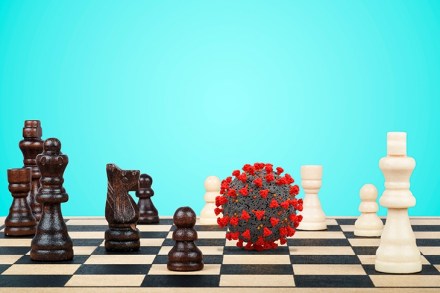
What are the best pandemic board games?

Dangerous games Sage scientists advised against playing board games at Christmas. Some games to consider if you are feeling subversive:Pandemic Co-operative board game inspired by 2003 Sars outbreak in which players pool their talents to defeat a deadly disease. Was stocked by the unlikely gift shop at the US Centers for Disease Control.Corona Battle Against Covid-19 German game where players battle to defend their businesses against the pandemic.Plague Inc. Players compete as diseases to infect the greatest number of people.Viral Players compete to try to infect a human body, braving its immune system.Infected One person plays plague doctor, while the others are villagers competing to try to stop him infecting the village.

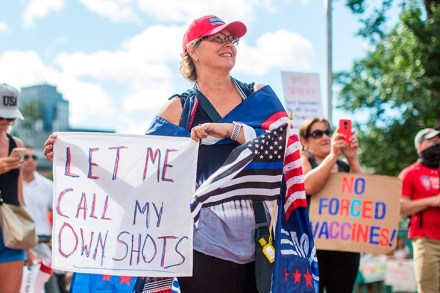
Which countries are most sceptical about vaccines?

Gloss over Should we be worried that the head of research into respiratory drugs at AstraZeneca is called Dr Pangalos, given that his near namesake, Dr Pangloss, is a byword for foolish optimism? Dr Pangloss was tutor to Candide in Voltaire’s satire on Gottfried Leibniz’s work on theodicy: the attempt to reconcile why a benevolent and all-powerful God should allow evil, tragedy — or a pandemic — to exist. Dr Pangloss’s favourite phrase, ‘all is for the best in the best of all possible worlds’, encapsulates Leibniz’s belief that the Earth, for all its apparent faults, was the best that God could possibly have created.

What does it mean to be ‘fit as a butcher’s dog’?

Boris and the butcher’s dog Who first coined the phrase ‘as fit as a butcher’s dog’? It has been traced to Lancashire. It is not the only quality attached to butcher’s dogs, however — such animals were perhaps widely observed as a result of customers having to entertain themselves somehow while the butcher prepared their cuts, and a dog gave them something to watch. A variant has someone as ‘happy as a butcher’s dog’. John Ray, in his collection of English proverbs from 1670, describes the expression ‘as surly as a butcher’s dog’.

Open and shut case: how did lockdown affect shops?

Shot in the arm Global stock markets reached a new high after pharmaceutical firm Pfizer announced a vaccine it is developing has been found to be 90 per cent effective. What have been the best- and worst-performing FTSE 100 shares over the past 12 months? BEST Scot. Mortgage Investment Trust | +109% Ocado | +94% Fresnillo (gold production) | +86% Flutter Entertainment | +75% Polymetal | +51% WORST Rolls-Royce | -74% Int. Consolidated Airlines | -71% BP | -61% Shell (B shares) | -58% Lloyds Bank | -52% Pharma’s life Who was Mr Pfizer? Charles Pfizer set up a factory with his cousin Charles Erhart in Brooklyn in 1849, initially to produce the drug santonin, used to purge the intestinal tract of parasitic worms.

Who came up with ‘lockdown’?

The start of lockdown The earliest known use of ‘lockdown’ in its current sense was in a 1973 story in the Fresno Bee, a Californian newspaper, referring to prisoners being kept in their cells after a knife attack. Despite apparently giving the world the concept, not all Fresno locals seemed happy to be placed in lockdown in April. A protest in May resulted in a fight between protestors and the president of the city council. Bed cover How full of Covid patients are hospitals?

Where is there water in the solar system?

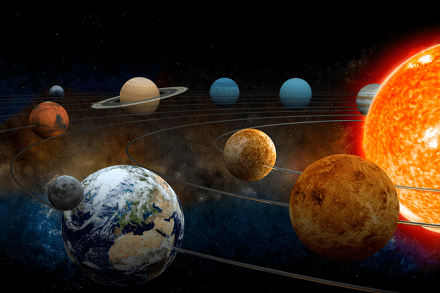
The Moon under water Nasa scientists using spectrometers claim to have found good evidence of water on the surface of the Moon. Where else in the solar system could you potentially go for a dip? — Signs of hidden oceans have been detected on Jupiter’s moons Ganymede, Europa and Callisto and on Saturn’s moons Titan and Enceladus. The latter is also believed to have icy geysers. Water is also believed to exist in craters on Mercury. — There are signs of ample water having been on Mars in the past, although most is believed to have been stripped away along with its atmosphere. The planet may, however, still have water beneath its surface and locked in ice caps at its poles. Free school meals How many children qualify for free school meals? In January, 15.

How many school teachers are male?

Special Offa A regulation passed by the Welsh government to prevent people travelling from Covid hotspots in England has brought comparisons to Offa’s Dyke. — There is no firm evidence that the dyke, which takes its name from the king of Mercia between ad 727 and 796, even stretched along the entire English-Welsh border. Moreover, some of the sections which do survive have been dated as early as ad 430, 300 years before Offa’s reign. But whoever built it, its design seems to confirm that it was designed to keep the Welsh out of England rather than the other way round: the ditch is on the west, Welsh side and the dyke takes such a path as to ensure that there are uninterrupted distant views into Wales.

Mind the gap: how wide is the North-South divide?

Red light, green light The three tiers of Covid restrictions have been described as a ‘traffic light’ system. — The world’s first traffic light is recorded as having been installed at the Palace of Westminster in 1868 to help MPs and peers enter and leave parliament. Those lights only had red and green phases.— Traffic lights installed in Cleveland, Ohio, in 1914 incorporated a buzzer to warn that the lights were about to change. The amber phase was patented by Garrett Augustus Morgan, an African-American inventor, after witnessing an accident. Watford Gap? New lockdown measures have rekindled talk of a north/south divide. Has the gap widened or shrunk over the past 20 years?

What happens when a US president dies?

Vice squad Donald Trump catching Covid-19 has concentrated minds on what happens if a US president dies in office. Normally, the vice-president will take over — which is why it matters who is on the ballot. In 1972, however, Americans had no idea who would end up president by the end of what should have been Richard Nixon’s second term. Nixon’s vice-president was Spiro Agnew, but he was forced to resign after pleading ‘no contest’ to charges of tax evasion. Nixon then appointed House leader Gerald Ford as vice-president. Ford became president when Nixon himself resigned before he was impeached over the Watergate scandal in August 1974. Ford lost to Jimmy Carter in the 1976 election and so was never elected by the American people in a national election.

Who started America’s presidential debates?

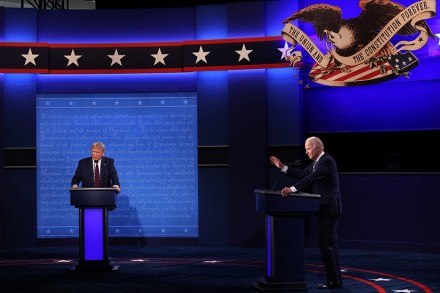
Word for word US presidential debates are often traced back to the first televised debate, between Richard Nixon and John F. Kennedy in 1960. But they were inspired by a series of seven debates held between Abraham Lincoln and Stephen Douglas while contesting an Illinois senatorial seat in 1858. The debates would have stretched a modern audience — they were each three hours long. It is hard to imagine, too, how modern candidates would have coped with the format: the first speaker was invited to speak for an hour, the second for 90 minutes, and then the first candidate was allowed a further half-hour. Douglas won the seat and, two years later, found himself again facing Lincoln for the presidency. This time, Lincoln declined to debate — and went on to win the top job.

Whose bright idea was the circuit-breaker?

It’s electrifying! Who invented the circuit-breaker? Thomas Edison patented it in 1879, realising what damage could be caused to electrical equipment in the event of a surge in current created by short-circuit. However, his early electrical installations did not use them, opting instead for fuses — thin wires designed to burn out when the current flowing through them reached a critical level. The first circuit-breaker — with spring-loaded contacts designed to open when the current became too much — was not installed until 1898, at L Street Station by the Boston Electric Light Company. Vehicle recovery Has the recovery in car sales been maintained?

Who will have more informants: the Stasi or Covid marshals?

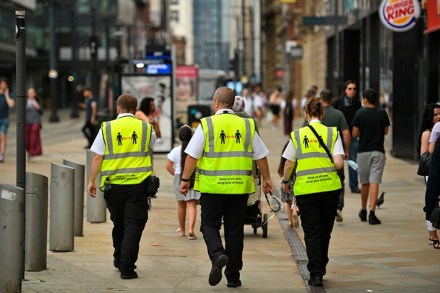
Information overload The government’s plan to put ‘Covid wardens’ on the streets to enforce the new rule against more than six people meeting in public has been likened to the practice of the East German Stasi relying on mass informants. How many East Germans worked on behalf of the Stasi? — According to historian Helmut Mueller-Enbergs, 620,000 Germans acted as informers during the 51-year history of East Germany, including 12,000 West Germans. — When the Berlin Wall fell in 1989, 189,000 East Germans were Stasi informants, just over 1 per cent of its 16 million population, and one in 20 Communist party members. Back in business? In which sectors is the jobs market recovering most strongly?

How important is coffee to Britain?

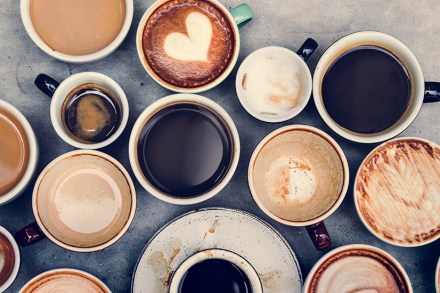
Lyrical errors ‘Rule, Britannia!’ begins with the lines: ‘When Britain first, at heaven’s command/Arose from out the azure main.’ — Main is an archaic word for ocean; Edmund Spenser refers to ‘swimming in the maine’ in The Faerie Queene (1590). Azure is perhaps not the best word to describe the colour of the seas around Britain. Nor did Britain in any sense rise from the seas — rather the opposite: it first became an island around 100,000 years ago thanks to glacial floodwaters causing the erosion of the land bridge between Dover and Calais. Caffeine economy Costa announced 1,650 job losses, the latest coffee shop chain to announce a contraction due to a decline in the economy of city centres.

Who first committed ‘cultural appropriation’?

Culture clashes The pop star Adele was accused of ‘cultural appropriation’ for adopting a Jamaican hairstyle for the online Notting Hill Carnival. Who first committed this alleged sin? The concept has been traced to a paper presented by Canadian art historian Kenneth Coutts-Smith at a symposium of the International Association of Art Critics in Lisbon in September 1976 — he used the terms ‘cultural colonialism’ and ‘historical appropriation’. His earliest example didn’t involve black cultures, however, but the Medici adopting an ‘idealised view of Roman Republican Virtue’ in the construction of Florence. Bags of rubbish The mandatory charge for plastic bags is to be doubled to 10p and extended to small convenience stores.

The BBC tradition of trying to remove patriotic songs from Last Night

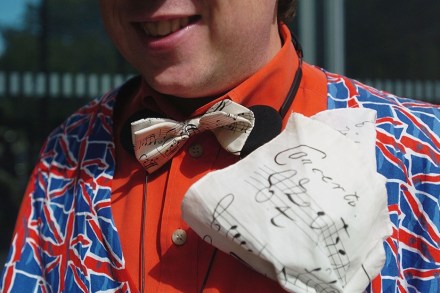
About Last Night It was suggested that the BBC might ‘decolonise’ the Last Night of the Proms by removing ‘Rule, Britannia’ and ‘Land of Hope and Glory’. ‘Land of Hope and Glory’ made its first appearance at the Proms in 1902 (Edward Elgar’s march had been played the previous year without the words). Sir Henry Wood’s ‘Fantasia on British Sea Songs’ followed in 1905. But the Last Night in its modern form began only with the first televised Last Night in 1947. Twenty-two years later began another tradition: the BBC trying to remove patriotic songs from the programme. The move was defeated in 1969 and again in 1990, in the run-up to the Gulf War.