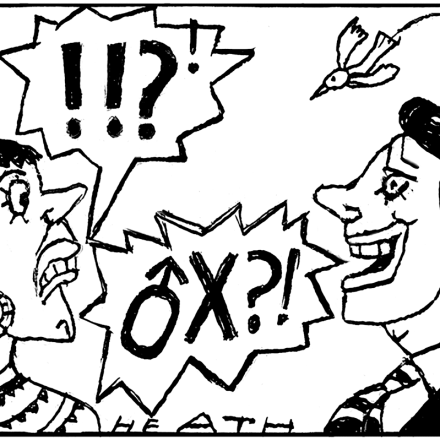
Down with exclamation points!
Punctuation is a gendered thing. I’ve been trying to stop myself overusing exclamation points and it’s been difficult. Exclamation points are girly because they’re a way of taking the sting out of what you say; they make any pronouncement seem more tentative, less serious. They’re the equivalent of a disarming smile, a marker that says: “No offense!” You add them to the end of a sentence to prevent anyone thinking you’re being bossy or critical. They’re an economical form of non-confrontation. Women use them far more than men. Almost 20 years ago, a study in the Journal of Computer-Mediated Communication found that women used nearly three-quarters of the exclamation marks in electronic messages, but it identified the tic as “markers of friendly interaction.