Features

Features

The promise and peril of Facebook Marketplace

Items currently available for sale on Facebook Marketplace within eleven miles of my kitchen table (a partial list): Two antique candlesticks, $20 One 1994 Lane cedar chest, $110 One Birkin philodendron, $20 Drunk Elephant Bronze Drops, $30 I became a Facebook Marketplace power user when my husband and I moved from a one-bedroom in San Antonio to a lovelorn Victorian in Pennsylvania. We had 3,000 square feet to furnish, and a budget depleted by closing costs and moving expenses. Marketplace is a classified-ad section of Facebook that was introduced as a less-seedy alternative to Craigslist, a place your grandma could browse for an antique footstool without stumbling across a solicitation for feet pics.

marketplace
jewish

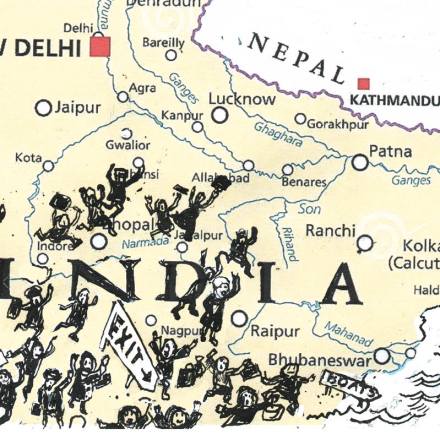
Indian Exodus: the Jewish population exits after 2,000 years

In December the Gate of Heaven synagogue in Thane, a city that links the peninsula of Mumbai with the Indian mainland, will light the Chanukah menorahs as it has annually since its opening in 1879. Among the initial members were Jews whose ancestors may have arrived in India during the time of King Solomon, when Middle East trade routes were established to exchange iron, peacocks, gems, ginger and other spices. Over the many intervening centuries, waves of Jewish immigration have washed up on the Indian shores from different ends of the earth. The varying groups came with separate traditions and practices and ways of living, but they shared prayers and faith, a distinct identity in a country where identity carries great importance.

Poland and Hungary learn different lessons from history

For decades, the European Union was dominated by a combination of French élan and German economic clout. By the late 2010s, a conservative Budapest-Warsaw alliance seemed poised to challenge this arrangement. The ideological firepower was supplied by Hungarian prime minister Viktor Orbán, who emerged as an unlikely spokesman for the international right, while Poland’s booming economy and large population lent the partnership some much needed heft. The Polish elections in mid-October not only marked the end of the Law and Justice party’s near-decade of conservative rule; they offered another blow to a Polish-Hungarian relationship already fraying over the war in Ukraine.

poland
west

Facing the facts of the West

The century began with a global celebration — the West’s belief in liberal democratic capitalism had battled foes for centuries and emerged victorious. All that remained was for the rest of the globe to melt into the West’s soft and loving embrace. Two decades in, things look much less rosy. China’s rapid rise has not spurred democratization, as many suggested it might; instead it has nourished a massive ideological and political competitor that may supplant the West not only economically but as an arbiter of global culture and behavior. Western decline is not yet inevitable, but Western values will survive and spread only if leaders recognize two clear facts. The first is that the spread of Western values has in large part been due to the dominance of Western power.

Why the post-Cold War era is far from over

In various speeches this year, secretary of state Antony Blinken has declared that “the post-Cold War era is over.” The announcement passes all but unnoticed, eclipsed as it is by crises, such as war in Ukraine and the Middle East, that make Blinken’s point in a starker way. Not so long ago, it was taken for granted that the fall of the Berlin Wall in 1989 had inaugurated a new age. Now, if Blinken is correct, the lifespan of that age hardly exceeds the duration of Tom Brady’s career as a star quarterback. By 1989, the United States had ascended to the status of sole remaining superpower. No challenges to its global primacy — political, military, economic or cultural — were visible anywhere on the horizon.

post-Cold War era
labor

Was 2023 the year of the labor union?

It is only fitting that the low point of the American labor movement occurred in 2009, the Year of the Rat. The Great Recession may have started with Wall Street speculation in the housing market, but your average American had most likely never heard of Henry Lehman or his siblings until the day Dick Fuld drove the 150-year-old bank bearing their name into the ditch. But General Motors, Chrysler? Cars, even more than Hollywood, jazz and the semi-automatic rifle, are the quintessential American business. How could those get driven into the ground? As soon as freshly evicted homeowners finished packing the remains of their subprime split-levels into the backseats of their battered Tahoes, they went looking for culprits. They settled on the United Auto Workers.

A look inside Right Side Broadcasting Network

On a summer afternoon in Erie, Pennsylvania, Right Side Broadcasting Network host Matthew Alvarez was doing what the outlet does best: interviewing diehard supporters of former president Donald Trump before one of his raucous rallies, the WWE-style events that defined his 2016 sprint to the White House and continued after his 2020 election loss. At one point during his cheery canvass of the crowd, Alvarez pointed his microphone at a stocky man wearing a Trump 2024 baseball cap and a “Thin Blue Line” T-shirt. “Joe Biden is a disgrace to this country,” the man said in a thick drawl. “And so are all the left and the RINOs, the globalists, every one of ’em! Kill ’em all! Kill ’em all!” “I agree with you on that,” Alvarez cautiously replied.

right side broadcasting network
harvard hamas

How Harvard befriended Hamas

In the aftermath of the October 7 attack on Israel, when videos were circulating on social media showing the enormities perpetrated on Israelis by Hamas terrorists — women raped, old people and children abducted, civilians murdered en masse — students of Harvard’s leftist groups banded together to condemn... Israel. Members of thirty-four student organizations signed a letter declaring that they “hold the Israeli regime entirely responsible for all unfolding violence.” The spectacle of America’s elite youth engaging in a shameless act of victim-blaming sent shockwaves through the world. Reprehensible as the letter is, the reality is that Harvard’s relentless pursuit of elitism has, for generations, been a breeding ground for antisemitism.

Israel’s imperial problem is ours, too

Israel will win its war against Hamas. But can it win the kind of war the United States lost in Afghanistan? Israel is facing today a dilemma that the West will face tomorrow. For more than sixty years, it has been easy for Western liberals to believe that imperialism is an unnecessary evil. When the US conquers and militarily occupies a foreign country, liberals don’t call it imperialism. It’s merely “regime change,” “nation-building” and “promoting democracy.” Such Newspeak has been powerless to alter the outcome of America’s wars in Iraq and Afghanistan, wars which after successful regime decapitations followed by decades of occupation and trillions of dollars spent on rebuilding failed to establish anything resembling secure liberal democracies in either land.

Israel
heirlooms

The world of future heirlooms

The table at which I sit to write this column is more than 400 years old — and yet brand new. A few years ago, when a mammoth oak fell in my parents’ woods, we profited from the generosity of friends with chainsaws and access to a lumber mill and kiln who were just as determined as we were not to see this venerable specimen go to waste. My parents consulted with yet another party keenly concerned with preservation — a local, family-owned, custom furniture builder of “heirloom-quality.” It seems like a quaint concept, in this fast-forward world, where news stories and trends mirror the lifespan of an avocado — ripe one second and useless the next — to acquire and keep things with a mind for future generations.

The year’s horrors have left me speechless

I’ve started and stopped three articles, written 1,500 words and hated every single one. This column was due days ago and I’ve been stuck. Completely blocked. I’m not sure if it’s one thing or many things — and sometimes the only way through writer’s block is to sit down and write all the jumbled, disconnected thoughts that are jamming me up. So I will start this piece and end this year with an apology to my editor and to you, dear reader. There is the thought that stands in the way of every other thought — and because I refuse to put horrifically graphic images in your head while you sip your coffee, I’ll let you fill in the blanks yourself. But the thought goes something like: “Hamas did X and Y and Z and I’m supposed to write or care about anything else?

horrors
red october gop gaetz

Unpacking the GOP’s red October

The Florida Man had a plan. It was obvious from the beginning, but this being Washington, despite all the bizarre outcomes of the post-Cold War political scene — interns, scandals, impeachments, Donald Trump in the White House and out of it, the Cheneys surrounded by cheering Democrats — normalcy remains the assumed status quo. Normalcy does not encompass a plan to vacate the speaker’s chair with the unanimous help of the other party. In fact, prior to 2019, anyone could have used the same tool the Florida Man would deploy to unseat a speaker. They just never tried it officially, because to do so would be crazy, risking handing control of the House to the minority. And it was that audacity which kept the Florida Man’s plan alive.

Hamas and retaking higher education

Maybe there is something for which we have to thank Hamas after all. That savage terror group epitomizes the latest form of murderous, antisemitic brutality. The world — most of it — has been sickened and appalled by the spectacle of burnt, mutilated and headless corpses. Aiming at maximum shock, the terrorists made no distinction between young and old, male and female, Israeli and foreign national. Among susceptible souls in the academy and other ideological fever swamps, however, a familiar moral perversion instantly came to the fore. The weasel word “but” was conscripted and put to work early and often. Without warning, Hamas attacked and murdered Israelis. Yet somehow the Israelis are to blame, or half to blame, or at least complicit in the slaughter.

education
Israel killing

Is killing civilians ever justified?

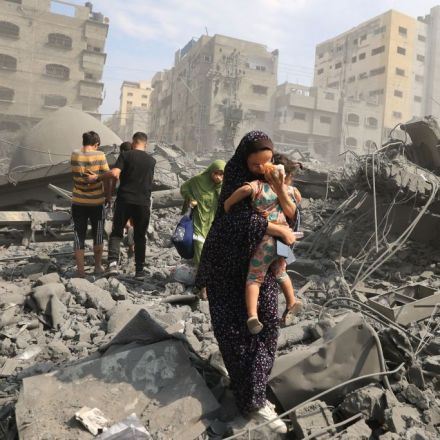
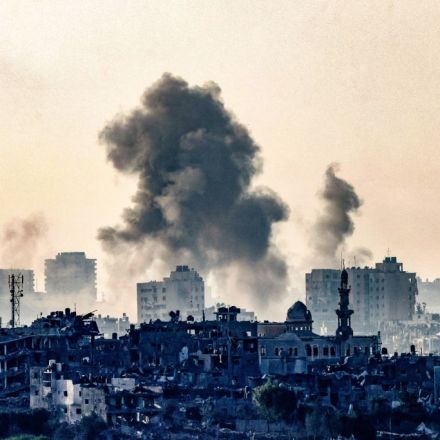
Israel said its tanks had “encircled” Gaza City as this went to press, the ground offensive being stepped up after a tentative beginning — but there’s been nothing tentative about Israel’s bombings from the air. Here’s a report of one incident: at 4:30 p.m. on October 10, an explosion collapsed a six-story building in Sheikh Radwan, a district of Gaza City, killing, it was said, at least forty civilians. A man named Mahmoud Ashour had to dig through the rubble with his bare hands to find members of his family. Buried there were his daughter and her four children, a girl aged eight and three boys of six, two, and six months, all killed. They had fled there thinking it would be safer than other parts of Gaza. But, he said: “I couldn’t protect them.

On the ground in Ashkelon

Southern Israel I woke up on Tuesday morning, October 10, having just got back from New York City covering a big pro-Palestine protest. War reporting has been something I’ve always wanted to do. I figured it might be hard to catch a flight to Israel with everything going on, but because of the large Jewish and Israeli population living around Miami, there was a direct El Al flight that evening to Tel Aviv for $800. It was the last direct flight out of Miami for a couple of days, so I thought, “If I am going to do this, today is the day.” I was planning on leaving my job at Townhall the following week to start my independent Substack, but told them I was departing that day to go cover the war in Israel. They wished me well and off I went.

Israel
editorial cover

The fight ahead

If there could ever be a positive that comes out of the horrific terrorist attacks in Israel in October, it’s this — the battle lines have never been clearer. That may seem obvious in the context of Israel versus Hamas, but for Americans, watching the drawing of the fault lines has been extremely clarifying. In the hours that followed the atrocities, the people who reject any sort of nuance in politics wanted to “put into context” the murders of 1,400 Jews — including elderly Holocaust survivors, women and children. The Manhattan chapter of the Democratic Socialists of America, of which Representative Alexandria Ocasio-Cortez remains a member, tweeted support of Palestine and its intention of holding a rally in Times Square.