Books & Arts

Books and Arts

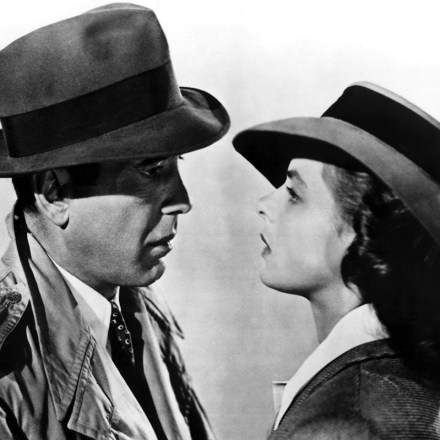
At eighty, Casablanca embodies Hollywood high style

In considering what makes a masterpiece of film, the critical community has its shortlist of highly artistic favorites: Citizen Kane, Vertigo, Battleship Potemkin, the like. But in the hearts and minds of average moviegoers, another kind of picture has come to encapsulate “the big screen”: one with less aesthetic ambition, perhaps, but an exceptional dose of romance and style. For this set, Casablanca remains something like the main attraction. Eighty years ago this November, Warner Bros.
casablanca
Leopoldstadt

Is this Tom Stoppard’s last act?

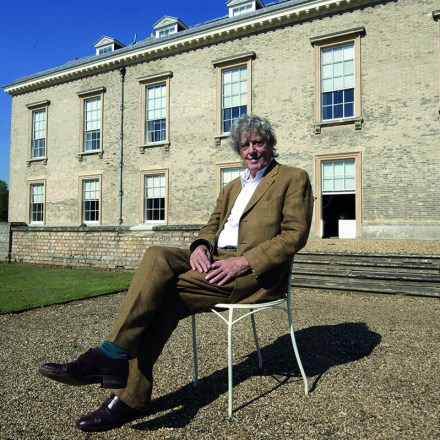
The London premiere of Leopoldstadt in 2020 made this decade the seventh in which a new Tom Stoppard play has been delivered unto the world, and since the playwright has suggested it may be his last, some words about his legacy seem to be in order. Stoppard is often regarded as the greatest English playwright of the later twentieth century. Harold Pinter is the other popular choice. Both men picked up where Pirandello, Beckett and the absurdists left off. Their respective approaches form two sides of the same post-existentialist coin. Stoppard made his name with the expanded footnote: plays in which a sidelight takes center stage, often bristling with comedy, like the metatheatrical Rosencrantz and Guildenstern Are Dead (1966) or The Real Inspector Hound (1968).

The heart of The Rings of Power

“Ours was no chance meeting. Not fate, nor destiny,” Galadriel says. “Nor any other words Men use to speak of the forces they lack the conviction to name.” The line is a bit pompous, but then so is the hotheaded elven warrior (Morfydd Clark) who speaks it in Amazon’s Lord of the Rings: The Rings of Power. Pomposity aside, Galadriel’s words reveal why the work of J.R.R. Tolkien is unique in a crowd of fantasy competitors. Anyone can give us elves and dragons and wizards. But few can match the anguished, longing note of hidden Providence in Tolkien’s Middle-earth. The Rings of Power has not yet achieved such depths of feeling — perhaps it will not be capable of doing so — but it has shown prudence in its stewardship of the story’s heart, which is encouraging.

lord of the rings of power
nickel

The buildings Richard Nickel championed

Perusing the listings of a recent auction, I noticed an intriguing, relatively flat piece of copper-plated cast iron featuring intricate foliate and geometric designs. It was a baluster designed by the firm of Adler & Sullivan in 1893 for the old Chicago Stock Exchange. The 1972 demolition of that building, thanks to the “urban renewal” undertaken by many progressive American cities during the mid-twentieth century, led to this bit of architectural salvage coming up at auction many years later. It also led to the death of an idealistic photographer and activist named Richard Nickel. When Nickel (born in 1928) was killed on April 13, 1972, his body was not recovered for weeks.

A chronicler of enormities

The Farnsworth Museum of Art, subject to New England winters up in Rockland, Maine, and consequently confined to a shorter calendar than most museums, made one of the bolder institutional decisions in recent memory: devoting part of its precious summer schedule to showing prints about the Holocaust. Moreover, these are the sublime and horrifying woodcuts of Leonard Baskin (1922-2000), executed in the last years of the artist’s life, which he spent contemplating the ravenous appetite that Death has for the Jews. Baskin was not to everyone’s taste, and the feeling was mutual. The critic Hilton Kramer called him a “macabre sentimentalist,” and that was only to denigrate the other artist he was reviewing at the time.

baskin
dawn

Dawn party

What a difference a century makes. That’s the upshot of At the Dawn of a New Age: Early Twentieth-Century American Modernism, an exhibition at The Whitney Museum of American Art culled from its own holdings. In-house ventures can sometimes come off as so much house-cleaning, an opportunity to air out the storage racks and take stock of inventory. Which is, in fact, exactly what Whitney curator Barbara Haskell has done. But by adding select loans from other institutions and private collections, she’s put together a show that has its own Gestalt. Though the fervor of artistic innovation has a limited shelf life, the work on display here continues to radiate a klutzy, almost childlike audacity. There’s a naivete at the heart of At the Dawn of a New Age, and it is winning.

A comedian explains how to quit social media

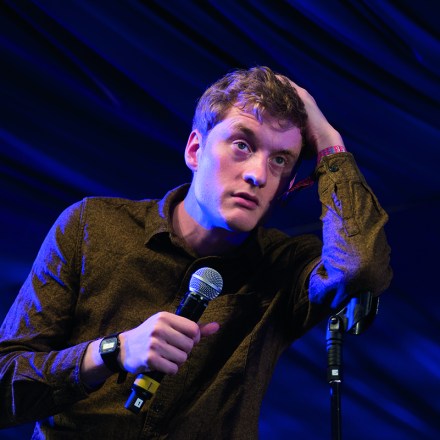
James Acaster’s Guide to Quitting Social Media presents itself as a “how-to” or “self-help” manual. But it's actually a 272-page stand-up comedy special. It’s no surprise that a stand-up comedian would write a comedy book — indeed, this is Acaster’s third trip to the literary well — but it’s nevertheless striking how fully the Kettering-born joker commits to the routine this go-round. His new Guide to Quitting Social Media reads like it was meant to be performed on stage. It’s a return to the signature style Acaster became known for following his breakout special Repertoire in 2018. The Netflix collection was filmed in one week and features four distinct, one-hour comedy routines that build upon and call back to each other.

acaster
wild problems

Living one’s best life

In our era of Twitter hot takes and Medium listicles promising to make you millions, I have a soft spot for life-wisdom books, meditations of the old school that you can spend quality time with even when the ideas presented in them are timeless. I’ve read with pleasure the popular life guidance books of the past decades, from The Happiness Hypothesis or Letters to a Young Contrarian to Zena Hitz’s quietly transformative Lost in Thought, and I felt a renewed connection with the ancient questions of existence in a modern retelling. It should be the habit of all widely read thinkers, whether coming from STEM, the humanities or the social sciences, to sit down and write an accessible recap for all of us of what they have found out.

The bookish life of John Carey

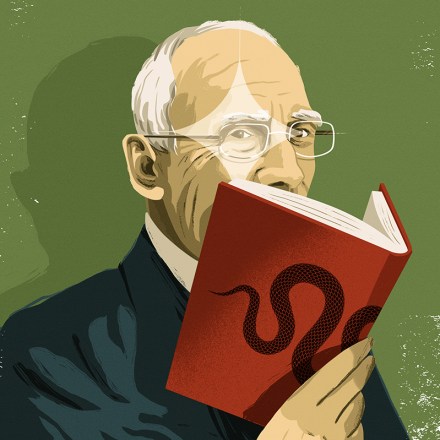
One of the most revealing moments in Sunday Best — a collection of book reviews dating back to the late 1980s — comes when John Carey, invited to appraise some items about Robert Graves, remembers hobnobbing with the author of I, Claudius half a century ago in Oxford’s High Street. Instantly, two of Carey’s signature marks — his love of literature and his eye for personality — come crashing together. Graves, then in his late seventies, tall, craggy and mage-like, is still a “commanding sight.” The drawback is his conversation: from the great poet’s lips, “in disconcertingly loud, upper-class tones, issued a bizarre stream of superstition and bogus history.

carey
cave

Nick Cave’s musings on life, death and creativity

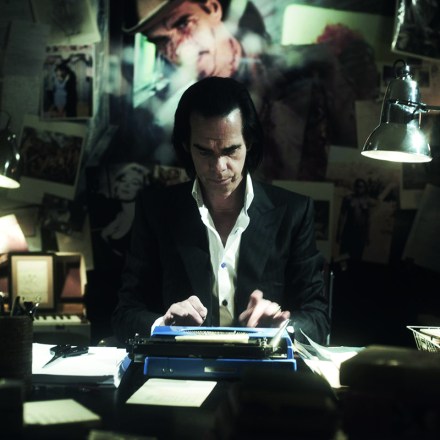
The musician, novelist and occasional ceramicist Nick Cave is the most literate of that often-decried breed, the rock star. Over the course of a forty-year career that began with the raucous punk act the Birthday Party and continues to this day with the Bad Seeds, in addition to eclectic solo and film-scoring work, he is restlessly innovative. Not only has he written countless lyrics that approach Dylan or Cohen-esque levels of profundity, but he has written film screenplays, novels and even a loose collection of musings about life on tour, The Sick Bag Song. Yet he shows no interest in writing the autobiography that many might have expected from him.

The prodigal daughter

In April 1930, the nineteen-year-old Edda Mussolini married Count Galeazzo Ciano, aged twenty-seven, after a brief courtship in which love appears to have played little part. Her father, Il Duce, wanted the magnificent occasion to be not merely the wedding of the century but a grand, almost royal, demonstration of fascist might and a celebration of fecundity. Edda, his beloved firstborn, was to stand for everything that was best about fascist womanhood, while the groom was to carve out the path of “the new Italian man.” These were the glory years, and thousands of schoolchildren sent poems and cards with angels in advance of the occasion, which the Papal Nuncio attended with a present from the Pope.

mussolini