Features

Features

The endgame: Biden’s quest for a foreign policy legacy

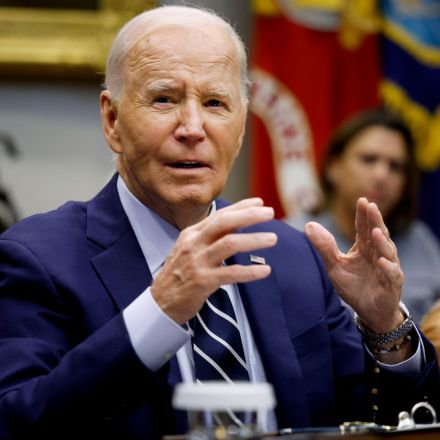
President Joe Biden only has a few more months before he steps out of the White House, hands over the keys to his successor and spends his remaining days soaking in the Delaware sun. But before he enjoys retirement, the lifelong public servant has a big piece of unfinished business: scoring a major foreign policy win that will secure his place in the history books. Unfortunately, dreaming about being a statesman is one thing; being one is quite another. The two conflicts that would give the president that coveted status — the wars in Gaza and Ukraine — aren’t presently amenable to diplomatic resolution. And while Biden and his advisors may be committed to doing the impossible, all the commitment in the world won’t do much if the combatants are intent on slugging it out.

Biden
Gaza

Inside the ‘next Gaza’

West Bank It’s hard to take someone seriously when they tell you: be extremely careful, that part of the West Bank is just like Gaza now. Hyperbole, surely, but duly noted. It was late August and I was heading to the Tulkarem and Nur Shams refugee camps, two adjacent Palestinian communities in the northern occupied West Bank which are now the site of almost daily fighting between the Israeli military and Palestinian armed groups. The nearby city of Jenin has seen even worse violence. On the approach to Nur Shams, the landscape suddenly turned from an impoverished yet benign Arab countryside into a full-blown urban war zone. Dust filled the air, Hamas propaganda was plastered all around, an Israeli drone circled above us.

The classroom panopticon

Is it ironic to give a prize for encouraging “open discussion and debate in the classroom” and “creating an environment where all perspectives can be heard” in the name of William F. Buckley Jr.? Although best known today as the founder of National Review and longtime host of Firing Line, Buckley first came to prominence in 1951 with the publication of his book God and Man at Yale, subtitled: The Superstitions of “Academic Freedom.ˮ Buckley’s secular and secularized Protestant critics might well have considered the firmly Catholic young man, twenty-five years old at the time the book appeared, an apologist for something they regarded as superstition. But Buckley did not mean the term as a compliment when he applied it to academic freedom.

classroom
letters

Letters from Spectator readers, November 2024

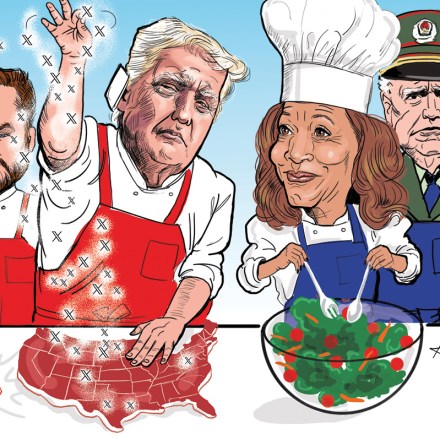
The rise of BlueAnon The adults on both sides have checked out completely and it shows. We are an empire on the decline and there is no denying that now. — Virgil Hilts As a basic foundation for this story you could do no worse than to recall an incident that occurred during LBJ’s campaign for senator in Texas in 1948. He proposed to accuse his opponent of “fornicating with a goat.” When an aide asked if he truly believed it, LBJ reportedly said, “Of course not. I just want to hear him deny it on the radio.” — Richard Lindo The academic legacy of Donald J. Harris It’s astonishing that Kamala will probably win with a true Marxist theoretician in the family — I guess the time is right for the US to get its very own socialist “utopia.

Inside the frazzled mind of the undecided suburban mom voter

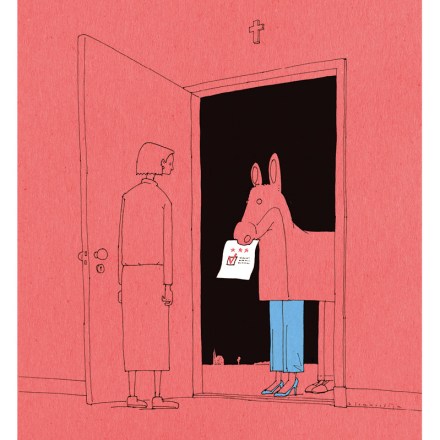
I’m a registered Independent voter, part of the coveted suburban mom vote, and as I file this in the dying days of September, I have no idea how — or if — I’m going to vote for president in the upcoming election. I’m not deciding between Kamala and Trump — does that even exist? Folks are trying to decide between Kamala... and Trump? That’s like trying to decide if you prefer listening to Insane Clown Posse or the Boston Philharmonic. I’ll let you decide who’s who. I’m sure they do exist, the ones waiting to pick, but I think a much more common question is, “Do I vote for one of these two clowns — or not at all?” I went with no one in 2020. I might do it again. The coward’s vote. The non-vote.

voter
housing

The West faces a new type of housing crisis

Throughout the West, particularly the Anglosphere, housing costs are ravaging the middle class. Homeownership, long the key to social mobility, is on the decline, particularly among younger generations and minorities. According to the Organization for Economic Cooperation and Development, house prices in high-income countries have been rising “three times faster than household median income over the last two decades,” causing the standard of living “to stagnate or decline.” Unlike previous housing crises, this one is not primarily caused by mass displacements due to wars or natural disasters or population growth.

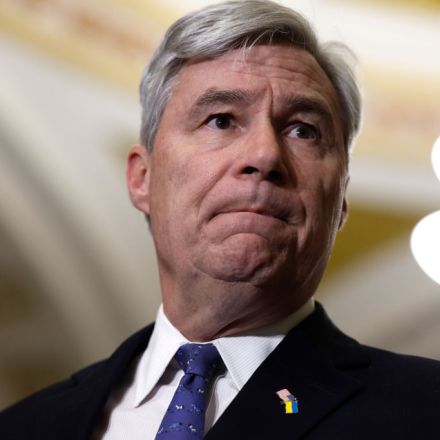
The life and times of Sheldon Whitehouse, the last patrician liberal

It is not often that an American politician publishes a book of genuine interest. It is even less often, breaking through the veil of ghostwriters and marketers and political risk consultants, that such a book provides real insight into its author. Hillbilly Elegy is an obvious example: an unusually vulnerable self-portrait whose sales shot through the roof after J.D. Vance was tapped to be Donald Trump’s running mate this summer. Josh Hawley may never be vice president, but his ambitions and his politics are already apparent in the biography of Teddy Roosevelt he published a full sixteen years ago.

Whitehouse
Senate

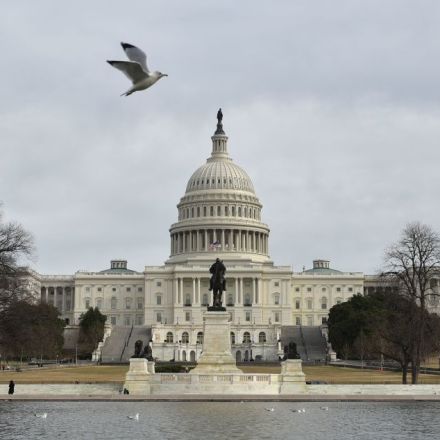
Unpacking the race for the US Senate

In the middle of the most chaotic presidential election in the modern era, with its death race through senility, assassination attempts and a manufactured coup, voters can be forgiven for their lack of focus on the partisan makeup of the United States Senate. But when it comes to what a Trump or Harris presidency could achieve, the answer may be determined by a handful of extremely close senatorial elections where a dearth of reliable polling has even longtime political insiders flying blind. Democrats have held the Senate since 2021, thanks to Republicans’ bungled attempt to hold on to two key seats in Georgia in the wake of Donald Trump’s attacks on early voting and mail-in ballots.

The turnout election: a tale of two ground games

In the past two months, the Harris-Walz campaign has texted five times asking me to join its door-knocking efforts in Virginia. I am a young woman living in Northern Virginia, so I am statistically likely to be a Democrat. But a data file of reasonable quality would also tell you that I have voted in every Republican primary since 2012, that I am a weekly Mass-attending Catholic and that I am married: three signs that I am probably not going to spend my weekend pounding the pavement for Kamala. This is anecdotal evidence, but it suggests to me that contrary to mainstream media reports, the Harris-Walz campaign doesn’t have the most sophisticated ground-game operation. “In 2020 the DNC actually wrote a press release bragging about appending cell phone numbers to the voter file.

voters
Harris

Why Kamala Harris will lose

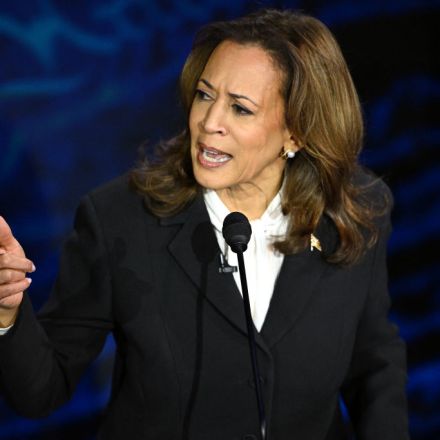
When you look back on the 2024 presidential election and try to understand why it was that Kamala Harris lost, there are a few things to remember. The first is that the two most important issues for American voters were the border and the cost of living. By “the border” I do not just mean the incomplete physical barrier along our southern frontier. That structure is merely the objective correlative of a policy that has its roots in such lofty ideas as sovereignty, the meaning of citizenship and national identity. After her coronation as the Democratic candidate in late July, Harris began to squirm and prevaricate about her appointment by Joe Biden as the “border czar.” But we have the phrase in black and white in the record of the appointment.

The 2024 Hobson’s choice

After what seems like four straight years of a presidential campaign, we’re finally here. When we say “here,” we are talking of course of the last stage of grief, exhausted acceptance. One half of the population accepted that their nominee could be replaced without a single primary vote. The other half accepted that their 2020 nominee couldn’t be replaced at any cost. Many this year are casting votes with considerable pain as they select from two less than ideal options. Andrew Sullivan details his grudging support for Kamala Harris; while Bridget Phetasy describes the reluctant undecided voters pulling the lever for Trump. We’re sure they’re not the only ones holding their noses. The lesser-of-two-evils election is nothing new.

2024