Features

Features

Americans are watching legal weed’s promise go up in smoke

When Colorado became the first state to legalize marijuana for recreational use in 2014, expectations were as high as its users. For decades activists, investors and lobbyists assured Americans that the legalization of marijuana would displace the black market, generate an influx of tax revenue to finance schools and hospitals, halt senseless arrests and improve racial equity, all without attracting the attention of kids. In the run-up to legalization in Colorado, officials projected a $70 million jump in tax revenue from the hundreds of marijuana and THC products in newly minted dispensaries and licensed shops and budgeted accordingly. They learned quickly that the expectations didn’t live up to the reality, bringing in around $44 million in its first full year in operation.
marijuana
doormen

The secret lives of New York’s doormen

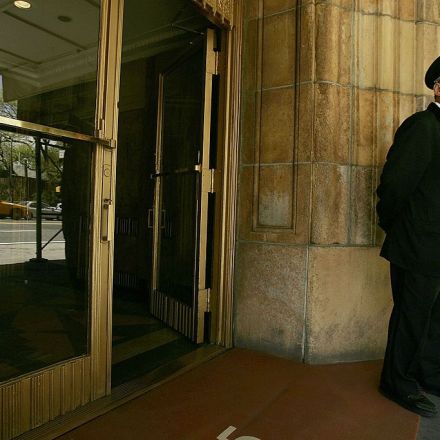
The first test was the audacious cockroach that sidled into our apartment about three days after we moved in. Hardly enough of a native Manhattanite to calmly swat it and flush it and go on eating my pizza, I pollyannaish-ly sprinted downstairs instead. “Excuse me,” I breathlessly announced to the crossword-solving bald guy manning the front desk — I hadn’t even had the courtesy of introducing myself to him yet. “There’s a cockroach in my living room.” Visibly unimpressed but with an air of professional politeness that almost hid what he actually wanted to say (“suck it up, princess”), he looked up at me sympathetically: “The exterminator comes Tuesdays.” It was Friday.

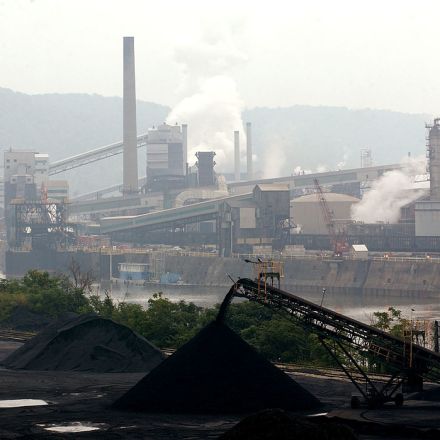
Why ‘dirty’ coal is vital to a ‘clean’ green future

The Central and Western regions of Pennsylvania are known for their majestic, untamed landscapes. Seen from on high, you’d think the forested wilderness here was yet untouched. Though that’s far from the truth, the area has, for the past few decades, for better and worse, been largely forgotten — except by the people who live, work and play among the lands and waters scarred and poisoned by abandoned deep-coal mines and unreclaimed strip mines. The Allegheny section of the Appalachian Mountain range resembles an accordion poised in compact, scrunched-up, ready-to-perform mode.

coal
freedom

Reports of the death of freedom have been greatly exaggerated

Not long ago, I accepted an invitation to attend a gala dinner in Washington, DC, celebrating what Caketoppers.co.uk informs me is the “emerald” anniversary of AnOther magazine. Ten years ago, as an unpaid intern with the same publication, I used to sign up for these things indiscriminately: House Freedom Caucus luncheons “catered” by Chick-fil-A, panels at the Brookings Institution on the debt-to-something-or-other ratio, symposia on the threats to cybersecurity faced by entrepreneurs in suburban Uzbekistan. As long as you showed up and at least pretended to listen (which meant, in practice, taking no more than two cigarette breaks per speaker), you got a free meal and an evening’s worth of drinks in one of the most expensive cities in the country.

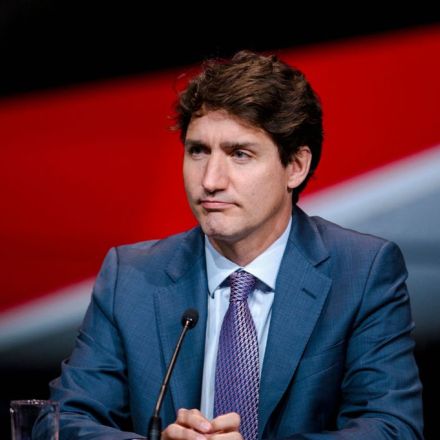
Justin Trudeau is tanking Canada’s economy

In September the leaders of the world’s most powerful nations met in New Delhi for the annual G20 Summit to address such heady matters as the war between Russia and Ukraine, the future of energy production and the criticality of food security. Everyone smiled for the cameras, shook hands politely and agreed to do their best to do something about everything, just so long as they weren’t asked to make any enforceable commitments. At the end of the weekend, all the great men and women of the world put their shoes back on, took one more group photo and bid adieu to their friends (and enemies). Then they all headed for home. All, that is, except one.

trudeau
border migrants abbott

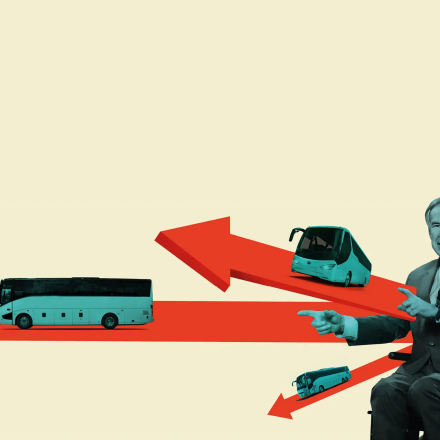
Migrant mania comes to sanctuary cities

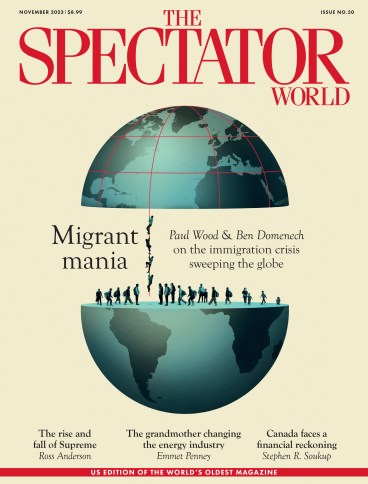
The first thing you see when you climb out of the Rio Grande into Eagle Pass, Texas, is the homely site of the municipal golf course. Nine holes along the river expanded to eighteen via different tees, the pruned grass of the course is scuffed and torn from the hundreds of thousands of footsteps that have crossed it just this year, rubber soles that trekked from Central and South America to get to this godforsaken patch of green that signifies the US of A and everything it holds for the migrant who dreams of a new life. As welcomes go, it’s no sparkling torch of Lady Liberty.

‘We must defend our territory’: on the frontline of Europe’s migrant woes

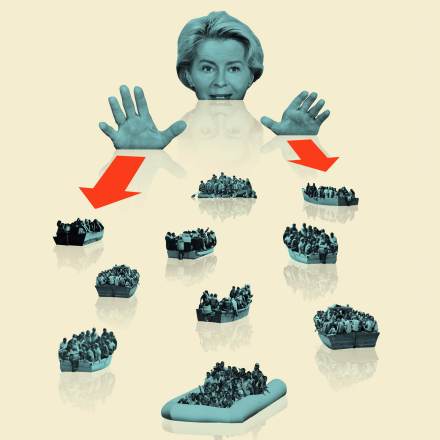
Lampedusa, Italy The motorcade carrying Italy’s prime minister is being held up by a wild-eyed pirate. With a bushy black beard, sun-blasted face, tattooed forearms and a single earring, he stands in front of the convoy of a dozen police cars, extending a flattened palm. Blue lights flash, engines idle and somewhere behind blacked-out windows sit Giorgia Meloni, the prime minister, and her important guest, Ursula von der Leyen, president of the European Commission. The pirate is Giacomo Sferlazzo, leader of the protests that began on the island of Lampedusa after around 100 small boats carrying migrants arrived there on a single day in September. Really he’s a local musician, professional puppeteer and, as he describes himself, a Marxist-Leninist follower of Antonio Gramsci.

lampedusa
republican

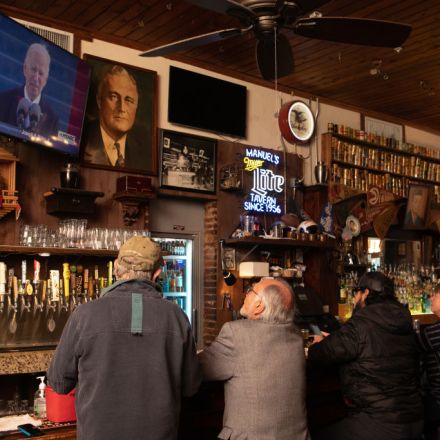
The future looks Republican

In presidential elections there’s no such thing as a Pyrrhic victory. Winning is everything — and neither party would ever openly admit there could be advantages to losing. Yet the outcome of the 2020 election wasn’t entirely unlucky for the Republican Party or even Donald Trump himself. And as both parties look to next year’s contest, far-sighted strategists can see a bigger picture beyond Trump and Biden. Whoever won in 2020 was going to face the ugly but necessary task of withdrawing US forces from Afghanistan, where twenty years of nation-building had failed to establish a free state that could resist the Taliban. Trump might have executed the withdrawal more successfully than Biden. But if he had, would the media have covered him more favorably? Of course not.

The rise of the underground free speech groups

Robin McDuff still lives in the same California town where she and other feminists formed a community back in the 1970s, during the heyday of the women’s movement. But by the end of the decade, McDuff had already begun to drift away from feminist orthodoxies. She’d been working in the anti-rape movement where victims said they wanted the man who assaulted them to understand the pain they caused, apologize and learn why never to do it again. They didn’t want them in jail. But most of McDuff’s feminist peers were fixated solely on incarceration as justice. “These women had no interest in considering any nuance of a case,” McDuff, now sixty-nine and retired, told me. “Nuance and feminism have never done well together.

free speech
woman

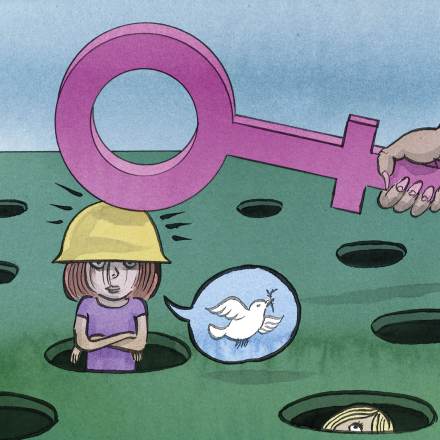
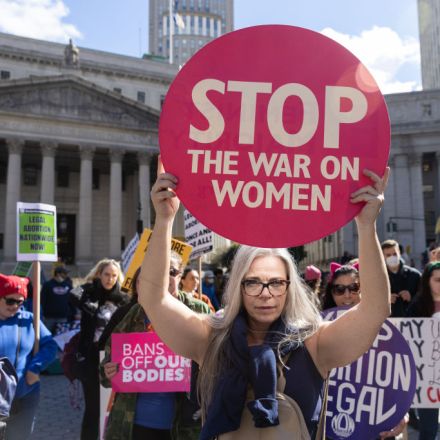
The new wave of woman hate

It was in the late 1990s, during then-President Bill Clinton’s scandal, when I first concluded that neither major political party actually cared about women. I watched — in horror — as the Democrats downplayed the allegations and defended Clinton’s actions rather than fully supporting Monica Lewinsky. Republicans exploited her testimony in order to discredit and weaken the president. Both parties used her to advance their own agendas at the expense of Lewinsky’s dignity and well-being. While the adults around me were concerned with the political fanfare, I only saw a young woman caught in the crossfire, enduring public scrutiny, humiliation and personal trauma while the media feasted on the spectacle.

Meet Meredith Angwin, the grandmother changing the energy industry

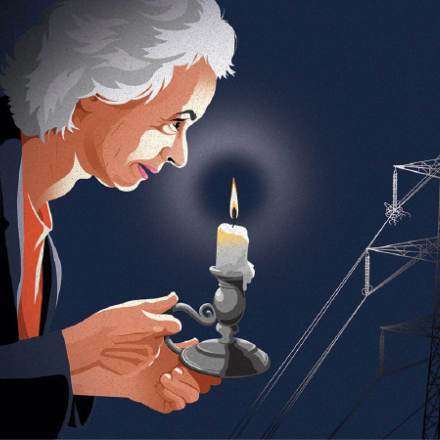
Along a twist in the Connecticut River within an old-style colonial Vermont home lives Meredith Angwin, the Jewish grandmother who saw what almost no one else did: the coming downfall of the American electrical system. Three years ago, Angwin self-published Shorting the Grid: The Hidden Fragility of Our Electric Grid, the first-ever explanation for laymen of America’s labyrinthine, abstruse power markets. Her diagnosis was simple and troubling: when America moved away from the monopoly utility system in the Nineties toward restructured electricity markets, all players were divested from the responsibility of keeping the lights on.

Angwin
family

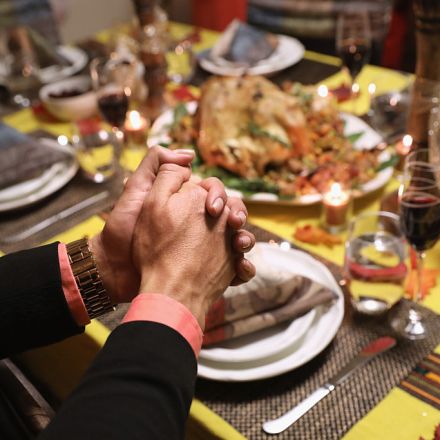
The case against the Thanksgiving dinner fight

As we come upon the treacherous holiday season before a presidential election, there will be plenty of people in media who tell you it is your moral responsibility to ruin food and fellowship with political confrontations. Armed with the emotional IQ of one of those idiots tossing perfectly good soup on the Mona Lisa — an ineffectual waste of vittles and dignity — these columnists insist that you must not let Aunt Margie’s incorrect opinions stand, lest democracy die in the darkness of her benighted worldview. You must serve countervailing takes as hot as the mashed potatoes, no matter the cost to family comity. It doesn’t have to be this way. There was a time, not too long ago, when we didn’t have to turn every breaking of bread into a struggle session.

The changing season brings a change in politics

If you are paying attention, you know that nature is full of inklings and adumbrations. I am writing in New England in mid-September — and it was just about a week ago that a subtle change in the atmosphere proclaimed the advent of autumn. It was not just that the weather listed cooler; it was also that the entire sensory gestalt shifted. The world suddenly bristled with different smells and colors and sounds. Browns and yellows and reds were edging out summer greens in the leaves. The roads were carpeted with acorns. You knew that the world was confronting you with different prospects and expectations. Something similar happens in the world of politics. For a long time, a certain narrative reigns.

signs
maui

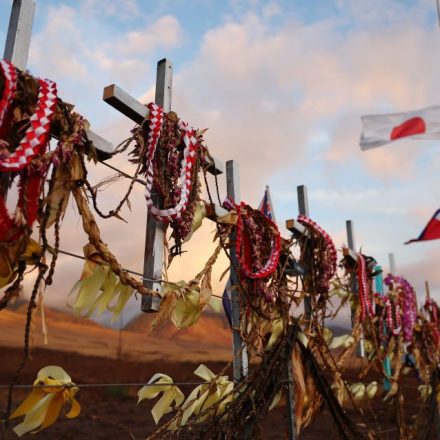
After the Maui fires

Maui, Hawaii It’s been almost eight weeks since the wildfires devastated Lahaina. Within a few days of the fire, I went to West Maui, visiting the community, friends and people I’ve known and worked with for years. Lahaina was once the capital of the Kingdom of Hawaii. It was a lush wetland, a destination that everyone wanted to go and visit. But thanks to a long history of plantation owners and corporations diverting water and streams away from their natural course to benefit their business interests, it’s now a community that is dry, arid, struggling with drought and brush fires every year. People around the world have seen the devastation, but the images don’t do it justice.

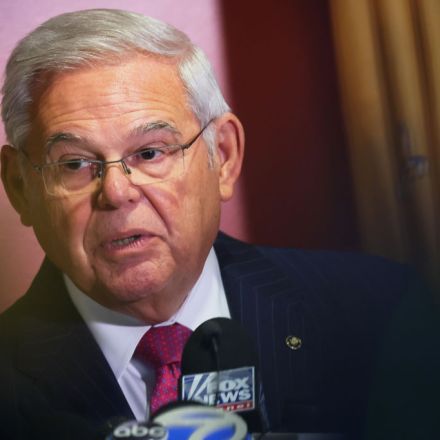
DC under the influence

Corruption and influence peddling seem to be running rampant in Washington these days, but that’s nothing new. We have a rich history of political scandal that goes back to our founding. America loves the spectacle of bringing a politician down: it’s part of our heritage. The tyrant King George started it all when he demanded higher taxes on tea and quartering soldiers in colonialists’ homes. Our rebel forebears weren’t having it and thankfully we have the Third Amendment to ensure it can never happen again. Aaron Burr, of course, is one of America’s favorite politicians to have been run out of public life.

menendez dc influence