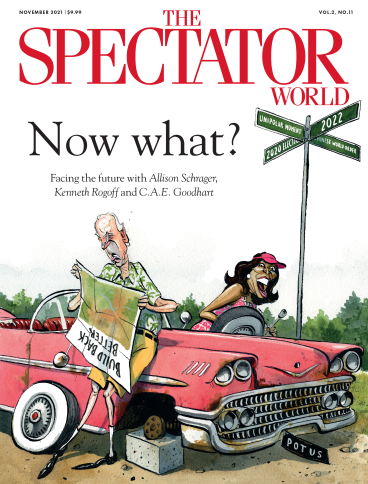
Features

Features

The problem with Ovid

'The Rotation Method’ is one of the most amusing sections of Kierkegaard’s Either/Or. The second-most famous melancholy Dane has some good advice for dealing with irritating absurdity: cultivate arbitrariness when confronted with flagrant examples of it. There is someone whose conversation you find insufferable. What to do? Kierkegaard’s narrator has some tips: ‘I discovered that he perspired copiously when talking. I saw the pearls of sweat gather on his brow, unite to form a stream, glide down his nose and hang at the extreme point of his nose in a drop-shaped body.’ There is much about cultural life today that can be profitably approached with the Rotation Method.
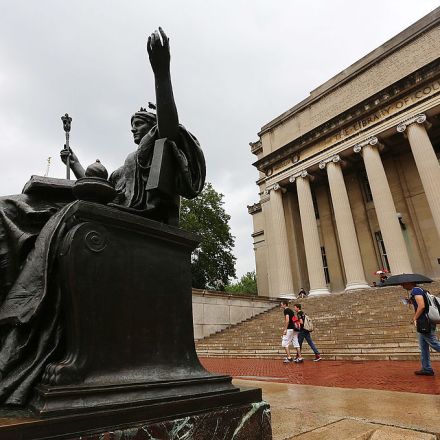

columbia
scotland

Scotland by sleeper

Traveling internationally these days is a bit like how Dicky Umfraville, a character in Anthony Powell’s Dance to the Music of Time, describes aging: being punished for a crime one hasn’t committed. After taking my pre-departure COVID test, alerting the British government to my whereabouts for the next week (no small undertaking given I’d be in a different bed every night), and proving all this plus my vaccination status to the British Airways check-in desk at JFK, I finally settled in my seat and supplemented my mandatory mouth-muzzle with an eye mask as though bound for Gitmo, not Heathrow. An hour into the flight, the woman in front of me started bawling: a panic attack brought on by mild turbulence.

How we can keep innovating

If the history of humanity is the history of big ideas — from the wheel to space flight, cave painting to the multiplayer game, monotheistic religion to special relativity — then the same is true of our future. By the 1960s the developed world had witnessed 200 years of extraordinary activity on every front. This was the era of the moonshot; of political obsession with technological mastery; of experimentation in music, culture, knowledge and relationships. Humanity had undergone a big-ideas revolution and the expectation was that progress would keep accelerating. In 1967, Herman Kahn, the futurist and theorist of nuclear war, and fellow futurist Anthony J. Wiener published The Year 2000: A Framework for Speculation Over the Next Thirty-Three Years.

stagnation
social media heroin

Social media is nothing like heroin

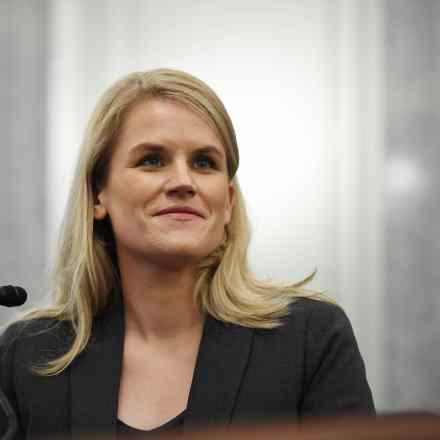
On Tuesday, Frances Haugen, speaking to the Senate Commerce Subcommittee on Consumer Protection, compared Facebook to tobacco and opioids while pushing for similar regulations. Haugen, a 'whistleblower' who came forward after Facebook dissolved her team and who admits she never worked on child safety during her time at Facebook, told a terrifying story about an app that harms young girls. Social media is like a drug. We hear this all the time. We’re powerless addicts in the face of its influence. We need to keep the kids safe from it. But is it? And do we? I used to call myself a Twitter addict. It’s the first thing I check each morning and the last thing I look at at night.

Evergrande illusions

At the height of the 2008 financial crisis I was invited to an off-the-record media lunch with a famous investor. I was taken aback when one of the world’s most successful capitalists announced that the crisis showed the Chinese had a superior economic model. China has tried something different from traditional capitalism, with its reliance on the ‘hidden hand’ of the free market. Since the first economic reforms in 1978, the heavy hand of the state has grown and modernized the economy with staggering results. If you believe the data, eight hundred million Chinese people no longer live in poverty and China has averaged 10 percent growth a year since reforms began.

Evergrande
border

Whipping up a crisis

'It’s a little thing, but a big little thing.’ I’ve been using this not-exactly-eloquent phrase lately to describe a category of observation that could be written off as nitpicking, but which isn’t, really. If you notice enough big little things, you might just be able to explain how the world works. One big little thing I’ve been thinking a lot about lately comes from ‘Another Crisis at the Border’, the September 27 edition of The Daily, the blockbuster New York Times podcast. The episode was hosted by Astead Herndon and was mostly a conversation between him and his fellow Times reporter Michael Shear. They discussed the growing crisis at the US/Mexico border, and the large group of mostly Haitian migrants fleeing political and natural disaster.

Goodbye, Lebanon

I’m sorry, Lebanon. We love you but we just can’t take it anymore. We’re breaking up with you. We’ve lived in Lebanon, on and off, for almost a decade. Our retreat began over the summer when we decided we couldn’t risk going to the beach with our daughter, who’s almost two. Every year, the Lebanese National Council for Scientific Research puts out a report that says that the seawater around many of Lebanon’s beaches is full of fecal bacteria. Raw sewage is discharged into the sea: you are literally swimming in shit. From some beaches, you can see the pipe and a murky flow of streptococci. We tried. We really did. We visited a private beach club that was supposed to have some of the cleanest water in the country.

lebanon
trigger

Why trigger warnings don’t work

The science is in, but don’t expect that to change anything. According to at least 17 recent studies, trigger warnings — those advisories posted ahead of content some readers may find distressing — not only fail to alleviate suffering in the emotionally disturbed but may actually induce greater trauma in those individuals. There are, to date, no studies that indicate trigger warnings work to their intended purpose. They were dreamed up in the 1970s after psychologists began to diagnose a new condition, post-traumatic stress disorder, in Vietnam War vets. But trigger warnings only reached popular consciousness in the 2010s, when feminist blogs used them ahead of content about sexual violence.

Here come the Nineties

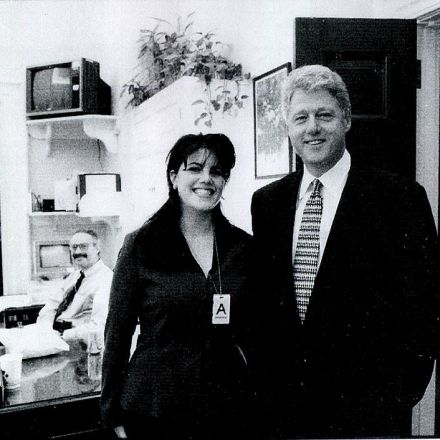
Everyone is bullish on natural gas, but I think America’s most inexhaustible resource might be 1990s nostalgia. Every time it seems our BuzzFeed badlands have run dry, another Friends reunion or reassessment of Francis Fukuyama comes gushing through the soil. So it is that the most hyped series on TV right now is American Crime Story, dedicated this season to Ryan Murphy’s telling of the Clinton impeachment. Legends of the Hidden Temple, perhaps the most beloved children’s show from the Nineties (and that’s saying something), is being remade for adults. Even the recent death of comedian Norm Macdonald elicited callbacks to the days of cynical wiseasses and O.J. Simpson cracks. What is it about the Nineties that remains stuck in America’s craw?

nineties
progress

Feminism has failed us

I’ve lost count of how many seminars I’ve had to sit through on Diversity & Inclusion, how many times I’ve been asked for my preferred pronouns and expected to discuss what I think ‘bringing my whole self to work’ really means. Conservatives mock these practices and complain that our lives seem to be dictated by a new moral order to which we did not consent. But we’re missing the forest for the trees. The problem with virtue signaling goes far beyond its annoying and unwelcome intrusions into our lives. We have been utterly hoodwinked. Or at least, I was. Sitting in my bathroom last week in the middle of my third miscarriage, blood, tears and expletives pouring out of me, I felt frustrated and stressed out.

America needs a 12-step program

When I got sober in October of 2013, my sponsor said many things I didn’t want to hear. One of those things was ‘You have no idea who you are.’ Another was ‘Many of the things you thought you wanted, you’ll realize you don’t want and vice versa. If you manage to stay sober long enough, you’ll look around and marvel at who you have become.’ She turned out to be right, but I never could have predicted that in the span of five years I’d go from waiting tables to writing for Playboy to representing Independents on the Ben Shapiro Election Special on a Fox News panel. At a certain point, sometime around 2018, I looked around and said to myself, ‘Wait. I’m a conservative now? How much weed was I smoking!?

sober
inflation labor

The numbers game

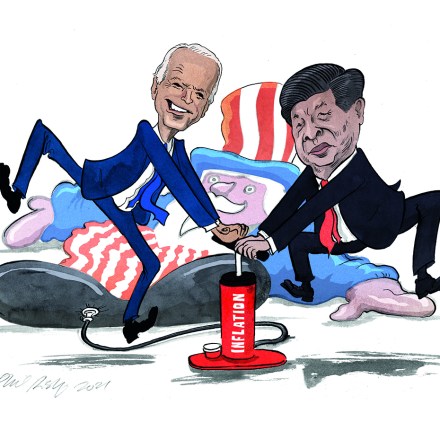
The most important macroeconomic development of the last three decades has been the extraordinary growth of the Chinese economy. In 1990, it was largely a subsistence peasant economy with a negligible footprint in world trade. China now provides the largest share of world exports, and by some standards has already become the world’s largest economy. In 1990, the wage of an average Chinese worker was perhaps 1/40th of that of an American worker. By 2020, it was just about a quarter: a tenfold gain in just 30 years. Before the 18th century, all societies were basically subsistence peasant agricultural societies with a small upper layer of landowning nobles and clerics. Then the Industrial Revolution began.

Welcome to the age of entropy

Americans and other westerners have long been accustomed to thinking that history has a clear direction. Sometimes the direction is contested, as it was during the Cold War. The future could have been capitalist or communist, or perhaps a blend of both systems — ‘convergence’ was a trendy notion for a time — but one way or another the alternatives were clear. After the Cold War, there were no alternatives. Capitalism, democracy and liberalism were here to stay, and soon they would be everywhere else too. All the Islamic world needed if it was to join us at the end of history was a nudge: regime change would speedily bring about social and economic change.

liberalism
biden mind artificial

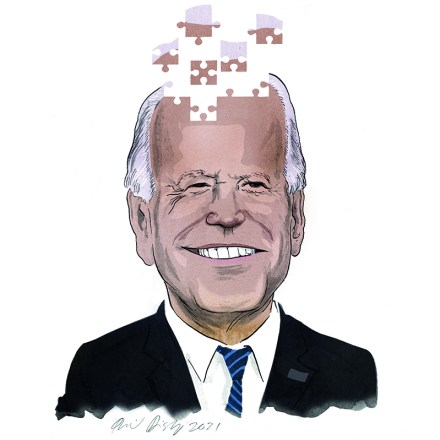
What’s on Biden’s mind?

Delaware used to be Cale Boggs country, almost as much as Massachusetts belonged to the Kennedys. Boggs served as governor, congressman and twice as Delaware senator, so in late 1972, when he was seeking a third term, the race looked sewed up. But as summer turned to fall, his 28-point lead evaporated. Voters started paying attention to Boggs’s rival, a Democrat youngster with fire in his belly and a spring in his step. Anti-Boggs ads said his best days were behind him. According to his fresh-faced opponent, Boggs was a ‘helluva nice guy’ but, after decades in power, he had ‘lost that twinkle in his eyes’. On election day, Boggs lost by a margin of 3,000 votes. The people of Delaware sent to Washington a 30-year-old thruster named Joe Biden.

The sleepwalkers

It is customary for presidencies to lose vitality and purpose in their last months. It is unprecedented for a presidency to lose its way in its first year, and when it still holds a majority in both houses of Congress. The Biden presidency has donned Jimmy Carter’s cardigan of shame in only nine months. If, that is, it ever was the Biden presidency. It was sold from the get-go as the ‘Biden-Harris presidency’. Double-barreled names are an inveterate mark of snobbery, and in this case the snobbery is that of the higher tokenism. Even the Democrats’ own members didn’t want Harris on the card in 2020. Harris’s symbolic merits as a woman of color seem to have been outweighed by her blatant falsity and opportunism.

biden