Books & Arts

Books and Arts

The spy’s the limit

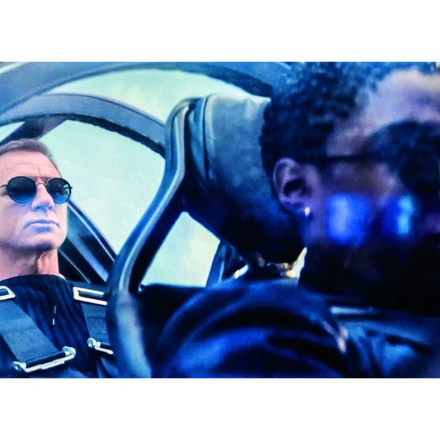
No Time to Die is Daniel Craig’s last mission as James Bond. Clocking in at well over 180 minutes, it might more accurately be called No Time to Pee. The epic length and general air of slothful despair derive from the picture’s tortured development. Mess and confusion are the inevitable product of two directors, platoons of writers, a tangled residue of multiple plotlines and the star’s blatant misery at being once again vacuum-packed into a tuxedo one size too small. ‘We did our best,’ Daniel Craig has said repeatedly in promotional interviews. M wouldn’t accept that, so why should we? Bond begins No Time to Die with plenty of time to die. He has retired with his heart broken and the rest of him in little better shape.
no time to die bond
eastwood

Eternal Eastwood

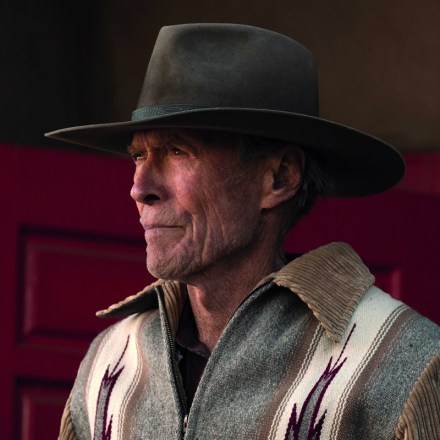
No other actor epitomizes traditional masculinity and classic cool quite like Clint Eastwood. He long ago ceased being human and transformed into the American Man. When you watch an Eastwood movie, your understanding of Clint as the ultimate symbol of a bygone America is so potent that an otherwise mediocre movie like Gran Torino feels greater than the sum of its parts because of his mere presence. This is what an American man is supposed to look and sound like, you think, as Clint snarls and puts up his dukes. These young whippersnappers, they’re no good now, you hear. Which is to say that when you watch one of his films, you’re not watching the actor become a different character, but rather hoping to see ‘Clint Eastwood’.

Delivery woes

It’s really quite difficult to keep up with all of the new ways technological ‘advancements’ are ruining things. We’re beginning to live out the 2009 film The Box, in which characters are presented a device with a button that, when pushed, grants them a million dollars — the only catch being that someone they’ll never meet will immediately perish. The dire unseen consequences of smart- phone conveniences aren’t quite as drastic, but they’re there nonetheless, and we rarely consider the moral quandary they present. Enjoying the long lifespan of your lithium-ion battery? A Congolese child might’ve mined the cobalt it contains. You want the new Róisín Murphy LP delivered to your doorstep?

delivery
morgan

Vital Morgan

The jazz world has seen more than its share of tragic deaths, whether it was the trumpeter Clifford Brown perishing in a car crash at night on the Pennsylvania Turnpike at the age of 25 or saxophonist John Coltrane succumbing to liver cancer at 40. But perhaps there is no more confounding early demise than that of the bravura trumpeter Lee Morgan. Morgan, who played with the likes of Miles Davis, Dizzy Gillespie and Art Blakey as a teenager, was known for his swagger, which he liked to call ‘expoobidence’, (which he deployed as the title for an album for Vee-Jay records in 1960 called Expoobident). It all came to a swift terminus in February 1972 after his common-law wife Helen, a tough cookie if there ever was one, pulled out a .

The art world is cashing in on anti-capitalism

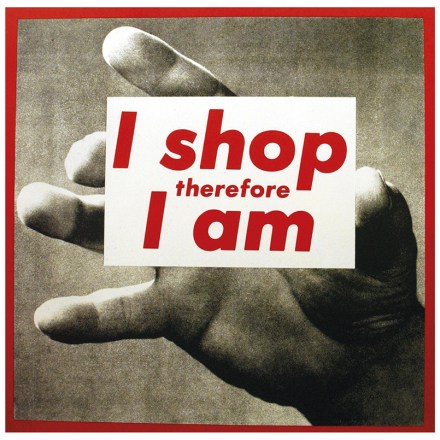
A few years ago, the American artist Barbara Kruger covered the facade of Frankfurt’s Kaufhof department store with a pair of huge eyes. It was as if Big Brother had come out of retirement. Above that unsparing gaze was the slogan, in Kruger’s signature Futura bold italic font: ‘You want it. You buy it. You forget it.’ It was a typical work of art by Kruger. She made her career from what’s called culture jamming, subverting media messages by transforming them into their own anti-messages and by indicting the business of capitalism. In 1987, for instance, she took an advertising image of an all-American boy flexing his juvenile biceps before his admiring sister and subverted that message with the overlaid words ‘We don’t need another hero’ for a billboard.

kruger art
bond

Turning the page on James Bond

The much-delayed 25th James Bond film, No Time To Die, is finally limping onto the big screen. There are gadget-packed car chases, scarred supervillains and revelations as to the loyalties of supposedly sympathetic characters, but there are also new, socially-conscious elements. Lashana Lynch plays a PoC 00-agent who is very much Bond’s equal at spycraft. Fleabag’s Phoebe Waller-Bridge has been parachuted in as a script doctor, to notify us that this is a post-#MeToo Bond. Without a simultaneous release on a streaming service, Daniel Craig’s swan song as Bond will stand or fall on its theatrical performance.

Why we should venerate Evelyn Waugh

Evelyn Waugh is popularly known today as a comic author, despite the fact that Brideshead Revisited, made famous by the eponymous 1981 television series, is certainly not a comedy. Not everyone agrees. Years ago, a well-read friend of mine remarked to me that he was not fond of Waugh’s work. When I asked why, he replied, ‘Because I don’t think he’s that funny.’ I answered that the way to appreciate the exquisite wit of Evelyn Waugh is to approach him in the expectation of something other than humor, in which case the absurd incongruities, outrageous juxtapositions and ludicrous extremes that occur throughout the novels are in fact supremely funny. Waugh never set out to write comedic stories in the manner of P.G.

waugh
art women

Why should art have ever been considered a male preserve?

I’m a lady, I kept thinking, reading these two books. More: I’m a lady art historian. Oughtn’t I to like books by other lady art historians about lady artists and ladies in art? Why don’t I? Why so out of sync with the sisterhood? Start with the positive. Jennifer Higgie’s The Mirror and the Palette follows an interesting, original line: ‘If she had access to a mirror, a palette, an easel and paint, a woman could endlessly reflect on her face and, by extension, her place in the world.’ Higgie, editor-at-large at frieze magazine and the host of the (excellent) art history podcast Bow Down, considers the lives and ambitions of a series of women artists in the light of the self-portraits they painted.

All Greek to us

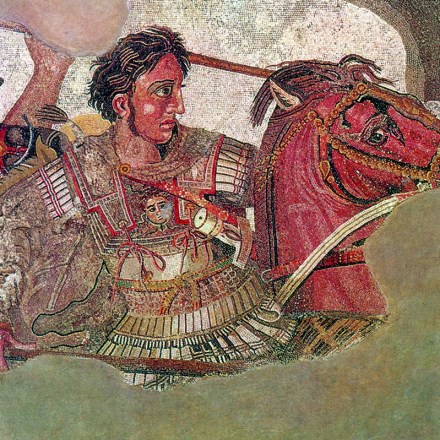
We are traveling through a shower of Greek anniversaries, triumphant and calamitous. Last year marked the 25th centenary of the Battle of Salamis in 480 BC, when 300 Greek warships defeated a Persian armada four times larger and ended the Persian empire’s expansion into Europe. This year marks the bicentenary of the beginning of the Greek War of Independence from the Ottoman empire in 1821, which resulted in the first European nation-state to be founded on the Enlightenment values of the American Constitution. Next year will mark the centenary of Greece’s defeat in Asia Minor in 1922, which ended the modern Greek state’s aspirations to absorb all the lands where Greeks lived and had lived since antiquity, an event still referred to as ‘the catastrophe’.

greek