Features

Features

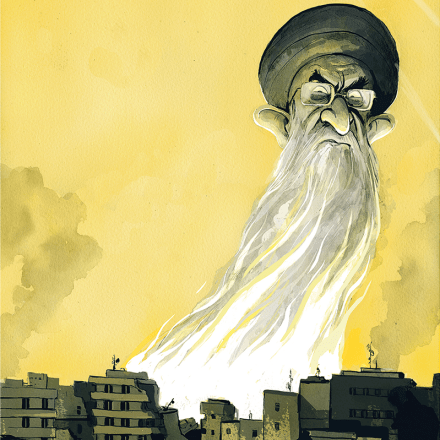
The mullahs mean their threats

I write at the very beginning of July. Where I live in Connecticut, people are unpacking flags and bunting in preparation for the July 4 festivities. Elsewhere, the trumpets sounding to accompany Donald Trump’s triumphant announcement of a ceasefire between Iran and Israel have subsided. It is clear that the President dearly wants peace. So does Israel. For its part, Iran wants the extermination of “the Zionist entity” and, beyond that, the eventual extinction of the “Great Satan,” America. How do I know? Iranian spokesmen keep telling the world just that. I wonder if Salman Rushdie has reached out to Trump now that he has joined the exclusive club of those upon whom the lunatics in charge of Iran have explicitly pronounced a fatwa – a death sentence.


Iran
ai

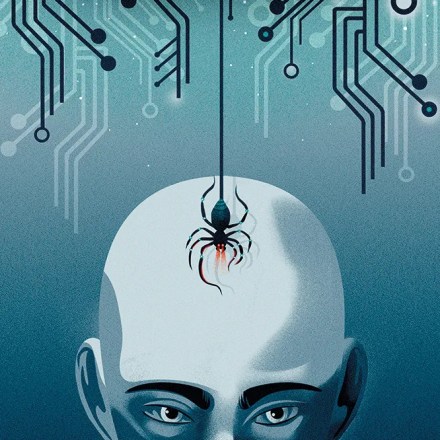
The real threat of AI is spiritual

Peter Thiel is one of the world’s most powerful men. He was an early investor in companies such as Facebook, SpaceX, Airbnb and an early backer of Donald Trump, as a leading donor to his 2016 campaign. He is a friend and mentor to the man who would be president in 2028: J.D. Vance. Thiel, a multi-billionaire, is also one of the few individuals who clearly have a hand in shaping the future of humanity, so it was disturbing to learn recently that he’s unsure whether humans are worth preserving at all. In conversation with the journalist Ross Douthat, Thiel was asked whether he wanted the human race to endure. He seemed unsure. “I don’t know,” he said, after a long pause. “I would, I would… there’s so many questions implicit in this.

What happens when AI surpasses humans?

I recently sat down to dinner with some very smart economists. I am the chief executive of an artificial intelligence company and so the conversation swiftly turned to the value of AI for the economy. The economists had many interesting things to say, both about the advantages of AI adoption and about the displacement effects on jobs. But about halfway through the dinner, another AI chief executive offered an opinion that struck me. He said: “I can’t quite articulate it, but I have a sense that what you are measuring with your GDP analysis is not what I care about. You treat this like an economic question. But it’s more like a geopolitical question.”  At a gut level, I knew exactly what he meant – but I also couldn’t clearly state the distinction.

AI
superintelligence

The race to superintelligence

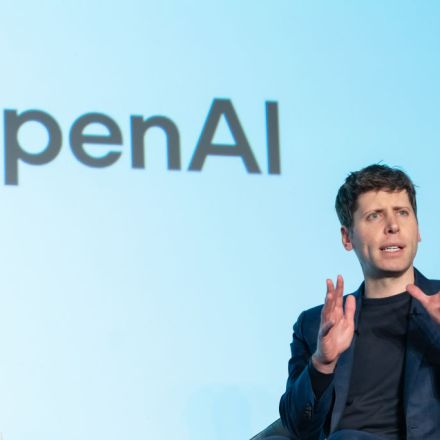
This summer, two of the leading contenders in the great AI race have suddenly, alarmingly, declared that the endgame is in sight and that they’re now spending vast amounts of time and money to try to ensure that their own AIs beat the others. What does winning mean? It means that their models (you know them perhaps as GPT, Claude and Gemini) reach first AGI (human-level intelligence), then superintelligence. No one quite knows what superintelligence will do (we’re not smart enough) but it’s clear that whoever owns the winning model will wield unimaginable power. They’ll dominate the world. A new Alexander the Great. The first to show his hand was Sam Altman, the chief executive and founder of OpenAI, a company he once shared with his former friend Elon Musk.

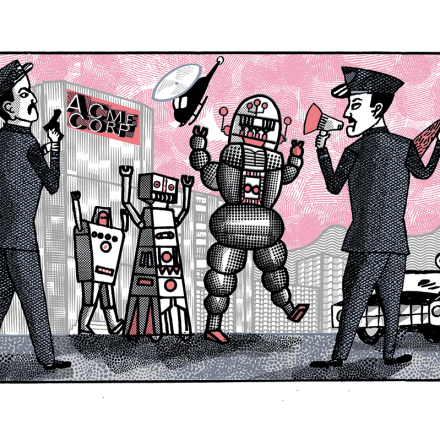
Should AI have rights?

Mary Shelley was challenged by Lord Byron to write a ghost story during a summer of “incessant rainfall” on Lake Geneva in 1816. She came up with something far more interesting than a mere ghost story: the tale of Dr. Frankenstein, a scientist who creates life by reanimating a corpse. Shelley, who was just 18 at the time, was horrified by her “waking dream.” The thought that man could “mock” God’s creation of life was “supremely frightful.” Some of the scientists building artificial intelligence today believe they, too, might be creating life. The implications are frightening – and not just because an AI might decide to kill us all. What if we could hurt the AI?

AI

In the age of AI, humans must keep learning

This year, colleges stopped teaching students to write. As artificial intelligence chatbots allow students to generate unique essays that can’t easily be vetted for plagiarism, professors have felt the need to replace essay assignments with written examinations in closed rooms. It’s a considerably shrunken version of the kind of university education that was on offer 75 years ago. In June, a study from MIT showed steadily waning brain engagement and originality as student essayists used AI more. The college business model is in trouble: $75,000 for a year’s worth of diversity, equity and inclusion nonsense already struck parents as a bit steep. But at least the kids were being taught something. The new limitations AI places on instruction may do a lot of colleges in.

How should AI be regulated?

As artificial intelligence becomes increasingly sophisticated, the time has come for humanity to choose. Should the nations of the world shut down or tightly regulate AI until it is clear a godlike artificial superintelligence will not gain consciousness and exterminate the human race? Or should governments not regulate AI at all, in the hope that it will cause an acceleration of technological progress that results in our colonization of the universe, our uploading as bodiless computer programs into the galaxy-wide web – or both? Or how about a third option: AI regulation by AI-enabled industry? AI may turn out to be the latest in a series of “general purpose technologies” (GPTs) that transform the economy, politics and society.

AI
2020s

The 2020s are too far-fetched for fiction

I write thrillers for a living. All kinds of thrillers. At one point I was in the business of penning Dan Brown-style romps, where ruggedly handsome academics find themselves embroiled in a global chase for the Holy Grail. Then came a stint in domestic noir – sad, isolated women on Scottish isles. Then I had a brief mid-career burst of erotic chillers. Now I’m moving on to folk-horror meets psych-thriller. This might sound ludicrous. It is quite often ludicrous. But it’s also fun: the books translate well and the location research can be a blast. There is a downside, though: plotting. Building a plot is fiendishly hard. You have to steer a fine line between entertainment and believability. The Holy Grail in the jungle can’t just show up – it needs some explanation.

The internet is dying and so are we

Sometime in the mid-2010s, a conspiracy theory called the “dead internet theory” started circulating on the darker parts of the web. It made its way to 4chan’s /x/ board in 2020 and from there it has gained traction. The theory posits that the internet will eventually become entirely devoid of genuine human activity and that all online content, interactions and accounts will be generated by bots, AI or automated systems rather than real people. The conspiracy is that the entire internet is a government-manipulated psy-op used to influence public opinion, control news narratives or boost engagement metrics for commercial or political purposes. The terrible reality is that dead internet theory isn’t wrong. It’s becoming true, more and more so all the time.

Internet
Chicago

What’s the matter with Chicago?

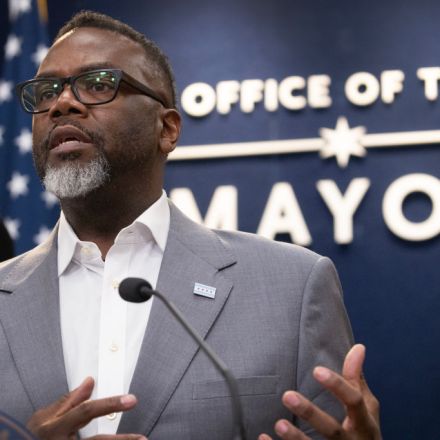
As the song goes: “Chicago, that toddlin’ town.” It was certainly toddlin’ in the 1950s and 1960s, when that song was a hit for Frank Sinatra. The city had bounced back from the Great Depression, begun building skyscrapers again and renewed its status as a vibrant financial and commercial hub. But Chicago has gone from toddlin’ to totterin’, thanks largely to incompetent governance by a succession of local officials – and far better leadership and lower taxes elsewhere in the country, in the places people are moving to. The city’s latest bungler, Mayor Brandon Johnson, was an apparatchik in the Chicago Teachers Union, the most powerful union in the state of Illinois.

Where is Jared Kushner?

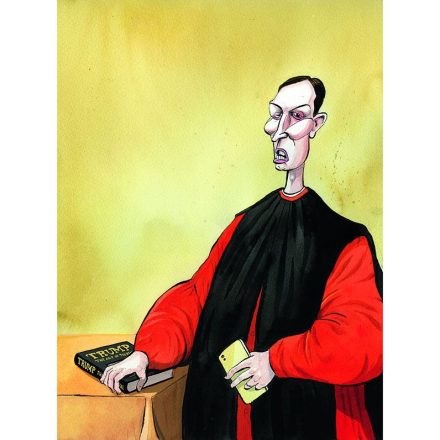
Where is Jared Kushner? In the first Trump term, as senior advisor to the President, he was everywhere and into everything. At home, he designed policies and plotted re-election efforts. Abroad, he orchestrated the Abraham Accords, which normalized relations between Israel and several Muslim nations. This magazine even produced a 2020 cover (pictured) examining the pervasive power of “Prince” Jared. In 2025, however, Kushner seems to have learned what most people don’t understand: to call the shots in Trumpland, it helps to operate behind the scenes.

kushner
Texas

Inside Texas’s bold takeover of the American film industry

When Dennis Quaid dropped out of the University of Houston to pursue his acting dreams, there was nowhere to go but Hollywood. Coming off a decade of its biggest hits and at the height of critical acclaim for the movies of the 1970s, California dominated the culture of the United States, and therefore the world. “It was a paradise,” Quaid says. “Creativity, community, the greatest films were made there, a vibrancy of the new wave, Bonnie and Clyde, The Conversation, The Right Stuff, it was an incredible place of palm trees and a real atmosphere of creativity and inspiration where we were making great films with great people we knew and loved… and now all that is gone.” ‘California really is insanely expensive. Rarely did we shoot anything there.

How progressivism killed American Protestantism

Mainline Protestantism, once a primary cultural and political pillar of American life, is in freefall. Traditional Protestant denominations – Episcopalians, Methodists, Presbyterians, Lutherans and others – now account for less than 11 percent of the population, down 40 percent since 2007, according to the Pew Religious Landscape Study. The Evangelical Lutheran Church in America (ELCA), the main Lutheran body in the United States, had more than five million members when it was formed in 1988. That number now stands at fewer than three million. By 2050, the ELCA projects that membership will have dropped to a mere 67,000. At that point, American Lutheranism will virtually cease to exist as a denomination – soon to be joined, no doubt, by other stalwarts of the Reformation.

Protestantism
sugar

Why Mormons can’t get enough sugar

The most common vice among Mormons – besides, perhaps, being a little too nice – is a ravenous, insatiable, unyielding sweet tooth. That’s why members of the Church of Jesus Christ of Latter-day Saints are devouring the American dessert industry. You may have noticed, in recent years, a sprinkling of Crumbl Cookies stores in cities and suburbs. Or maybe a quirky customizable mixed-soda place such as Swig has opened near you. Or you’ve heard someone mention a “dirty soda.” These are the candied cultural exports of Utah and its predominantly Mormon culture. Over the past eight years, Crumbl – with its sugary-sweet marketing and bright pink boxes – has launched more than 1,000 franchises and become one of the largest dessert companies in the country.

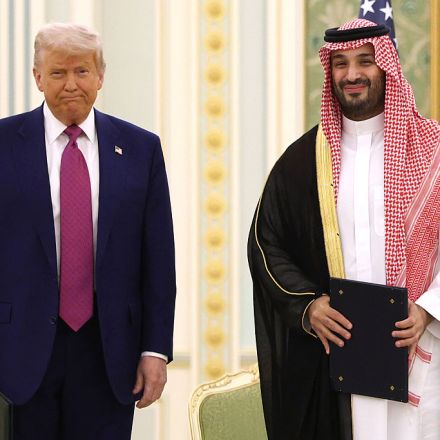
Will we stop Saudi Arabia developing a nuclear weapon?

Though clearly resolved to declare victory over Iran’s nuclear program and move on, Donald Trump has been beset this summer by assertions that the Iranian effort has not been “obliterated” after all and that the mullahs will be back at work in no time cranking out the requisite materials for a bomb. Therefore, according to some, Trump should bomb some more – or at least unleash Israel to do so. Whether or not Trump is pushed into further strikes, the argument over Iranian nuclear weapons capabilities will not go away.

Saudi Arabia
DoGE

DoGE, alligators, public land and Mamdani mania

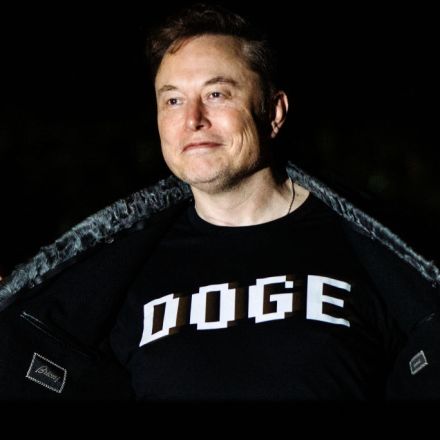
Daddy DoGE Despite Elon Musk and Donald Trump’s continued public fallout, DoGE is still slashing away at the federal workforce. From a peak of 3,015,000 employees on federal payroll in January, job cuts per month are as follows: February 13,000 March 11,000 April 13,000 May 25,000 June 7,000 Source: US Bureau of Labor Statistics See ya later, alligator Would migrants at Florida’s “alligator Alcatraz” detention center be eaten by the surrounding wildlife if they managed to escape? “I guess that’s the concept,” said Trump. But which species would do the snacking? There are around 1.25 million American alligators in Florida which are native to the state.

Who replaces the ayatollahs if the Iranian regime falls?

The masked gunmen of Jaish al-Adl are probably not the kind of people Donald Trump had in mind when he talked about “regime change” in Iran. A terror group in Iran’s southeastern Baluchistan region, they have a bloodthirsty record of shootings and suicide bombings, all part of a jihad for a separate Baluchi homeland. They are, however, excited by Israel and America’s bombing campaign, which they see as a once-in-a-lifetime chance to achieve their goal. As they declared recently: “We extend the hand of brotherhood to all the people of Iran to join the ranks of the Resistance.” How long that brotherhood would last is another matter.

Iran
Trump

Why President Trump can’t stop talking to reporters

The best time to call is the weekend. Or early in the morning. Or late at night. Definitely not when he’s on the golf course. If he’s alone, he’s more inclined to chat. If he’s in a good mood, you might get a few minutes. If he’s in a bad mood he’ll be brief, but you’re still liable to get a usable quote. That’s how White House reporters describe cold-calling Donald Trump, perhaps the most accessible president in American history. He’s not the first to smuggle a cell phone into the White House: Barack Obama insisted on keeping his BlackBerry throughout his time in office, despite the angst it caused his staff. But you couldn’t just call Obama. You can just call Trump.

The lessons of Ron Paul

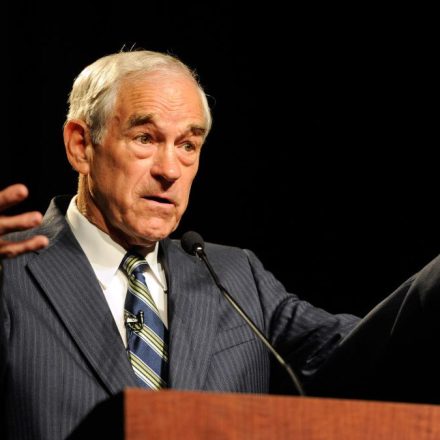
As Elon Musk feuds with Donald Trump and looks to launch a political party of his own – the America party – he should stop to consider the lessons of Ron Paul. The former Republican congressman, who turns 90 on August 20, is best known as the leader of the GOP’s libertarian wing – which for years was practically a one-man faction. In 2008, however, Paul ran for the Republican presidential nomination and touched off a grassroots insurgency. It wasn’t enough to win him any primaries, but it laid the groundwork for the GOP’s populist turn, leading directly to the Tea Party movement and lighting the way for Trump’s arrival a few years later. Dr.

Paul
Paul

The lessons of Ron Paul

As Elon Musk feuds with Donald Trump and looks to launch a political party of his own – the America party – he should stop to consider the lessons of Ron Paul. The former Republican congressman, who turns 90 on August 20, is best known as the leader of the GOP’s libertarian wing – which for years was practically a one-man faction. In 2008, however, Paul ran for the Republican presidential nomination and touched off a grassroots insurgency. It wasn’t enough to win him any primaries, but it laid the groundwork for the GOP’s populist turn, leading directly to the Tea Party movement and lighting the way for Trump’s arrival a few years later. Dr.

Can Clarksdale find its mojo again?

When Bubba O’Keefe announced he was running for mayor of Clarksdale this spring, there was a mixed response. This dirt-poor, crumbling Mississippi Delta city is more than 80 percent African American – and Bubba is white. But so poorly had the current mayor, who is African American, been performing that Bubba’s supporters thought he’d be a shoo-in, and that the residents would buy into the mantra that he was Clarksdale’s last hope, white or black. Locals describe Mississippi as the crime state. And Clarksdale is the worst city in Mississippi. There are 20 times more murders per capita in Clarksdale than in New York. As Bubba says: “We only have a population of 13,000 and there are 19 or 20 murders a year.